
Kościół w Dębnie — History & Facts
In a world that constantly shifts and dissolves, the act of capturing a moment becomes a rebellion against the ephemeral. Look closely at the intricate lines of Kościół w Dębnie, where the curves of the church’s steeple reach upwards in defiance of gravity. Focus on the delicate interplay of light and shadow across the aged stone, emphasizing its texture and the weight of history. The vibrant hues of greens and browns evoke the surrounding landscape, yet the figures that populate the scene are rendered with a sense of immediacy, as if they are caught in a gentle breeze that stirs the air. Observe the tension between the solidity of the church and the fluidity of the figures.
The dynamic poses of the townsfolk hint at movement and life, contrasting with the stillness of the architectural monument behind them. Each brushstroke seems to narrate a story, weaving together the past and present, suggesting the continuity of faith and community through generations. In 1916, Władysław Skoczylas was deeply engaged in the artistic revival of Polish folk art and national identity during a tumultuous period leading to Poland’s independence. Painted amidst the backdrop of World War I, this work reflects not only personal introspection but also a collective yearning for cultural roots.
Skoczylas, influenced by the regional character of his homeland, sought to capture the spirit of his time, melding tradition with modern artistic sensibilities.
More Artworks by Władysław Skoczylas
Browse all →
Motyw ze Starego Miasta
Władysław Skoczylas
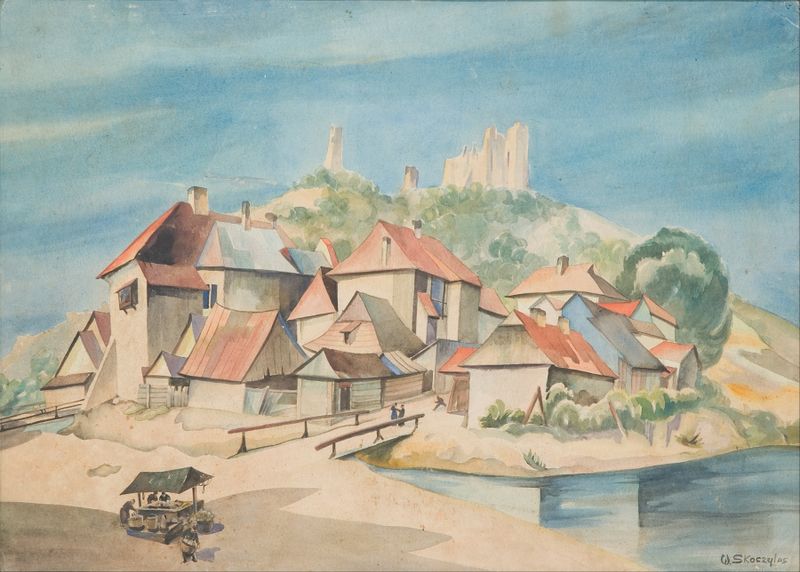
Widok Kazimierza nad Wisłą
Władysław Skoczylas
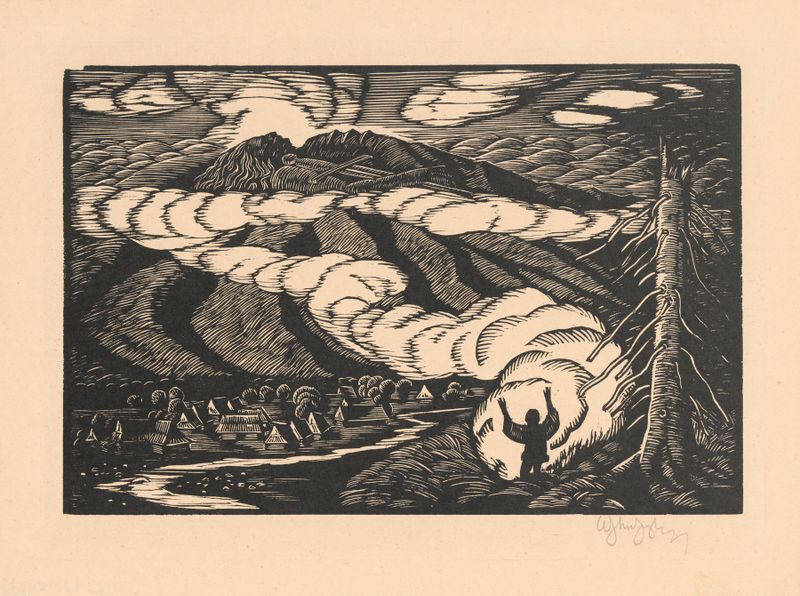
Giewont
Władysław Skoczylas
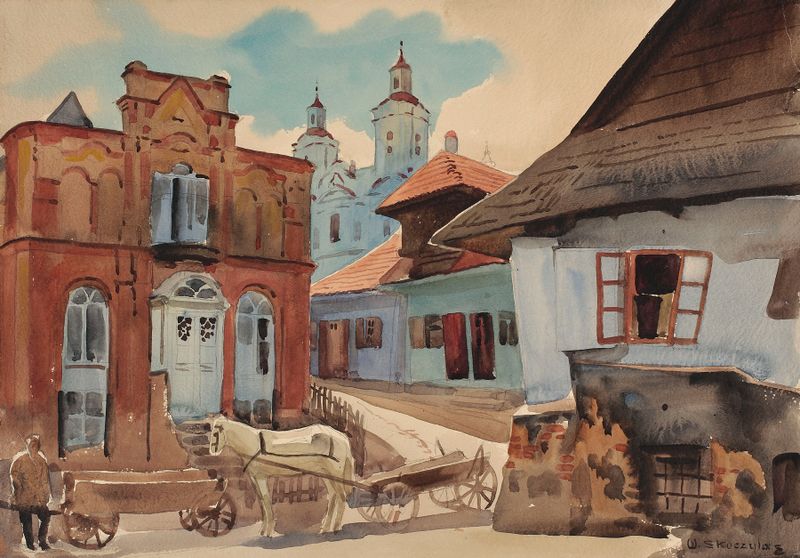
Fragment miasteczka
Władysław Skoczylas

Ulica w Kazimierzu
Władysław Skoczylas

Rynek w Kazimierzu nad Wisłą
Władysław Skoczylas
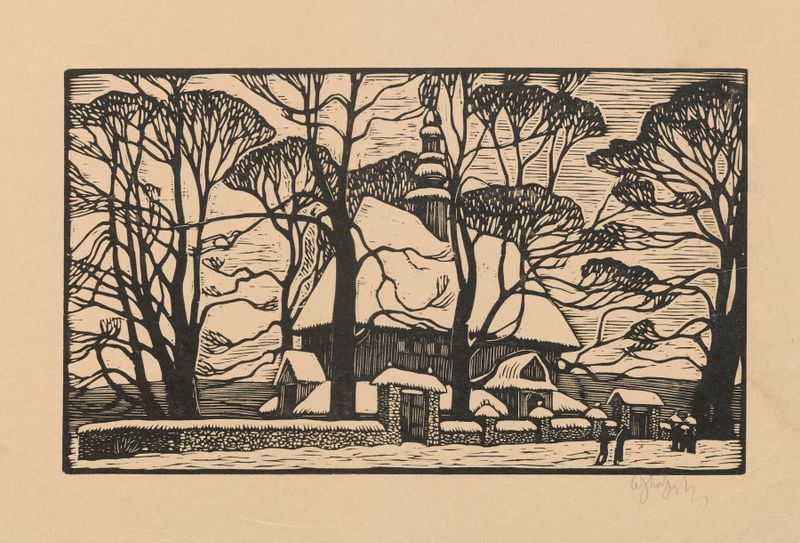
Kościółek w zimie
Władysław Skoczylas

Kolumna Zygmunta
Władysław Skoczylas
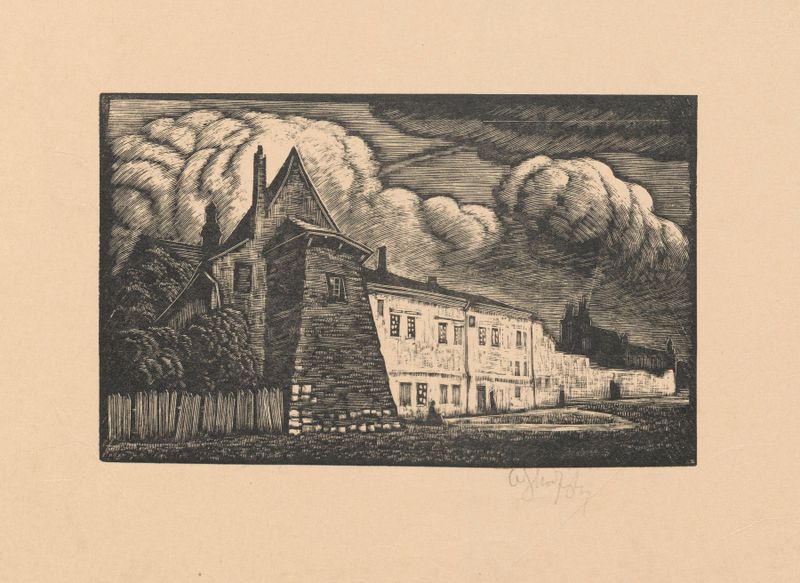
Motyw z Krakowa; Baszta Augustianów
Władysław Skoczylas
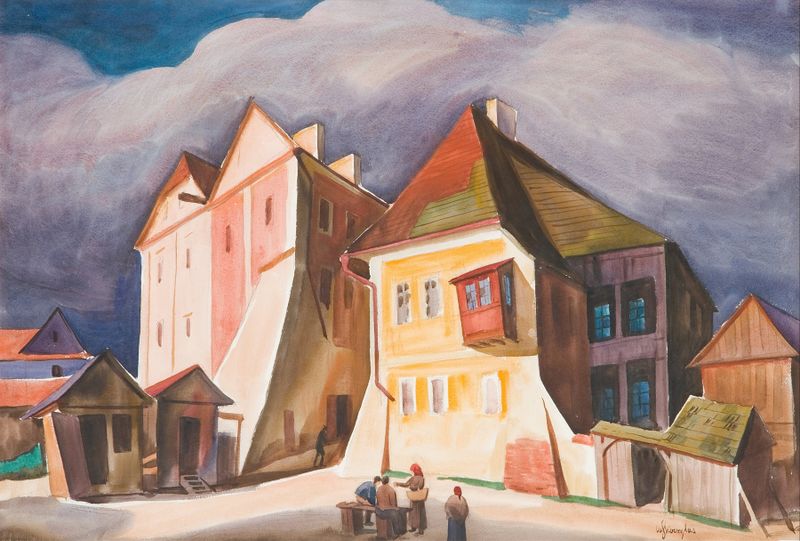
Widok Kazimierza nad Wisłą
Władysław Skoczylas
More Architecture Art
Browse all →
The statue of Liberty
Frédéric Auguste Bartholdi

View of Houses in Delft, Known as ‘The Little Street’
Johannes Vermeer

View of Houses in Delft, Known as ‘The Little Street’
Johannes Vermeer

The Cathedral in Rouen. The portal, Grey Weather
Claude Monet

The yellow house
Vincent van Gogh

The Church in Auvers-sur-Oise, View from the Chevet
Vincent van Gogh