
Kolumna Zygmunta — History & Facts
Who listens when art speaks of silence? In Kolumna Zygmunta, the echoes of grief resonate through each meticulous stroke, inviting contemplation of loss and memory. Look to the center of the composition, where a towering column rises, its surface adorned with intricate details that suggest both strength and fragility. The muted palette of grays and earthy tones envelops the structure, casting shadows that hint at the weight of history. Surrounding the column, a formless void embodies absence, juxtaposed against the solidity of the monument, guiding the viewer's gaze to the interplay of light and shadow that animates this solemn tribute. The column, a tribute to a bygone era, embodies the collective mourning for history's passage.
Each chiseled line tells a story of resilience amidst sorrow, while the absence of figures amplifies the emotional gravity of solitude and remembrance. Yet, in this starkness lies a profound strength; the artwork captures the tension between permanence and impermanence, prompting reflection on what remains when all else is lost. In 1930, Władysław Skoczylas created this piece during a time when Poland was grappling with its national identity and cultural revival. The artist was deeply influenced by the landscape and history of his homeland, seeking to convey deeper meanings through simple forms.
This period marked a turning point in his career, where he embraced folk traditions and personal narratives, infusing his work with both cultural significance and a poignant sense of loss.
More Artworks by Władysław Skoczylas
Browse all →
Motyw ze Starego Miasta
Władysław Skoczylas
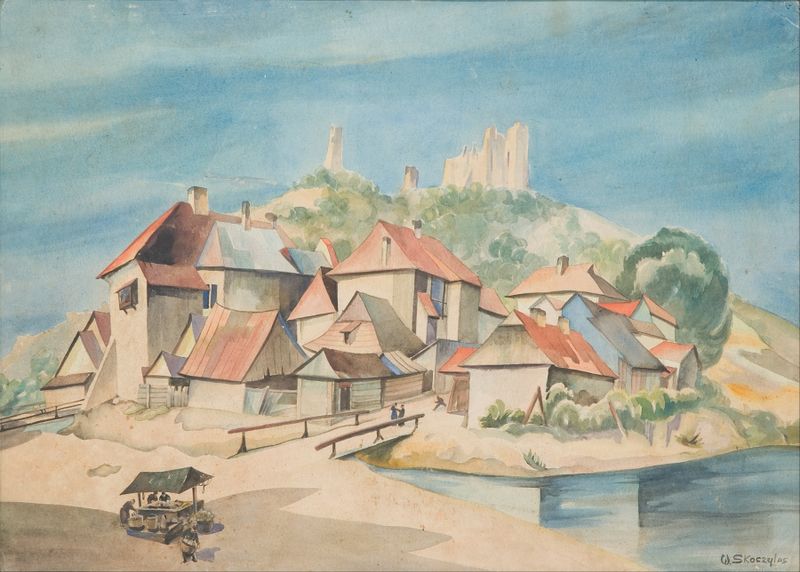
Widok Kazimierza nad Wisłą
Władysław Skoczylas
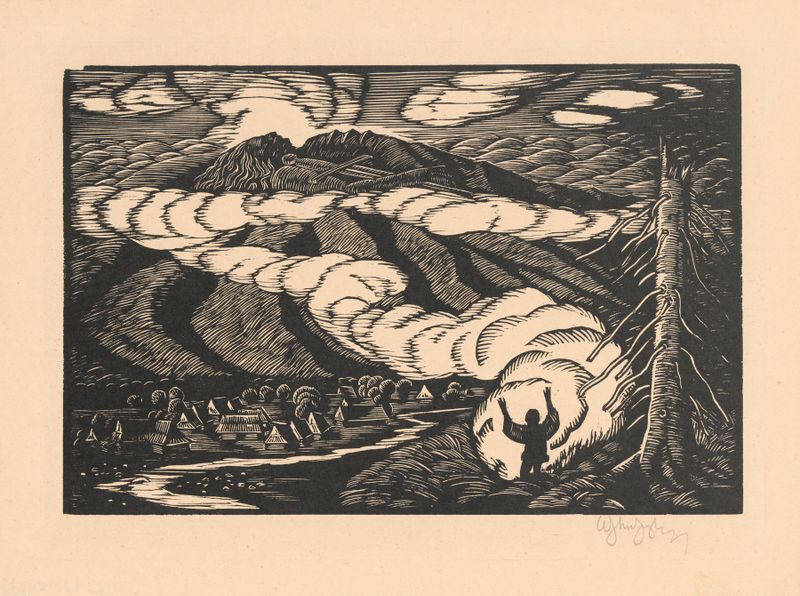
Giewont
Władysław Skoczylas
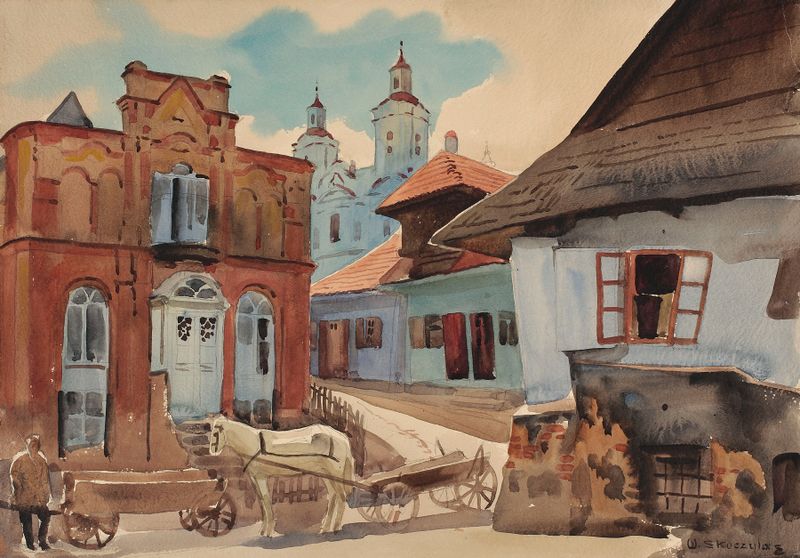
Fragment miasteczka
Władysław Skoczylas

Kościół w Dębnie
Władysław Skoczylas

Ulica w Kazimierzu
Władysław Skoczylas

Rynek w Kazimierzu nad Wisłą
Władysław Skoczylas
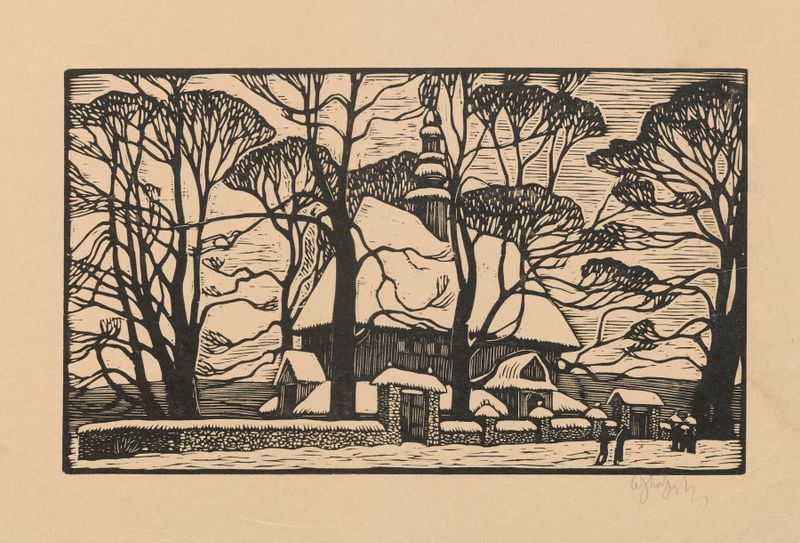
Kościółek w zimie
Władysław Skoczylas
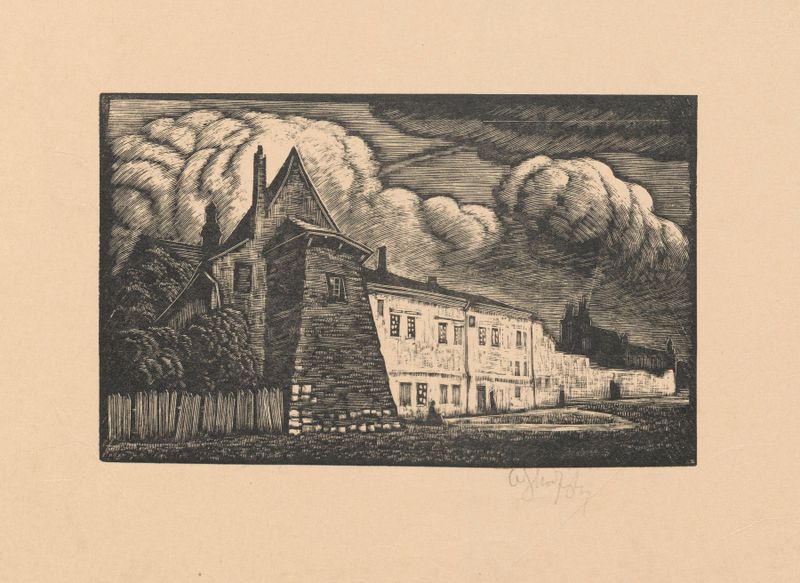
Motyw z Krakowa; Baszta Augustianów
Władysław Skoczylas
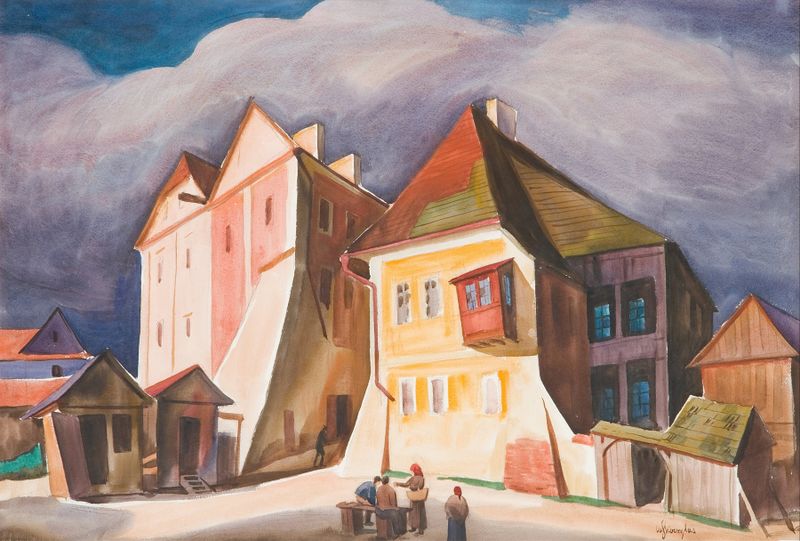
Widok Kazimierza nad Wisłą
Władysław Skoczylas
More Architecture Art
Browse all →
The statue of Liberty
Frédéric Auguste Bartholdi

View of Houses in Delft, Known as ‘The Little Street’
Johannes Vermeer

View of Houses in Delft, Known as ‘The Little Street’
Johannes Vermeer

The Cathedral in Rouen. The portal, Grey Weather
Claude Monet

The yellow house
Vincent van Gogh

The Church in Auvers-sur-Oise, View from the Chevet
Vincent van Gogh