
Kristus kommer — History & Facts
A shaft of light slices through the gloom, drawing every eye in the room toward a spectral figure at the threshold—this is where Asta Nørregaard sets her drama in Kristus kommer. The painting’s most striking feature is this sudden arrival: a luminous Christ, rendered almost as an apparition, stepping into a world of shadow and sorrow. The viewers’ gaze is pulled first to the glowing white, then to the faces and gestures of the crowd—some hopeful, some grieving, some simply stunned.
The palette is somber, with earthy browns and ochres dominating the scene, but the sky in the upper left bursts with unexpected color, hinting at a new dawn or revelation. Painted in 1881, this work belongs to a period when religious themes still held sway in Scandinavian art, but the approach here is modern, almost psychological. Rather than a triumphant Christ, Nørregaard gives us a moment of tension and ambiguity: the dead or dying figure on the ground, the mourners’ raw gestures, the uncertain postures of the onlookers. The composition leads the viewer in a slow spiral from the light at the door, through the clustered figures, to the foreground’s tableau of suffering and hope.
History has kept few traces of this painting’s journey, but it now resides in the Nasjonalmuseet for kunst, arkitektur og design—a quiet witness to the era’s search for meaning in the familiar stories. Let your eyes return to that meeting of light and darkness, and see how many stories unfold in the half-seen faces.
More Artworks by Asta Nørregaard

Interior with Harp
Asta Nørregaard
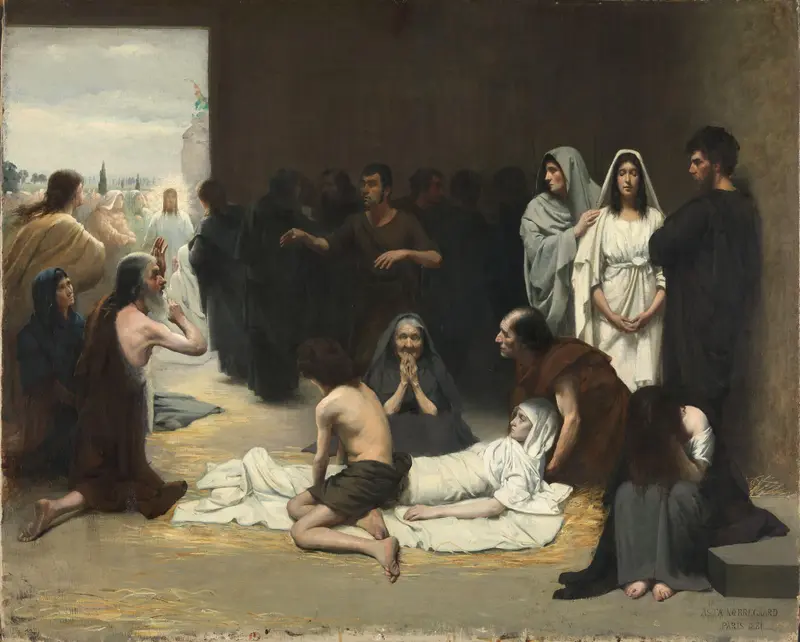
Waiting for Christ
Asta Nørregaard
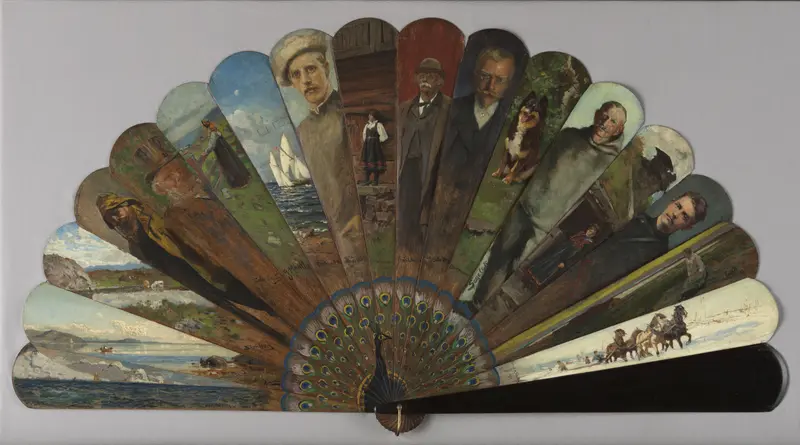
Kunstnerviften
Asta Nørregaard
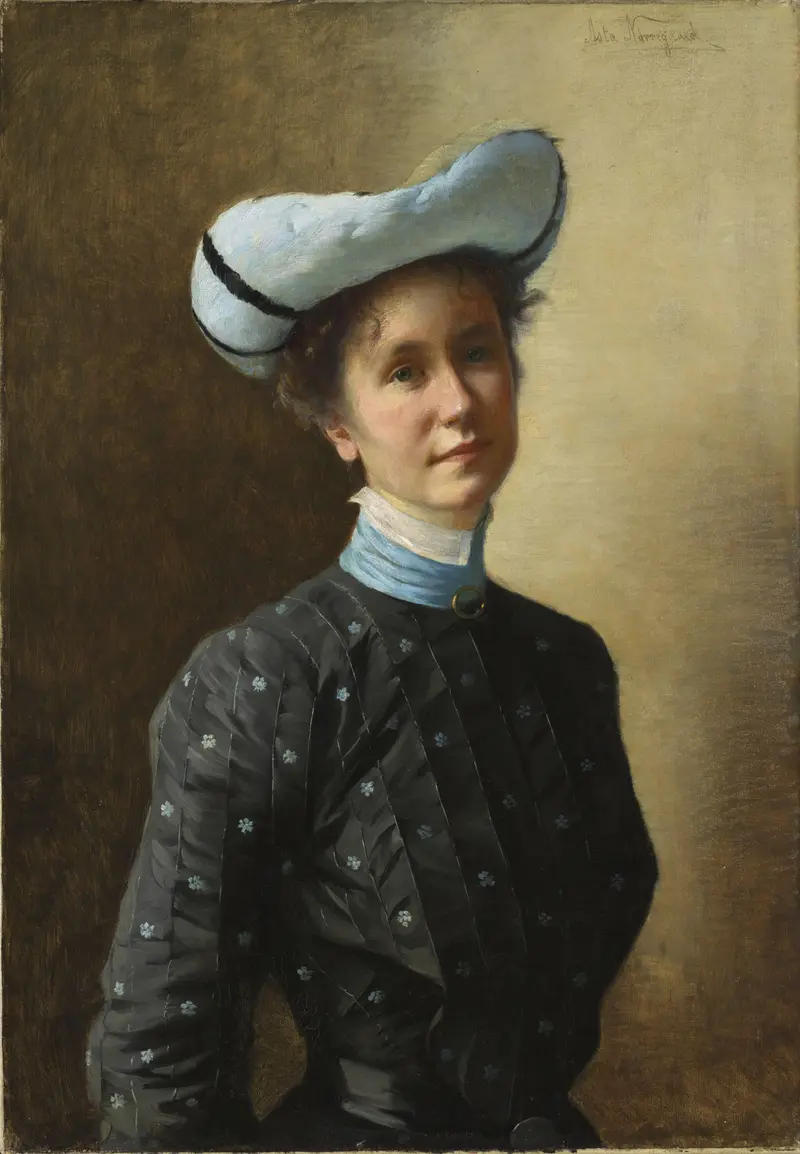
Portrait of Ingeborg Gade
Asta Nørregaard
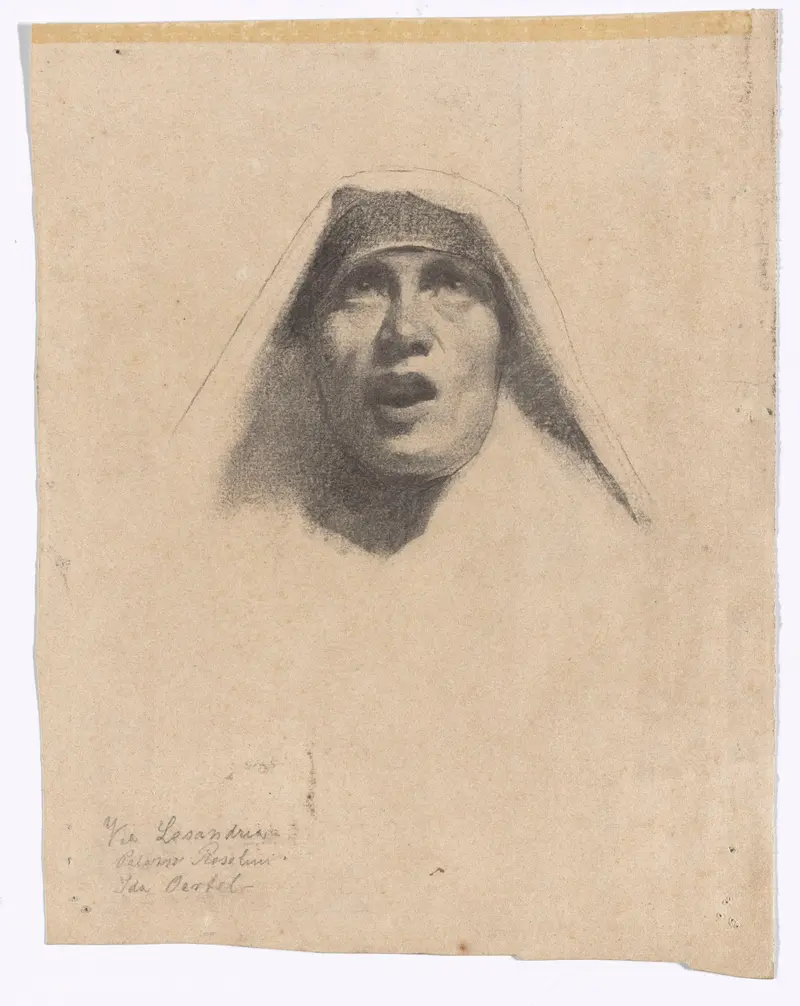
Nun
Asta Nørregaard
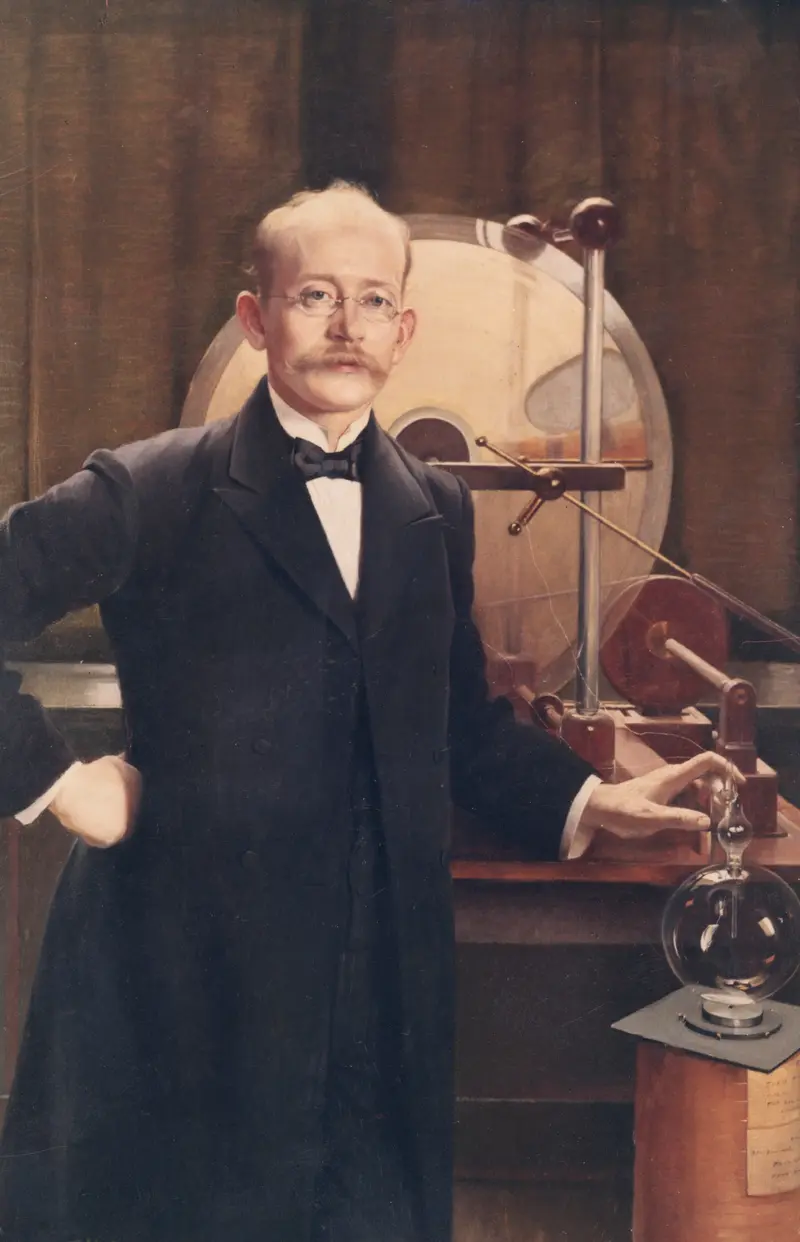
Portrait of Kristian Birkeland, Norwegian scientist and industrialist
Asta Nørregaard
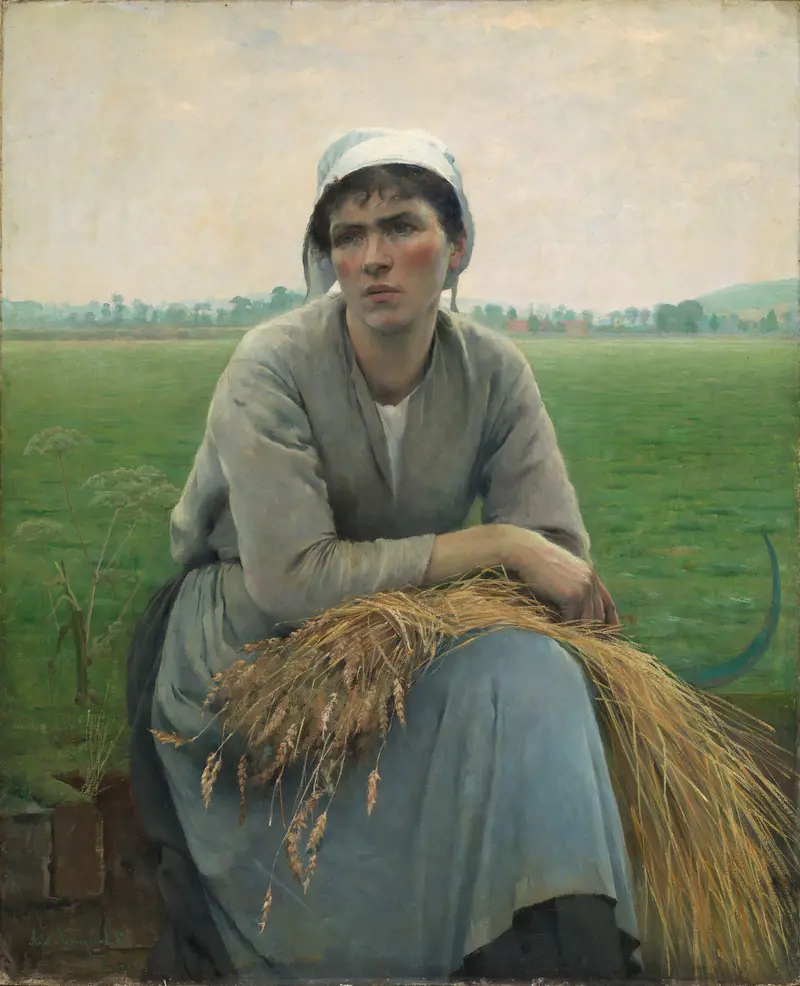
Peasant Woman from Normandy
Asta Nørregaard
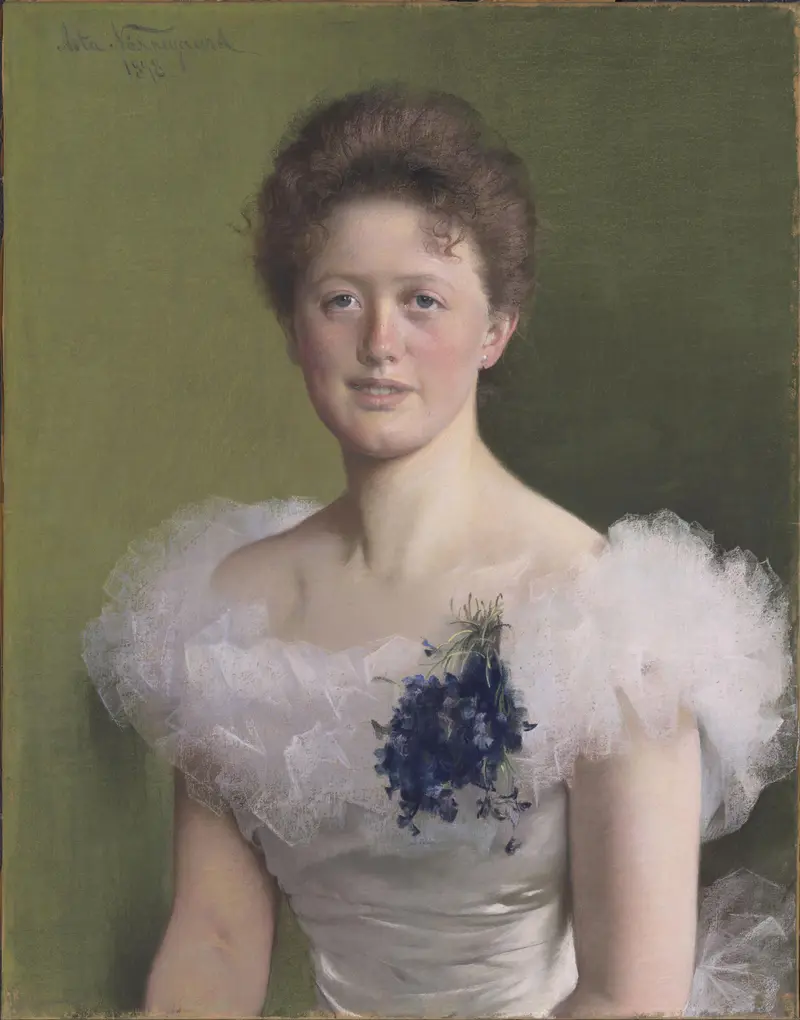
Portrett av Benedikte Sophie Kaltenborn
Asta Nørregaard
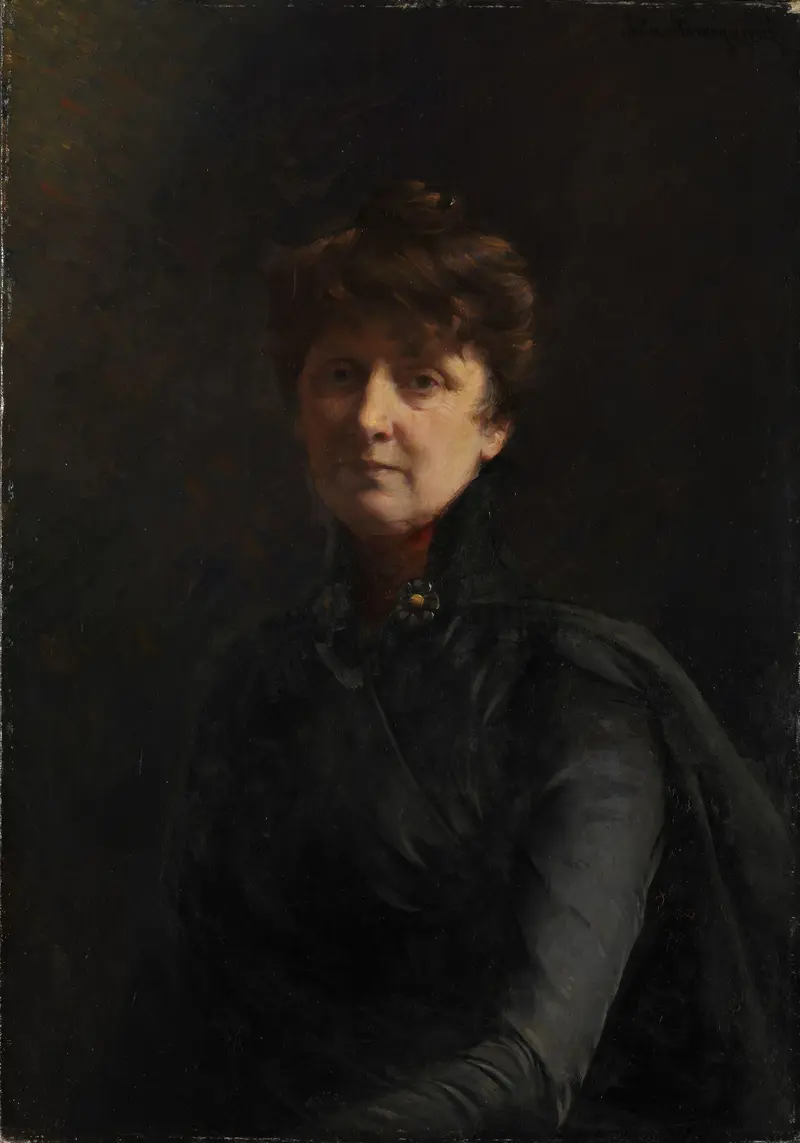
Selvportrett
Asta Nørregaard
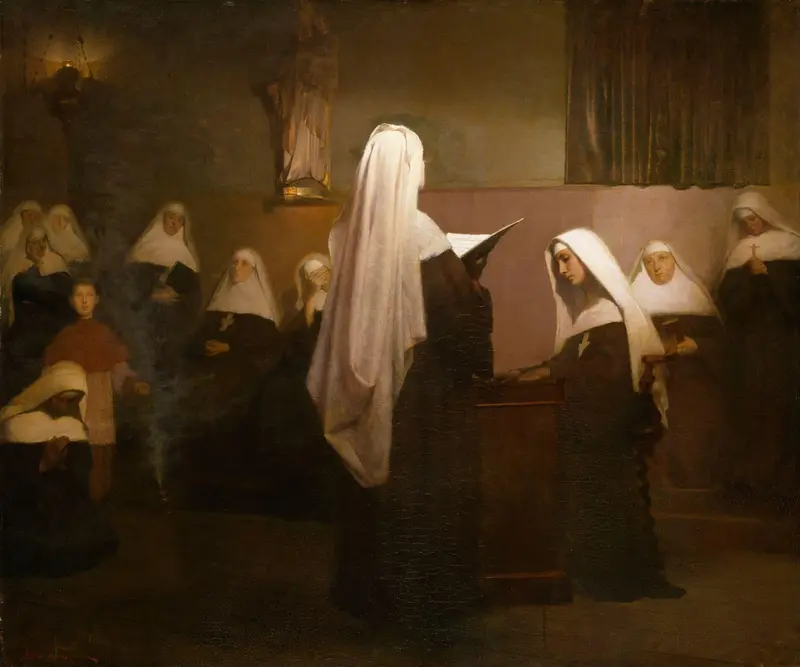
Christmas Night Mass celebrated in a French Nunnery
Asta Nørregaard





