
Peasant Woman from Normandy — History & Facts
What holds the viewer is the direct, unguarded gaze of the young woman, her face caught between fatigue and defiance. The painter, Asta Nørregaard, sets her subject at the edge of a wide, green field, the horizon stretching away in a haze of distant trees. The woman’s hands rest on a bundle of wheat, her work interrupted but not yet finished; the sickle at her side is a silent witness to the labor just paused.
The pale sky and the muted tones of her dress draw the eye to her flushed cheeks and steady eyes, making her presence immediate and inescapable. Every detail—the tilt of her headscarf, the roughness of her hands, the weight of the harvest—speaks to a life shaped by the land. This is a portrait not of a specific event, but of a type: the rural worker at the end of the nineteenth century, rendered with both realism and empathy. In 1889, artists across Europe were turning their attention to the rural poor, but where French painters like Millet often bathed their peasants in golden light, Nørregaard’s approach is cooler, more reserved.
The composition is spare, the landscape almost secondary to the psychological presence of the sitter. The viewer is left to wonder what thoughts pass behind those guarded eyes—pride, exhaustion, or perhaps a longing for something beyond the fields. In the quiet space between her and the horizon, the painting invites us to imagine the rest of her story.
More Artworks by Asta Nørregaard

Interior with Harp
Asta Nørregaard
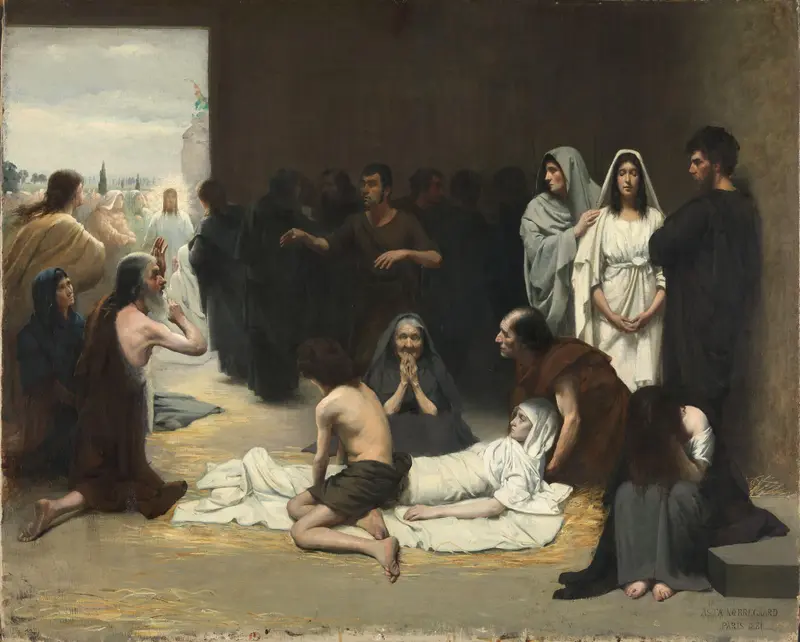
Waiting for Christ
Asta Nørregaard
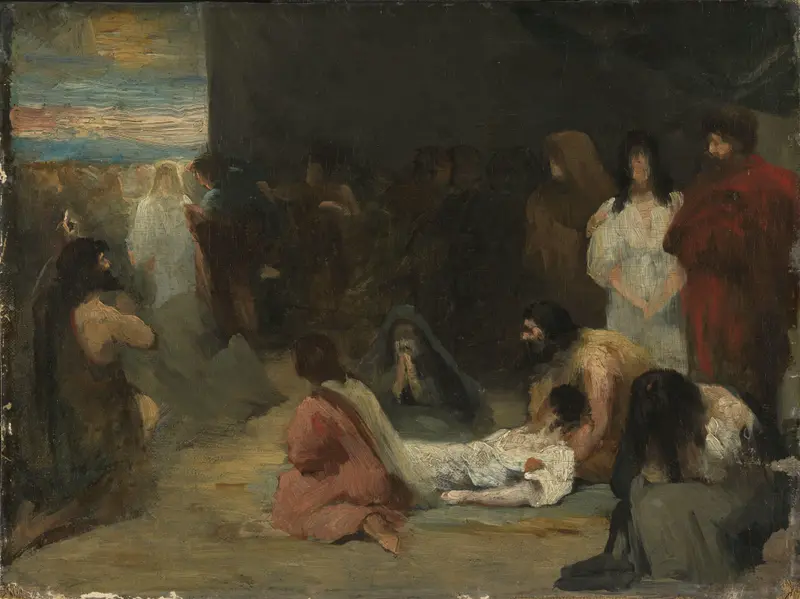
Kristus kommer
Asta Nørregaard
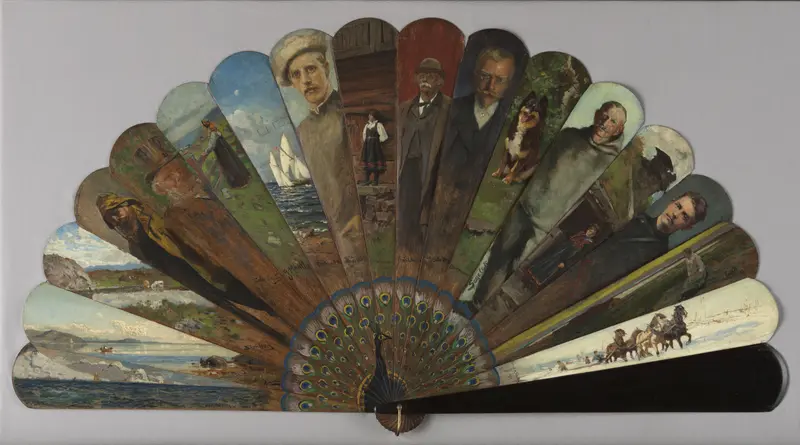
Kunstnerviften
Asta Nørregaard
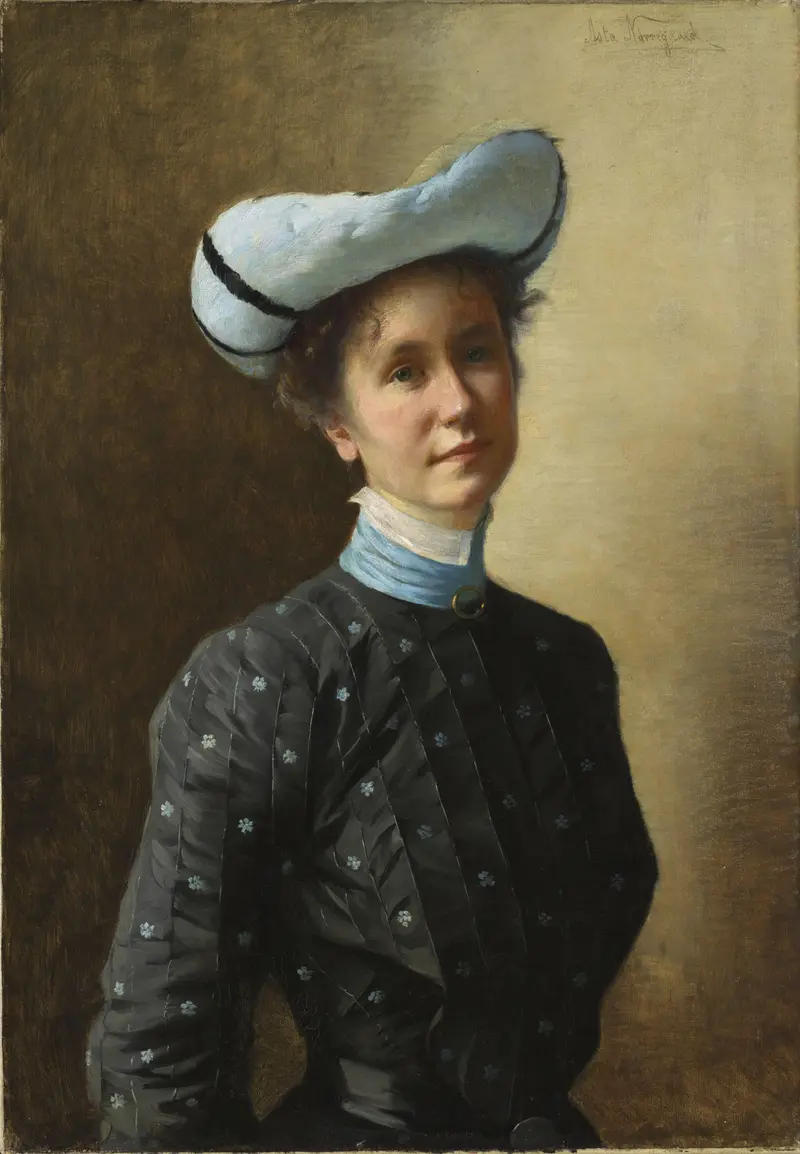
Portrait of Ingeborg Gade
Asta Nørregaard
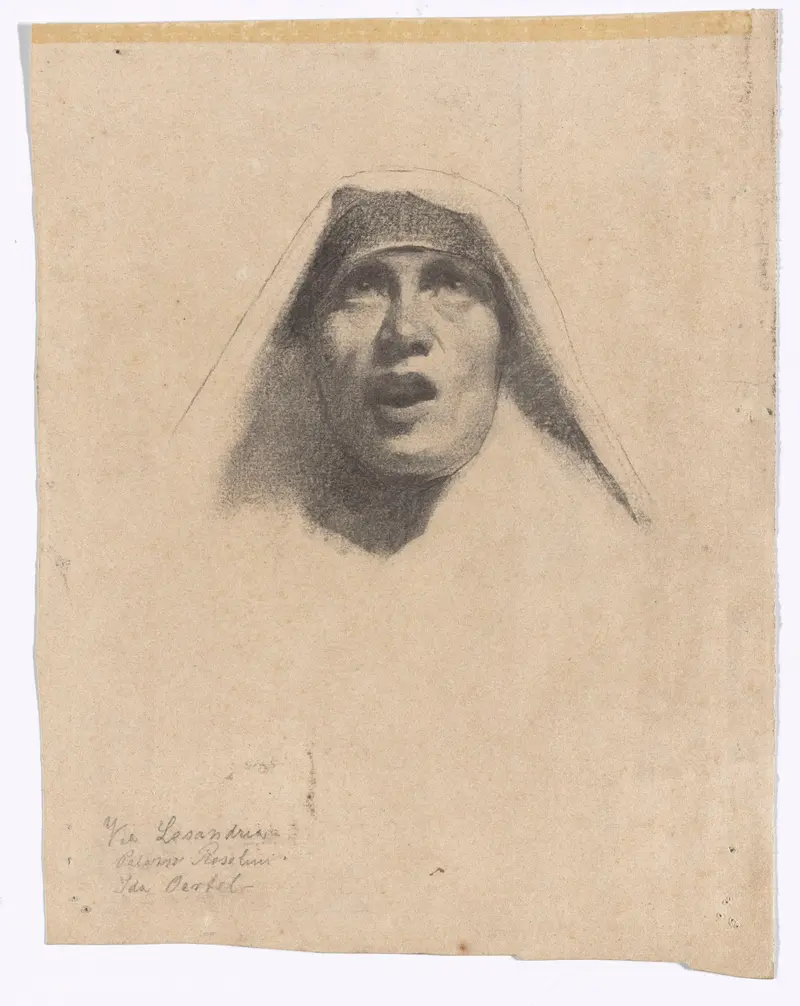
Nun
Asta Nørregaard
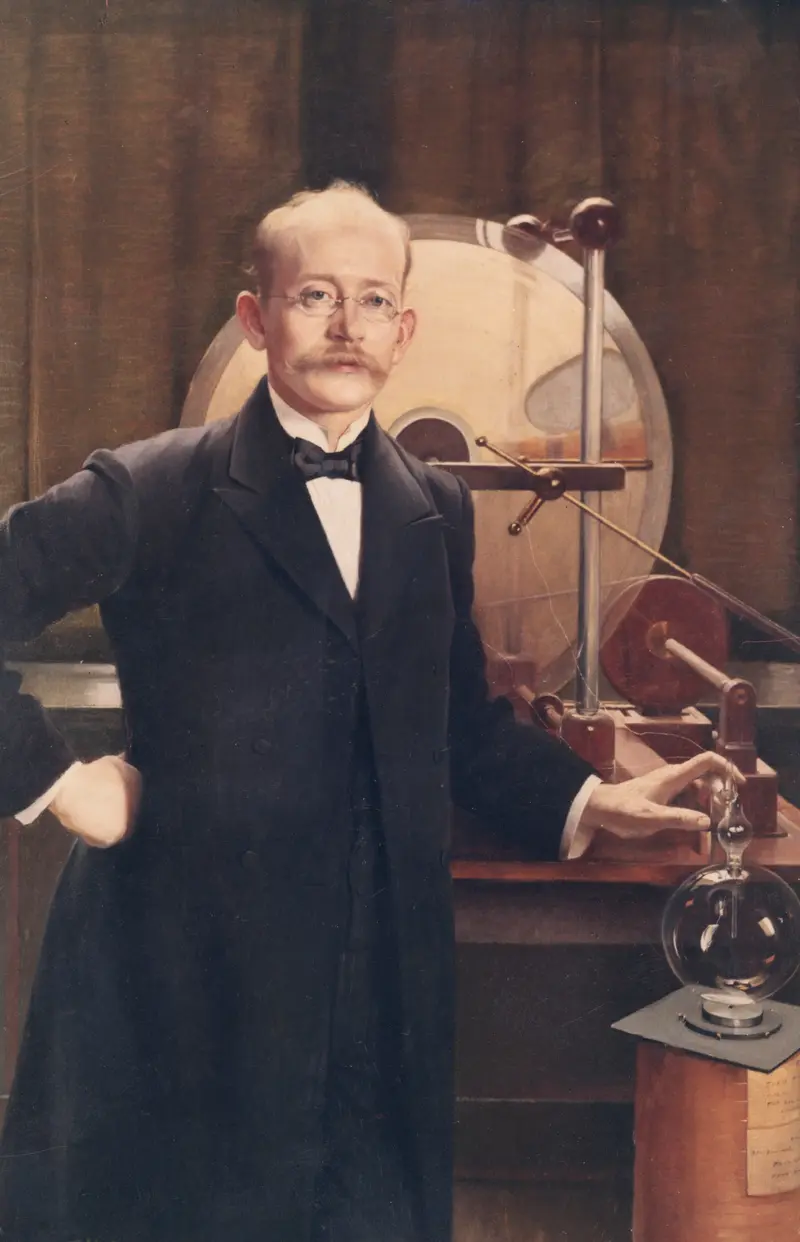
Portrait of Kristian Birkeland, Norwegian scientist and industrialist
Asta Nørregaard
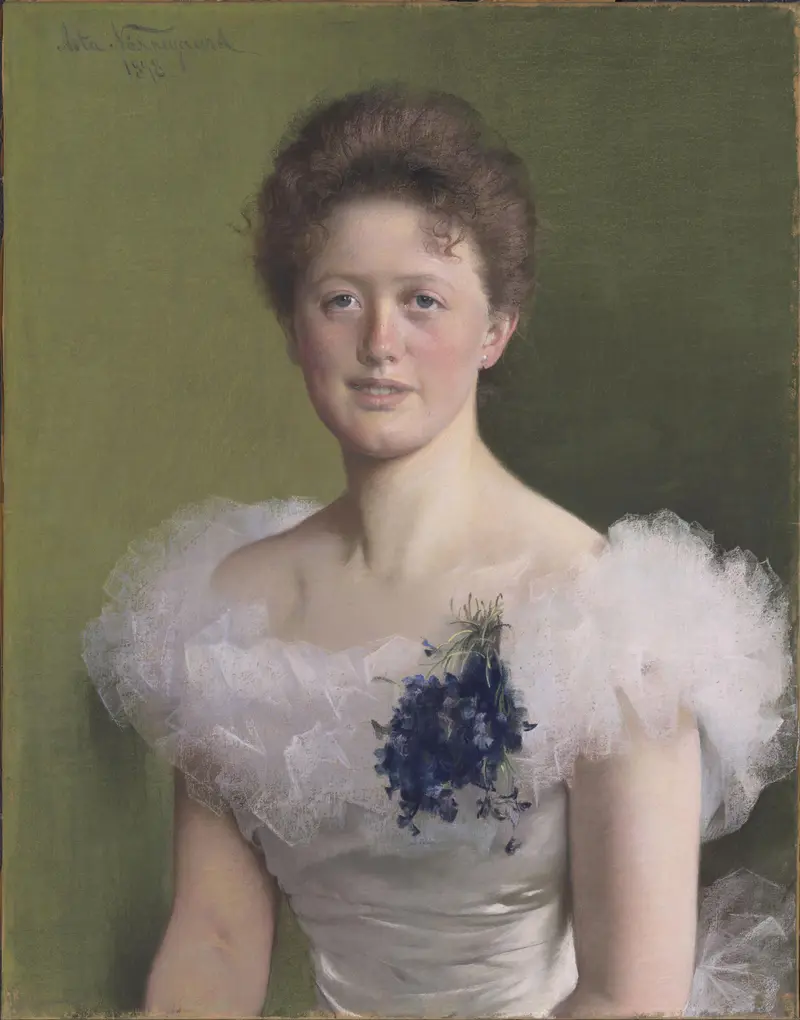
Portrett av Benedikte Sophie Kaltenborn
Asta Nørregaard
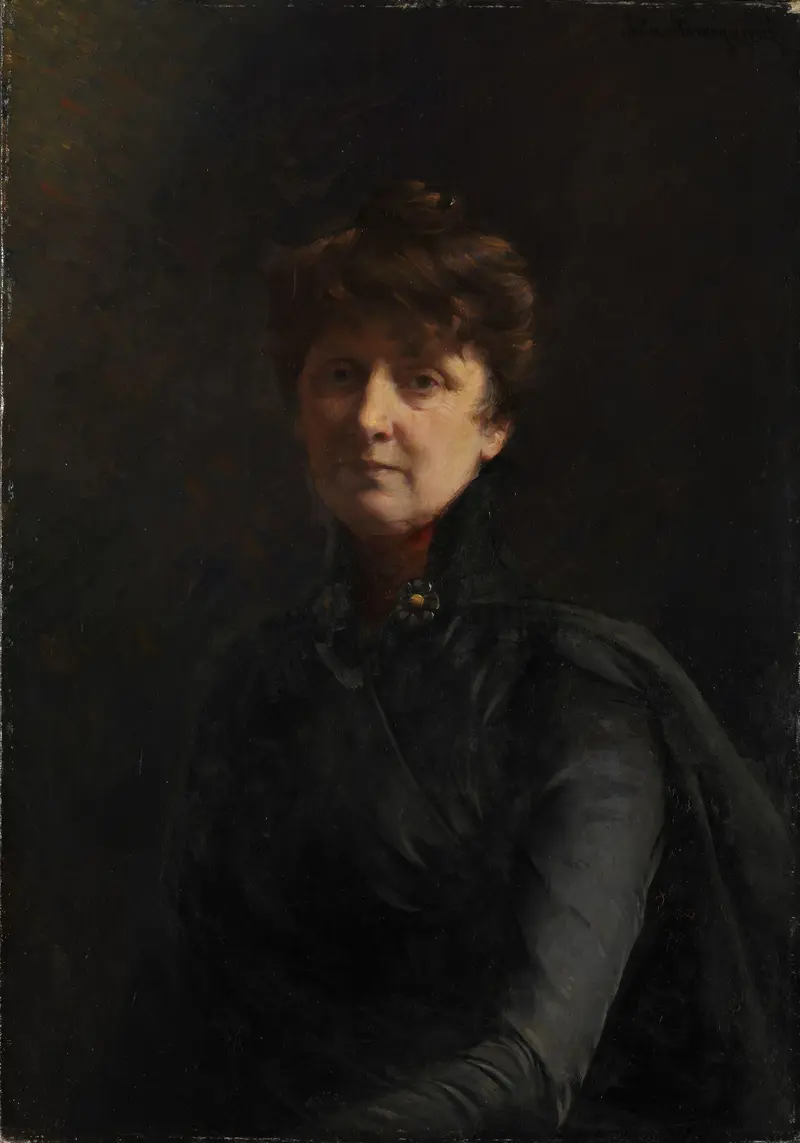
Selvportrett
Asta Nørregaard
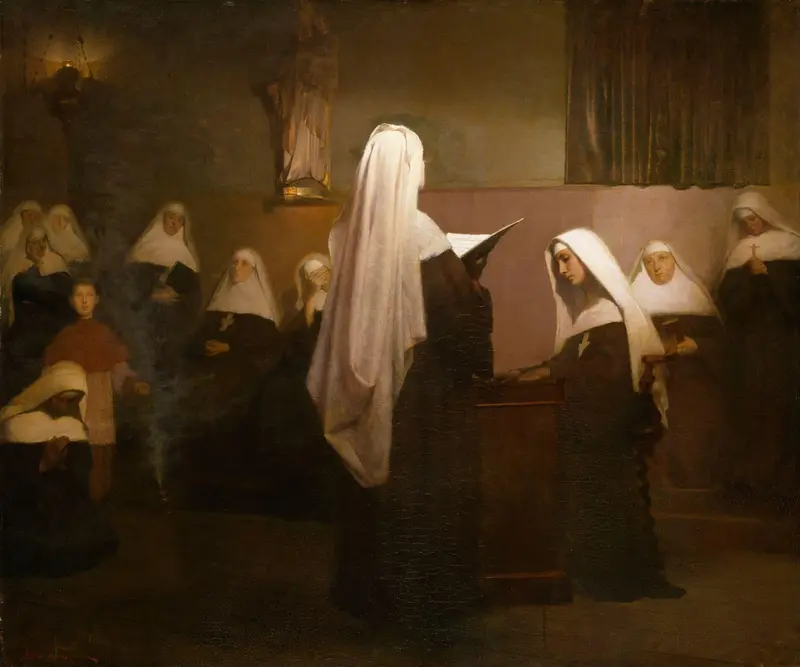
Christmas Night Mass celebrated in a French Nunnery
Asta Nørregaard





