
Kubistische Landschaft — History & Facts
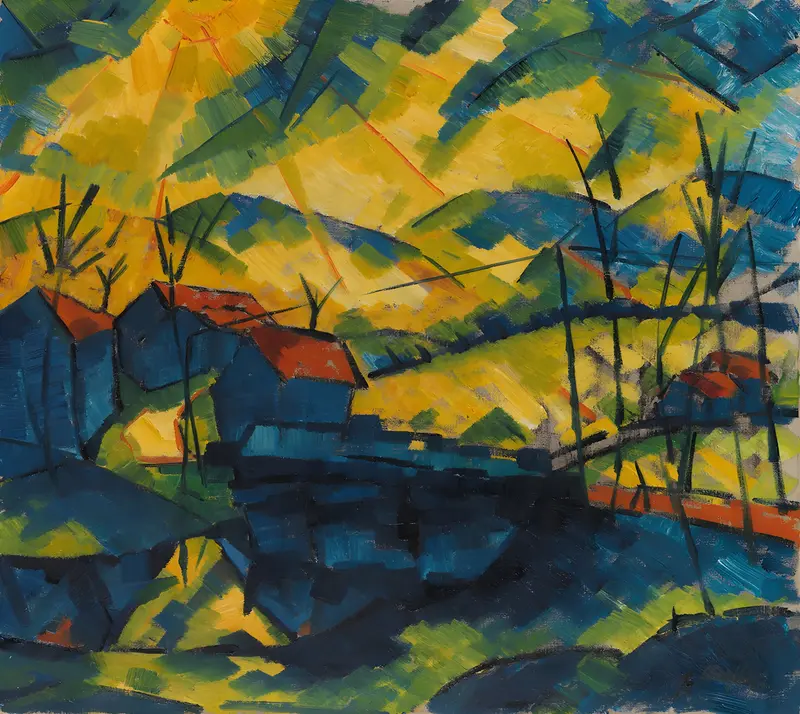
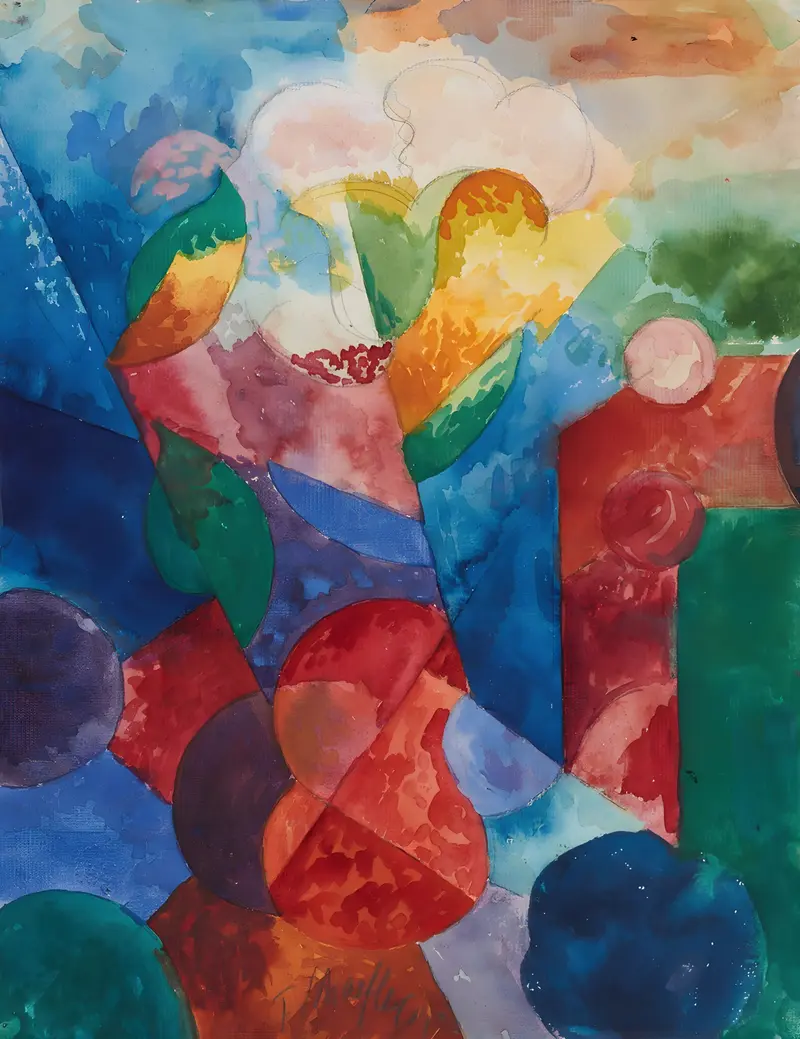
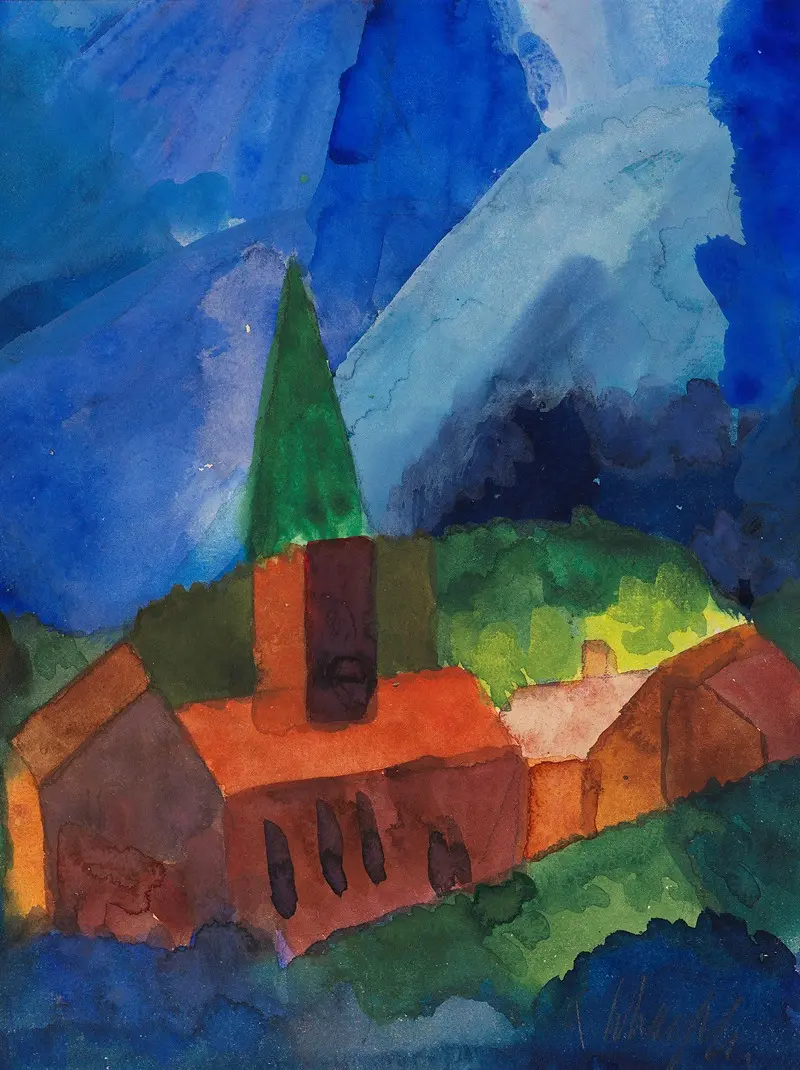
In Kubistische Landschaft, the viewer is greeted by a vibrant array of colors that depict a fragmented landscape. Geometric shapes dominate the composition, creating a sense of depth and movement. The use of blues, greens, and earthy tones adds to the dynamic quality of the scene.
Figures may be abstracted, suggesting human presence within this stylized environment. The painting showcases typical characteristics of Cubism, with its emphasis on geometric forms and multiple perspectives. The brushwork appears deliberate, with visible strokes that enhance the texture of the landscape. The color palette is both bold and harmonious, reflecting the artist's skill in blending tones.
Viewers can appreciate the complexity of the composition upon closer inspection. Fritz Schaefler was an artist associated with the Cubist movement, which sought to break away from traditional representation. Kubistische Landschaft exemplifies his exploration of form and space in a modern context. An interesting fact about this work is that it reflects the influence of early 20th-century European art movements, particularly in its abstraction.
This painting remains a testament to the innovative spirit of its time.
More Artworks by Fritz Schaefler

More Landscape Art

The Starry Night
Vincent van Gogh

View of Delft
Johannes Vermeer

Water Lilies
Claude Monet

The Grand Canal, Venice, looking north-west from the Ca' Corner to the Ca' Contarini degli Scrigni, with the campanile of Santa Maria della Carità
Canaletto

Windsor Castle
Canaletto

The Grand Canal looking North-East from the Palazzo Dolfin-Manin to the Rialto Bridge
Canaletto