
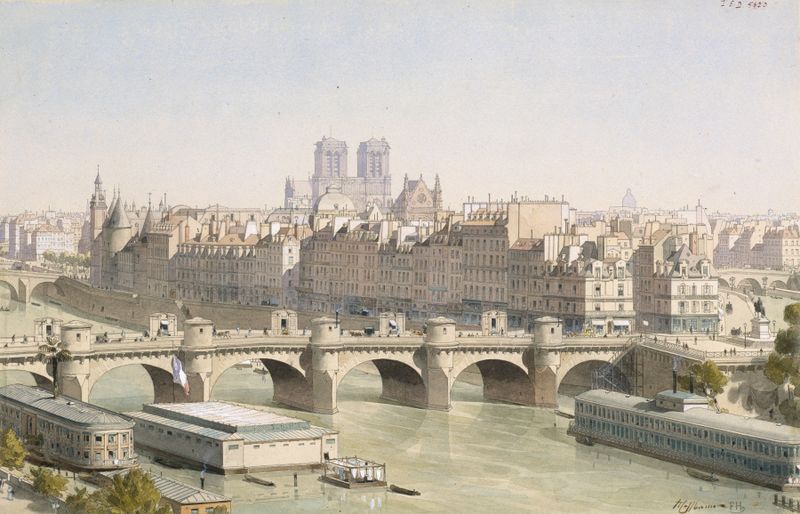
La Cité et le pont aux Change en hiver 1650 — History & Facts
When did color learn to lie? In the stillness of winter, hues unfurl their secrets, whispering tales of serenity beneath a muted sky. Focus on the delicate brushstrokes that bring the scene alive, drawing your eye first to the soft pastels of the buildings nestled along the water's edge. The subtle blues and grays blend into one another, hinting at a world both familiar and dreamlike. Notice how the light reflects off the frozen surface of the river, creating an ethereal glow that contrasts with the somber shadows cast by the architectural forms.
This interplay of color and light reveals Hoffbauer's intent to evoke a tranquil yet haunting atmosphere, where winter reigns with a quiet dignity. Delve deeper into the layering of emotions within the scene. The starkness of the winter landscape juxtaposes the warmth of human presence, seen in the miniature figures dotting the bridge, embodying a sense of community amidst isolation. The carefully rendered details of the bridge suggest connection, yet the cold environment speaks of solitude.
This contrast between warmth and chill, presence and absence, creates a poignant tension that invites reflection on the nature of urban life in harsh seasons. Created between 1915 and 1945, during a tumultuous time in Europe, the artist found himself navigating the complexities of war and shifting cultural landscapes. Hoffbauer painted this piece in Paris, a city that was both a refuge and a site of conflict, capturing the essence of resilience. This work resonates not only with the visual language of the era but also reflects personal and collective struggles, embodying a serene beauty that tempers the chaos surrounding him.
More Artworks by Fédor Hoffbauer
Browse all →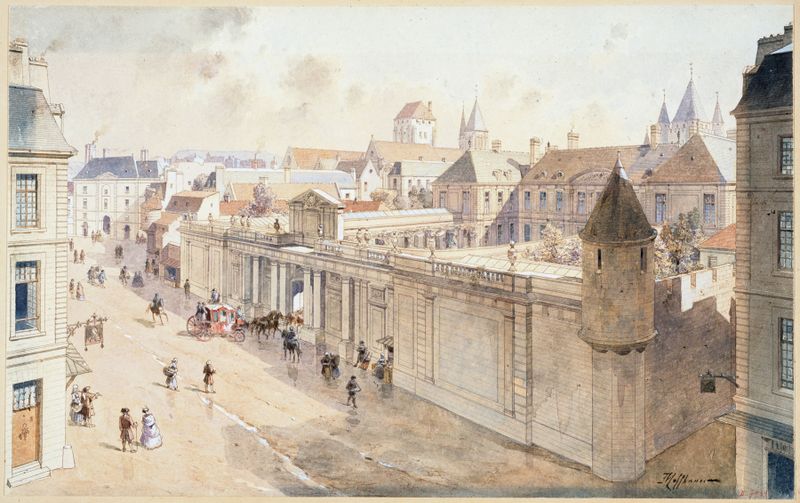
Le palais du Grand Prieur au Temple, en 1770
Fédor Hoffbauer
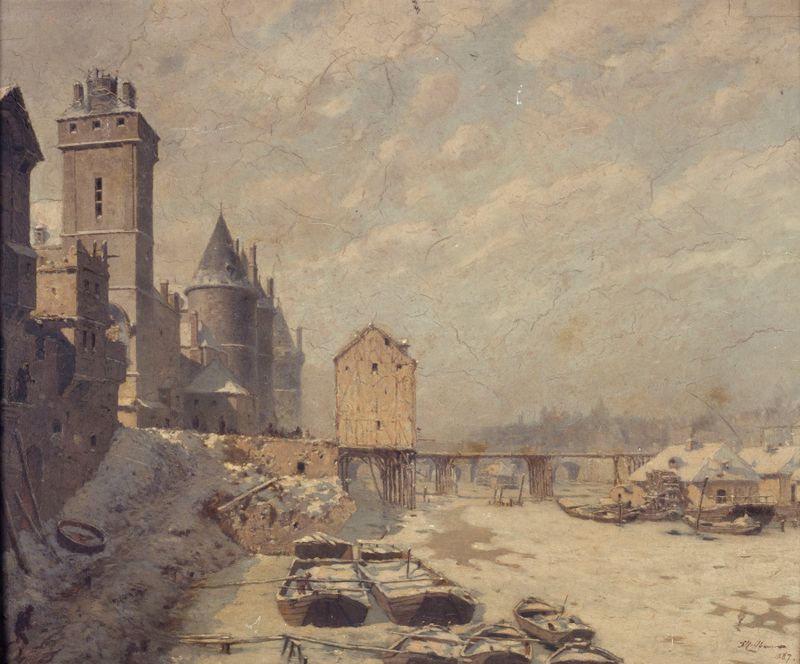
La tour de l’Horloge, la Conciergerie et le pont au Change, en 1621
Fédor Hoffbauer

Banquet des officiers de la marine Russe, dans la salle des fêtes à l’Hôtel de Ville. Fêtes Franco-Russes à Paris
Fédor Hoffbauer

Le Grand Châtelet et le pont de Bois, 1621-1645
Fédor Hoffbauer
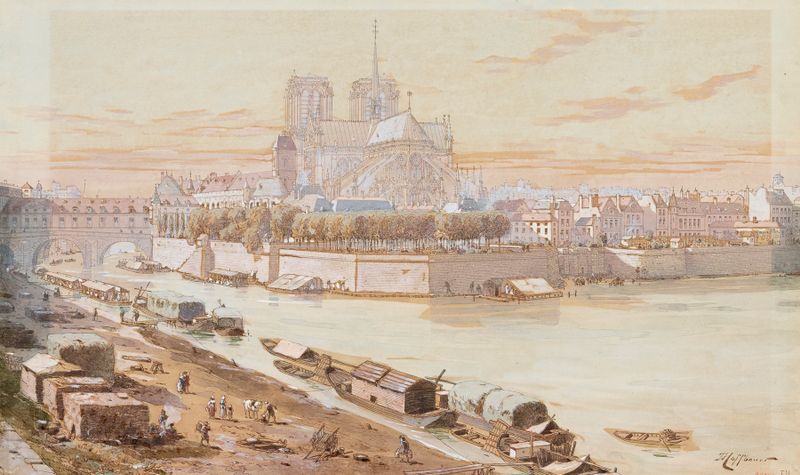
Notre-Dame et l’Evêché en 1750
Fédor Hoffbauer

Vue panoramique de Paris en 1588, depuis les toits du Louvre, avec le Pont-Neuf en construction
Fédor Hoffbauer
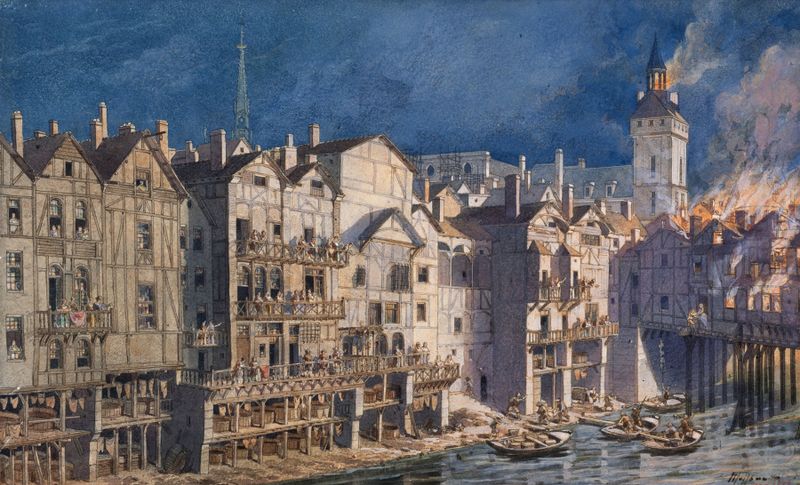
La Cité entre le pont Notre Dame et le pont au Change en 1621
Fédor Hoffbauer

L’Hôtel de Ville et le pont d’Arcole en 1842
Fédor Hoffbauer

Le Cimetière des Innocents en 1750
Fédor Hoffbauer
Vue de l’île de la Cité et le pont-Neuf avec ses boutique, vers 1840
Fédor Hoffbauer





