
La petite rue — History & Facts
Can paint confess what words never could? In La petite rue, the pulse of betrayal lingers in every brushstroke, whispering secrets of a bygone era. Look to the left at the narrow cobblestone path, where shadows mingle with the faint light of day. Raffaëlli's technique masterfully captures the subtle interplay of sun and shade, highlighting the textured, uneven surfaces that suggest both familiarity and abandonment. The muted palette, punctuated by the worn hues of the buildings, evokes a nostalgic melancholy that draws you deeper into this intimate scene. Within the labyrinth of alleys, a sense of isolation contrasts with the intimacy of the surroundings.
The distant figures, perhaps caught in their own lives, remain unknowable yet hauntingly present. The use of perspective invites contemplation on loneliness and the complexities of human connection, as the viewer is left to ponder who may have walked this path before and what stories they carried with them. The intricate details of the architecture echo the layers of emotional depth—betrayal, love, and loss—that permeate the air. In 1898, Raffaëlli was immersed in the Parisian art scene, navigating the tensions between traditional techniques and the burgeoning Modernist movement.
At this time, he was establishing his reputation as a painter who could capture the essence of everyday life, often focusing on the working class, and exploring themes of alienation. This painting reflects not only his personal artistic journey but also the shifting social landscape of France at the end of the 19th century.
More Artworks by Jean François Raffaëlli
Browse all →
Autumn In Paris
Jean François Raffaëlli

Le jardin du Luxembourg
Jean François Raffaëlli
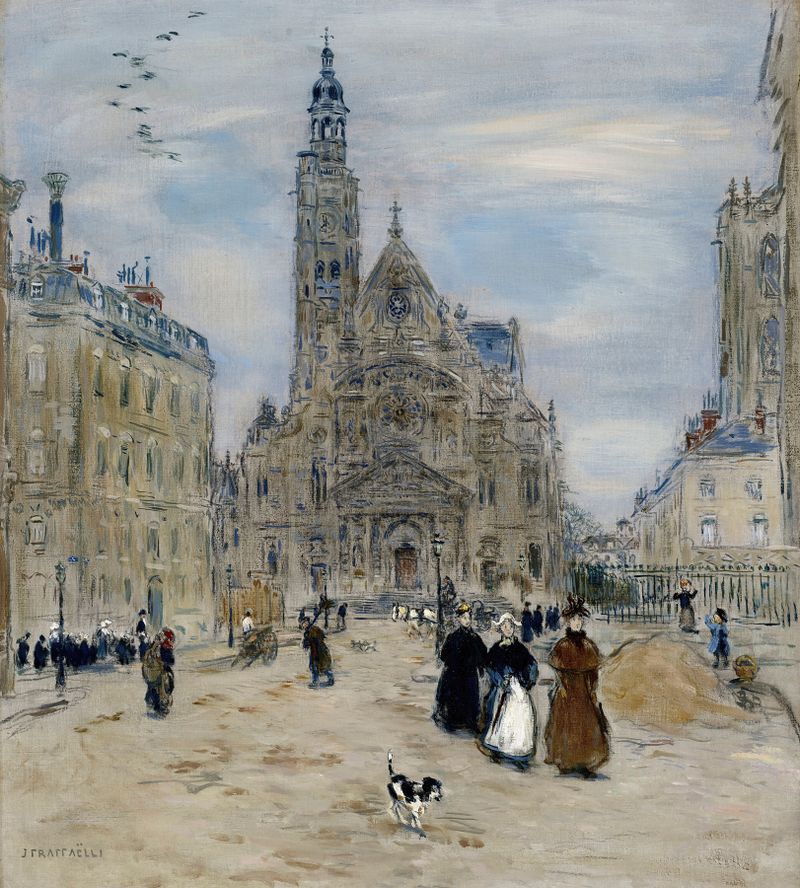
Saint-Étienne-du-Mont, Paris
Jean François Raffaëlli
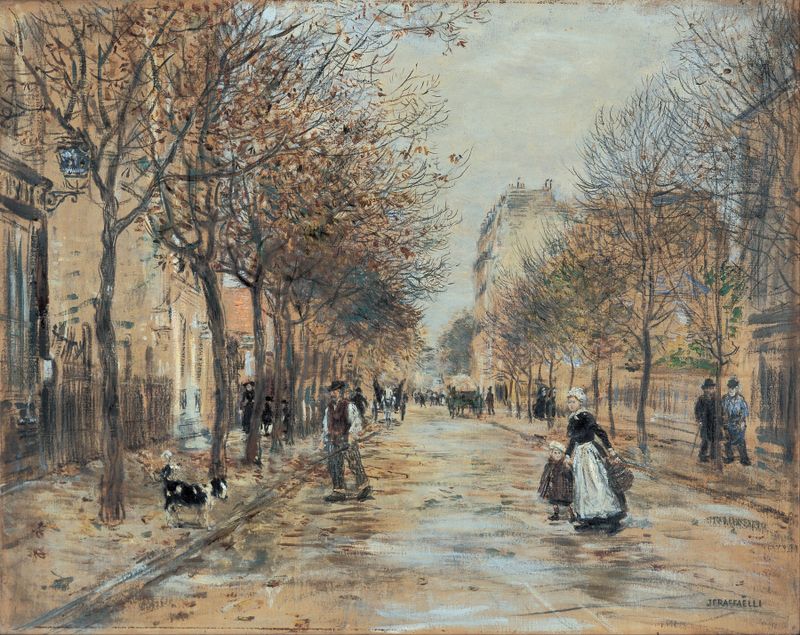
Street in Asnières
Jean François Raffaëlli
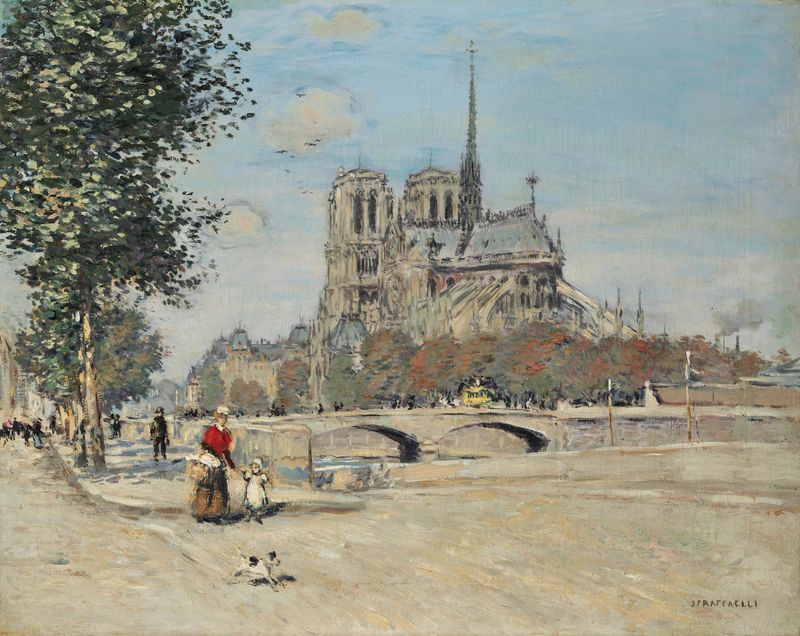
Notre-Dame de Paris et le pont de l’Archevêché
Jean François Raffaëlli

Place de Saint-Germain des Prés, Paris
Jean François Raffaëlli
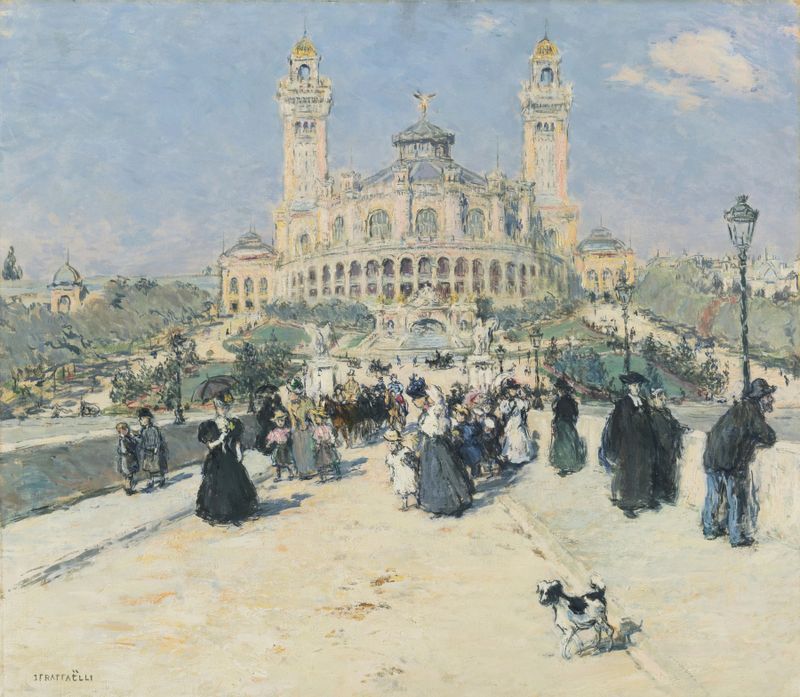
Le Trocadéro
Jean François Raffaëlli

Les Champs-Élysées
Jean François Raffaëlli

Le boulevard des Italiens
Jean François Raffaëlli

The Quai Malaquais, Paris
Jean François Raffaëlli





