
La Place de la Concorde et la rue Royale — History & Facts
Is this a mirror — or a memory? In La Place de la Concorde et la rue Royale, a vibrant urban tableau unfolds, capturing the pulse of Paris caught between the past and the present, where the weight of betrayal lingers beneath the surface. Look to the center, where the majestic obelisk juts upwards, its grandeur commanding the viewer's gaze. The interplay of light and shadow dances across the cobblestones, illuminating figures in bustling motion—some lost in conversation, others steeped in contemplation. The palette of warm ochres and deep blues evokes a sense of nostalgia, while the architectural lines lead the eye throughout the composition, drawing attention to the entwined paths of the streets that converge at this iconic square. Yet beneath this lively scene lies a tension that speaks to personal and collective histories.
The figures, while engaged in their daily lives, seem encumbered by unspoken secrets, their postures hinting at lost connections or unfulfilled desires. The placidity of the sky contrasts sharply with the hurried movement below, suggesting a world caught between aspiration and disillusionment, mirroring the artist's own experiences of betrayal within the social fabric of his time. Created in 1910, this work reflects Renoux's immersion in the vibrant artistic milieu of Paris, where modernism was beginning to redefine traditional norms. At this point in his career, the artist was exploring urban life’s complexities against a backdrop of rapid change and burgeoning tensions in society.
His acute observations of human nature and interaction reveal a profound engagement with the shifting dynamics of his time, illustrating how art serves as both a mirror and a memory to history.
More Artworks by Ernest Jules Renoux
Browse all →
L’Entrée du Pont Alexandre III
Ernest Jules Renoux

Le Dôme des Invalides vu depuis l’avenue de Ségur
Ernest Jules Renoux
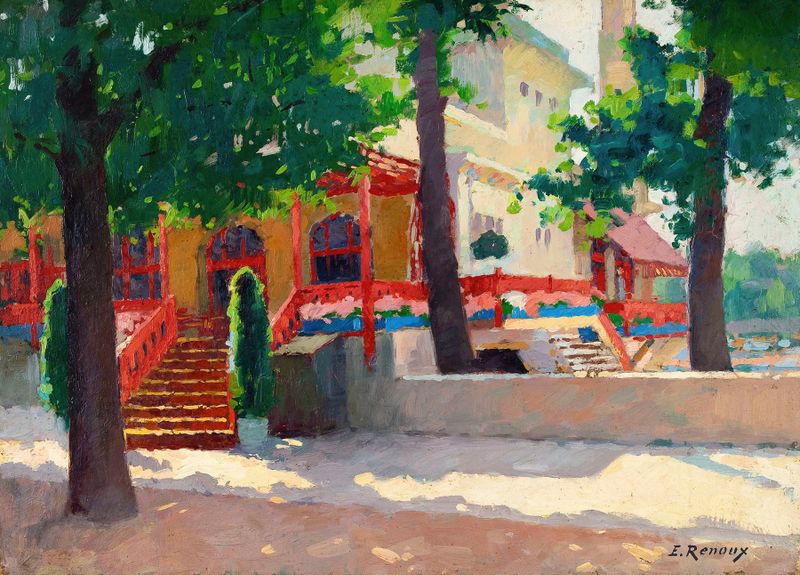
Un pavillon de l’Exposition des Arts décoratifs
Ernest Jules Renoux
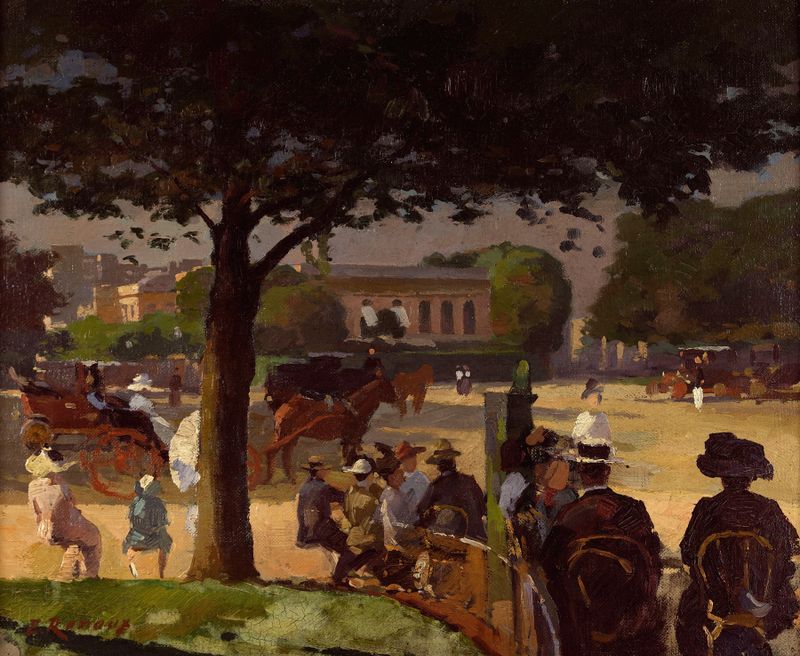
Le Palais Rose
Ernest Jules Renoux
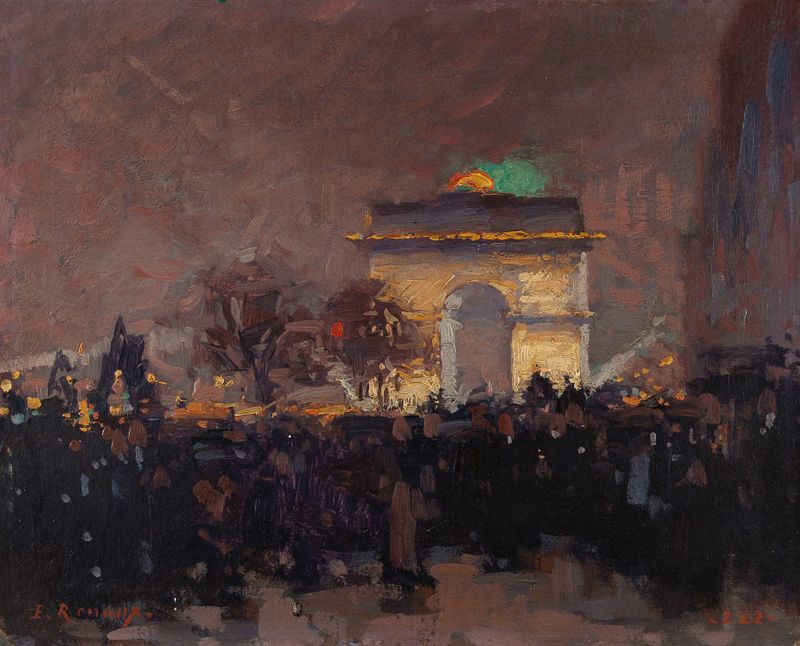
11 novembre 1920. Installation des cendres du soldat inconnu sous l’Arc de Triomphe de l’Etoile
Ernest Jules Renoux
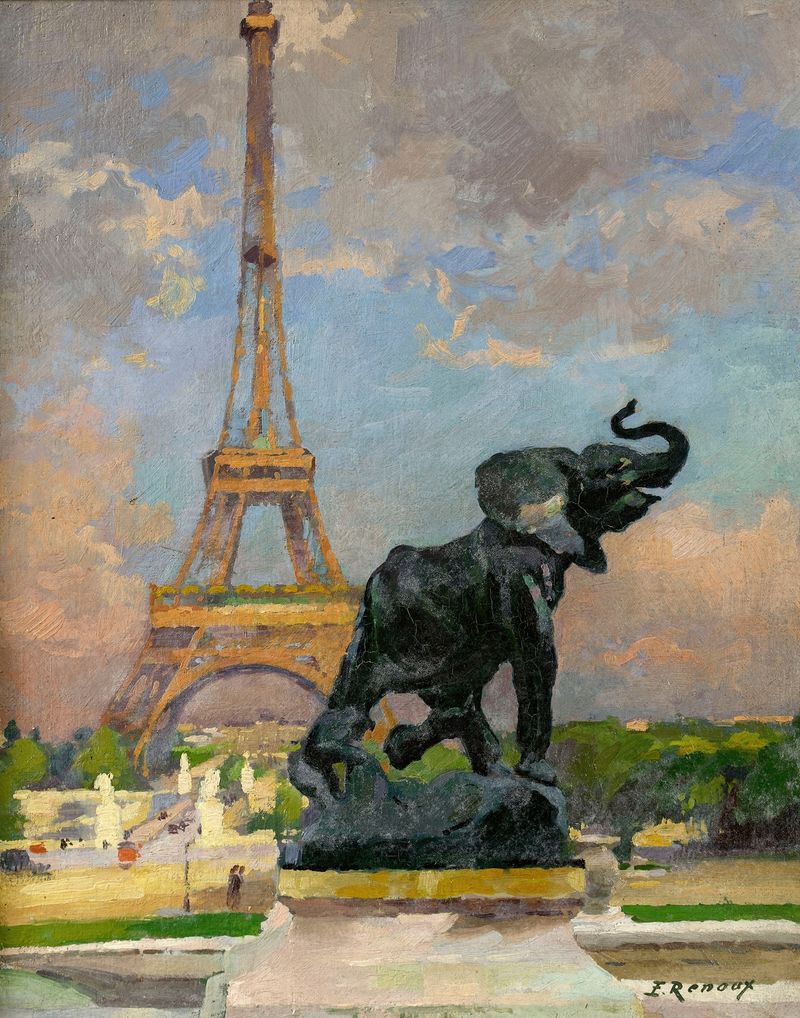
L’Eléphant pris au piège de Frémiet et la Tour Eiffel
Ernest Jules Renoux
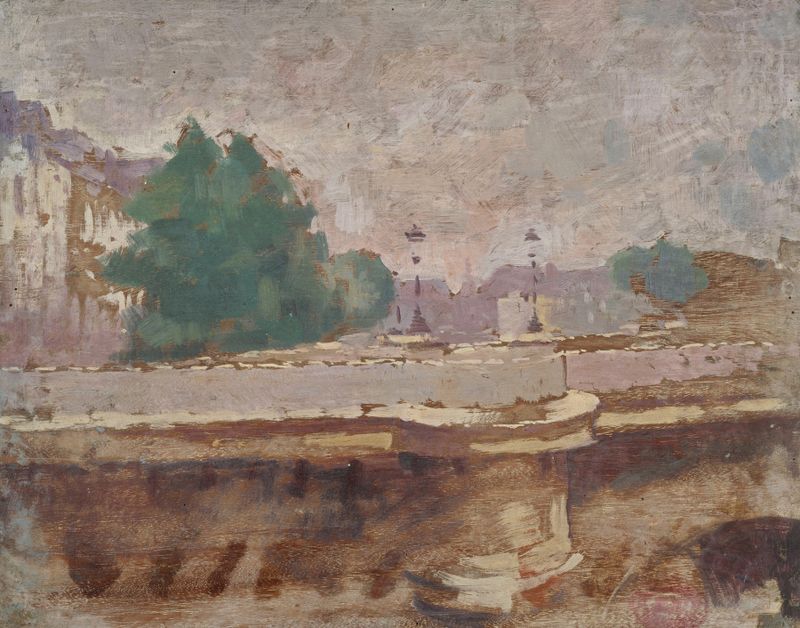
Paris, le pont Neuf
Ernest Jules Renoux
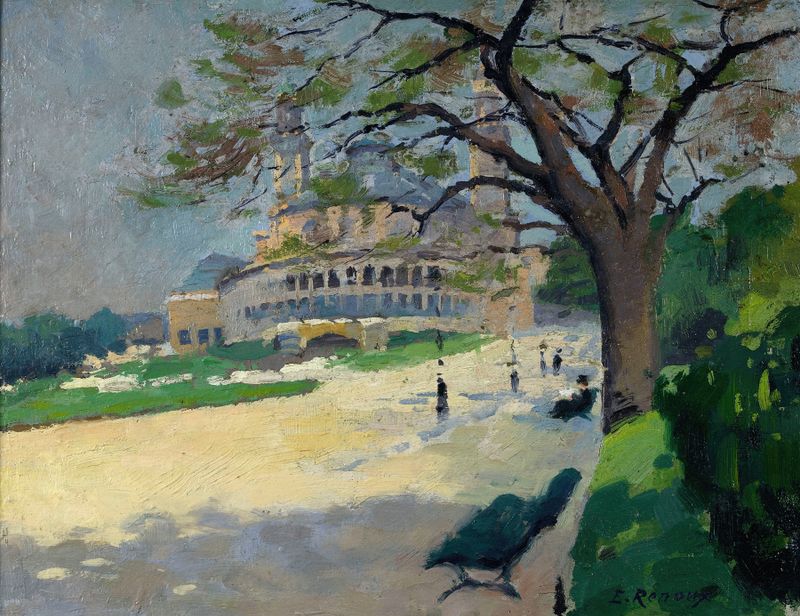
Le Palais du Trocadéro vu des jardins
Ernest Jules Renoux
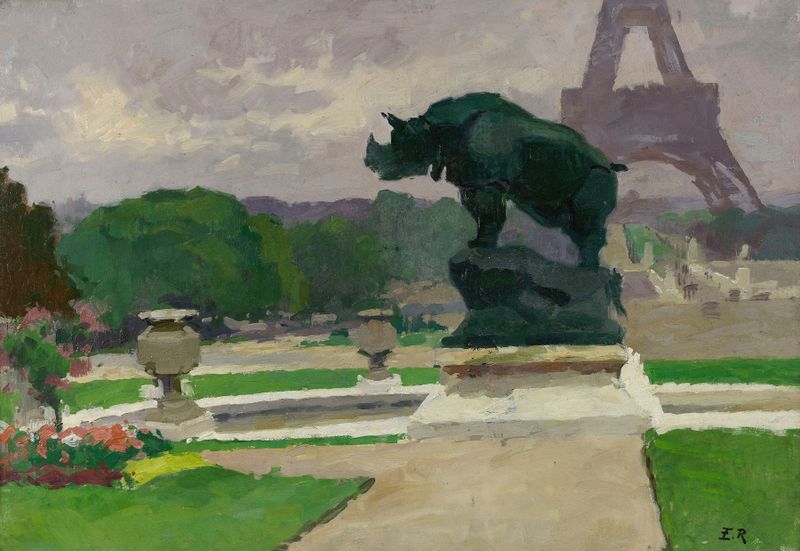
Jardin du Trocadéro avec le Rhinocéros de Jacquemart
Ernest Jules Renoux
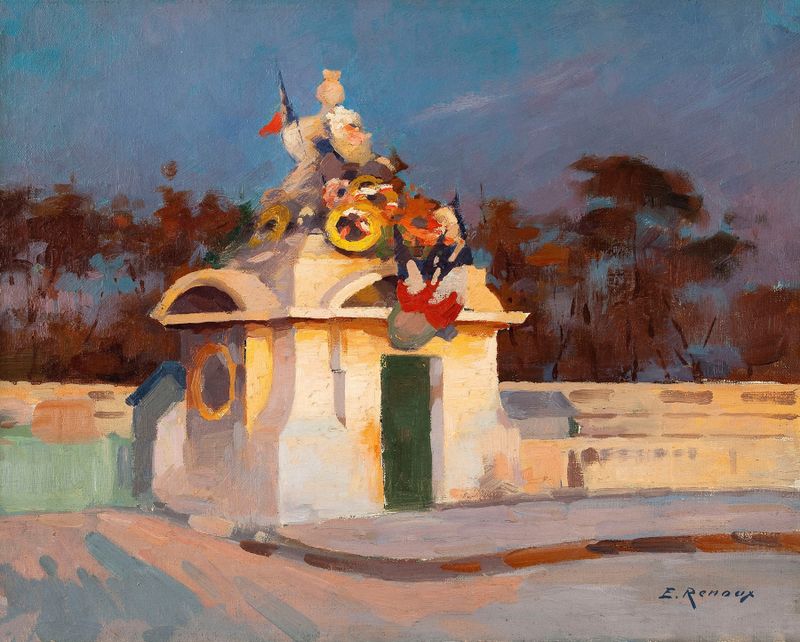
Place de la Concorde, statue de la ville de Strasbourg
Ernest Jules Renoux





