
La place des Vosges, élément d’un triptyque — History & Facts
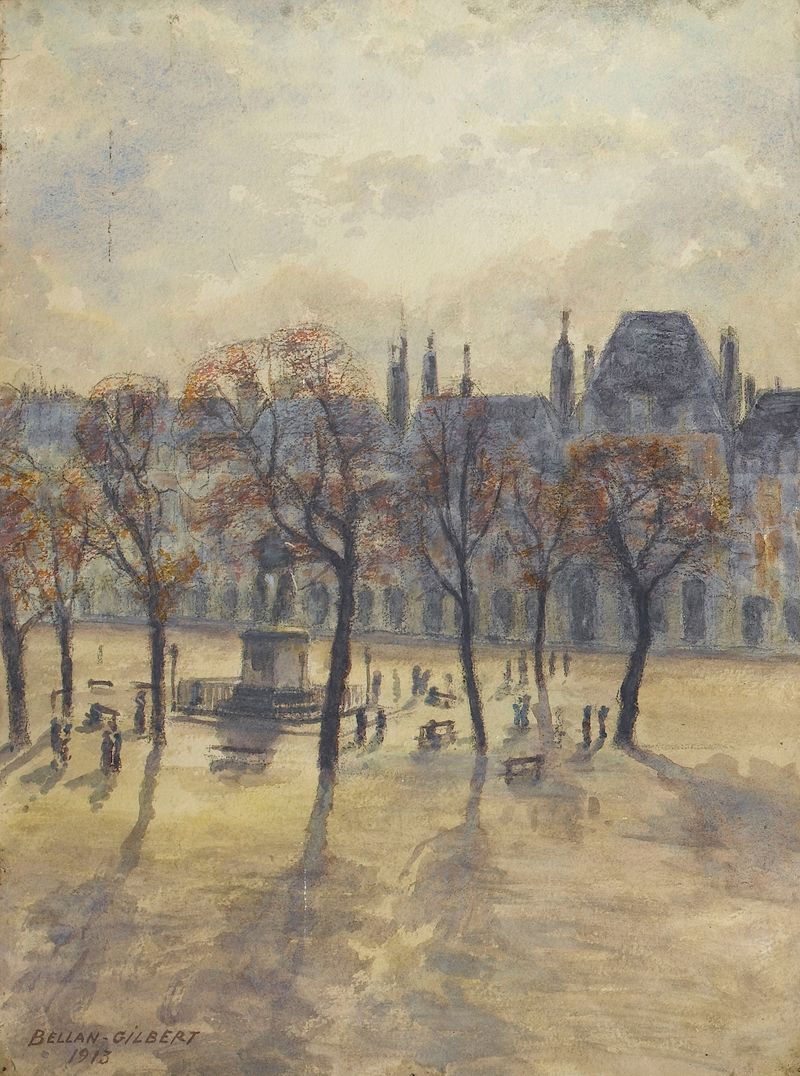
Could beauty survive in a century of chaos? As the world teetered on the brink of upheaval, artists like Louis-Gilbert Bellan sought to capture the serene whispers of legacy amidst the tumult. Look closely at the central composition of La place des Vosges, élément d’un triptyque. Your gaze is immediately drawn to the lush greenery, where the delicately painted trees arc gracefully over the cobblestone pathway. Notice how the soft light bathes the scene, creating an almost ethereal glow that enchants the viewer.
The muted palette—gentle greens, warm browns, and touches of pale blue—evokes a sense of nostalgia, inviting contemplation amid the chaos of early 20th-century France. Bellan imbues the tranquil surroundings with deeper meanings. The juxtaposition of nature’s beauty against the rigid architecture of the historic buildings evokes a dialogue between the past and present, hinting at the enduring legacy of artistry and urban life. The subtle play of shadows and light suggests the passage of time, while the absence of people emphasizes solitude and introspection in the face of an uncertain future.
Each brushstroke reflects a yearning to preserve beauty, defying the disarray that loomed on the horizon. In 1913, when this piece was created, Bellan was deeply engaged in capturing the essence of Parisian life, emphasizing its historical significance. The world was on the cusp of World War I, and artists were grappling with the shifting cultural landscape. In this moment of looming crisis, Bellan's work stands as a testament to the necessity of beauty and memory in the face of inevitable change.
More Artworks by Louis-Gilbert Bellan
Browse all →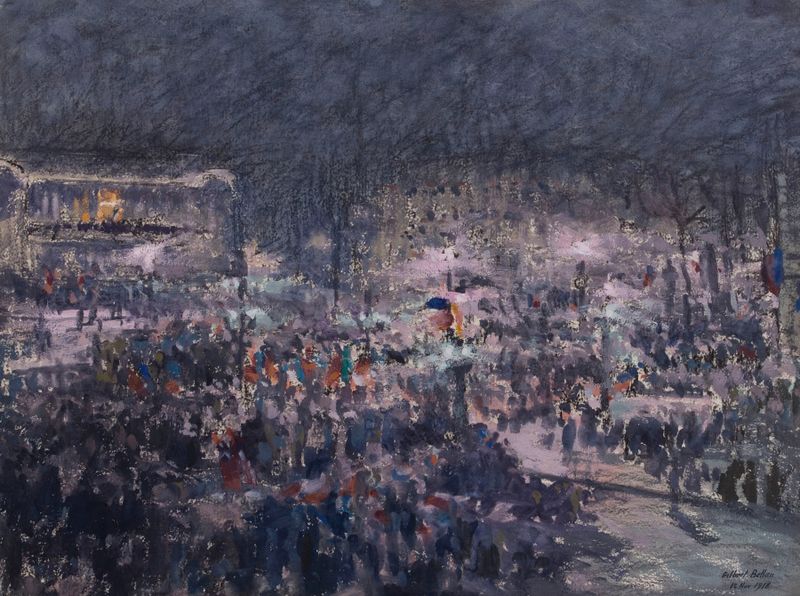
La Marseillaise chantée à la loggia de l’Opéra par Me Chenal le 12 novembre 1918
Louis-Gilbert Bellan
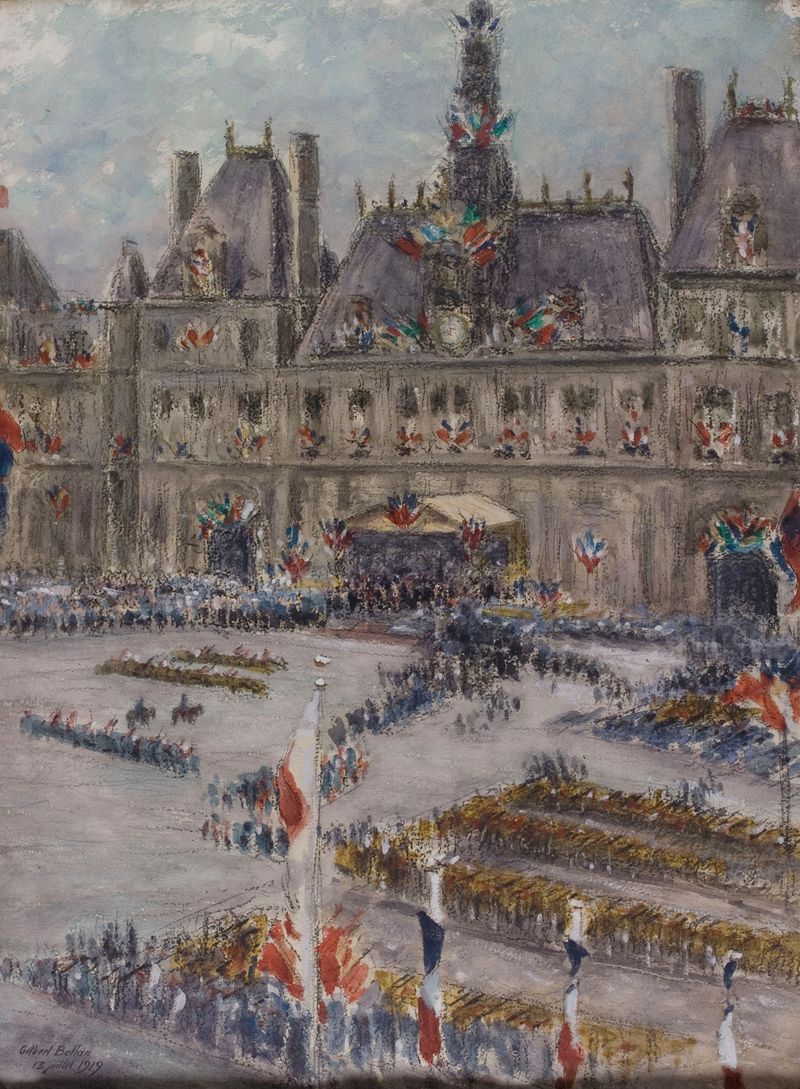
La place de l’Hôtel de Ville le 13 juillet 1919
Louis-Gilbert Bellan
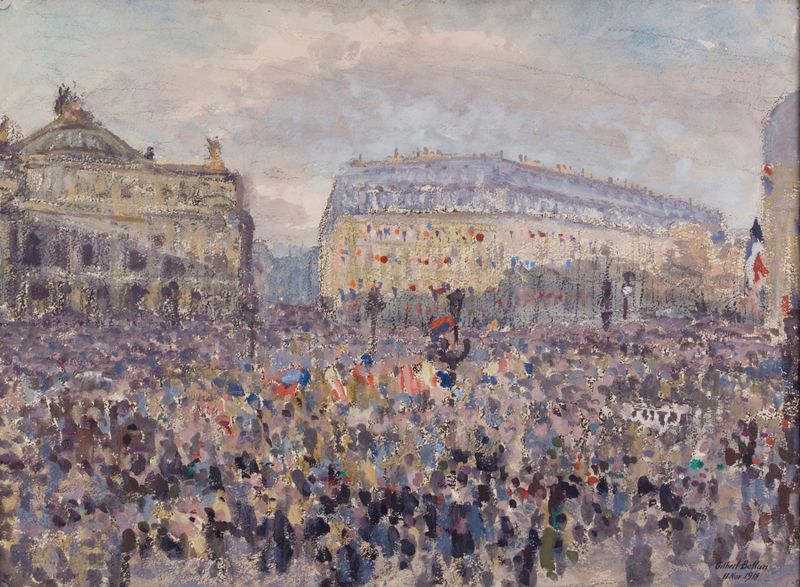
L’Opéra le 11 novembre 1918
Louis-Gilbert Bellan

La place de la Concorde le jour de l’Armistice, le 11 novembre 1918
Louis-Gilbert Bellan
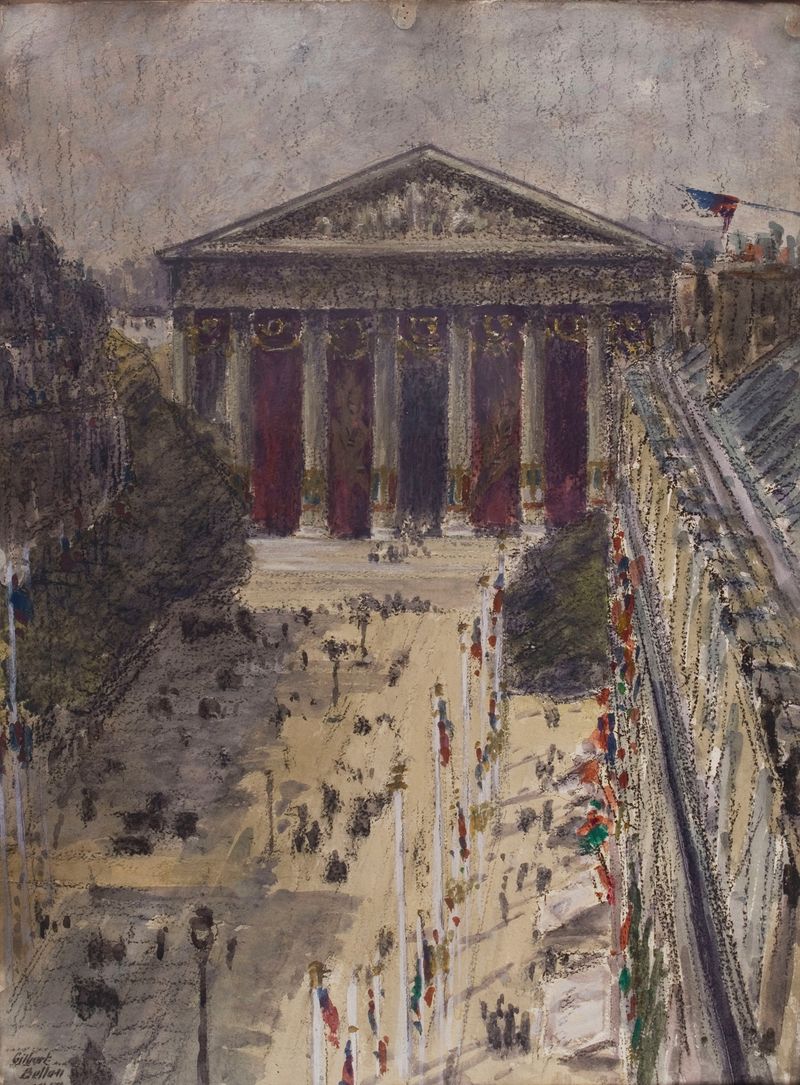
La rue Royale le jour de la Fête de la Victoire
Louis-Gilbert Bellan

La place des Vosges, élément d’un triptyque
Louis-Gilbert Bellan
La place des Vosges, élément d’un triptyque
Louis-Gilbert Bellan





