
La rue Royale le jour de la Fête de la Victoire — History & Facts
In the realm of illusion lies a celebration not just of victory, but of the vibrant life that pulses through the streets, echoing the hopes and dreams of a people reborn. Look to the bustling center of the composition, where figures in elegant attire animate the thoroughfare, embodying both joy and release. The vivid palette of reds and blues dances in the light, creating a sense of movement that captivates the eye. Notice how the architectural lines frame the scene, directing your gaze towards the festooned buildings, which seem to pulse with life as they mirror the fervor below. Within this jubilant celebration lies a juxtaposition of tranquility and exuberance; the calm faces of a few solemn spectators contrast sharply with the joyous revelers.
Such contrasts evoke an emotional tension, hinting at the aftermath of conflict and the fragility of happiness. The fluttering flags capture the fleeting nature of victory, as they billow in the wind — a flicker of hope that can easily be extinguished. Painted in 1919, La rue Royale le jour de la Fête de la Victoire emerged during a time of great change for Louis-Gilbert Bellan. The world was grappling with the aftermath of World War I, and the art community was looking to capture the zeitgeist of rebirth and national pride.
Working in Paris, Bellan sought to express the collective celebration of life and liberty, embracing a moment that resonated deeply within a society yearning for peace and renewal.
More Artworks by Louis-Gilbert Bellan
Browse all →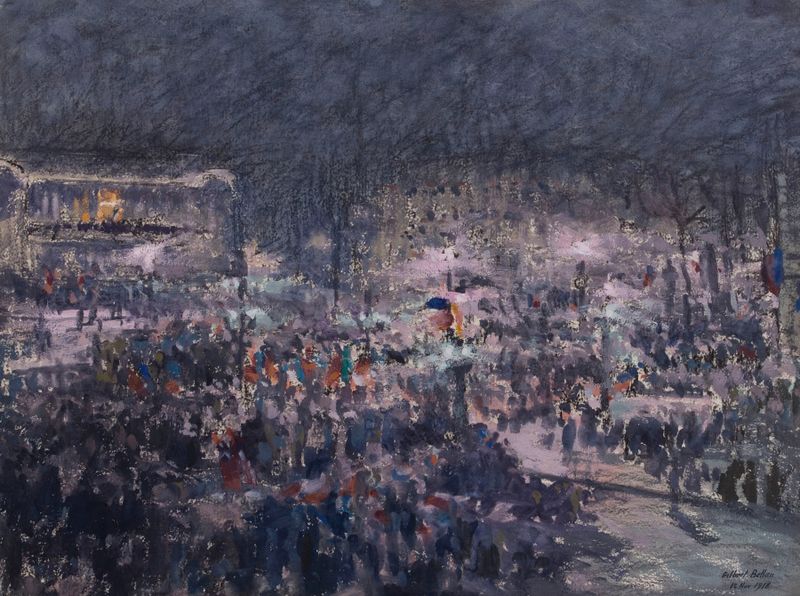
La Marseillaise chantée à la loggia de l’Opéra par Me Chenal le 12 novembre 1918
Louis-Gilbert Bellan
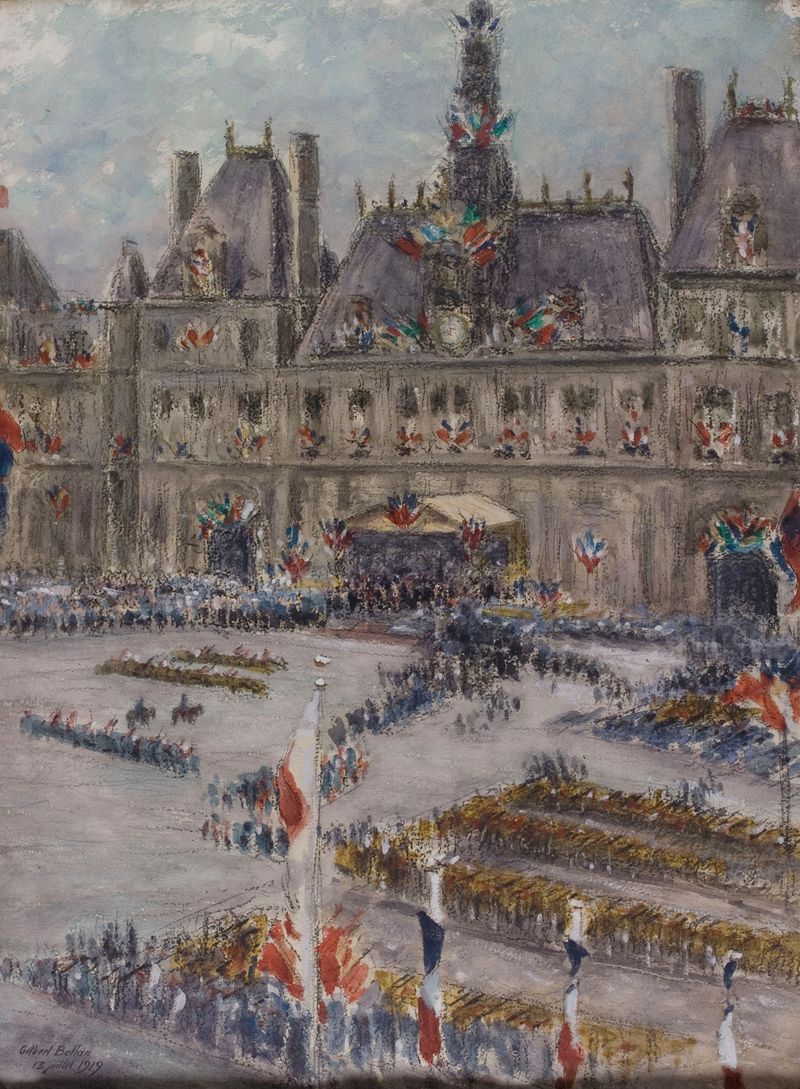
La place de l’Hôtel de Ville le 13 juillet 1919
Louis-Gilbert Bellan
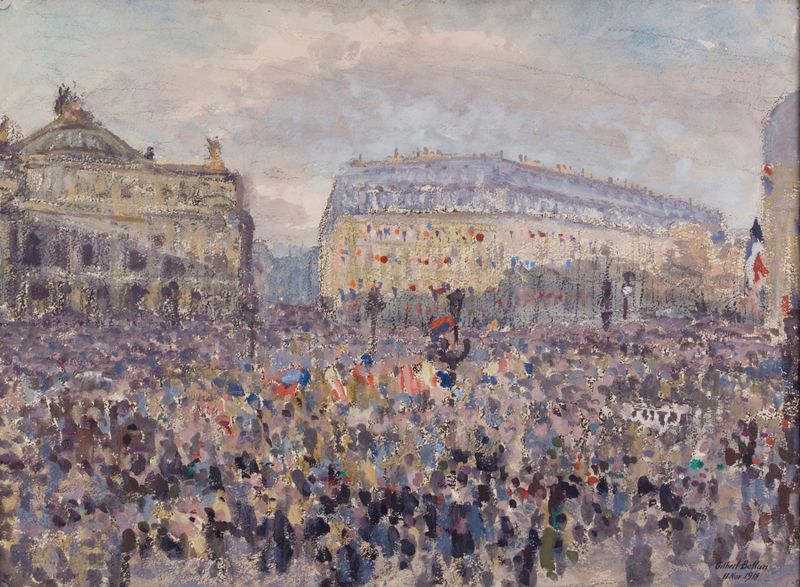
L’Opéra le 11 novembre 1918
Louis-Gilbert Bellan

La place de la Concorde le jour de l’Armistice, le 11 novembre 1918
Louis-Gilbert Bellan

La place des Vosges, élément d’un triptyque
Louis-Gilbert Bellan
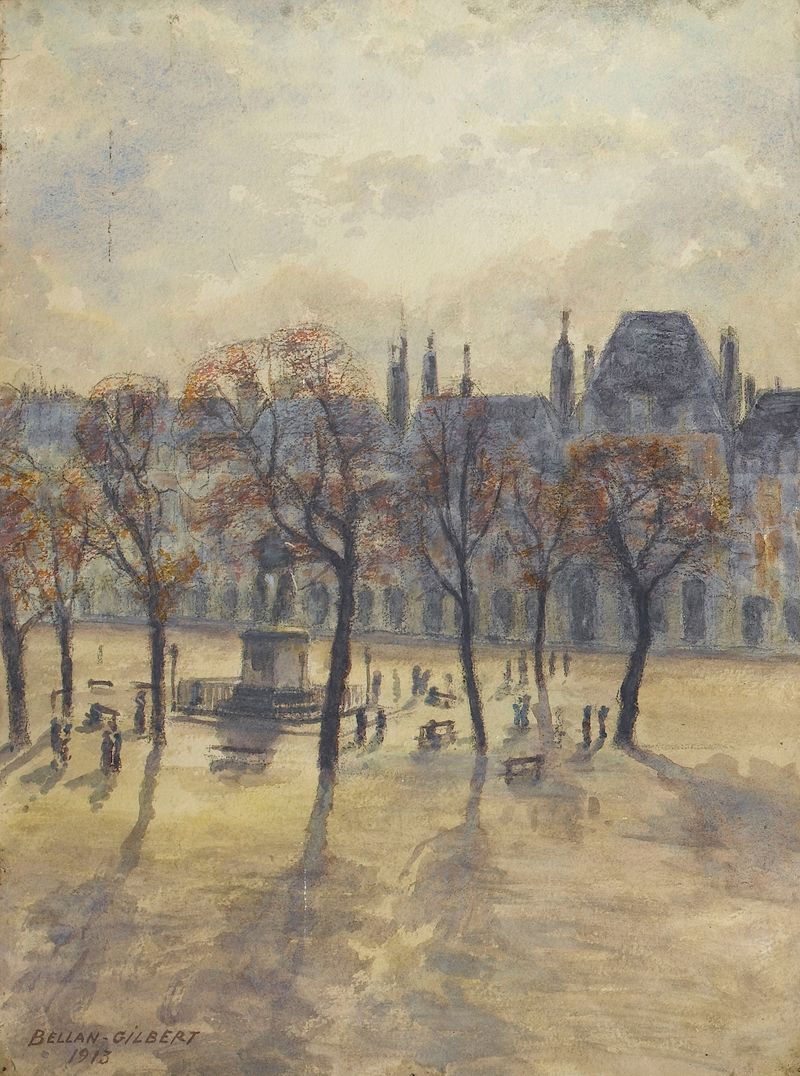
La place des Vosges, élément d’un triptyque
Louis-Gilbert Bellan
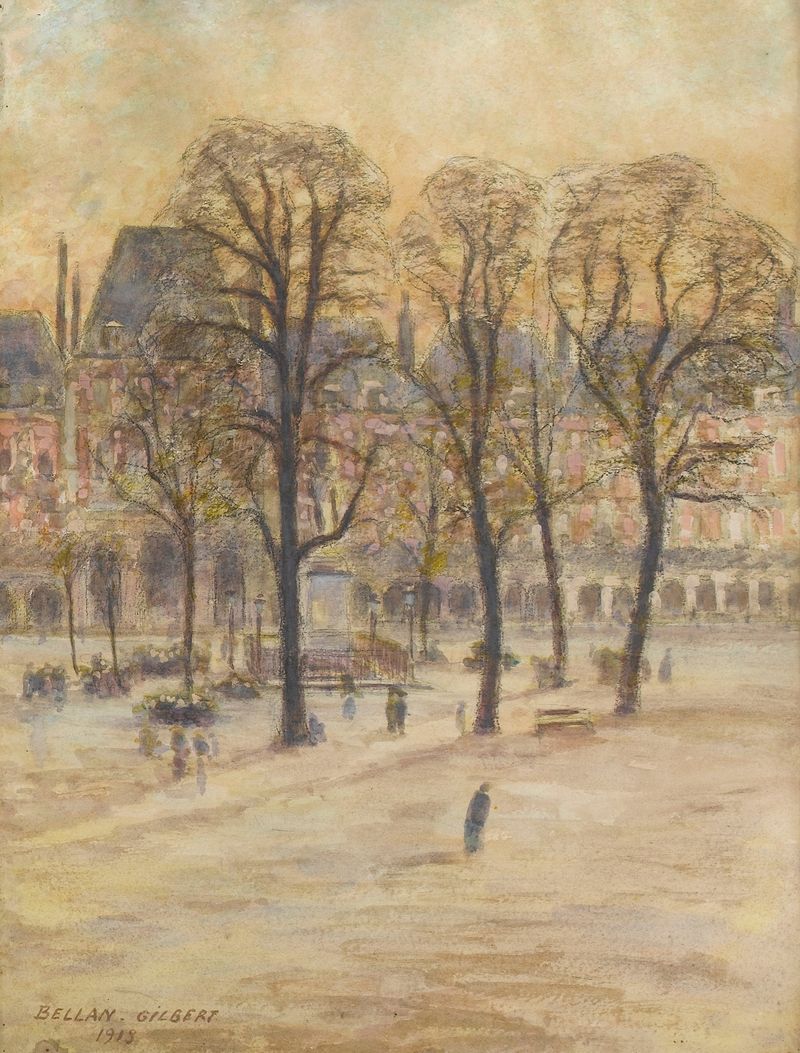
La place des Vosges, élément d’un triptyque
Louis-Gilbert Bellan





