
La place des Vosges, élément d’un triptyque — History & Facts
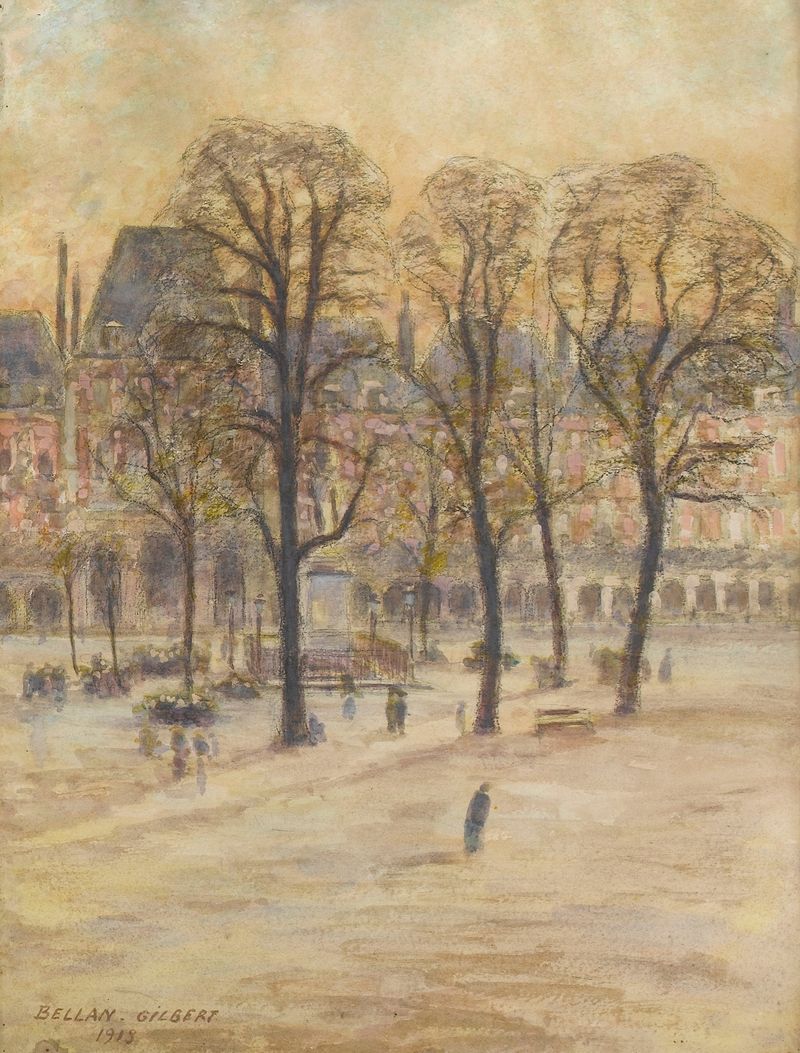
In a world swirling with complexities, art holds the power to distill emotion into a single frame. The melancholy that permeates the canvas invites reflection on the passage of time and the delicate balance of human experience. Look to the left where the trees extend their branches, unsure whether to cling to their summer foliage or surrender to the inevitable change of seasons. The warm hues of ochre and orange bleed into the cooler tones, creating a tension that resonates throughout the composition.
A sense of stillness envelops the central square, punctuated by the delicate interplay of light and shadow that dances across the cobblestones, revealing the artist’s meticulous brushwork and thoughtful layering. Within this scene, the contrasts between nature and architecture mirror the broader human experience — the impermanence of beauty against the backdrop of enduring structures. Each building stands as a sentinel of history, a reminder of what has come before, while the vibrant yet fading colors evoke an air of nostalgia. This delicate balance between the liveliness of the trees and the stoic presence of the buildings speaks to the transient nature of joy and sorrow, drawing the viewer into a shared space of contemplation. Created in 1913, this piece emerged during a time when Louis-Gilbert Bellan was exploring the intersections of impressionism and modernity in a rapidly changing France.
The early 20th century was marked by artistic experimentation and social upheaval, reflecting a world in transition. His connection to the rich history of Paris, especially as depicted in this triptych, encapsulates both a celebration of the past and an acknowledgment of the melancholic shadows that linger in the echoes of time.
More Artworks by Louis-Gilbert Bellan
Browse all →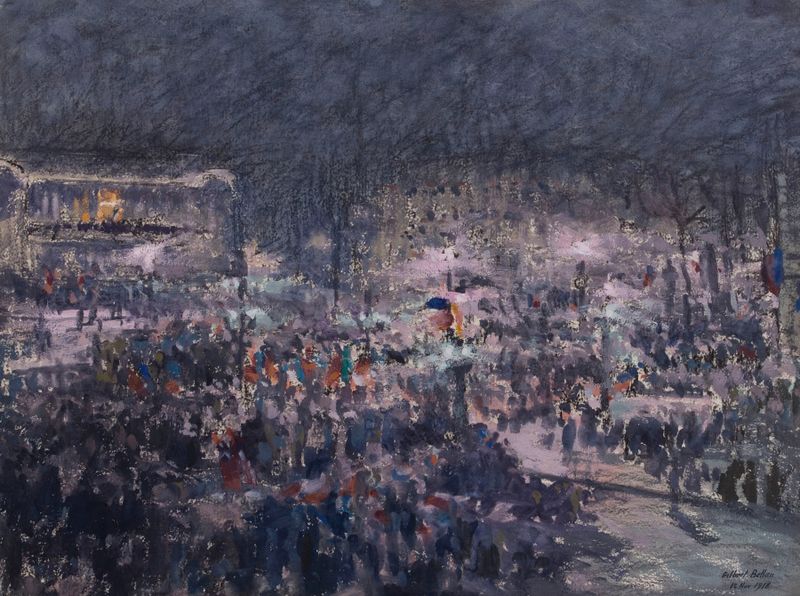
La Marseillaise chantée à la loggia de l’Opéra par Me Chenal le 12 novembre 1918
Louis-Gilbert Bellan
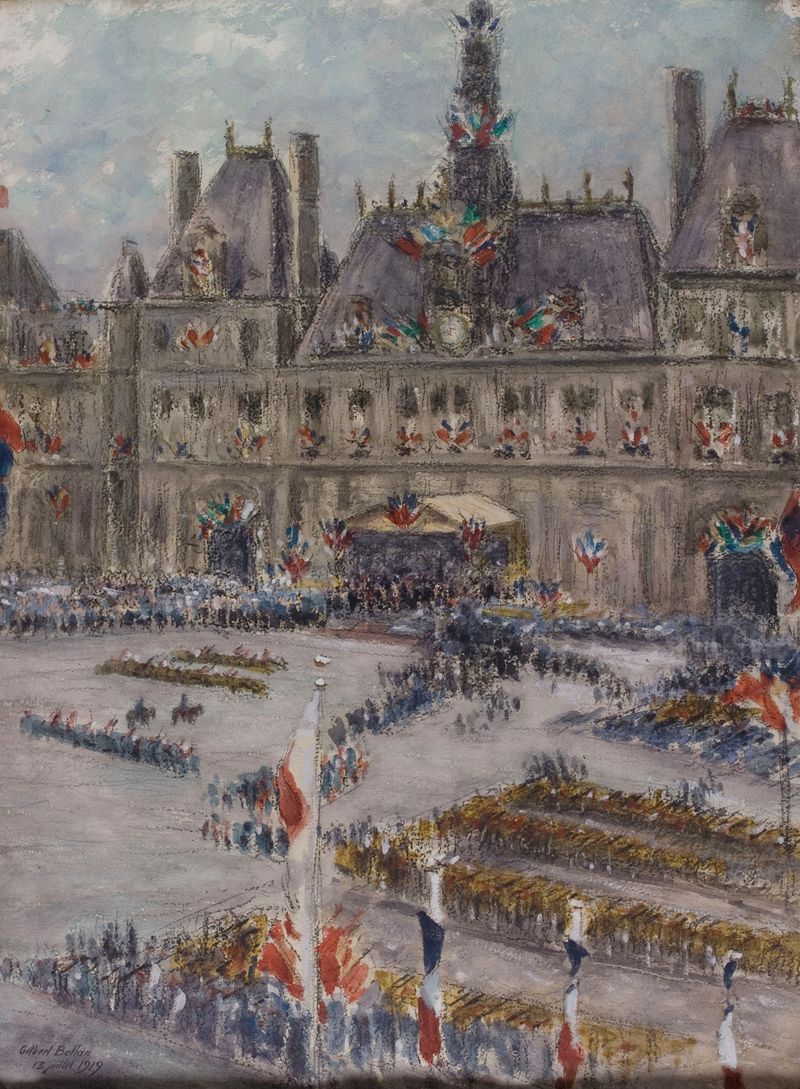
La place de l’Hôtel de Ville le 13 juillet 1919
Louis-Gilbert Bellan
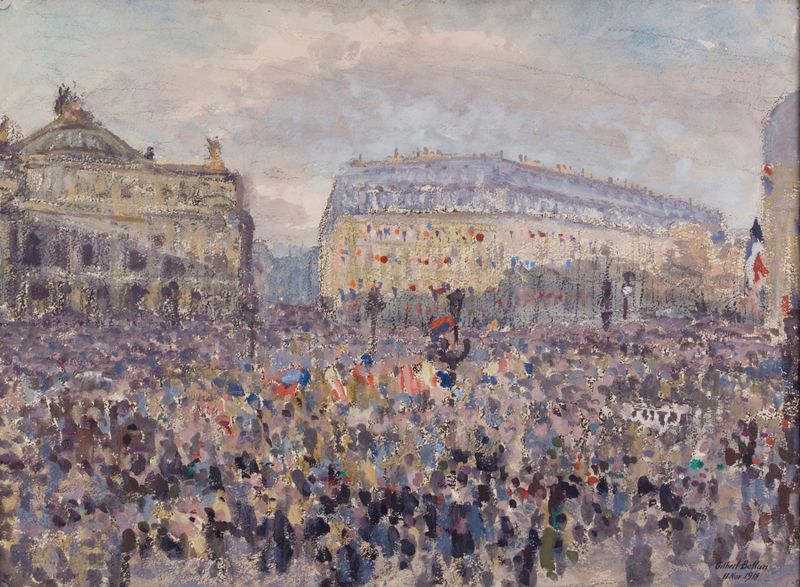
L’Opéra le 11 novembre 1918
Louis-Gilbert Bellan

La place de la Concorde le jour de l’Armistice, le 11 novembre 1918
Louis-Gilbert Bellan
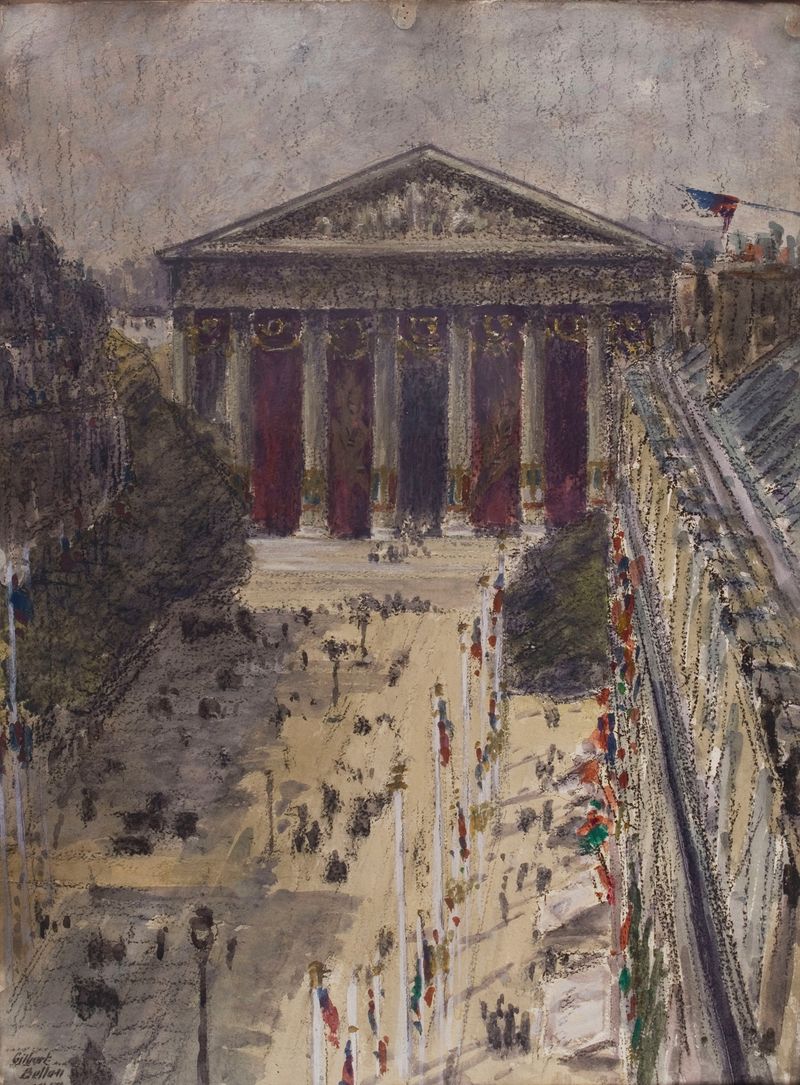
La rue Royale le jour de la Fête de la Victoire
Louis-Gilbert Bellan

La place des Vosges, élément d’un triptyque
Louis-Gilbert Bellan
La place des Vosges, élément d’un triptyque
Louis-Gilbert Bellan





