
La place de la Concorde le jour de l’Armistice, le 11 novembre 1918 — History & Facts
This poignant notion encapsulates a moment that transcends mere celebration; it beckons us to explore the divine in humanity's resilience. The great expanse of the Place de la Concorde, bathed in the golden hues of a fading light, reveals the souls of a nation poised between the shadows of war and the promise of peace. Look closely at the figures scattered throughout the scene — the jubilant crowds reveling in newfound freedom. Notice how the light dances off their faces, illuminating expressions of hope and relief.
The contrasts are striking: the starkness of the architecture, almost rigid in its authority, counters the fluidity of the human form, depicting motion and emotion. The sweeping strokes and vibrant colors pull us into a raucous jubilation echoing through the canvas, inviting us to feel the simultaneous weight of history and the lightness of liberation. Yet, amidst the celebration lies a deeper tension. In the foreground, a few weary souls remain shadowed, embodying the collective memory of sacrifice.
Their muted colors emphasize the remnants of sorrow even in joy, suggesting that true divinity is found not just in triumph but in the acknowledgment of loss. This duality breathes life into the painting, revealing how the echoes of conflict linger even in moments of triumph. Each brushstroke seems to remind us that the past shapes the present, urging us to embrace the complexity of human experience. Created in 1918, this work emerged from a tumultuous period for the artist as well as the world.
Just as the armistice was declared, signaling the end of a catastrophic war, Bellan found himself at the crossroads of history and personal evolution. Capturing the pulse of a nation, he painted this scene in the wake of societal upheaval, reflecting both the fervor of the moment and the profound yearning for peace that would resonate for years to come.
More Artworks by Louis-Gilbert Bellan
Browse all →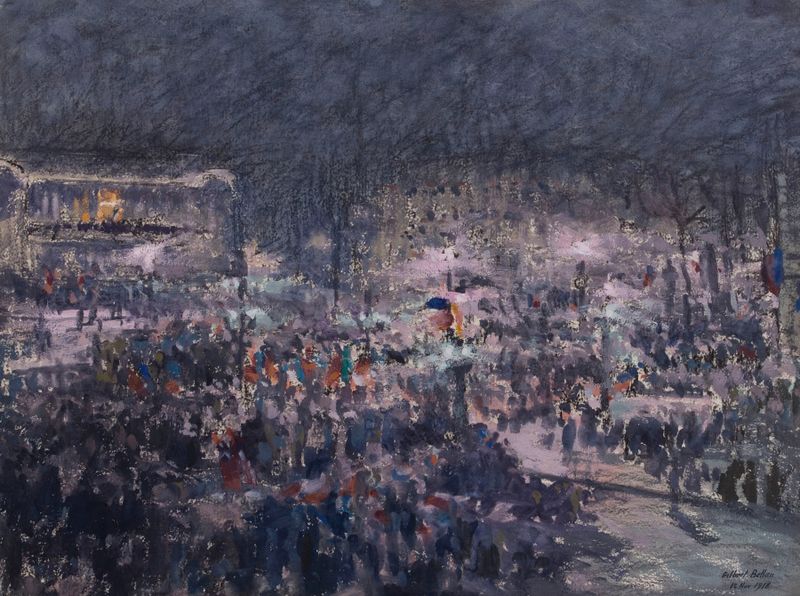
La Marseillaise chantée à la loggia de l’Opéra par Me Chenal le 12 novembre 1918
Louis-Gilbert Bellan
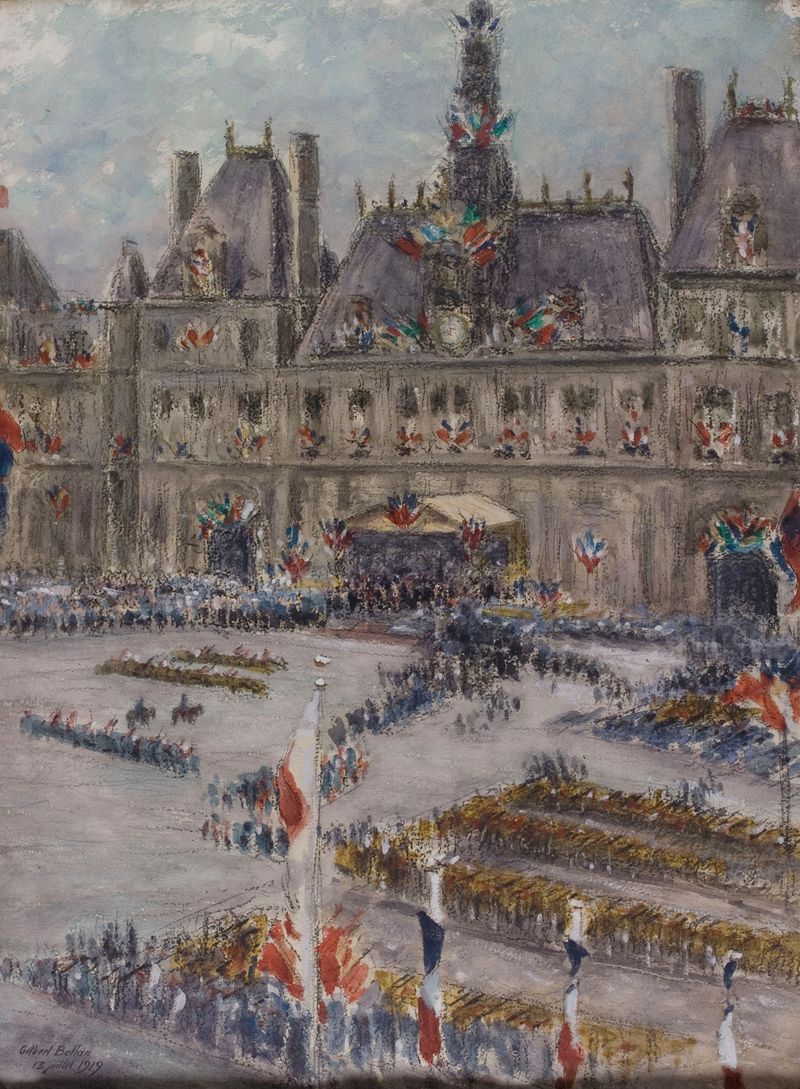
La place de l’Hôtel de Ville le 13 juillet 1919
Louis-Gilbert Bellan
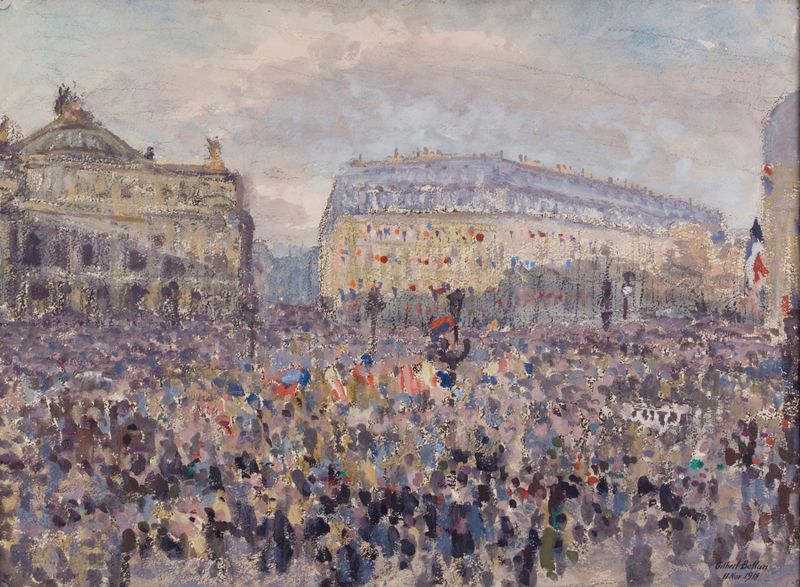
L’Opéra le 11 novembre 1918
Louis-Gilbert Bellan
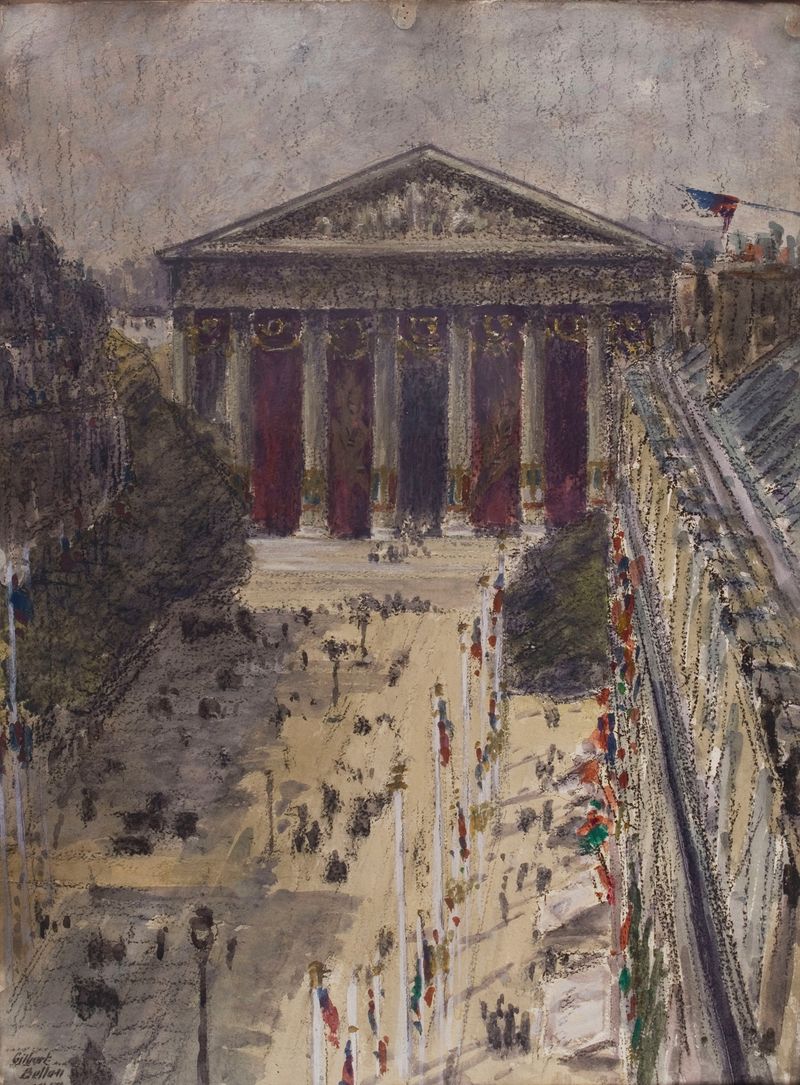
La rue Royale le jour de la Fête de la Victoire
Louis-Gilbert Bellan

La place des Vosges, élément d’un triptyque
Louis-Gilbert Bellan
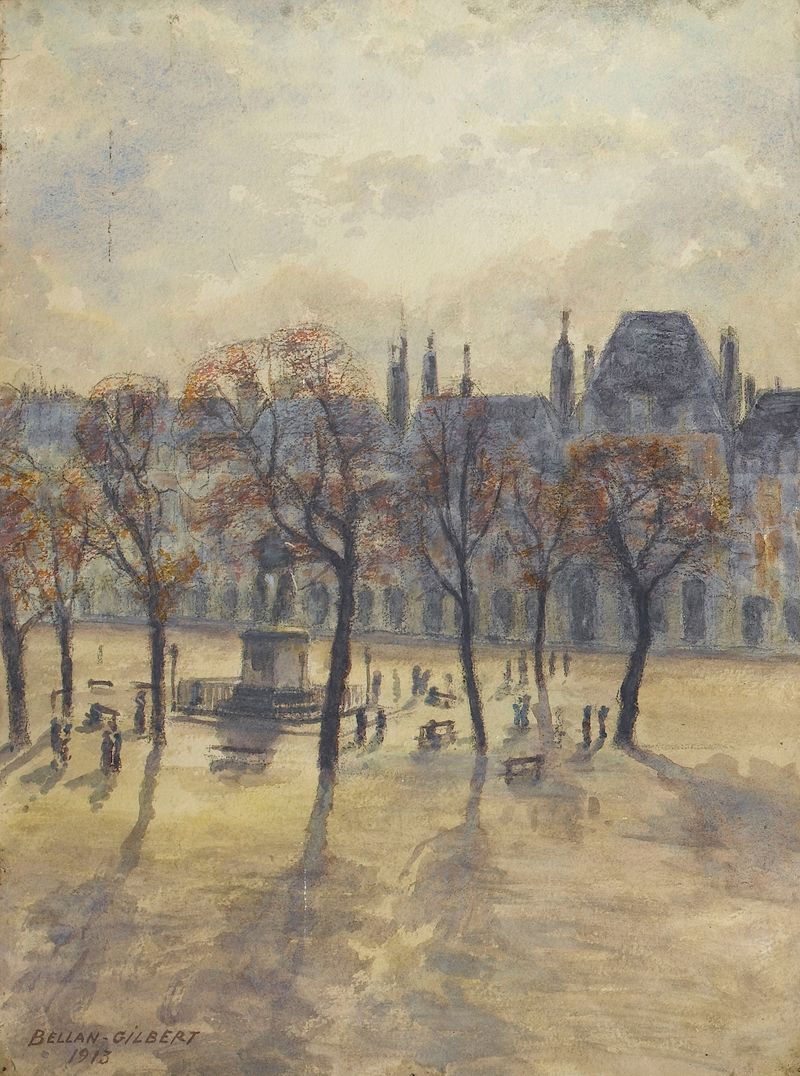
La place des Vosges, élément d’un triptyque
Louis-Gilbert Bellan
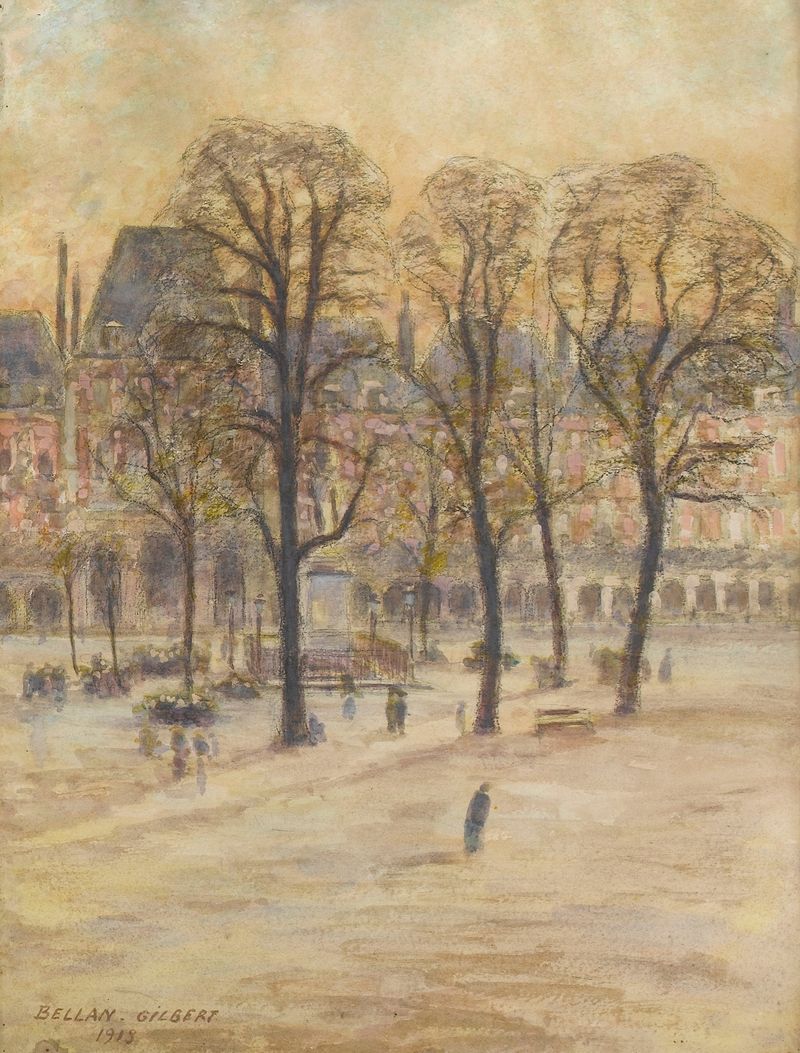
La place des Vosges, élément d’un triptyque
Louis-Gilbert Bellan
More Historical Art
Browse all →
The Night Watch Militia Company of District II under the Command of Captain Frans Banninck Cocq
Rembrandt van Rijn

Lincoln Memorial
Henry Bacon

The Third of May 1808
Francisco de Goya

Isaac and Rebecca, Known as ‘The Jewish Bride’
Rembrandt van Rijn

The Charge of the Mamelukes (1814)
Francisco de Goya

De vier ruiters van de apocalyps
Albrecht Dürer