
La Plaine de la Plante à Biau — History & Facts
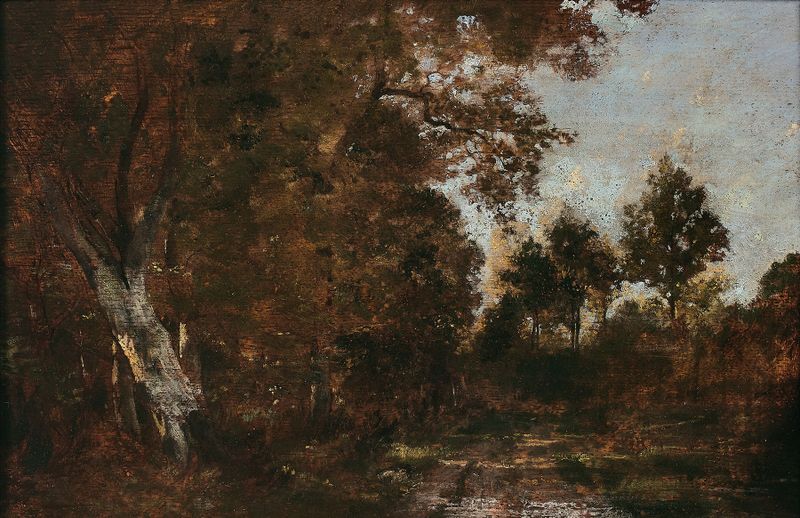
In a world teeming with vibrancy, the quietude of shadow often reveals the most profound insights. Look to the left at the dense thicket of trees, their dark forms stretching upward against a canvas of soft greens and browns. The interplay of light and shadow draws you in, leading your gaze across the textured landscape towards the horizon—a blend of earth and sky. Notice how the brushstrokes convey a sense of movement, as if the foliage is gently swaying in an unseen breeze, while patches of sunlight dance upon the ground, illuminating the underbrush with a fleeting glow. The emotional tension here lies in the contrast between the chaotic energy of nature and the serene solitude it offers.
The shadows cast by the towering trees seem to cradle the ground beneath, suggesting both protection and a hint of foreboding. This duality reflects the inner conflict of existence: a celebration of life amid the silent encroachment of darkness. The palette, dominated by earthy tones, invites contemplation and invites you to explore the nuances of light and shade. In the period between 1854 and 1862, the artist was deeply engaged with the Barbizon school, focusing on capturing the essence of the French countryside.
Living near the Forest of Fontainebleau, he sought to break traditional conventions of landscape painting, embracing a naturalistic approach that emphasized emotional depth. During this time, Rousseau was influenced by the tenets of Romanticism, aiming to depict nature not just as a subject, but as a reflection of the human spirit.
More Artworks by Théodore Rousseau
Browse all →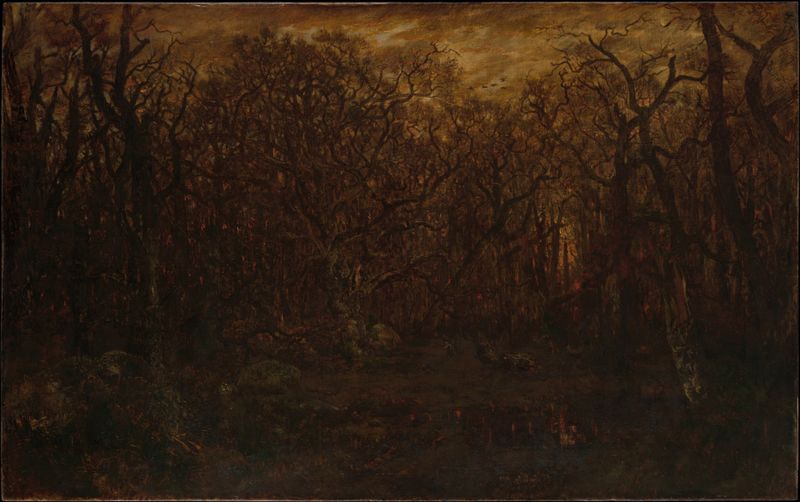
The Forest in Winter at Sunset
Théodore Rousseau
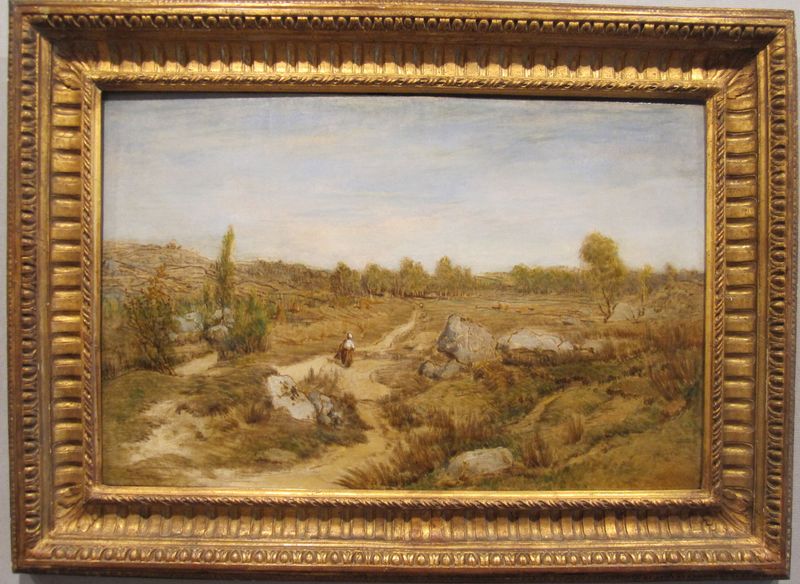
Valley of the Rouars in the Gorges d’Apremont
Théodore Rousseau
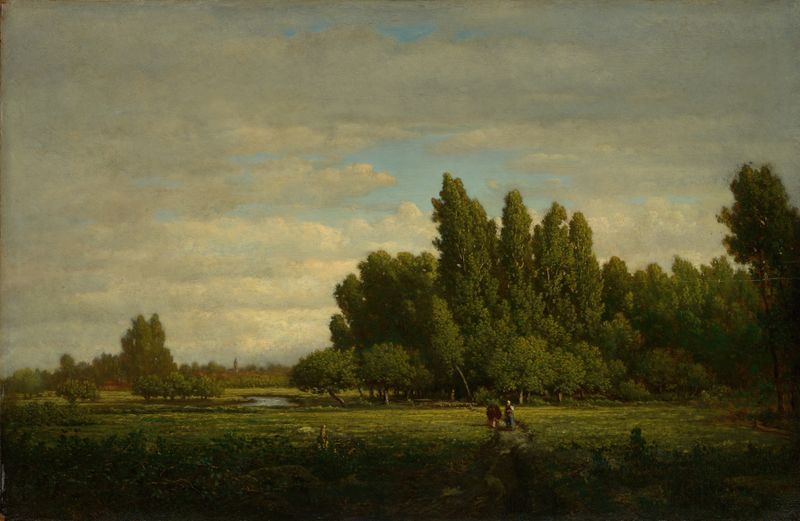
A Meadow Bordered by Trees
Théodore Rousseau
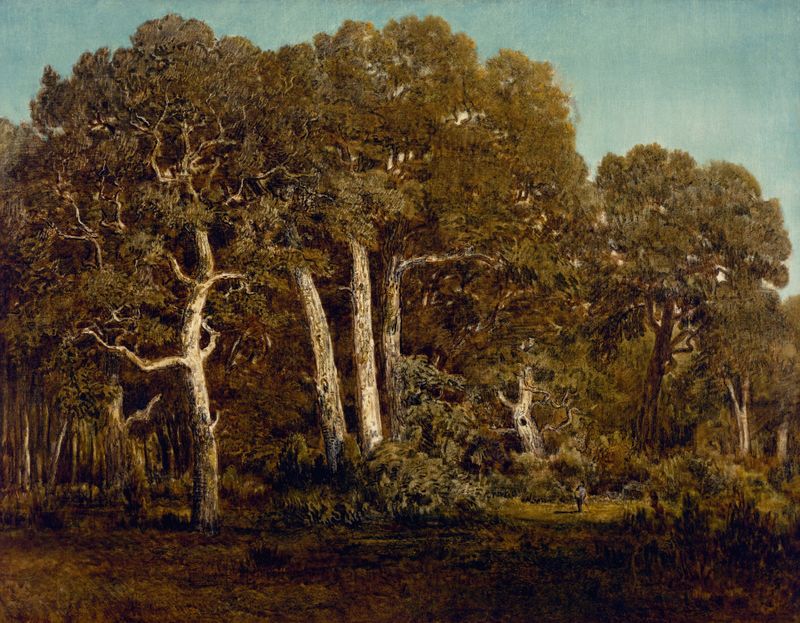
The Great Oaks of Old Bas-Bréau
Théodore Rousseau
Paysage de sous-bois
Théodore Rousseau
Paysage
Théodore Rousseau
The Oak Tree
Théodore Rousseau
Sunset from the Forest of Fontainebleau
Théodore Rousseau
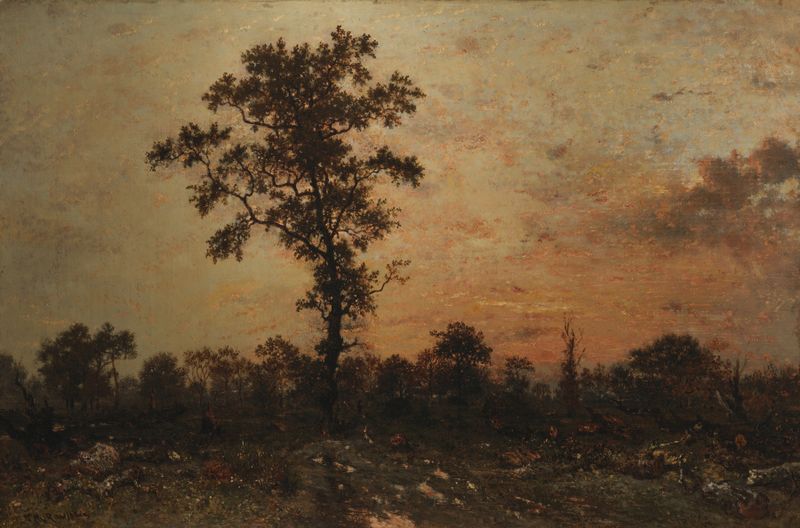
Edge of the Forest, Sun Setting
Théodore Rousseau
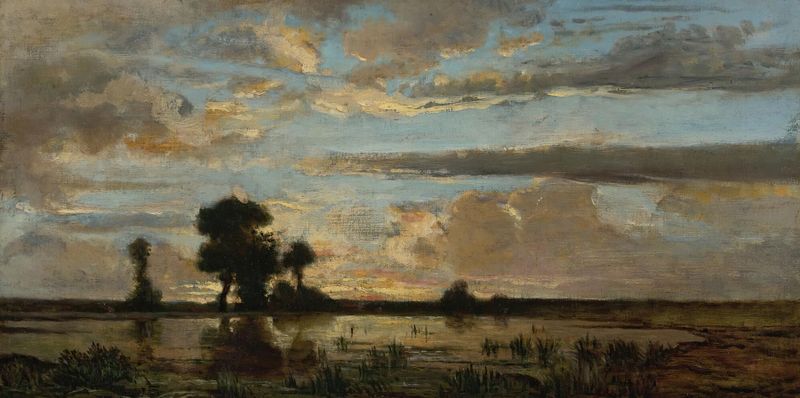
Soleil Couchant
Théodore Rousseau





