
La Porte St Denis — History & Facts
In the stillness of a bustling Parisian street, hearts can be both mended and broken. The vibrant hues bely a whispering tension that lurks just beneath the surface of daily life, where every passerby holds a story of longing or betrayal. Look to the left at the intricate details of the facade of the Porte St Denis, the archway drawing the viewer’s gaze into a world of bustling activity. Notice how the artist captures the play of light on the cobblestones, illuminating the faces of the pedestrians who seem to drift in a rhythmic dance.
The subtle palette—earthy browns, cool greys, and bursts of color in the clothing—evokes a bittersweet nostalgia, enticing us to explore the emotional landscape of this vibrant urban scene. Yet beyond its beauty lies a poignant contrast: the joyful energy of the crowd juxtaposed with the shadowy alleyways that hint at untold stories. The gentle curves of the archway symbolize both entry and exit, a threshold where hopes may flourish or dreams may shatter. The gesturing figures, caught mid-step, convey a fleeting connection that hints at deeper, unspoken betrayals—friendships tested, loves lost, or the quiet resignation of choices made. Painted in an era when Impressionism was flourishing, the artist captured La Porte St Denis during his tenure in late 19th-century Paris.
It was a time of artistic liberation yet social upheaval, as the city transformed and modernity encroached upon tradition. Within this frame, we find a reflection of both personal and collective emotions, where the vibrancy of life is laden with the weight of unacknowledged truths—and perhaps, the quiet ache of betrayal.
More Artworks by Eugène Galien-Laloue
Browse all →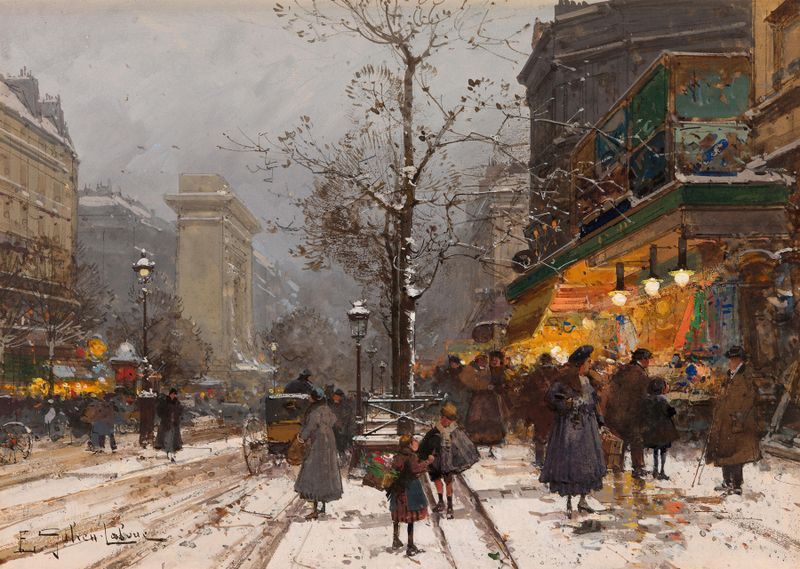
Boulevard Bonne – Nouvelle sous la neige
Eugène Galien-Laloue
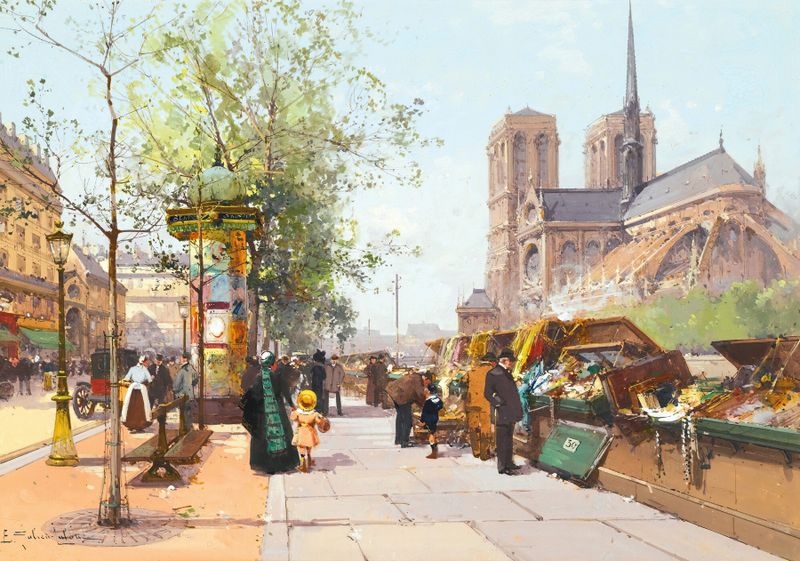
Notre Dame De Paris
Eugène Galien-Laloue
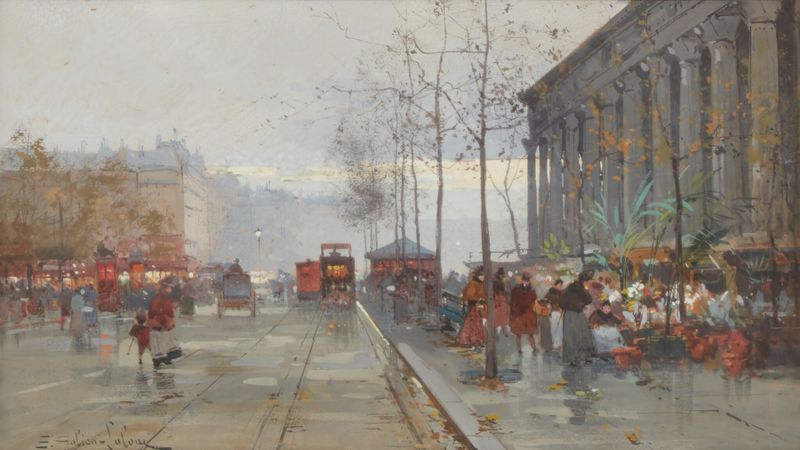
Le Marché aux fleurs de la Madeleine
Eugène Galien-Laloue
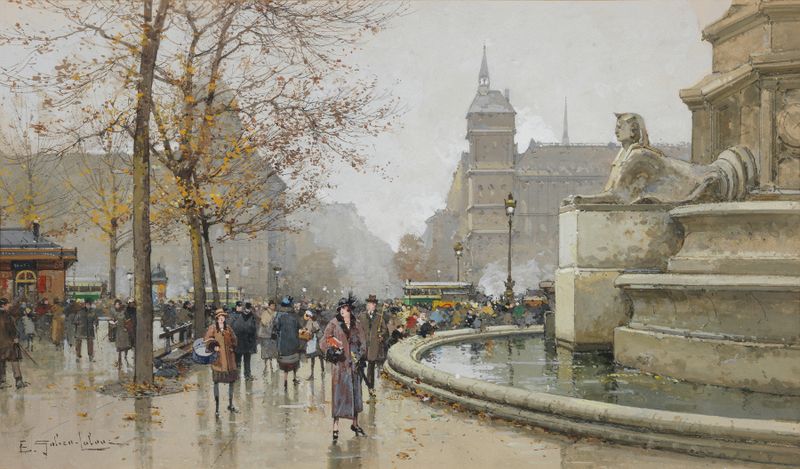
La fontaine du Palmier, place du Châtelet
Eugène Galien-Laloue
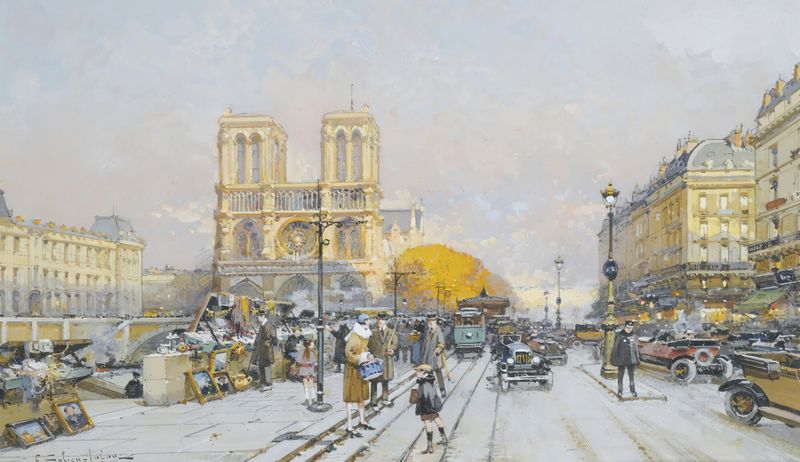
Notre Dame
Eugène Galien-Laloue
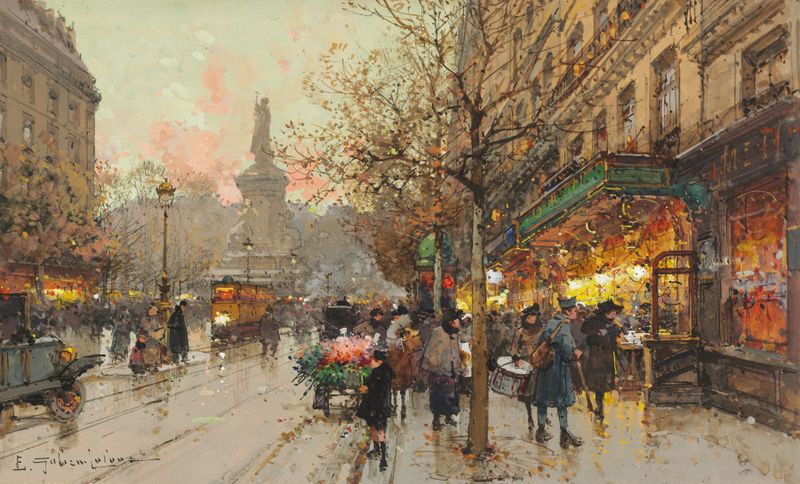
Place De La République
Eugène Galien-Laloue
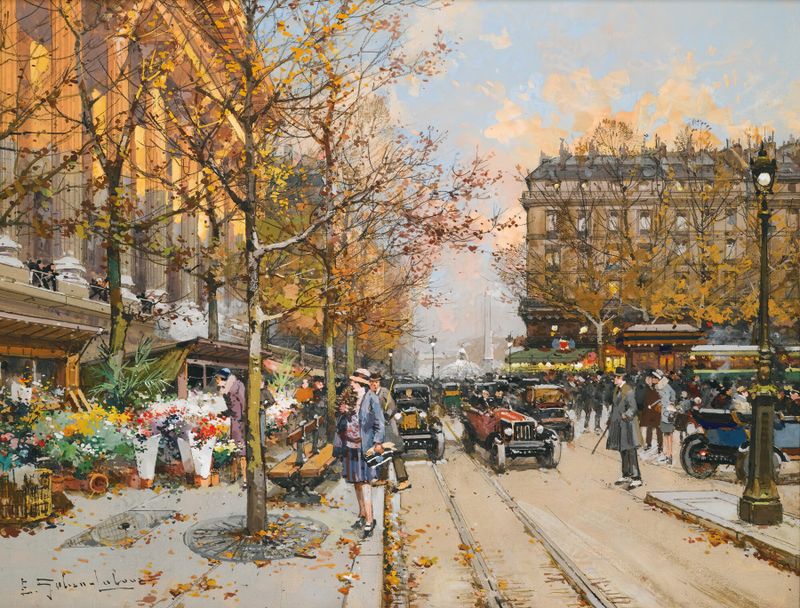
Place De La Madeleine
Eugène Galien-Laloue
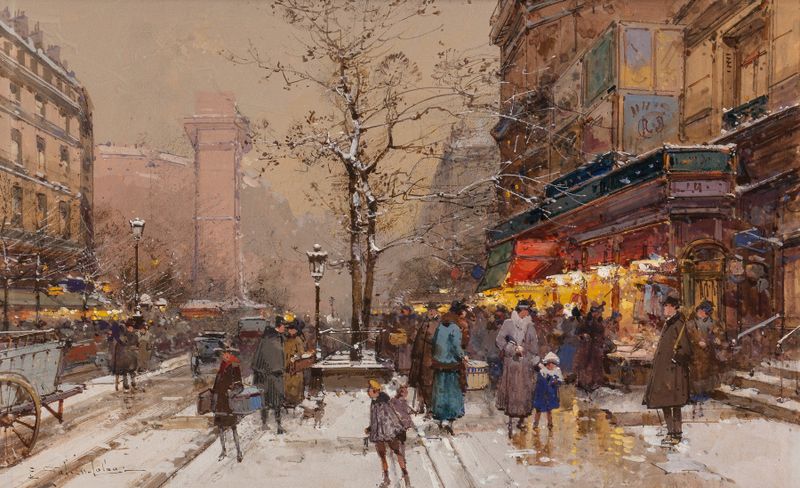
Porte Saint-Denis
Eugène Galien-Laloue
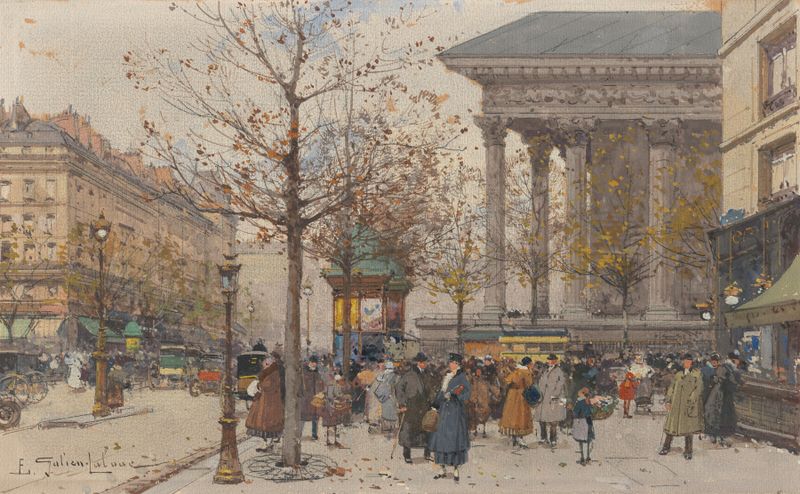
Vue animée de la Madeleine
Eugène Galien-Laloue
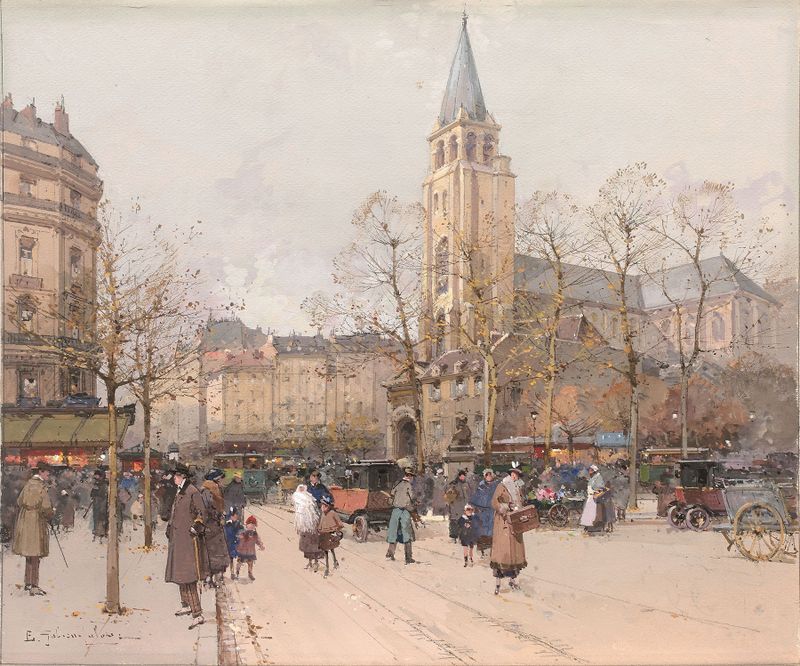
Vue des boulevards à Saint-Germain-des-Prés
Eugène Galien-Laloue
More Architecture Art
Browse all →
The statue of Liberty
Frédéric Auguste Bartholdi

View of Houses in Delft, Known as ‘The Little Street’
Johannes Vermeer

View of Houses in Delft, Known as ‘The Little Street’
Johannes Vermeer

The Cathedral in Rouen. The portal, Grey Weather
Claude Monet

The yellow house
Vincent van Gogh

The Church in Auvers-sur-Oise, View from the Chevet
Vincent van Gogh