
La rue du Paon blanc. — History & Facts
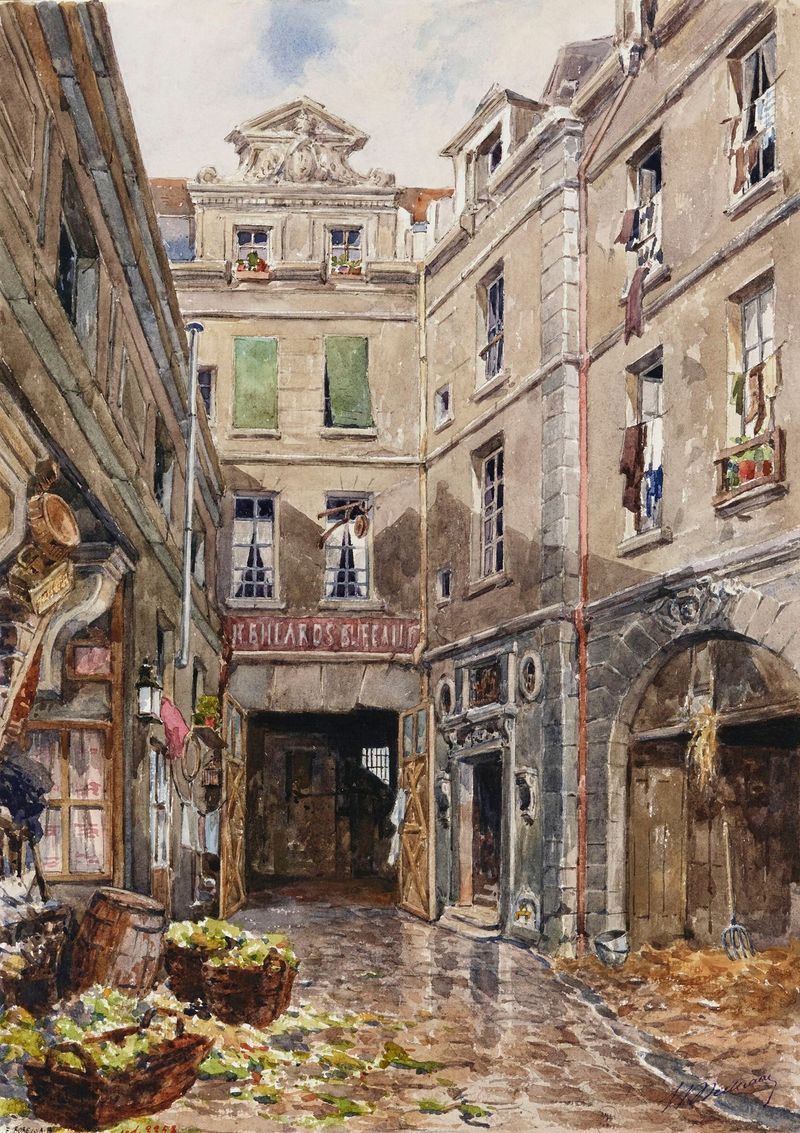
Could beauty survive in a century of chaos? La rue du Paon blanc invites us to ponder this profound question through its vibrant portrayal of life amidst uncertainty. The elegance of the street, marked by the delicate interplay of color and light, acts as a sanctuary where the mundane transcends into the extraordinary. Look to the left at the lively street corner, where a charming café spills out onto the cobblestone, its tables adorned with sunlit patrons. The artist employs a palette of soft pastels and lively hues, creating a warm embrace that draws the viewer into the scene.
Notice how the shadows dance across the cobblestones, suggesting a gentle breeze, while the harmonious composition invites one to explore every detail, from the fluttering awnings to the vibrant flower boxes that breathe life into the urban landscape. Within this tranquil setting lies a juxtaposition of serenity and the bustling life of the street. The juxtaposition of the figures engaged in conversation against the backdrop of a fleeting moment speaks to human connection against a chaotic world. The carefully rendered architecture provides stability, suggesting that even in turbulent times, community and beauty can flourish.
The ethereal quality of the light seems to suggest a transcendence, elevating the ordinary to a realm of the sublime. Henri Berthaut painted this scene in 1913, during a period marked by significant social and artistic change. Living in Paris, he was influenced by the vibrant artistic movements of the time, including Impressionism and Post-Impressionism. As Europe stood on the brink of World War I, the painting serves as both an escape and a reflection on the beauty that persists amidst the impending storm.
More Artworks by Henri Berthaut
Browse all →
La rue de Nevers.
Henri Berthaut
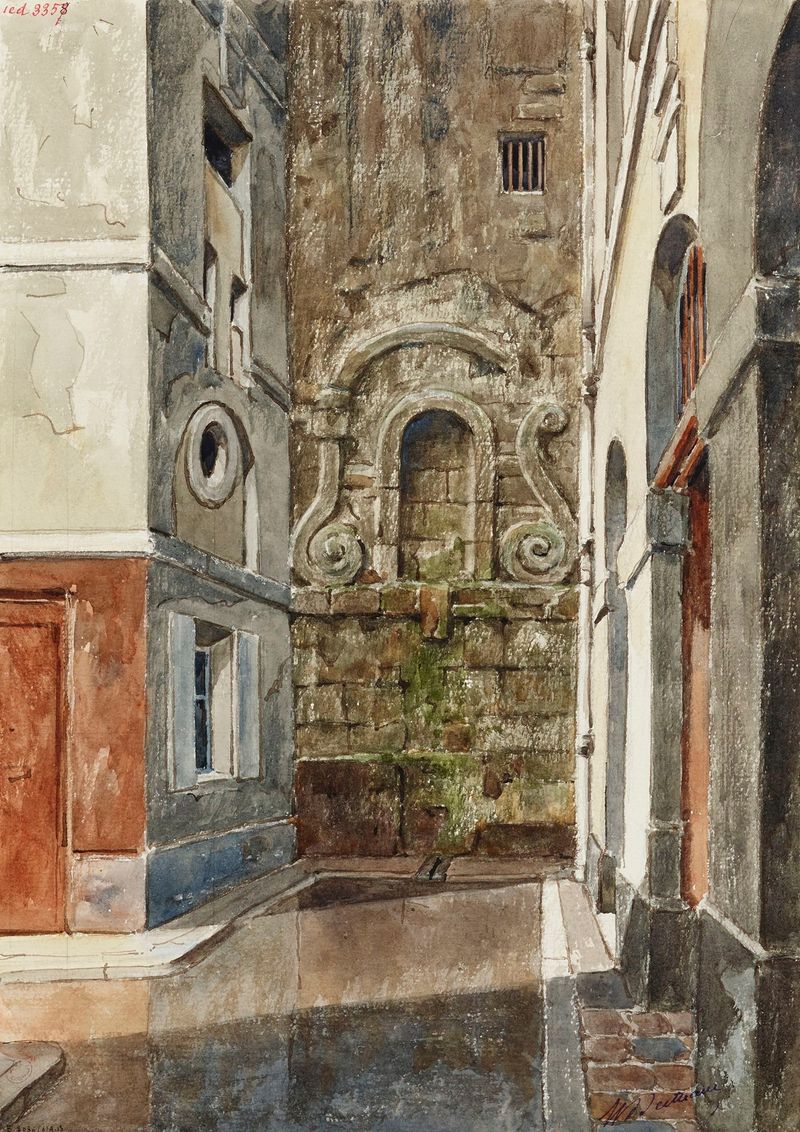
Ancienne fontaine rue Eginhard.
Henri Berthaut
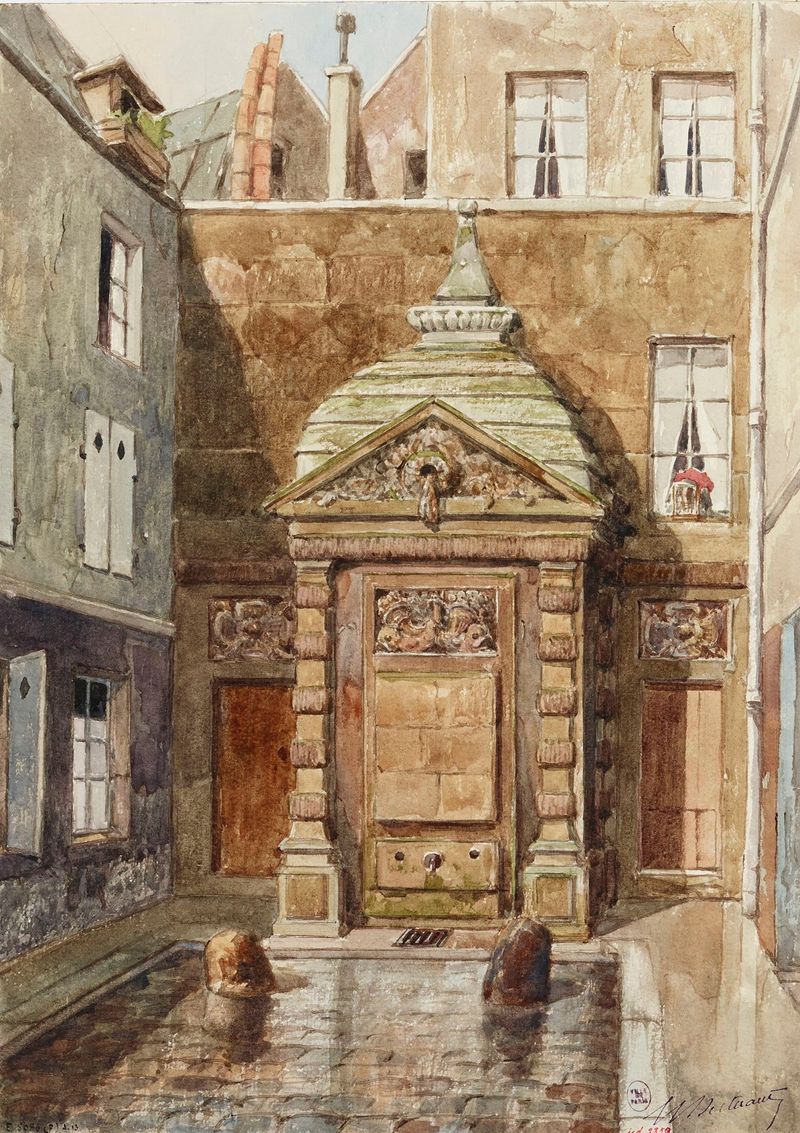
Ancienne fontaine Sainte Catherine – Impasse de laPoissonnerie.
Henri Berthaut
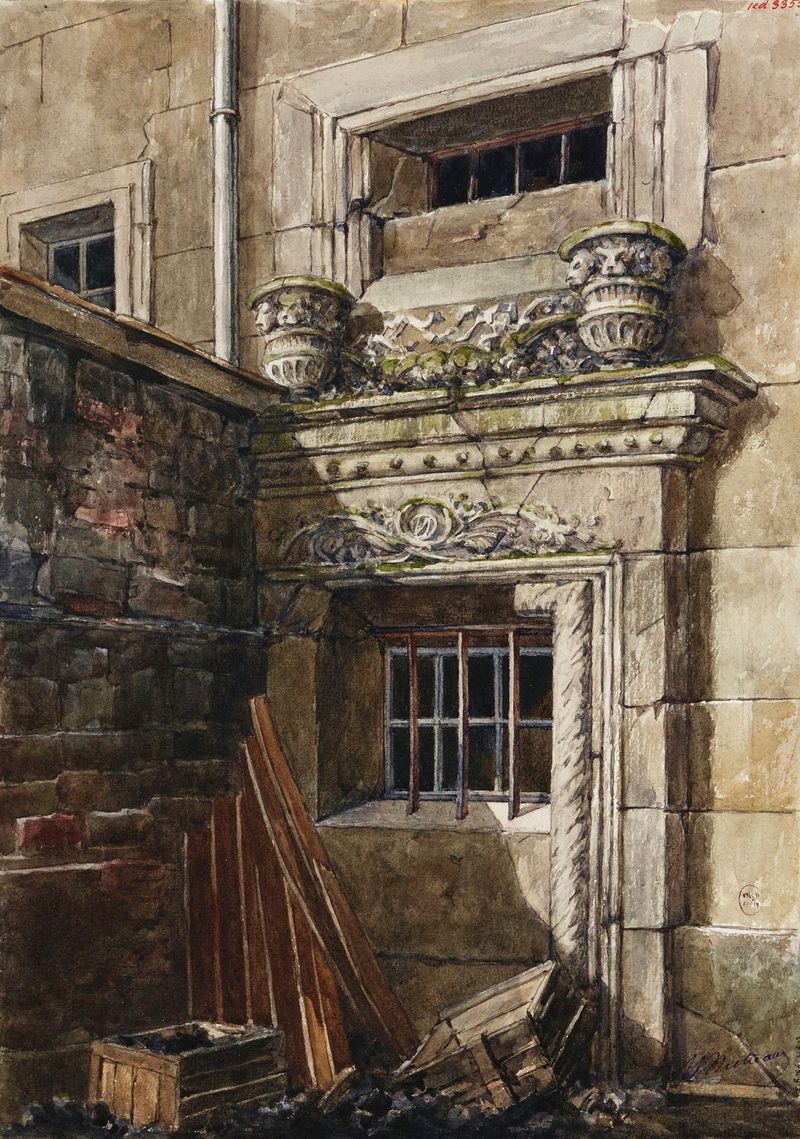
Fenêtre ornée de sculptures, courette à charbon d’une maison sise 27 rue du Jour
Henri Berthaut
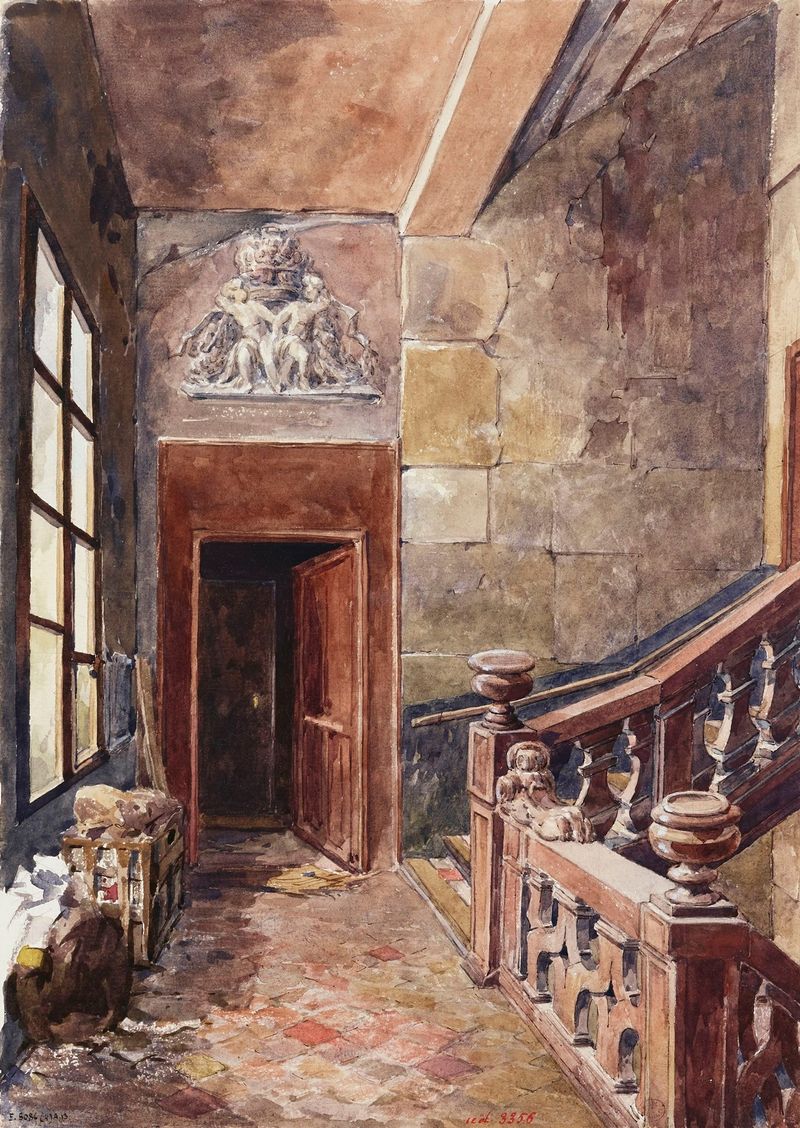
Maison nº27 rue du Jour, palier de l’escalier du premier étage
Henri Berthaut
Cour d’une maison ancienne, 25 rue du Jour.
Henri Berthaut

Porte de l’escalier principal d’une maison sise 27 rue du Jour
Henri Berthaut





