
La Sainte Chapelle. — History & Facts
Could a single brushstroke hold eternity? In La Sainte Chapelle, the layers of color and light resonate with the weight of memory, capturing a moment suspended in time. Look to the center of the canvas, where the grand stained glass windows of the chapel draw the eye with their intricate designs. Notice how the artist employs a rich palette of blues and golds, each hue layered with precision to evoke the ethereal quality of sunlight streaming through glass, casting a divine glow across the stone interiors. The delicate brushwork invites viewers to explore the interplay of light and shadow, emphasizing the architectural grandeur and spiritual essence of the space. As you delve deeper, observe the juxtaposition of the vibrant colors against the somber stone structure.
This contrast speaks to the duality of human experience—between the transcendent and the mundane, memory and reality. Each window tells a story, a silent echo of faith and history, reminding us that while the physical structure may fade, the essence of what it represents endures. The minute details, from the ornate carvings to the reflections on the floor, contribute to a narrative that transcends time, drawing you into a contemplative state. Auguste-Sébastien Bénard painted La Sainte Chapelle in 1810, during a period marked by a growing interest in Romanticism.
Living in Paris, he was immersed in the artistic revival of historical themes and spirituality, a reflection of the cultural shift after the tumultuous years of the French Revolution. This backdrop informed his work, as he sought to capture the profound beauty and significance of one of the city's most cherished landmarks.
More Artworks by Auguste-Sébastien Bénard
Browse all →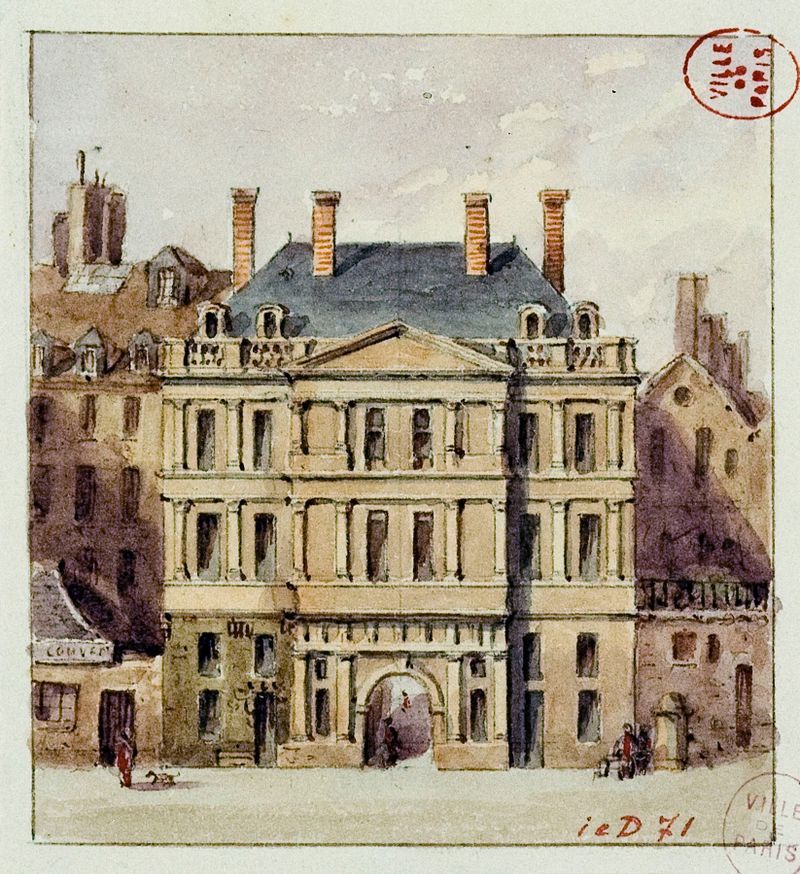
Cour de la Sainte Chapelle.
Auguste-Sébastien Bénard
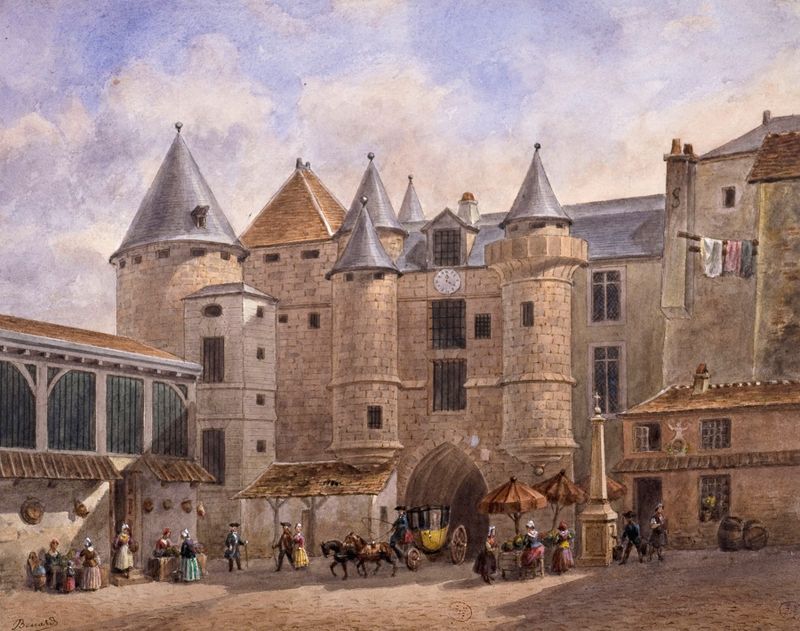
Le Grand Châtelet du XVIIIème siècle.
Auguste-Sébastien Bénard

Place de l’Hôtel de Ville.
Auguste-Sébastien Bénard

Salle souterraine du Palais de Justice.
Auguste-Sébastien Bénard

Voûtes du quai de Gesvres
Auguste-Sébastien Bénard

Monument expiatoire élevé à la mémoire du duc de Berry, à l’emplacement de l’ancien Opéra
Auguste-Sébastien Bénard
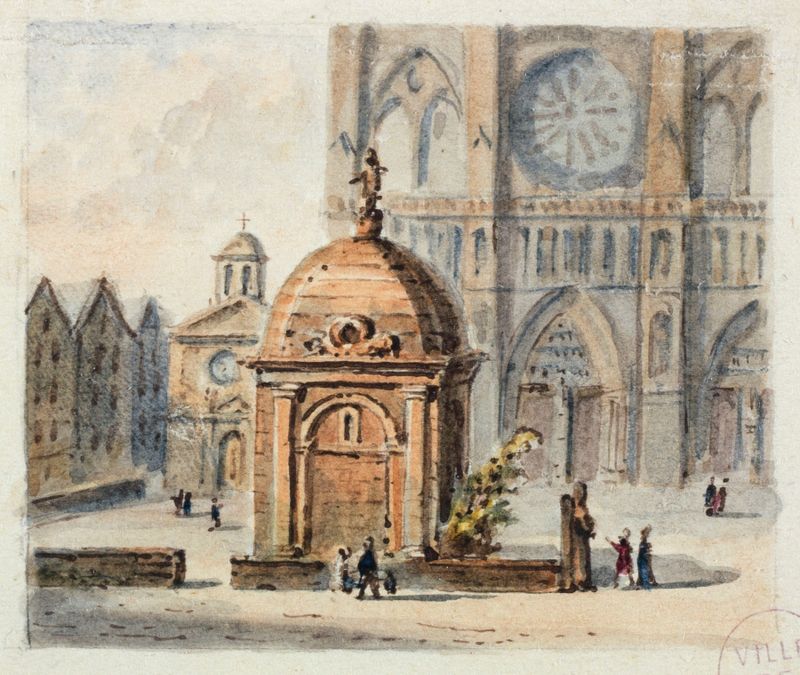
Le parvis de Notre-Dame de Paris
Auguste-Sébastien Bénard

Rue des chantres (entre le quai aux fleurs et la rue Chanoinesse).
Auguste-Sébastien Bénard

L’entrée de l’ancienne forteresse du Grand Châtelet, un jour de Carnaval
Auguste-Sébastien Bénard
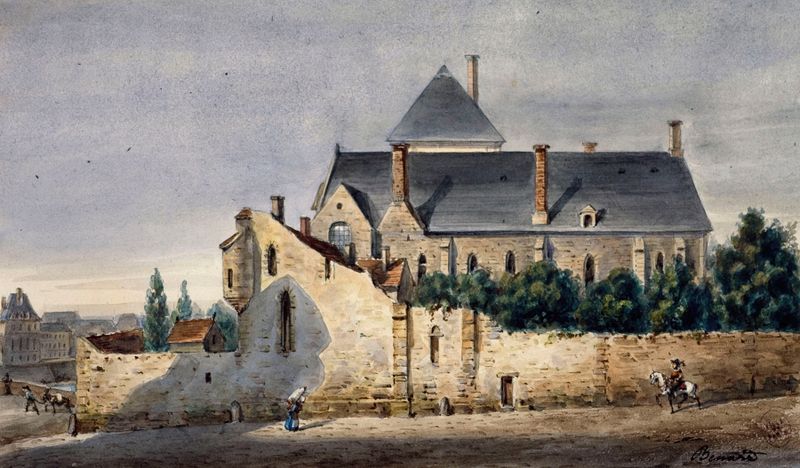
Les restes des bâtiments de l’hôtel du Petit Bourbon.
Auguste-Sébastien Bénard
More Religious Art
Browse all →
The Return of the Prodigal Son
Rembrandt van Rijn

The Garden of Earthly Delights
El Bosco

Count Orgaz’ funeral
El Greco

The Hundred Guilder Print: the central piece with Christ preaching, the plate arched
Rembrandt van Rijn

The Descent from the Cross
Rogier van der Weyden

The return of the prodigal son
Rembrandt van Rijn