
La terrasse à la Madrague — History & Facts
In a world where fleeting moments disappear into the void, destiny finds its permanence within the brushstrokes of an artist. Look to the left at the vibrant blue of the sea, where the waves gently lap against the shore, evoking a sense of calm and endless possibility. Notice how the sunlight dances across the surface, creating glimmers that seem to invite the viewer into a serene embrace. The composition is anchored by a terrace, where figures recline in leisurely repose, their forms basking in the golden warmth of the sun — a stillness that hints at deeper narratives intertwined in this carefree scene. Yet, beneath the tranquil surface, contrasts emerge.
The figures’ relaxed postures juxtapose the wild energy of the surrounding nature, suggesting a tension between human existence and the untamed world beyond. The use of color — from the lush greens to the cool blues — creates a visual harmony, yet hints at life’s unpredictability, capturing a fleeting moment poised delicately between joy and the weight of time’s passage. These small details reinforce the notion that every serene moment is underscored by the inevitability of change. Albert Marquet painted this piece during the early 20th century, a time when he was deeply immersed in the Fauvist movement.
Living in Paris, he sought to express the vibrancy of life through color and form. This period marked a significant departure from traditional techniques, allowing him to explore new expressions of light and emotion, ultimately shaping his unique vision of reality and destiny.
More Artworks by Albert Marquet
Browse all →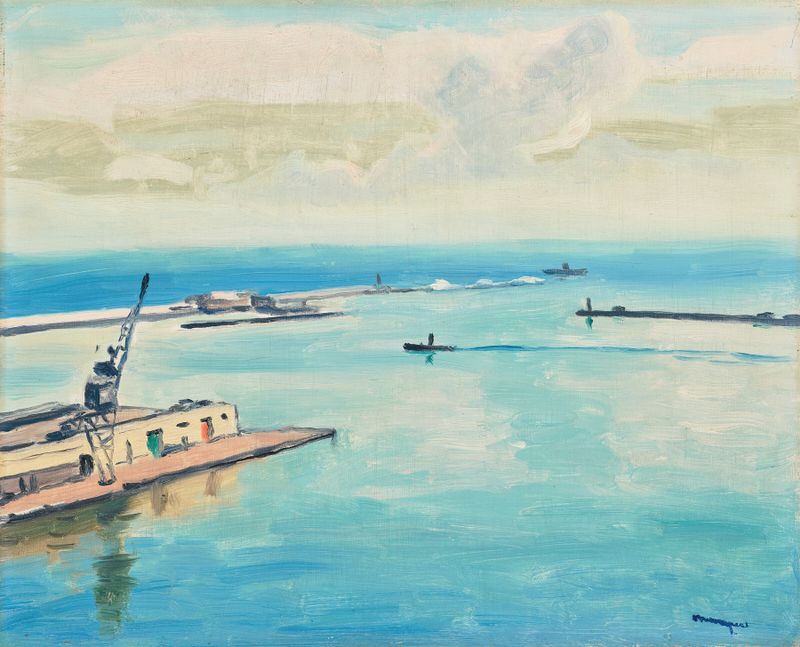
Le Port d’Alger
Albert Marquet
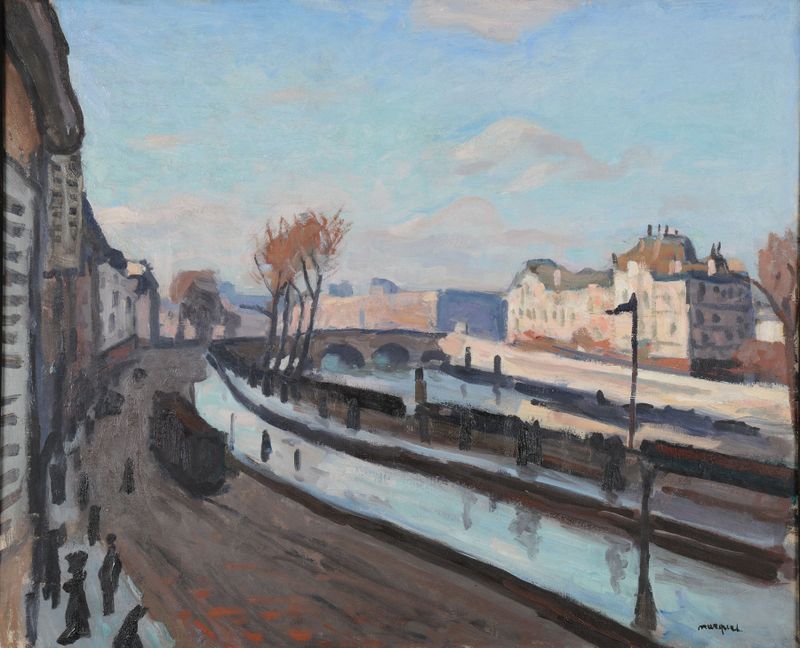
Le quai des Grands Augustins
Albert Marquet
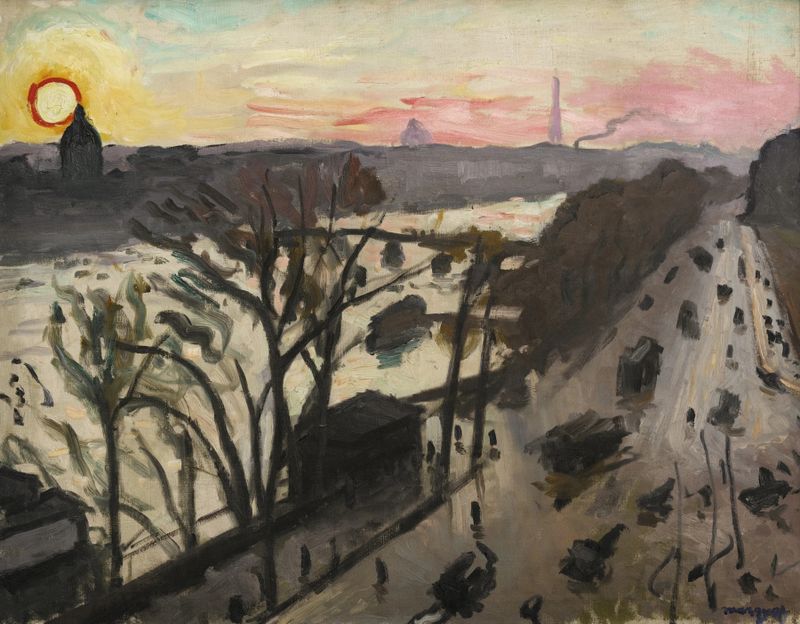
Paris, quai du Louvre, soleil d’hiver
Albert Marquet
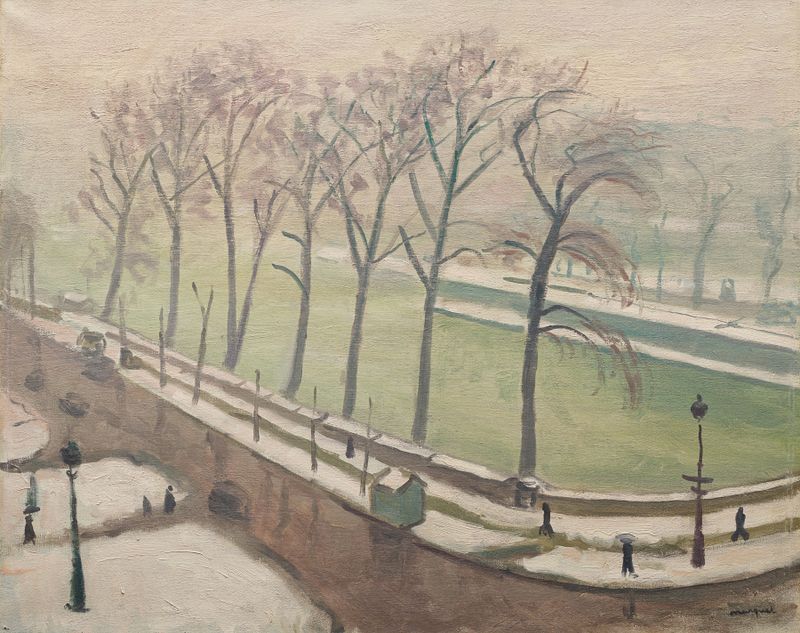
Pont-Neuf sous la neige
Albert Marquet
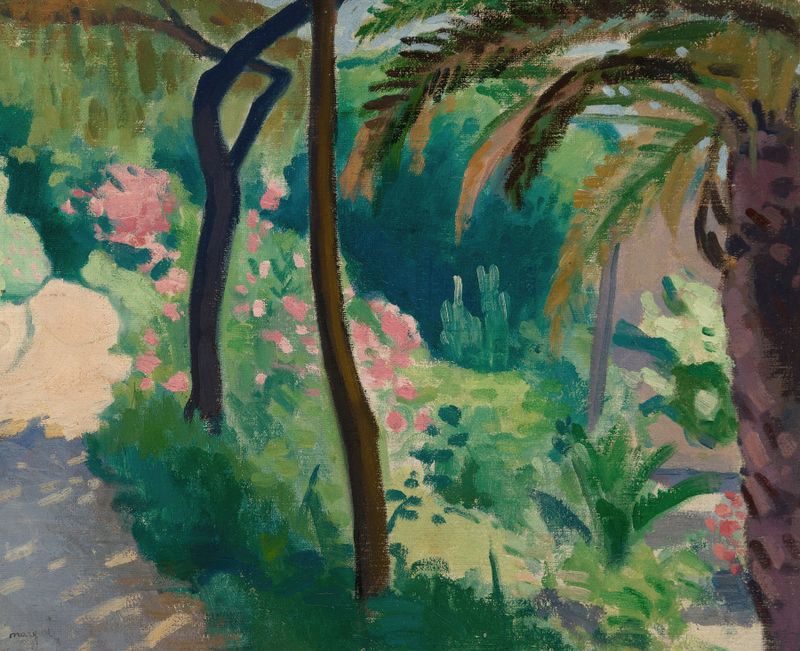
Le jardin à l’Estaque
Albert Marquet
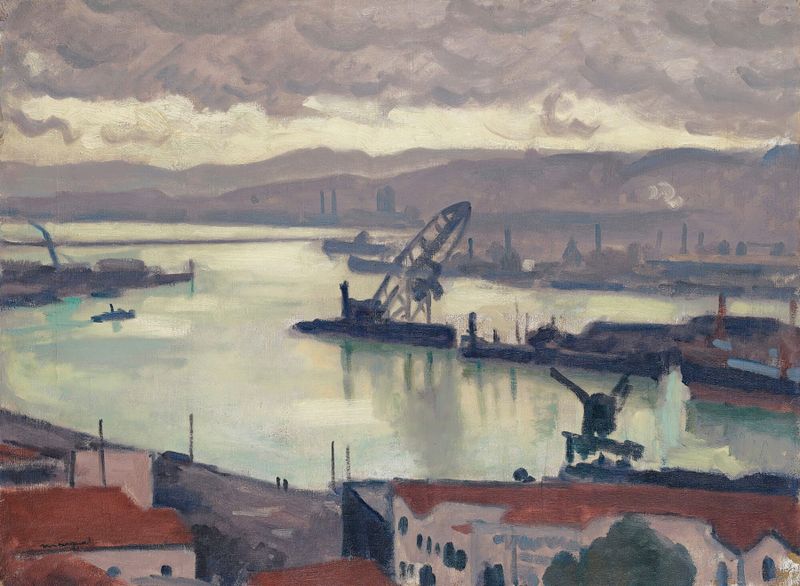
Alger, Temps Gris
Albert Marquet
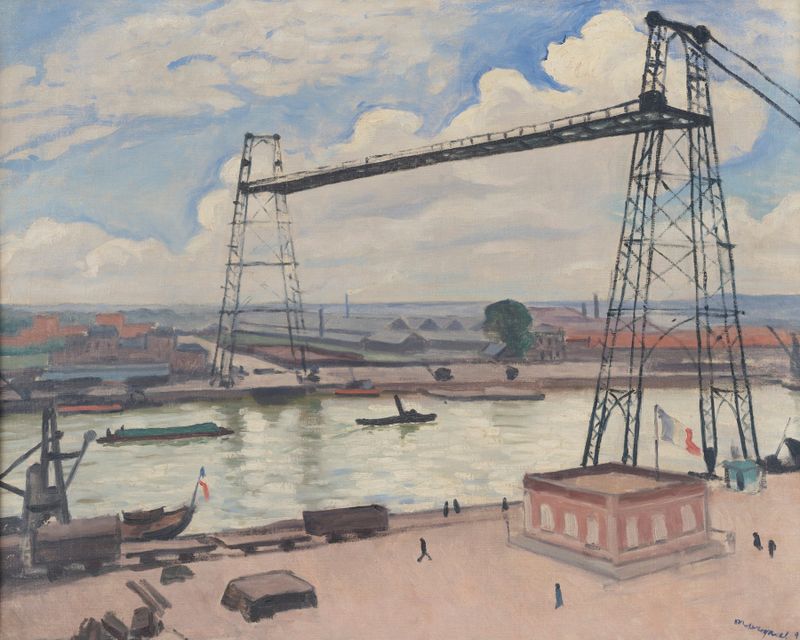
Rouen, le pont transbordeur
Albert Marquet
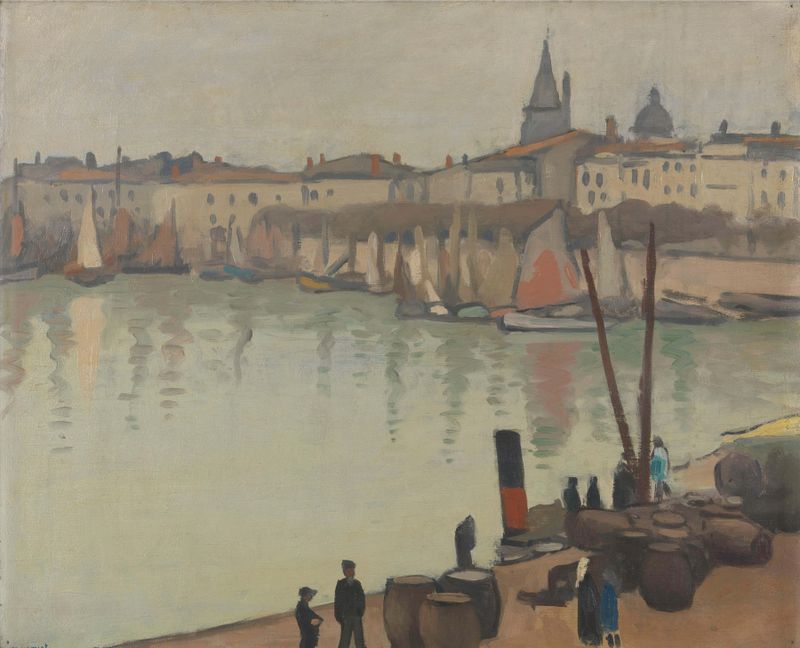
Port of La Rochelle
Albert Marquet

Berge de la Seine à Méricourt
Albert Marquet
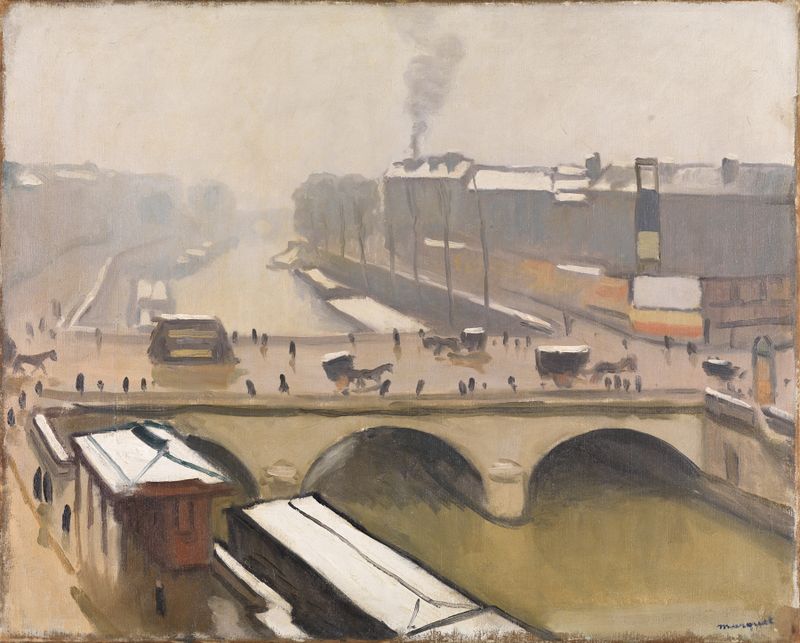
View of the Pont Saint-Michel in Paris
Albert Marquet





