
L’Abreuvoir — History & Facts
In the quiet depths of nature, faith is a gentle reminder of what endures amid the ephemeral. Look to the foreground where the soft, dappled light filters through the leaves, illuminating a tranquil watering place. The rich greens of the foliage cradle the cool blues of the water, inviting the viewer’s gaze. Notice how the brushstrokes evoke a sense of movement in the rippling surface, while the delicate blending of hues speaks to the artist's reverence for the natural world.
The composition, harmonious yet dynamic, captures a moment that feels suspended between the realms of reality and memory. Beneath the serene exterior lies an emotional complexity; the play of light and shadow mirrors the tension between human existence and nature’s timelessness. The subtle inclusion of animals drinking at the edge of the water suggests a cycle of life, a testament to resilience and community. Each brushstroke reverberates with the faith that connects the elements of this scene, a reminder of the simplicity and beauty that can be found in nature's quiet corners. At the time Rousseau created this piece, likely during the mid-19th century, he was immersed in the Barbizon School movement, which sought to depict nature with authenticity and emotional depth.
His practice was influenced by a burgeoning appreciation for plein air painting, reflecting a shift in the art world towards capturing the immediacy of the landscape. This painting embodies his dedication to portraying the natural world as a sanctuary, a source of inspiration, and a vessel for unspoken truths.
More Artworks by Théodore Rousseau
Browse all →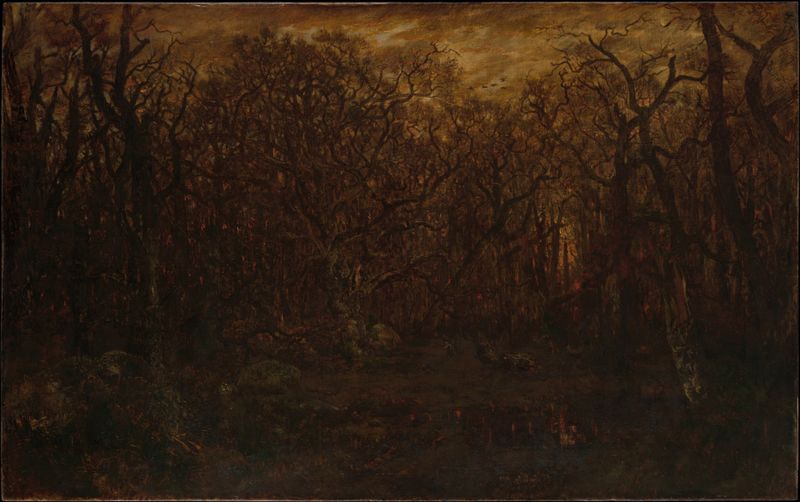
The Forest in Winter at Sunset
Théodore Rousseau
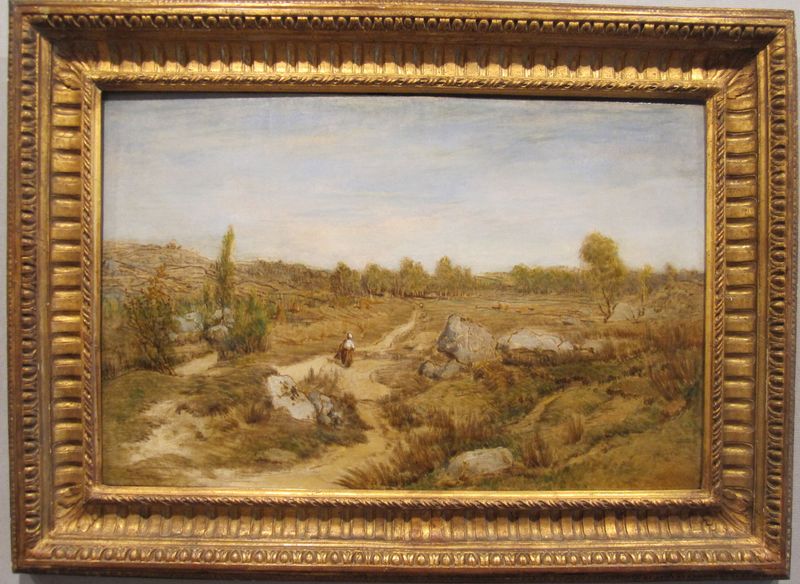
Valley of the Rouars in the Gorges d’Apremont
Théodore Rousseau
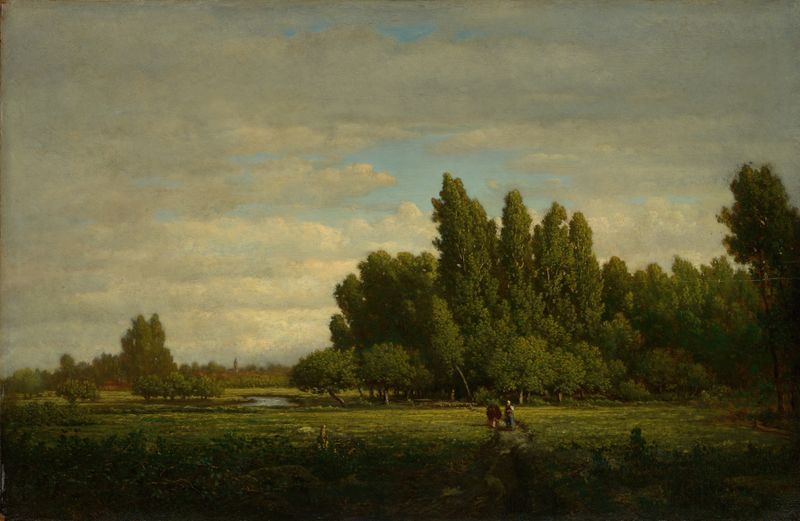
A Meadow Bordered by Trees
Théodore Rousseau
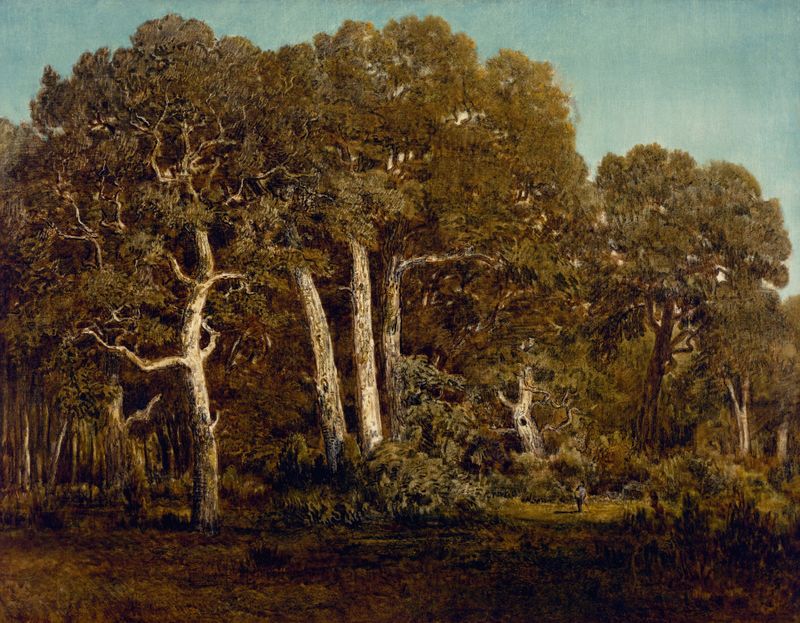
The Great Oaks of Old Bas-Bréau
Théodore Rousseau
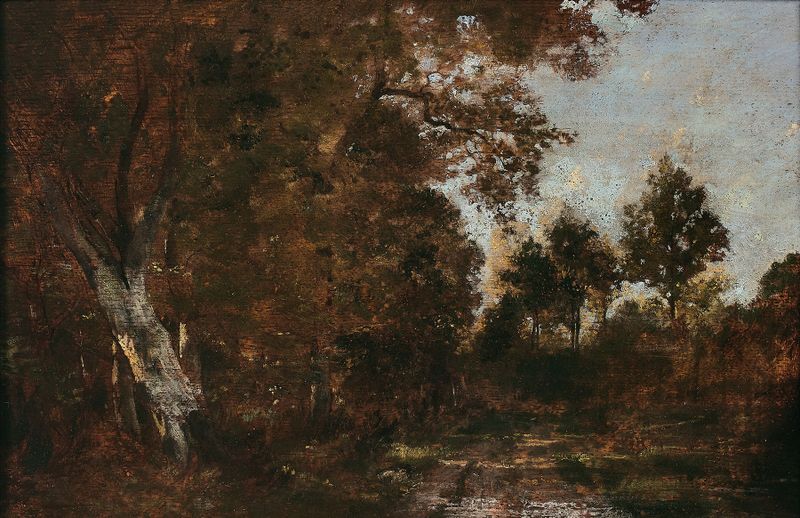
Paysage de sous-bois
Théodore Rousseau
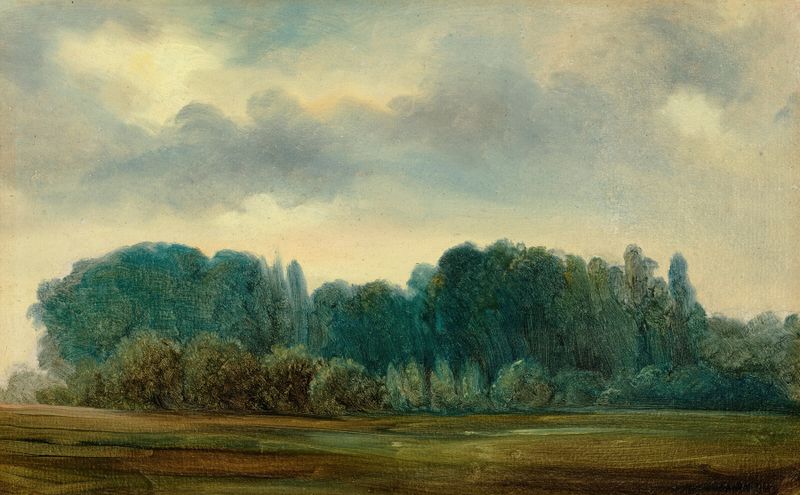
Paysage
Théodore Rousseau
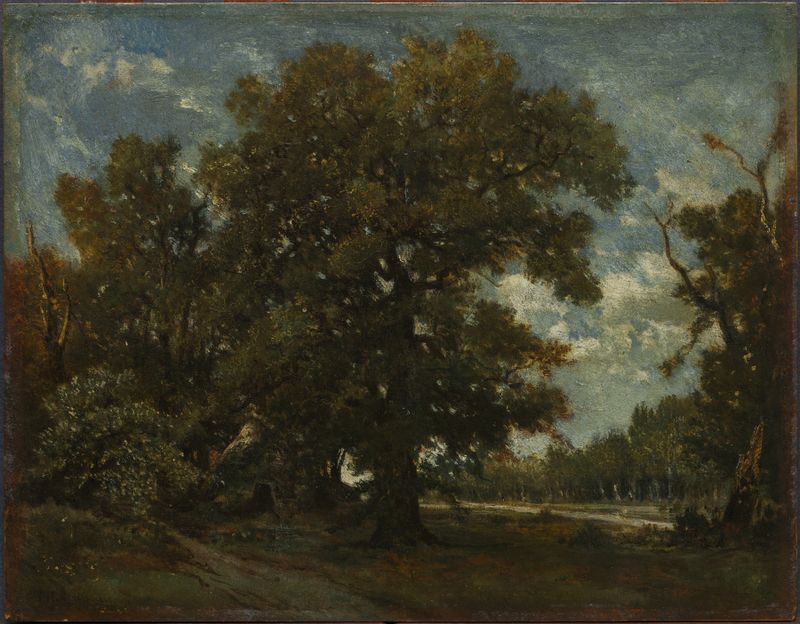
The Oak Tree
Théodore Rousseau
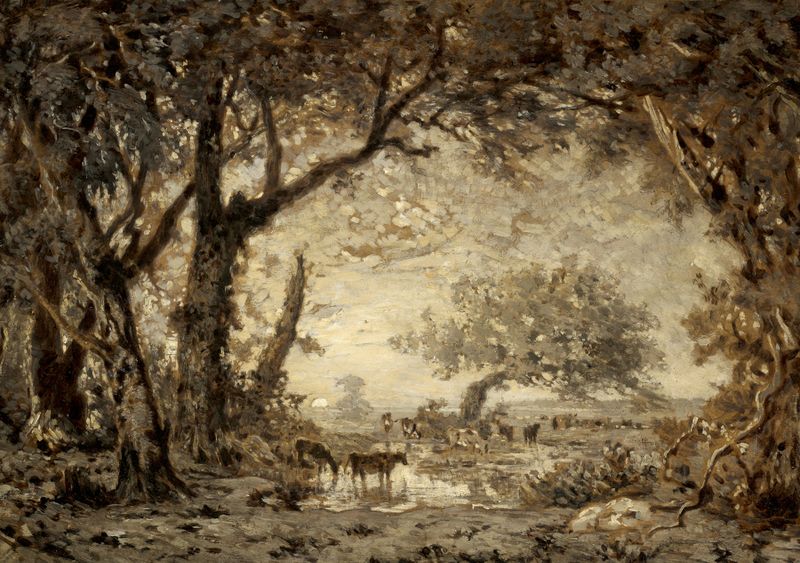
Sunset from the Forest of Fontainebleau
Théodore Rousseau
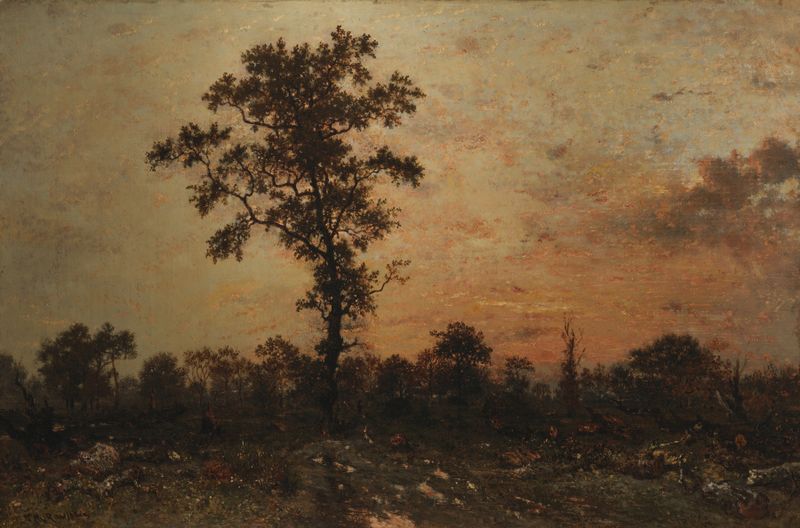
Edge of the Forest, Sun Setting
Théodore Rousseau
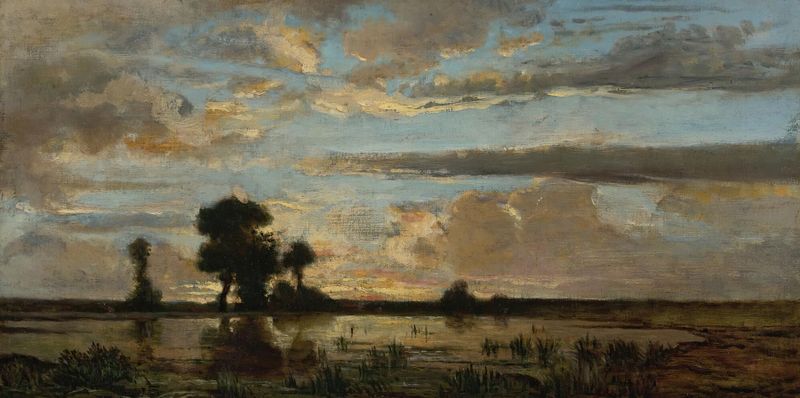
Soleil Couchant
Théodore Rousseau





