Landscape — History & Facts
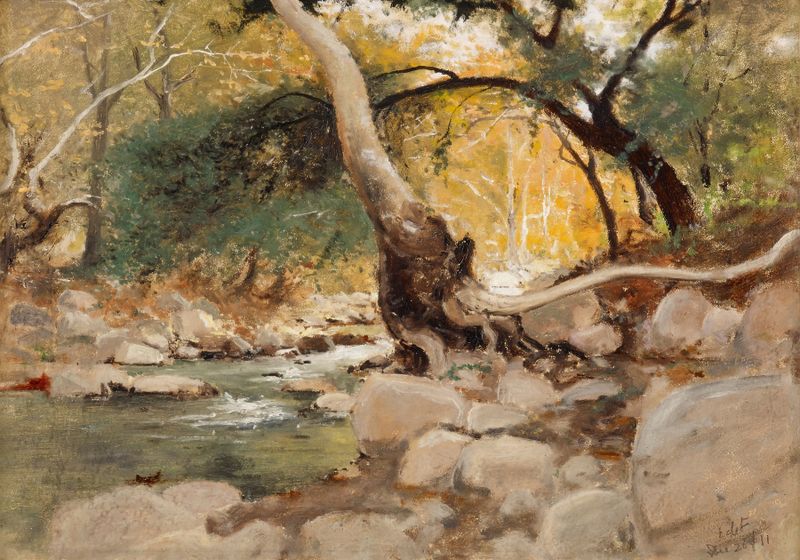
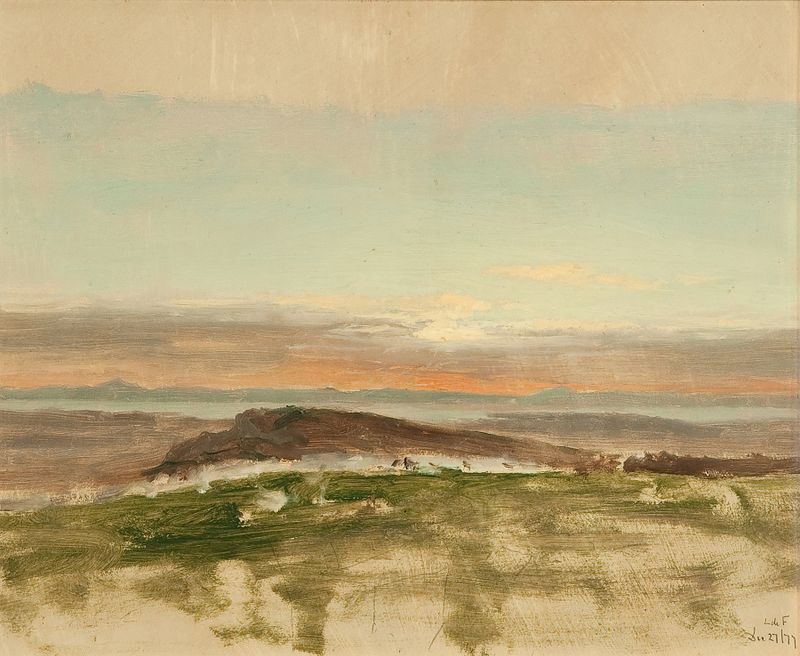
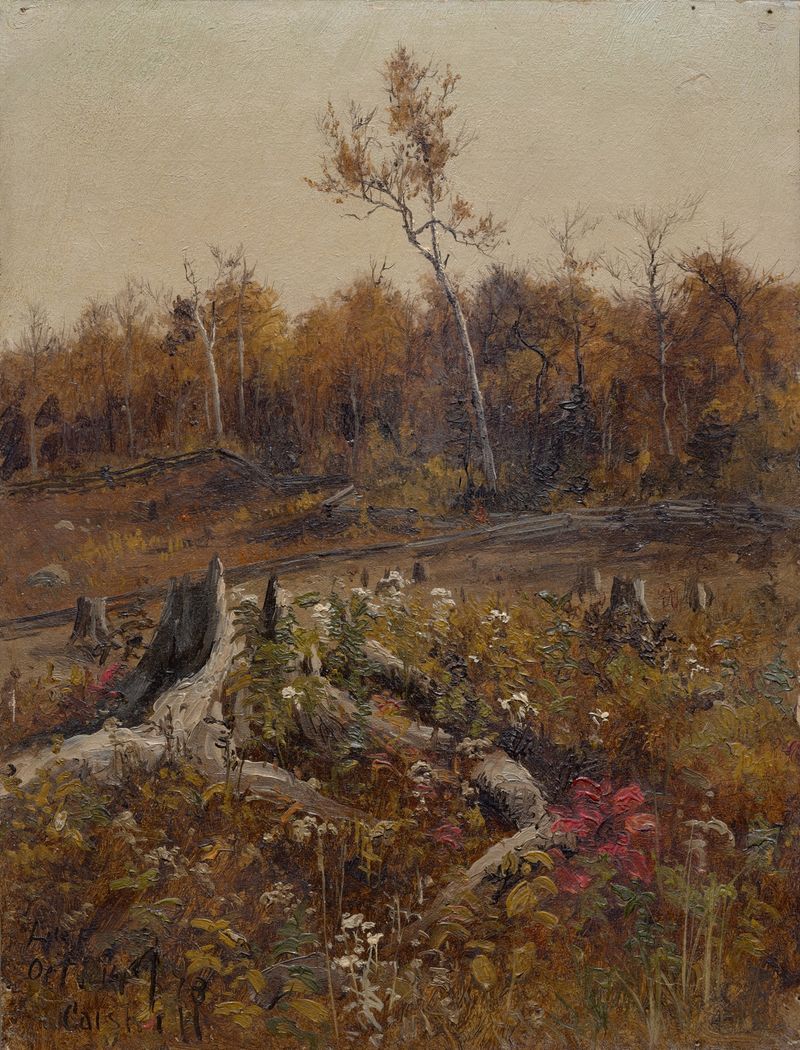
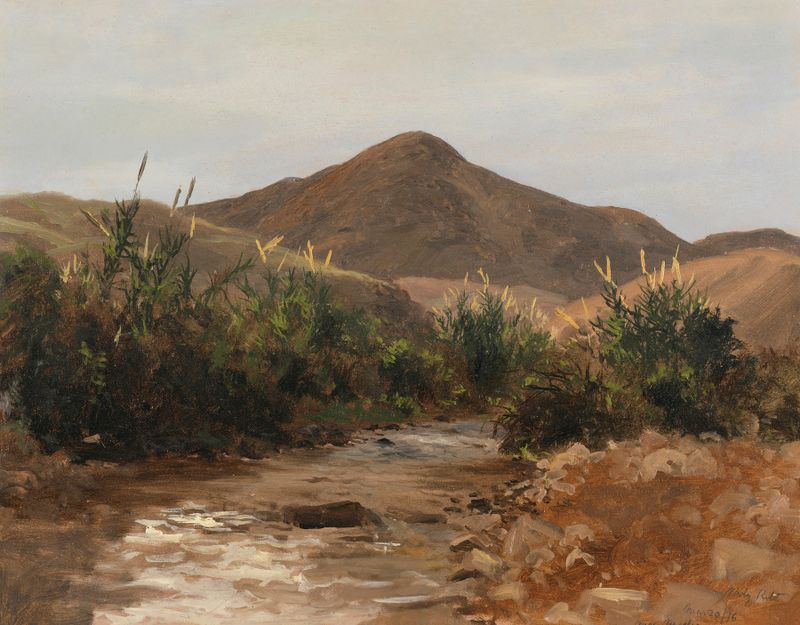
What if beauty was never meant to be finished? Perhaps in this endless cycle of nature, there lies an eternal yearning, whispering to us from the canvas. Focus on the tranquil expanse that unfolds before you, where soft greens and blues meld seamlessly into one another. Look to the horizon, where a golden light dances across the water, hinting at the setting sun. Notice how the brushstrokes, though seemingly spontaneous, reveal a meticulous hand — each stroke narrating the gentle sway of trees and the delicate shimmer on the surface of the lake.
The composition draws you in, creating a serene balance between land and sky. Yet, beneath this picturesque facade lies a deeper tension. The tension between the idyllic world presented and the fleeting nature of such beauty is palpable. The trees, though lush and full of life, stand in quiet solitude, as if yearning for a touch of human connection.
The calmness of the water contrasts starkly with the restlessness that whispers through the leaves, suggesting an unspoken longing for permanence in a moment destined to fade. Lockwood de Forest created this piece in 1873, during a time of great change in the American art scene. While the Impressionist movement was gaining traction, de Forest's work stood apart, capturing nature's beauty with a reverence that spoke to his own experiences in the lush landscapes of the Hudson River School. His connection to these serene settings is palpable, reflecting the collective desire for escape and contemplation amid the industrializing world.