Landscape — History & Facts
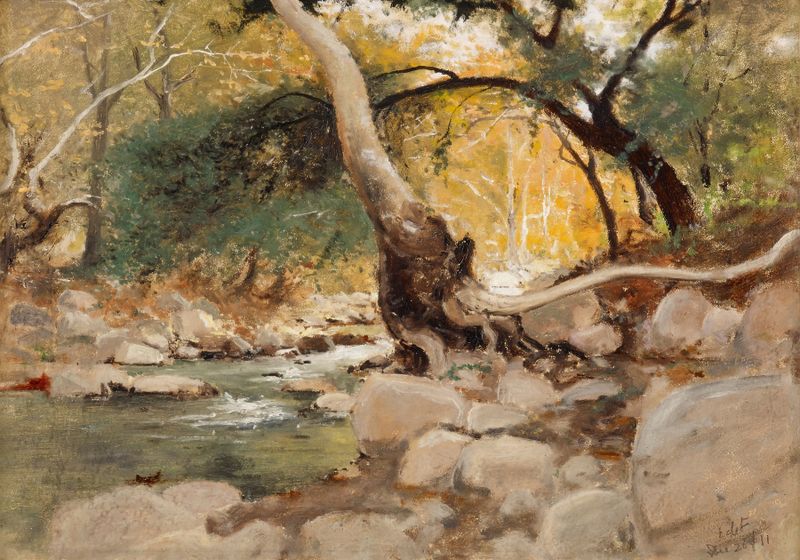
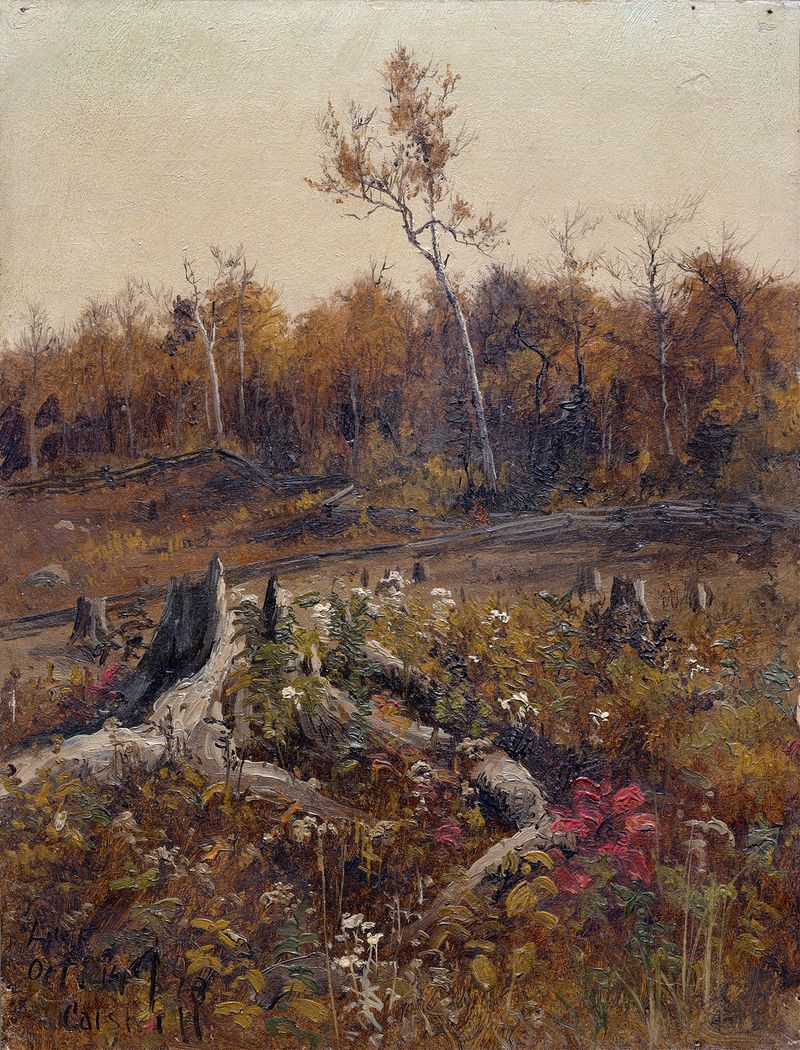
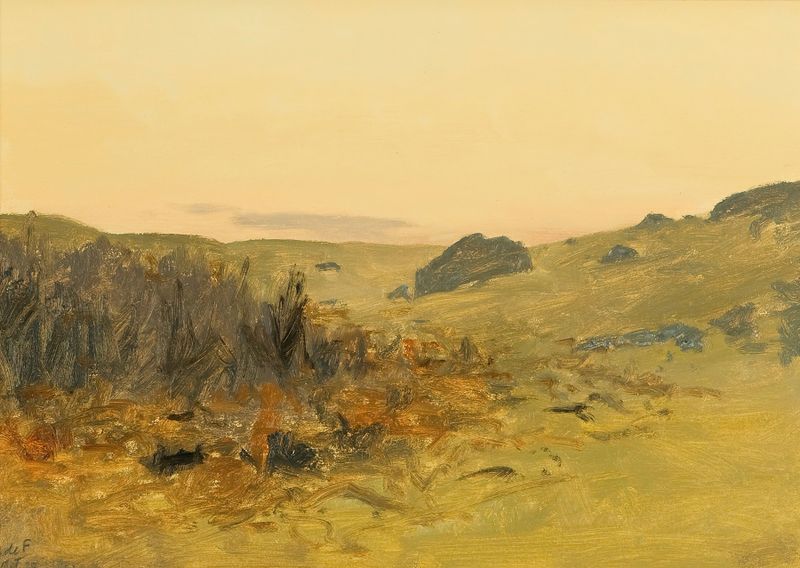
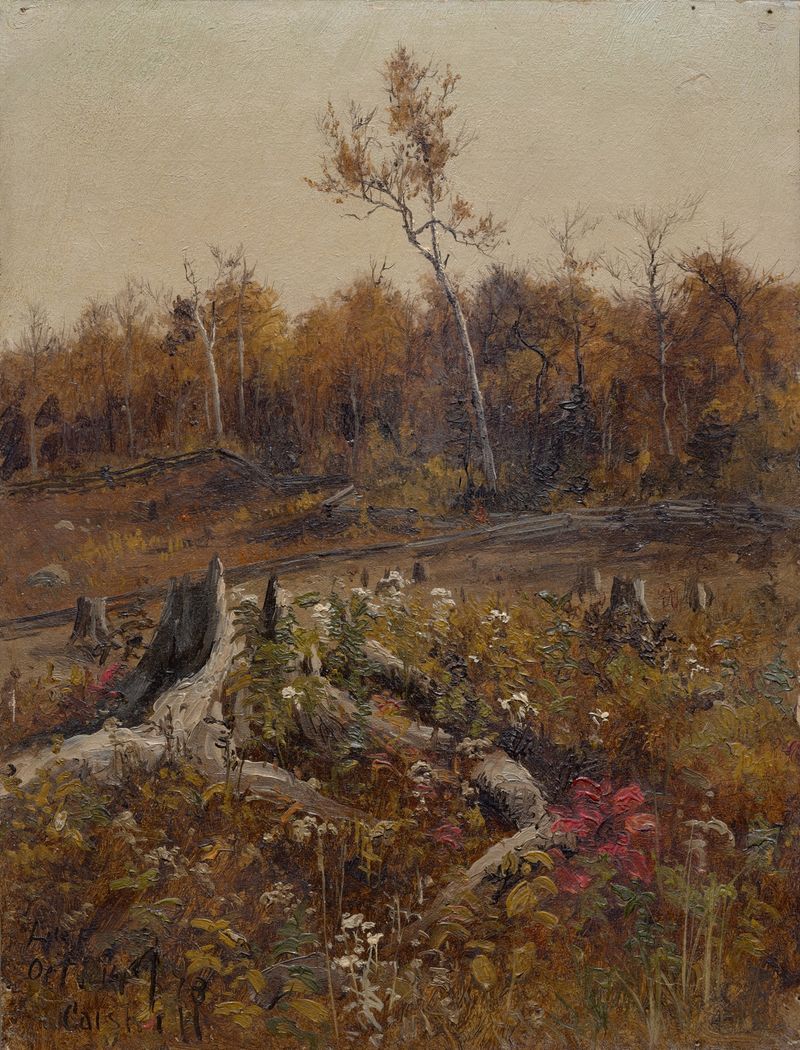
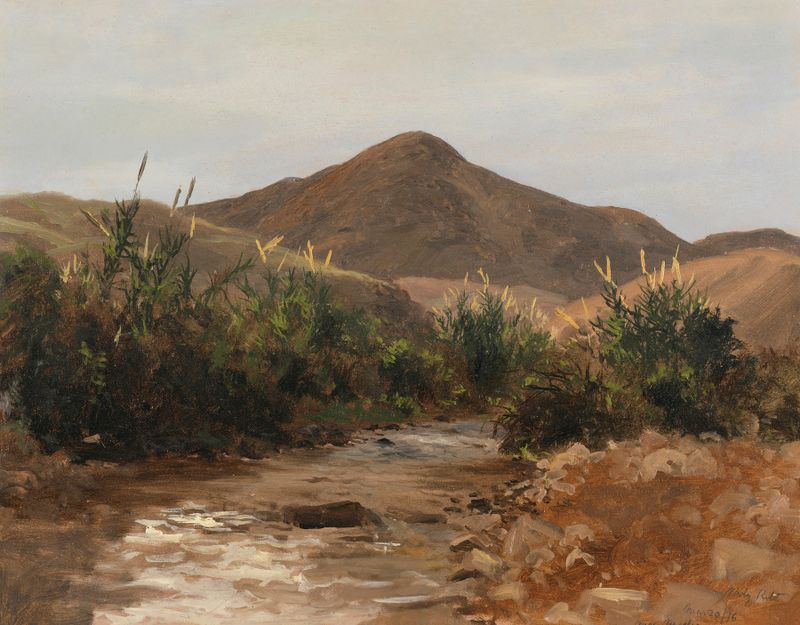
Could a single brushstroke hold eternity? In Landscape, Lockwood de Forest presents a world where the chaos of nature dances with the stillness of the human mind, inviting viewers to ponder the delicate balance between madness and tranquility. Look to the foreground where the vibrant hues of green and gold collide, revealing a lush patch of grass that appears almost alive. The brushstrokes are dynamic and spontaneous, suggesting a restless energy that breathes life into the composition. As your gaze moves upward, notice how the sky transitions from brilliant cerulean to soft pastels, a metaphorical reflection of the emotional turbulence felt within.
The casual placement of trees punctuates the scene, creating a sense of movement that draws the eye and evokes a feeling of fleeting moments captured in time. Dig deeper, and you may find hidden meanings nestled within the layers of paint. The contrast between the lively foreground and serene sky may speak to the tumultuous emotions lurking beneath the surface of the mind. Each brushstroke becomes a fragment of thought, swirling together in a captivating cacophony that mirrors the artist's own struggles with his creative identity.
This tension between chaos and calm becomes a poignant reminder of the fine line we walk between madness and inspiration. In the late 1870s, de Forest was immersed in the vibrant art scene of America, grappling with the influences of Impressionism while seeking his own voice. Landscape was painted during a formative period in his career, as he explored new techniques and subjects inspired by his travels. This work is emblematic of his desire to capture not just the physical beauty of the world, but the emotional truths that lie beneath, marking a pivotal moment in his artistic evolution.