Landscape — History & Facts
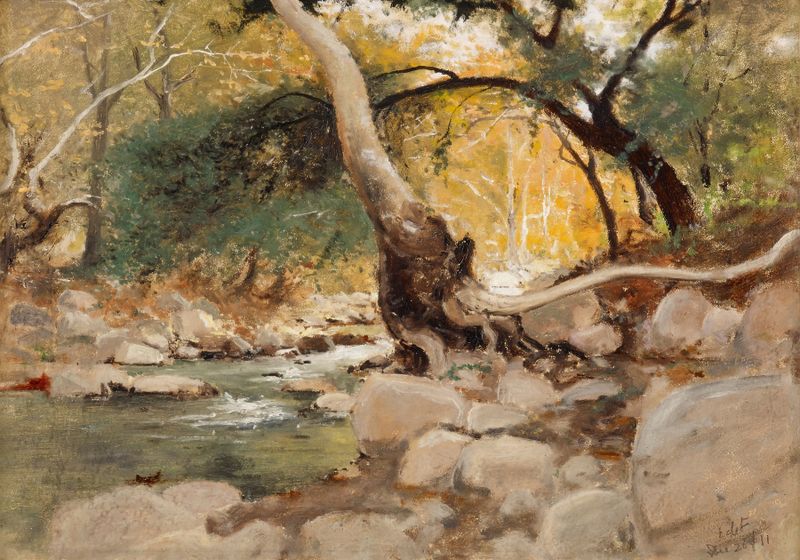
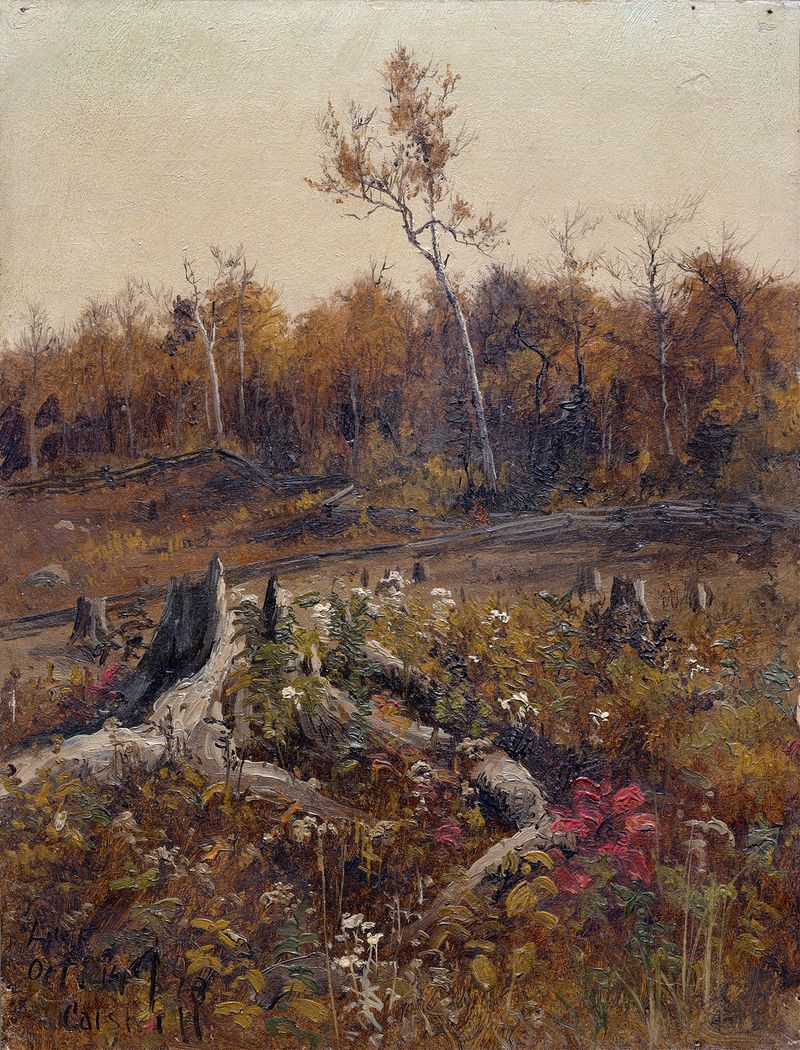
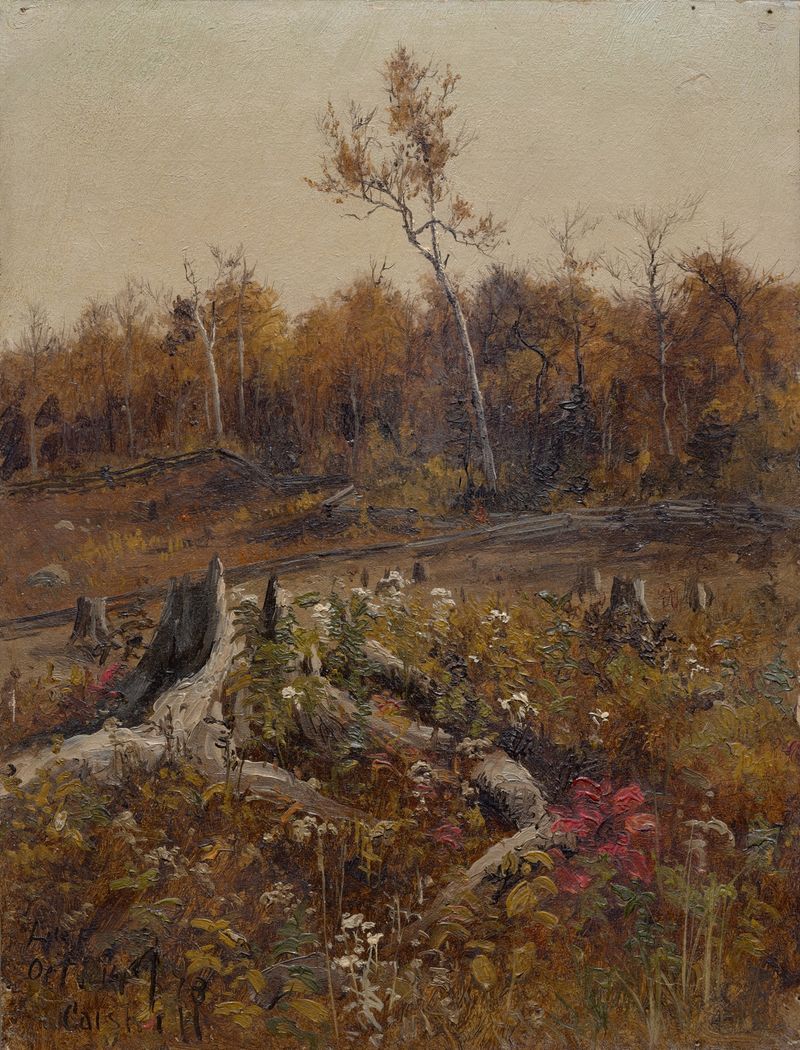
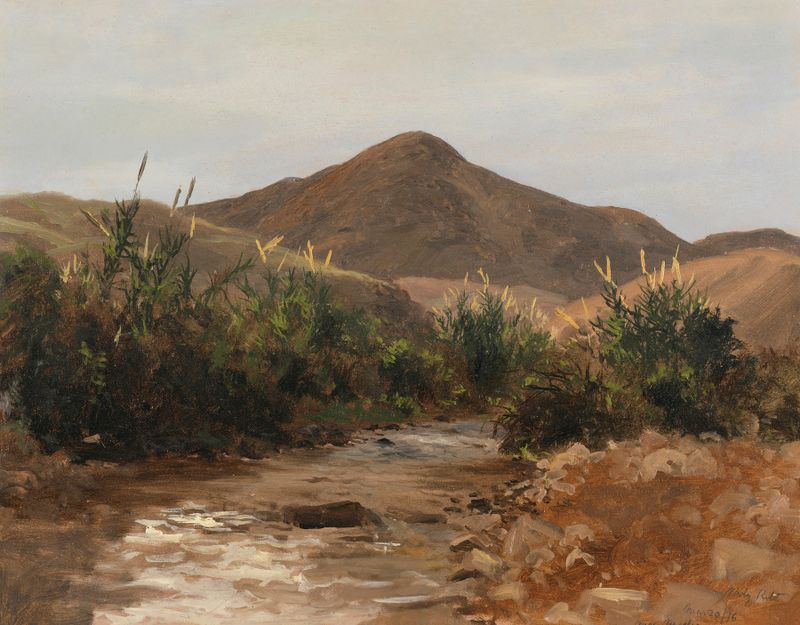
In an era often lost in the clamor of industrial progress, the quiet allure of nature beckons us to pause and reflect. Look to the lower left corner, where trees emerge from the canvas like guardians of a secret realm. The lush greens breathe life, while the gentle strokes suggest a whispering breeze. Focus on the interplay of light and shadow, which dances across the landscape, providing an illusion of depth that invites you to wander into the scene.
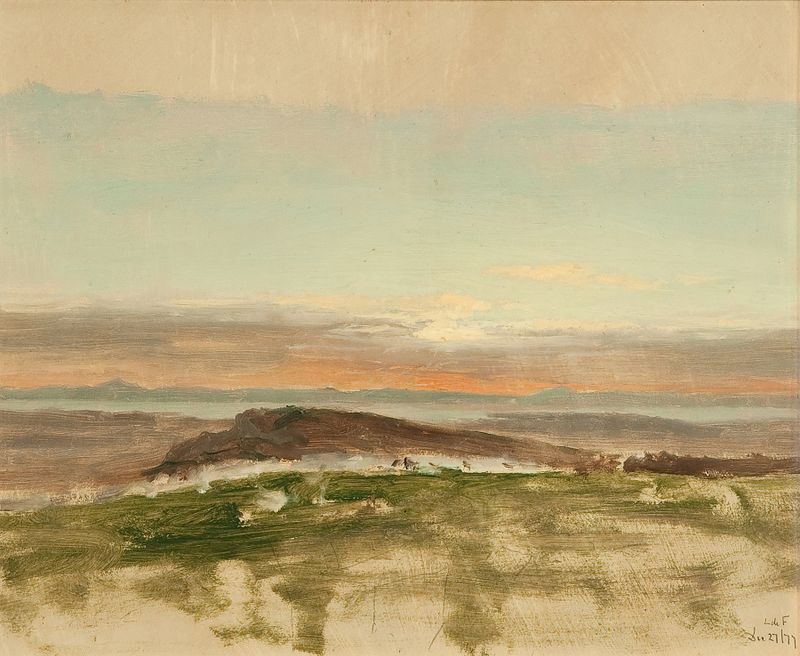
The subtle, muted colors create a serene atmosphere, contrasting with the weight of modernity pressing on the edges of existence. Within this tranquil representation lies a tension between the idyllic and the ephemeral. The delicate brushwork hints at a moment captured in time, yet there’s an underlying vulnerability, as if the beauty of this landscape is both cherished and fleeting. A distant horizon blurs the boundary between reality and dream, suggesting that the splendor of nature is an illusion we must protect.
Each element, from the rustling leaves to the distant mountains, speaks to a world that is at once familiar and elusive. Lockwood de Forest painted Landscape in 1910, during a period marked by an increasing disconnection from nature due to urbanization. Living in New York and influenced by the Arts and Crafts movement, he sought to revive an appreciation for the natural world through his work. His art resonates with the collective yearning for simplicity and connection in a rapidly changing society, reflecting a desire to retrieve a lost harmony in the face of looming modernity.