Near Jericho, Wady Kilt — History & Facts
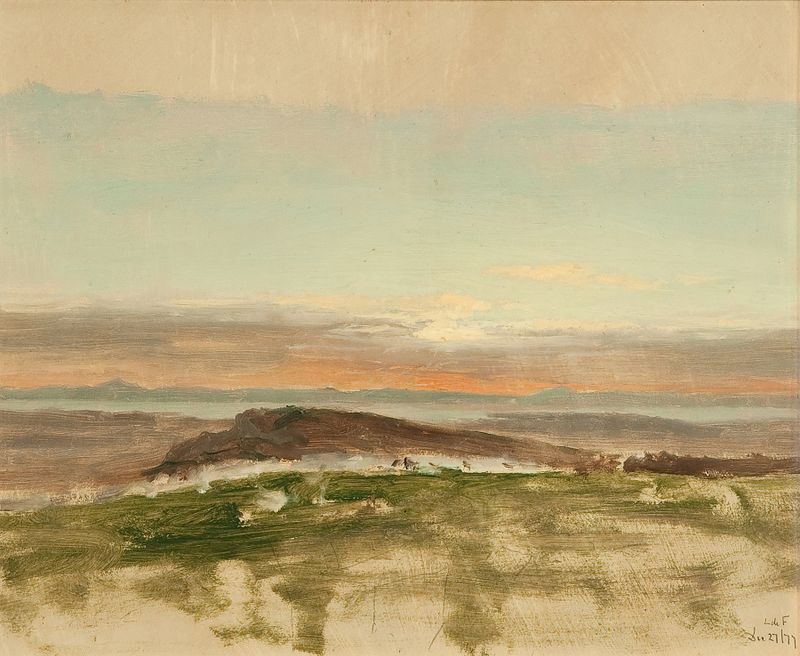
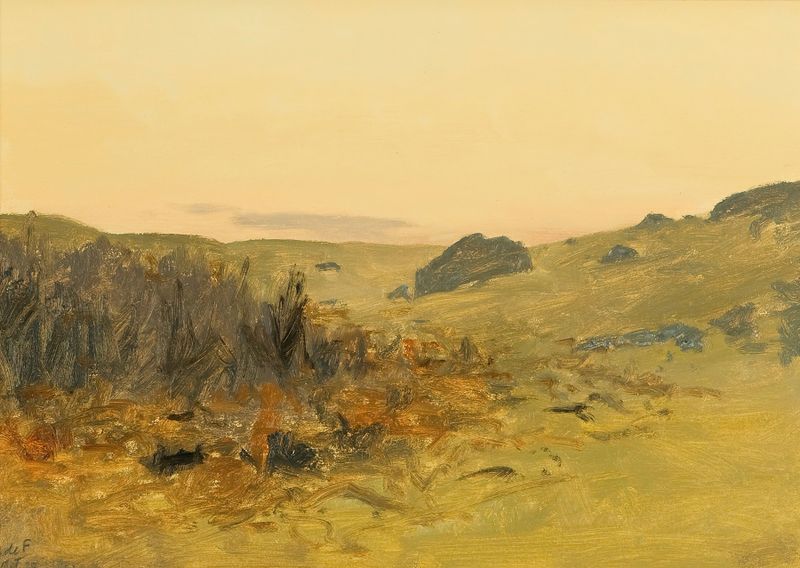
Who listens when art speaks of silence? In Near Jericho, Wady Kilt, a gentle interplay of light and shadow invites contemplation of the balance between solitude and nature’s grandeur. Look to the center of the canvas where the rugged terrain rises, its earthy tones grounding the composition. The soft blues and greens of the distant hills contrast beautifully with the warm ochres and browns that make up the foreground, drawing the eye inwards. Notice how the artist uses delicate brushwork to create a sense of depth, with each stroke whispering secrets of the landscape.
The majestic backdrop of the rocky cliffs offers a commanding presence, while the winding path hints at quiet exploration, a journey that lingers in one’s imagination. In this expansive vista, there exists a profound tension between stillness and movement. The solitude of the landscape suggests both a refuge and a reminder of the vastness of the world beyond. Small, almost imperceptible details—a solitary tree clinging to a cliff’s edge, the faintest suggestion of a figure—evoke humanity’s fragile existence amid the grandeur of nature.
It is a poignant balance that speaks of isolation yet invites connection; the viewer senses both the weight of loneliness and the beauty of serene contemplation. Lockwood de Forest painted this work in 1876 while immersed in an era of exploration and discovery. As an American artist in Europe, he was deeply influenced by the Orientalist movement and the adventure of travel. Both his personal experiences and the broader artistic climate of the time shaped his vision, allowing him to capture the harmonious yet complex relationship between humanity and the magnificent landscapes he encountered.