Landscape — History & Facts
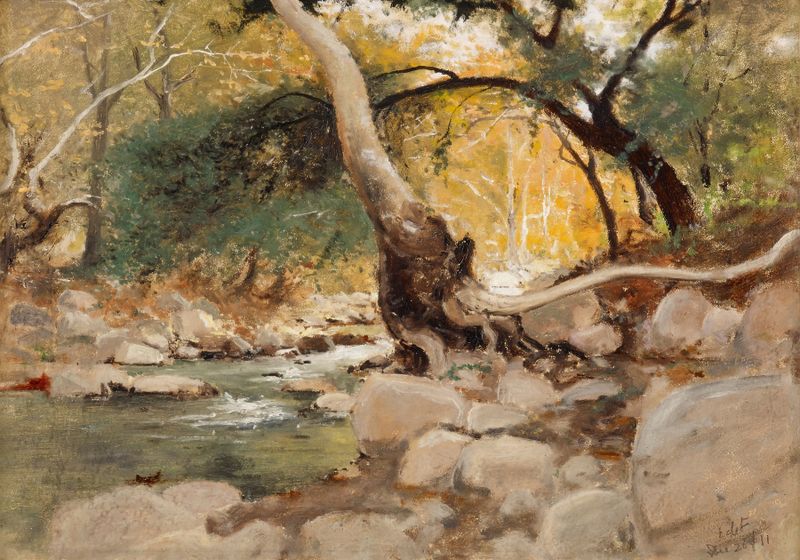
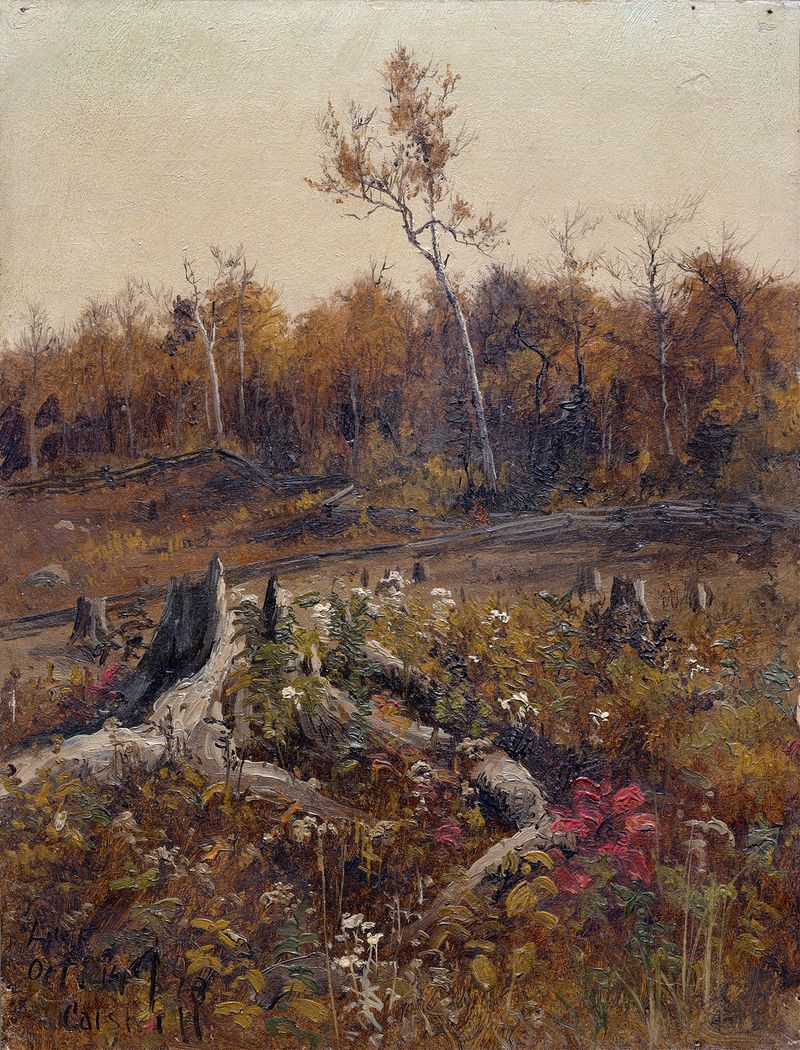
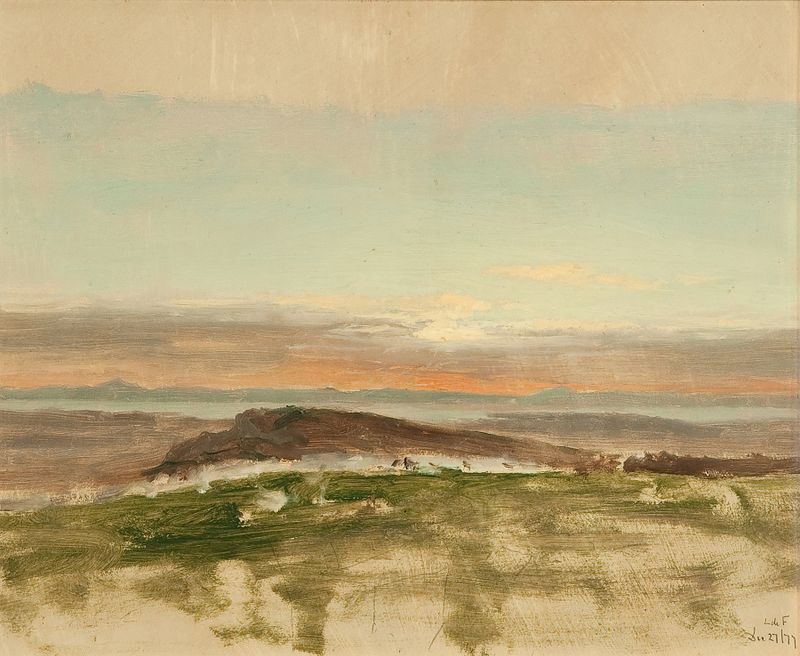
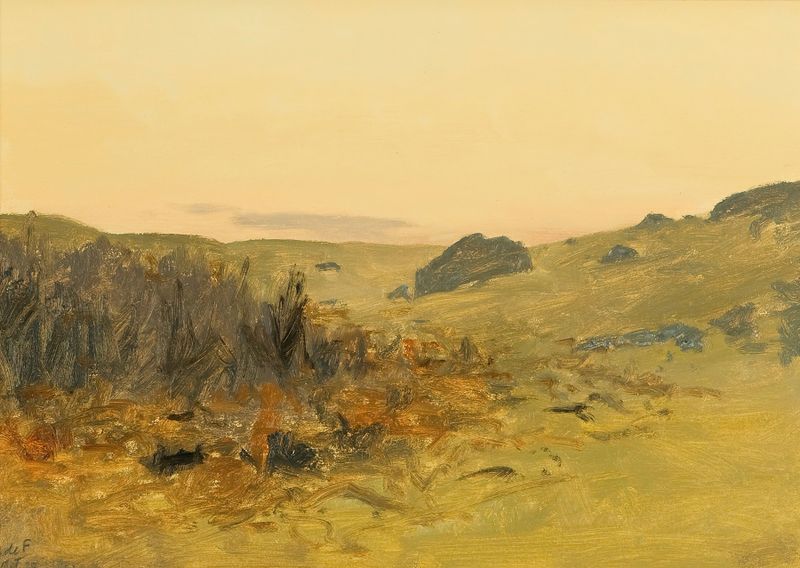
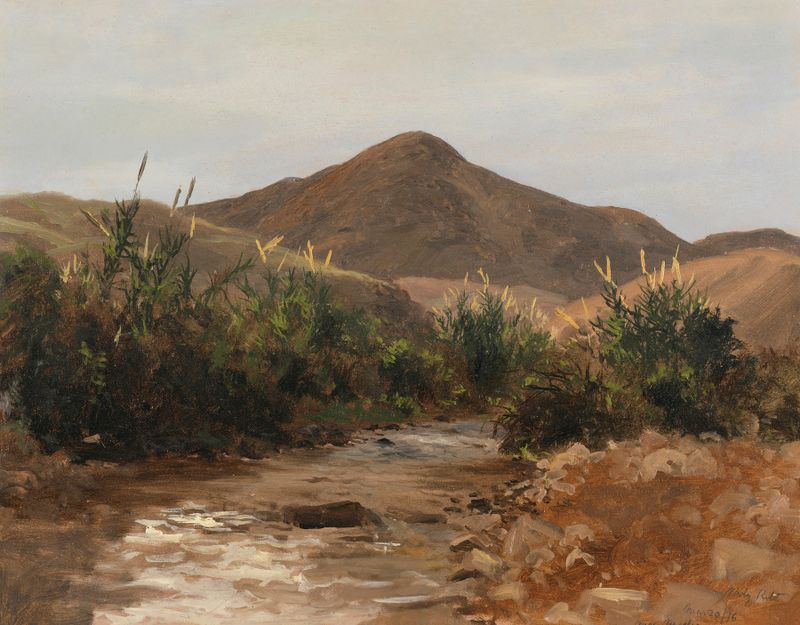
In its stillness, it invites the soul to wander, to seek a connection with the palette of life itself. Every brushstroke presents a whisper of nature, a dialogue of colors that stirs the heart and ignites the imagination. Look to the center of the composition, where rich greens and soft earth tones meld to form rolling hills, their curves inviting your eyes to dance across the landscape. Notice how the sky above transitions from pale azure to warm golden hues, a perfect interplay of light that hints at the time of day.
The artist’s technique, with deft layering and gentle blending, captures the vibrancy of the scene while drawing attention to the delicate patterns of light and shadow that breathe life into the canvas. Beneath the surface of this serene panorama lies a complex emotional landscape. The contrasts between the lush foreground and the distant, fading hills evoke a sense of yearning—an invitation to explore not just the physical terrain, but also the emotional depths of solitude and tranquility. The careful modulation of color suggests a fleeting moment, perhaps a sunrise or a sunset, symbolizing both the promise of a new beginning and the melancholy of endings. In 1873, the artist created this work amidst a flourishing era of American landscape painting, characterized by a growing appreciation for natural beauty.
Living in a time of rapid industrialization, he sought solace and inspiration in nature, reflecting the period's tension between progress and preservation. This piece stands as a testament to his dedication to capturing the essence of the world around him, offering a moment of respite from the chaos of modern life.