Landscape — History & Facts
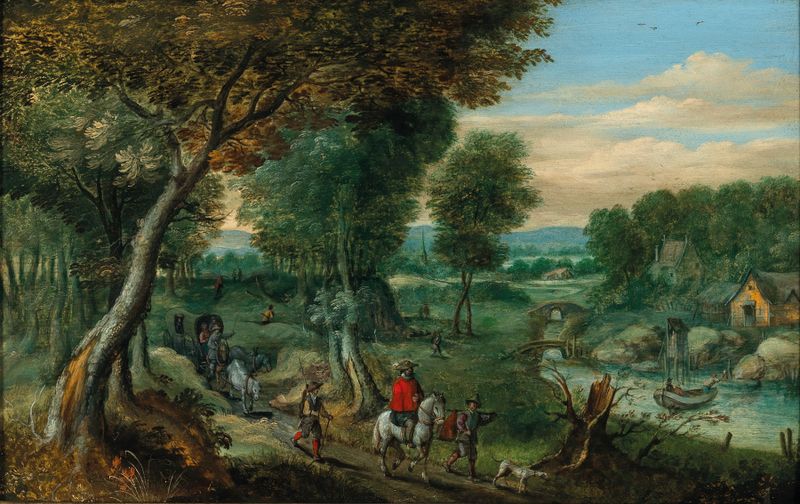
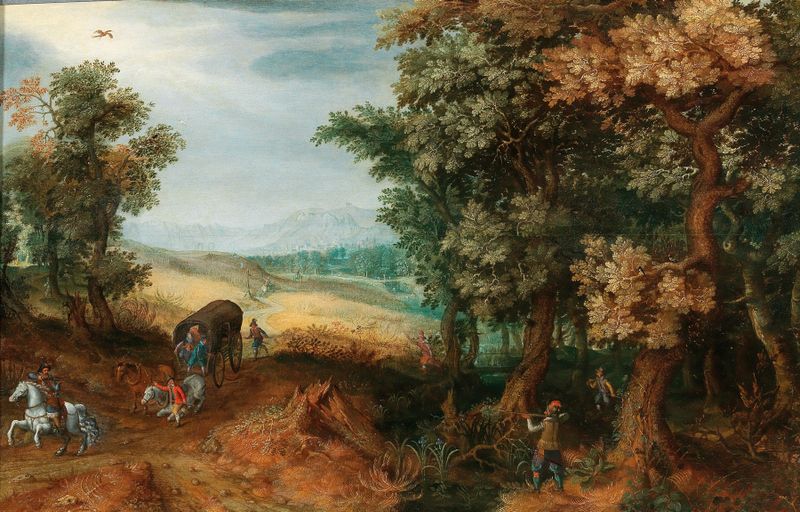
What if silence could speak through light? In Landscape, the interplay of shadow and illumination evokes a profound stillness, inviting the viewer to pause and reflect. Look to the left where a gentle slope rises, its contours enveloped in a soft haze, revealing the whisper of distant hills. Notice how the sunlight filters through the trees, casting elongated shadows that dance across the ground, creating a dialogue between light and dark. The color palette, dominated by muted greens and earthy browns, underscores a sense of tranquility, yet hints at the tension between the vibrant life of nature and the enveloping quietude that surrounds it. The subtle contrasts in this composition tell a deeper story.
The shadows that sprawled beneath the trees appear to cradle the light, as though guarding secrets of the landscape. Each brushstroke seems to capture the fleeting moment of dusk, suggesting a time when day surrenders to night, a metaphor for transience and contemplation. This juxtaposition invites the viewer to explore themes of solitude and the ephemeral beauty found in the natural world. Molanus painted this piece during a period when artists were deeply exploring the relationship between nature and emotion.
Although specific details about the time and place of its creation remain unclear, the artwork aligns with the broader artistic movements that emphasized mood and atmosphere, reflecting a growing appreciation for landscapes as more than mere settings, but as profound reflections of inner states and life’s fleeting moments.