
Landscape — History & Facts
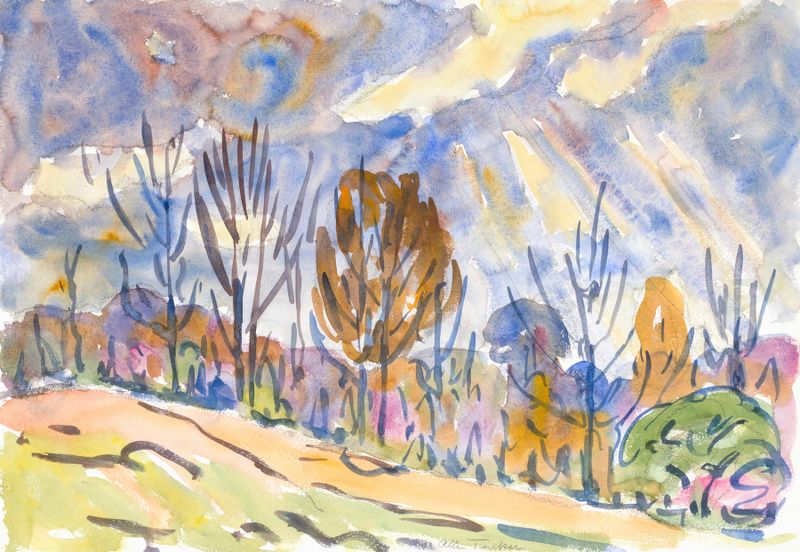
In the realm of Landscape, revelation awaits those who dare to peer into its depths and embrace the vibrant tranquility it offers. Look to the foreground, where a palette of rich greens and soothing blues draws your gaze, inviting you into a serene world. Notice how the swirling brushstrokes create a sense of movement, as if the landscape breathes along with the viewer. The interplay of light and shadow across the hills evokes a quiet morning, where dawn's first rays coax the earth from slumber, suggesting a narrative of renewal and hope. Yet, beneath this idyllic exterior lies an emotional tension.
The fragmented strokes hint at impermanence, whispering secrets of a transient beauty that may soon fade. The horizon, painted with an ethereal glow, represents the boundary between reality and imagination, prompting reflections on the nature of perception and the fleeting moments that define existence. Each layer of color holds a story, inviting viewers to decipher the delicate balance between stillness and the chaos of nature. In 1909, while residing in New York, the artist delved into a transformative period of experimentation and exploration.
This year marked a shift in his artistic approach, as he sought to blend abstraction with the natural world. Against the backdrop of a rapidly modernizing society, Landscape emerged as a personal statement, embodying both a connection to the earth and a longing for the spiritual essence hidden within its beauty.
More Artworks by Allen Tucker
Browse all →
Surf Breaking, Cranberry Island
Allen Tucker
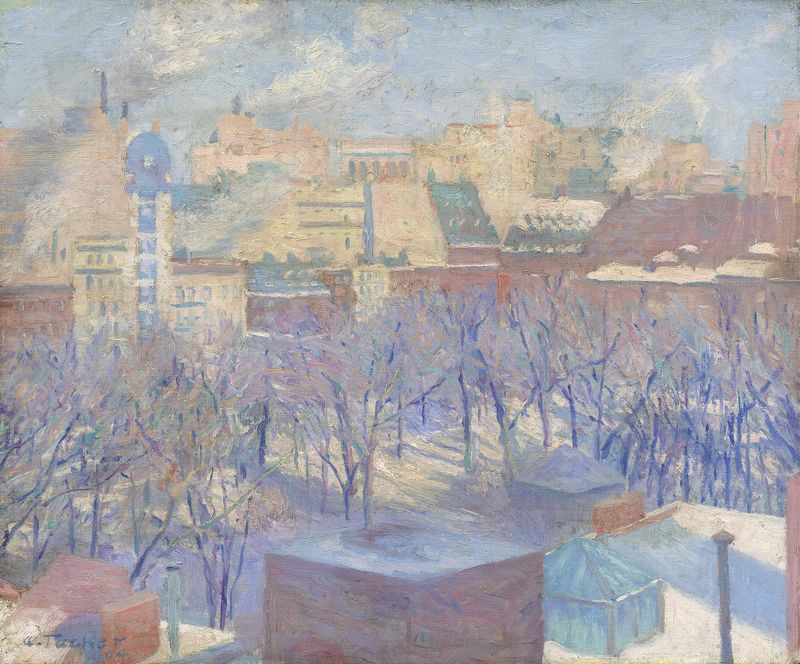
Madison Square,Snow
Allen Tucker

Cloudburst at Black Mesa, New Mexico
Allen Tucker
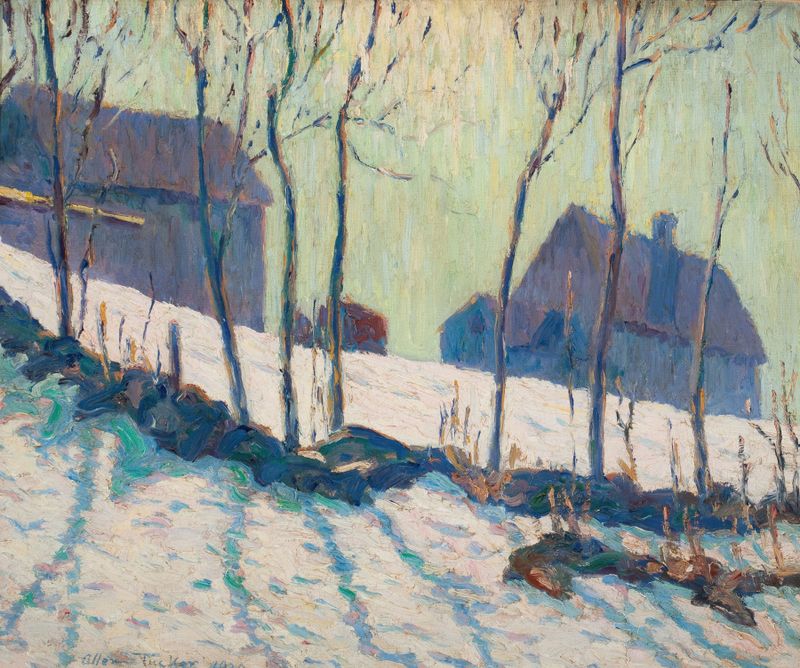
Winter Landscape
Allen Tucker
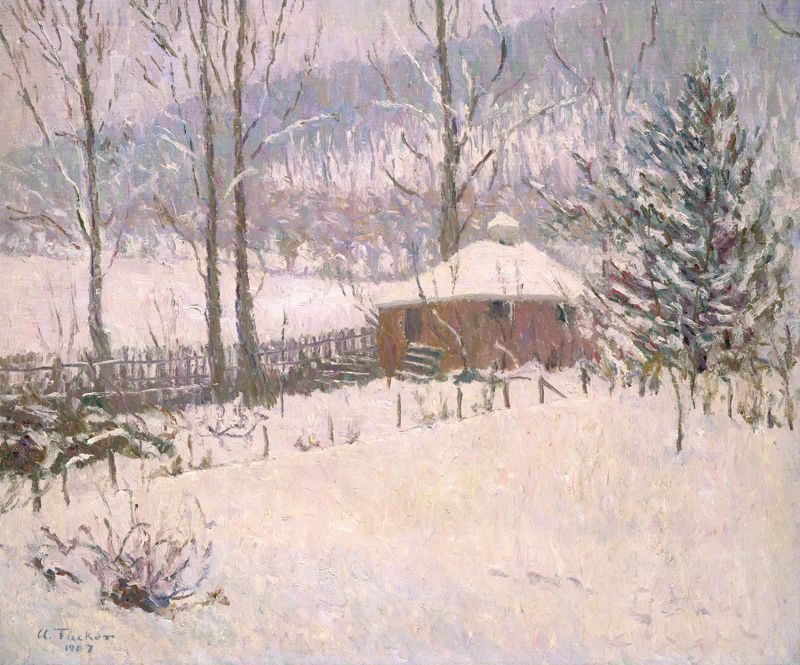
Winter at Portland
Allen Tucker

Watercolor No. 73, Blue And Lavender
Allen Tucker
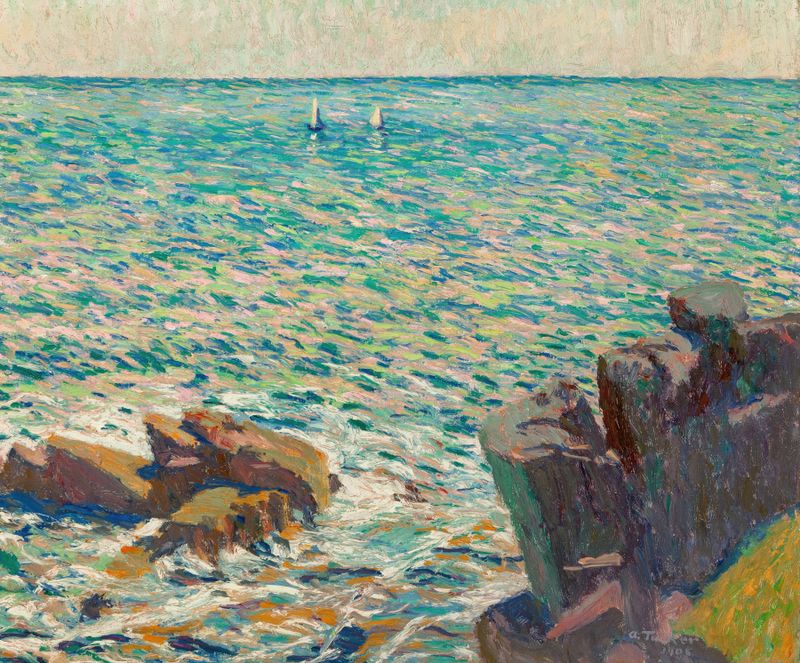
Two Boats
Allen Tucker
Watercolor No. 63, Road
Allen Tucker

Bunker Hill
Allen Tucker

Watercolor No. 6, Blue Coast
Allen Tucker





