
Watercolor No. 63, Road — History & Facts
In this stillness lies a poignant reflection of emptiness, an echo that reverberates beyond the borders of the paper and into the viewer's soul. It invites contemplation, a reminder that silence can speak volumes, yearning to be filled with meaning. Look to the center of Watercolor No. 63, Road where the faintly painted path meanders into a horizon that seems almost unattainable.
The delicate strokes form a gentle gradient of muted blues and grays, suggesting a tranquil yet forlorn journey. The wispy brushwork conveys an ephemeral quality, while pools of color bleed into one another, creating a sense of fluidity and depth. The sparse composition enhances the feeling of isolation, inviting the viewer to trace the road with their eyes, only to find solitude at the end. Within this artwork lies a subtle dialogue between presence and absence.
The empty space surrounding the road suggests an open invitation to the viewer's imagination, evoking questions about where the journey leads and who might walk it. The juxtaposition of the tangible path against the vast emptiness around it mirrors the human experience—our travels often defined by both movement and stillness. This tension between expectation and reality resonates deeply, leaving the viewer to ponder their own voyages. Created in 1930, this piece reflects Allen Tucker’s exploration of abstraction during a significant period in American art, where artists were beginning to break away from traditional representation.
At this time, Tucker was immersed in the New York art scene, influenced by the burgeoning movements that sought to depict emotional truths rather than mere appearances. His experimentation with watercolor, a medium known for its fluidity and transparency, marked a departure from the rigidity of earlier works, capturing a moment in the evolution of modern art.
More Artworks by Allen Tucker
Browse all →
Surf Breaking, Cranberry Island
Allen Tucker
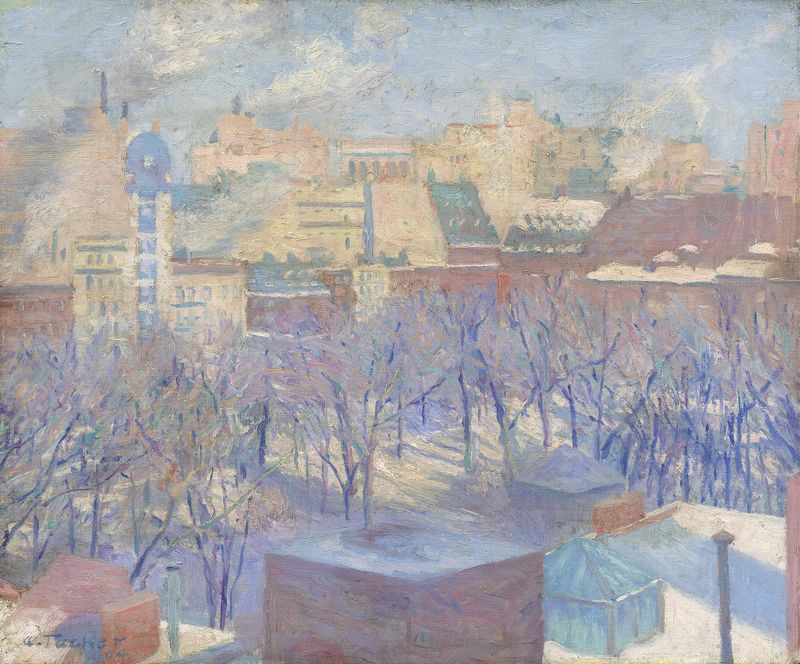
Madison Square,Snow
Allen Tucker
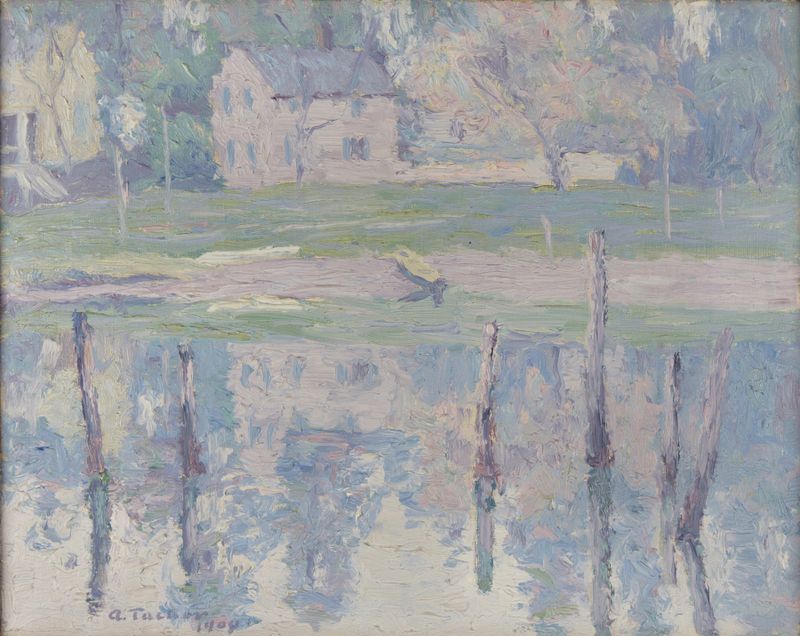
Landscape
Allen Tucker

Cloudburst at Black Mesa, New Mexico
Allen Tucker
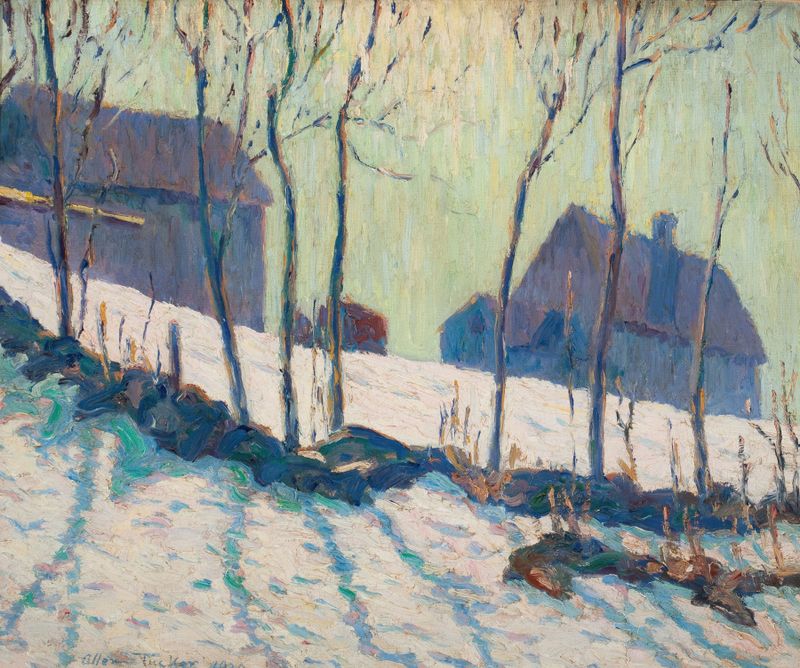
Winter Landscape
Allen Tucker
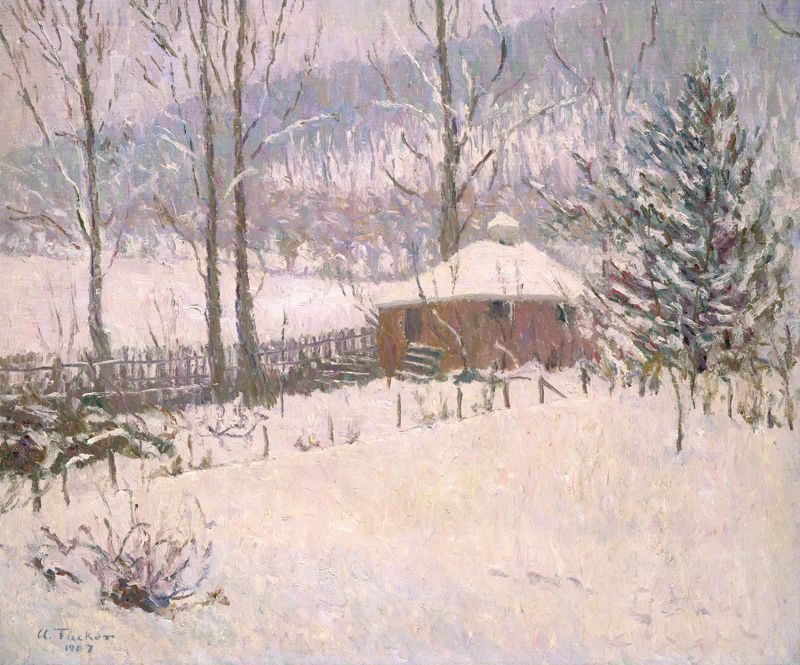
Winter at Portland
Allen Tucker

Watercolor No. 73, Blue And Lavender
Allen Tucker
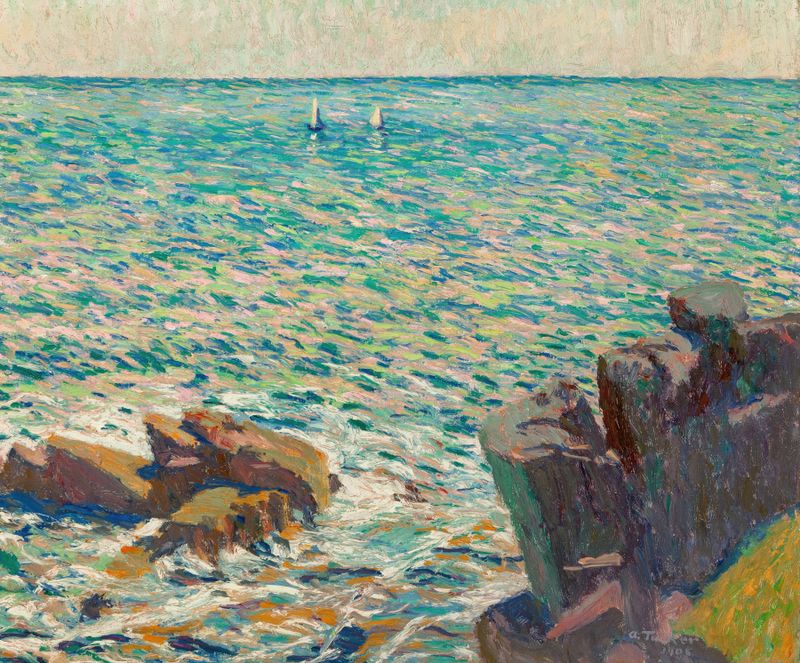
Two Boats
Allen Tucker

Bunker Hill
Allen Tucker

Watercolor No. 6, Blue Coast
Allen Tucker





