
Winter at Portland — History & Facts
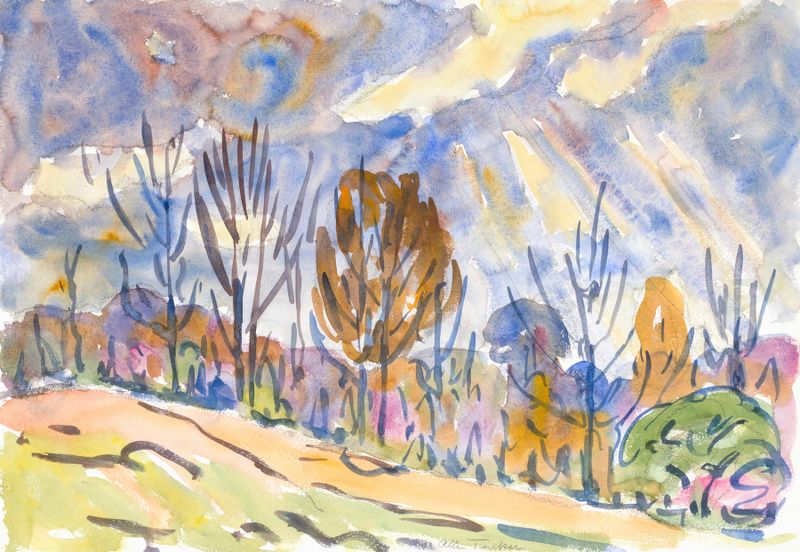
In the chilled embrace of winter, the stark landscapes often reveal the depths of human solitude. Each brushstroke holds the weight of isolation, whispering secrets of the heart amidst the frozen stillness. Look to the foreground, where a solitary figure stands, partially obscured by the whispering snowflakes. Notice how the cool blues and grays envelop the landscape, casting a somber mood that enhances the quiet desolation.
The trees, stripped of their leaves, stretch like skeletal hands against the overcast sky, while the uneven patches of snow create a textured canvas that invites your gaze to wander through the scene. The composition draws you in, as if beckoning you to share the profound silence that envelops the individual. In this frozen moment, the contrast between the vibrant strokes of the figure’s clothing and the muted surroundings speaks volumes. The isolation is palpable, yet there’s a subtle hint of resilience — the figure stands firm, perhaps in defiance of the surrounding vastness.
The interplay of light and shadow enhances the emotional weight, suggesting a glimmer of hope amidst overwhelming loneliness. This juxtaposition transforms the landscape into a mirror of internal struggle, reflecting both despair and the quiet strength found in solitude. Completed in 1907, this work emerged during a transformative period for the artist, recently inspired by the burgeoning modernism movement. Tucker, rooted in the New York art scene, was exploring themes of nature and the human condition, drawing from both his personal experiences and the broader shifts in society.
Amidst changing artistic conventions, Winter at Portland captures not only a moment in time but also a profound emotional landscape that resonates with the viewer.
More Artworks by Allen Tucker
Browse all →
Surf Breaking, Cranberry Island
Allen Tucker
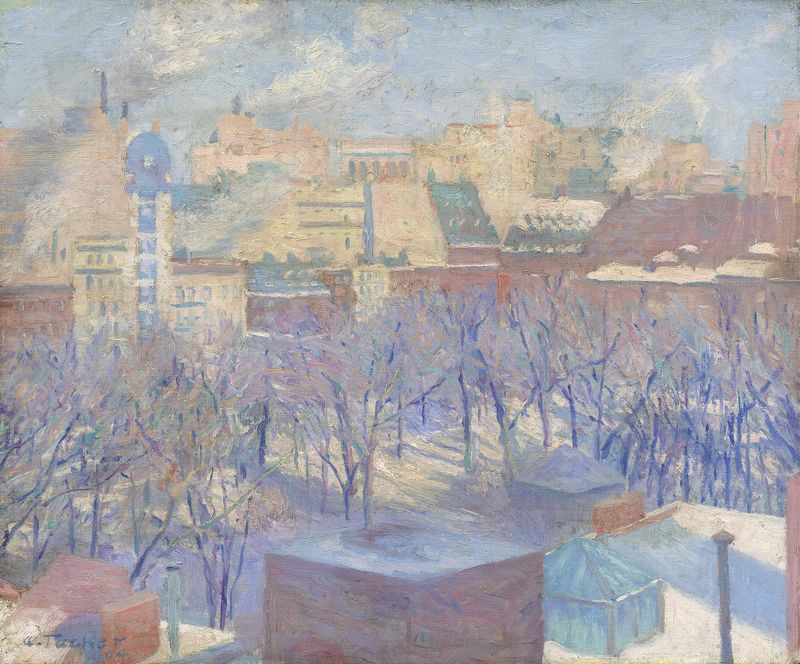
Madison Square,Snow
Allen Tucker
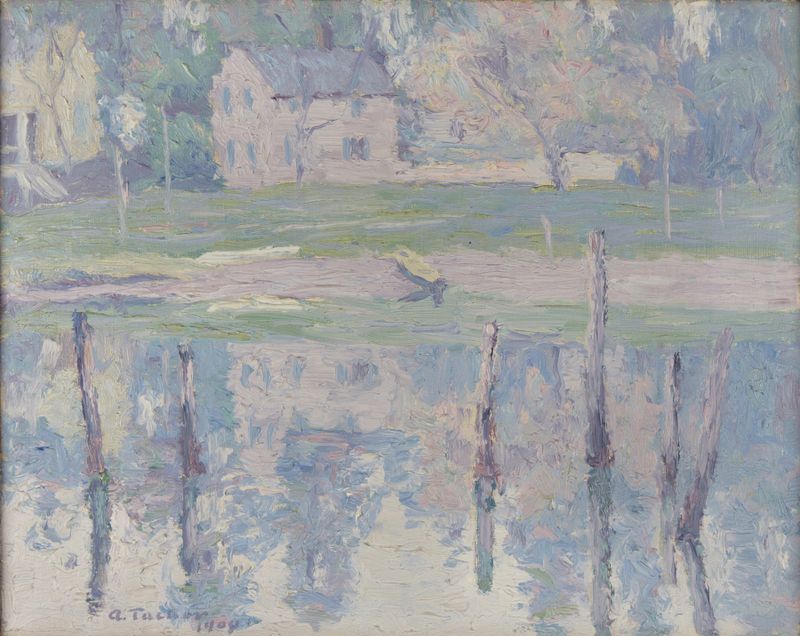
Landscape
Allen Tucker

Cloudburst at Black Mesa, New Mexico
Allen Tucker
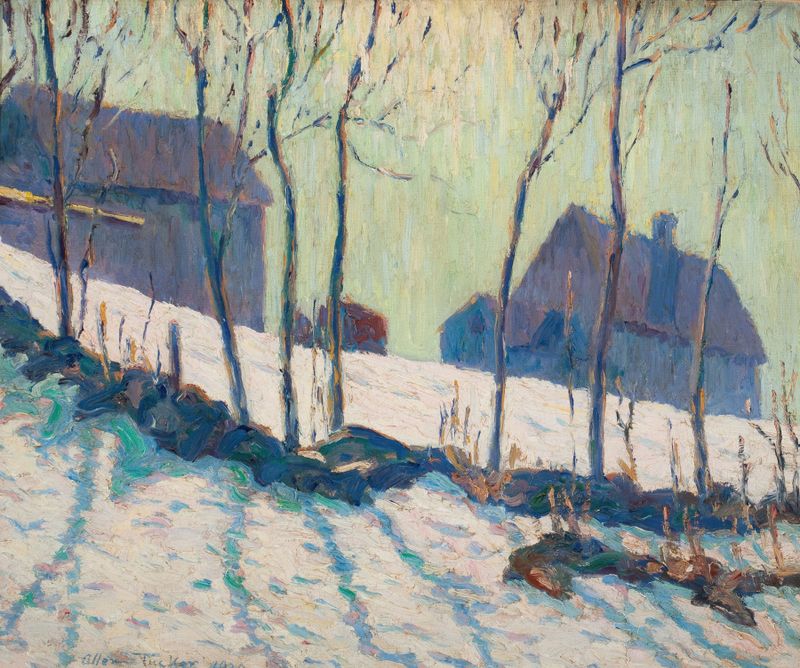
Winter Landscape
Allen Tucker

Watercolor No. 73, Blue And Lavender
Allen Tucker
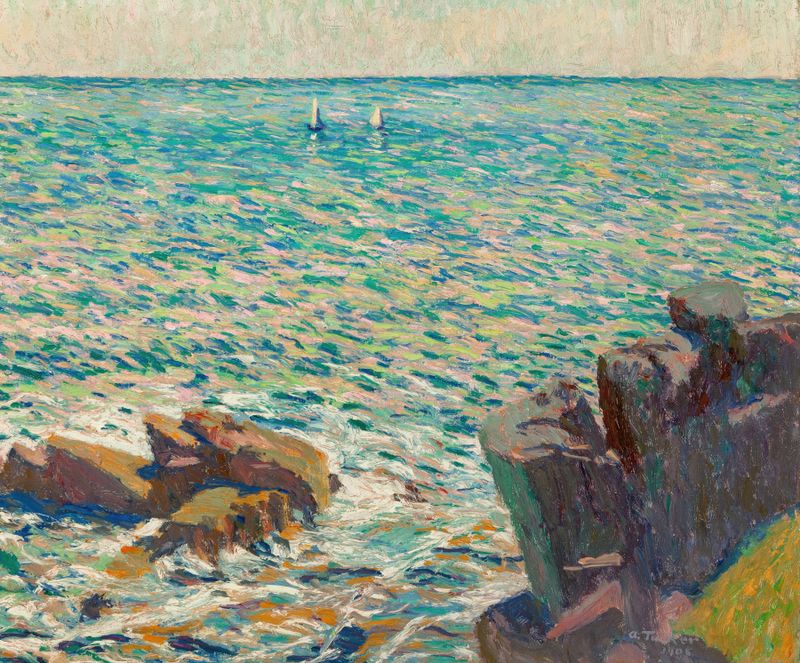
Two Boats
Allen Tucker
Watercolor No. 63, Road
Allen Tucker

Bunker Hill
Allen Tucker

Watercolor No. 6, Blue Coast
Allen Tucker





