
Surf Breaking, Cranberry Island — History & Facts
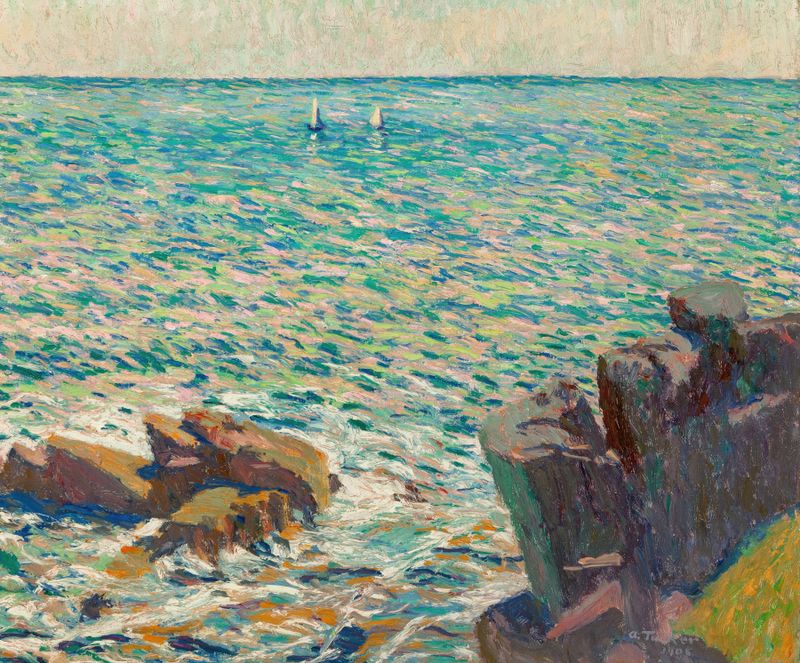
Who listens when art speaks of silence? In Surf Breaking, Cranberry Island, a tranquil yet powerful transformation unfolds, inviting viewers to contemplate change in the natural world. Look closely at the turbulent waves crashing against the rocky shore, where bold brushstrokes create a symphony of motion. Notice how the interplay of deep blues, frothy whites, and earthy browns conveys both chaos and beauty. The composition draws the eye toward the horizon, where the sky meets the sea—an invitation into the vastness of nature’s quiet force.
The artist's use of light, particularly the soft glow that dances on the water’s surface, enhances the scene’s ethereal quality, evoking a sense of peace amid turmoil. Beneath the surface lies a deeper narrative. The contrast between the solid rocks and the fluid waves captures the delicate balance between permanence and change—an emblem of life's continuous cycles. Each wave, a fleeting moment, crashes against the enduring land, symbolizing both destruction and renewal.
The absence of human presence further emphasizes the solitude found in nature, urging the viewer to reflect on their own journey of transformation amidst the chaos of life. In 1913, Allen Tucker painted this work during a period marked by significant developments in American art, as artists began to embrace more expressive styles. At this time, Tucker was involved with the American art scene, seeking to capture the essence of the landscapes around him while also exploring the emotional depths inherent in nature. His commitment to this vision is vividly captured in Surf Breaking, Cranberry Island, a testament to the powerful dialogue between the artist and the environment.
More Artworks by Allen Tucker
Browse all →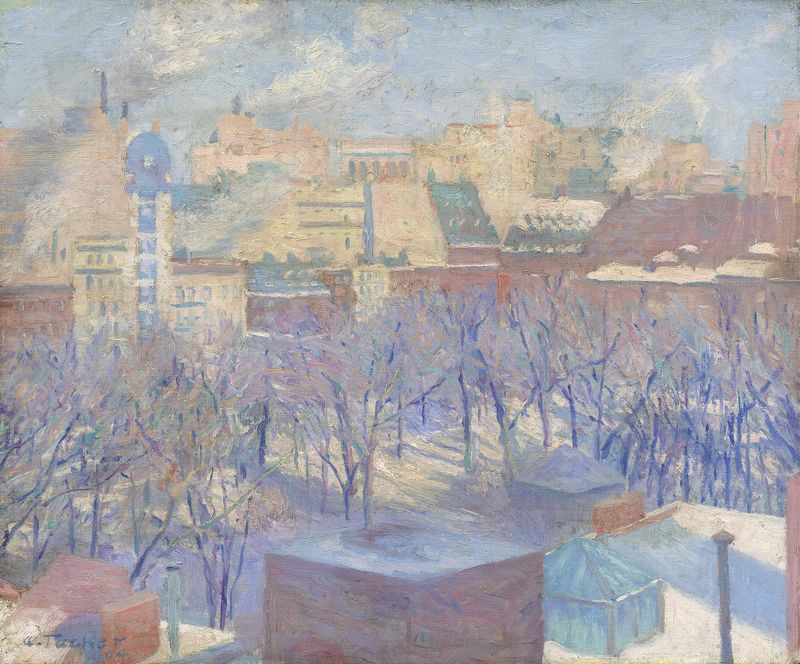
Madison Square,Snow
Allen Tucker
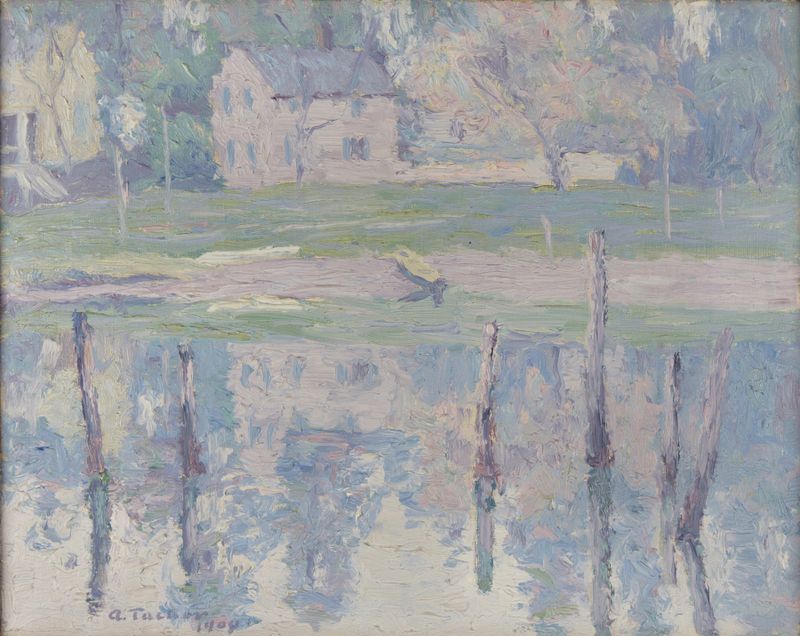
Landscape
Allen Tucker

Cloudburst at Black Mesa, New Mexico
Allen Tucker
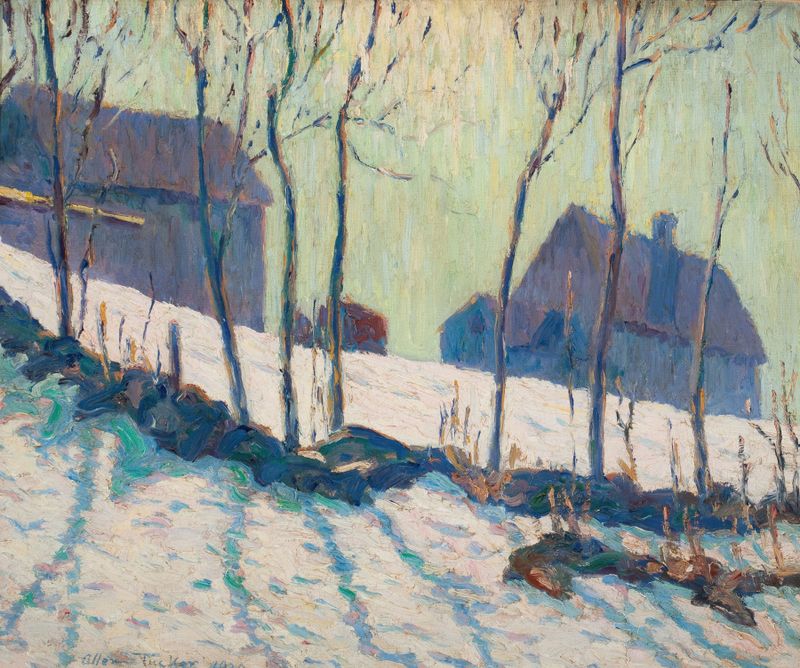
Winter Landscape
Allen Tucker
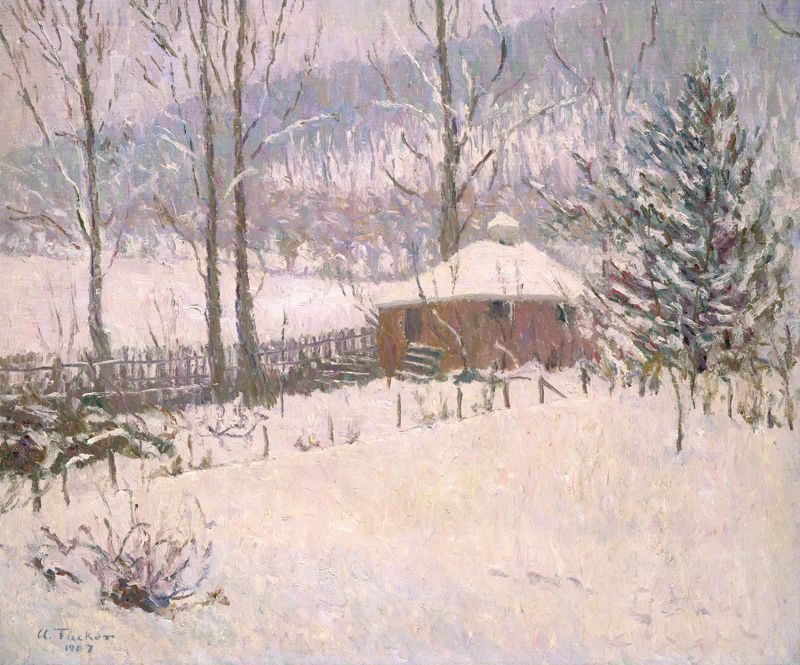
Winter at Portland
Allen Tucker

Watercolor No. 73, Blue And Lavender
Allen Tucker
Two Boats
Allen Tucker
Watercolor No. 63, Road
Allen Tucker

Bunker Hill
Allen Tucker

Watercolor No. 6, Blue Coast
Allen Tucker





