
Landscape — History & Facts
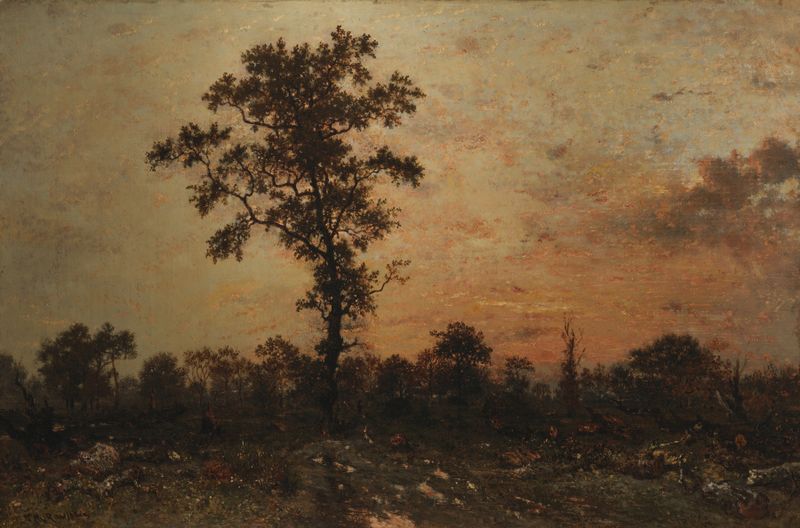
Did the painter know this moment would outlive them? The melancholy beauty of existence lingers in the twilight of nature, where shadows dance and memories fade. Focus on the gentle undulations of the earth; the contours of the hills evoke a quiet strength. Look to the left, where a lone tree stands resilient against the evening sky, its gnarled branches reaching out like arms craving connection. The palette whispers of greens and browns, infused with the soft embrace of dusk, creating a tranquil yet poignant atmosphere that suggests both the solace and sorrow found in solitude. Hidden within this landscape is an emotional tension, a reflection of life's transient nature.
The juxtaposition of the sturdy tree against the ethereal sky reminds us of our own fragility, while the interplay of light and shadow reveals the ever-present cycle of growth and decay. Rousseau's brushwork captures the poignant stillness of the moment, inviting viewers to contemplate the weight of loss and the beauty that persists in its wake. In 1836, when this work was painted, the artist was rooted in the Barbizon School, a movement emphasizing naturalism and the beauty of rural life. Influenced by the changing landscapes of France and the Romanticism that dominated the period, Rousseau sought to encapsulate the essence of nature.
This period of his life was marked by both personal struggles and a commitment to expressing deeper emotional truths through his art, solidifying his legacy in the world of landscape painting.
More Artworks by Théodore Rousseau
Browse all →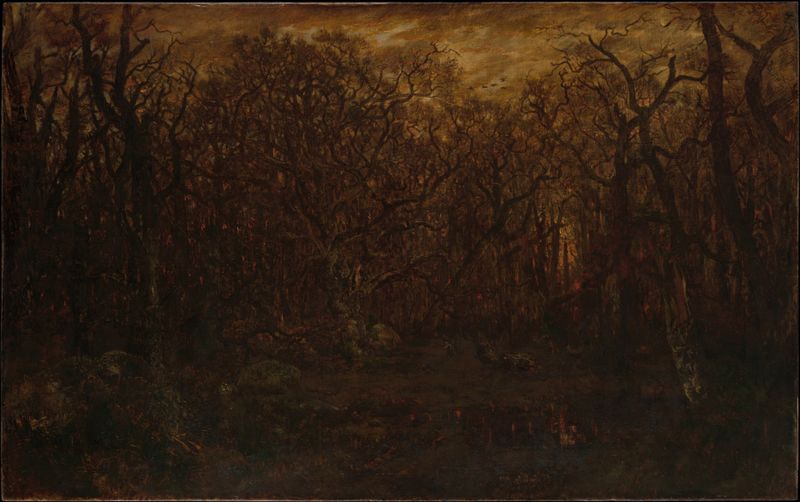
The Forest in Winter at Sunset
Théodore Rousseau
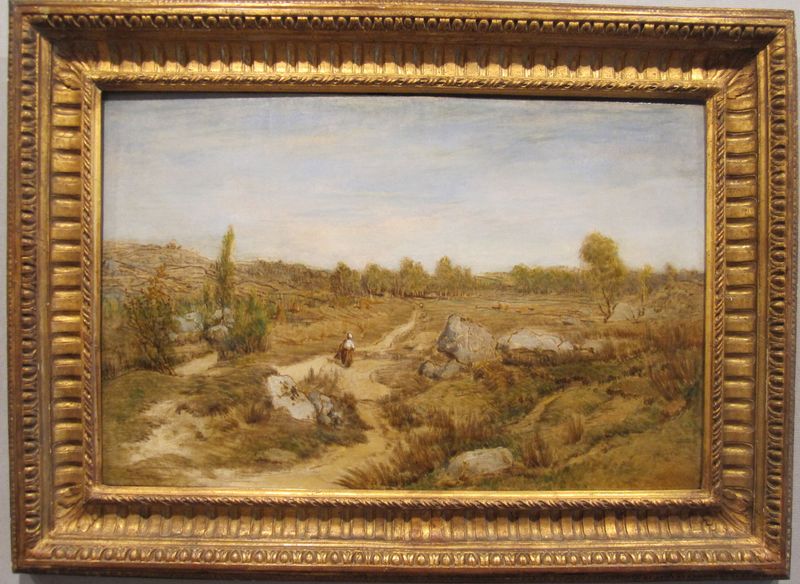
Valley of the Rouars in the Gorges d’Apremont
Théodore Rousseau
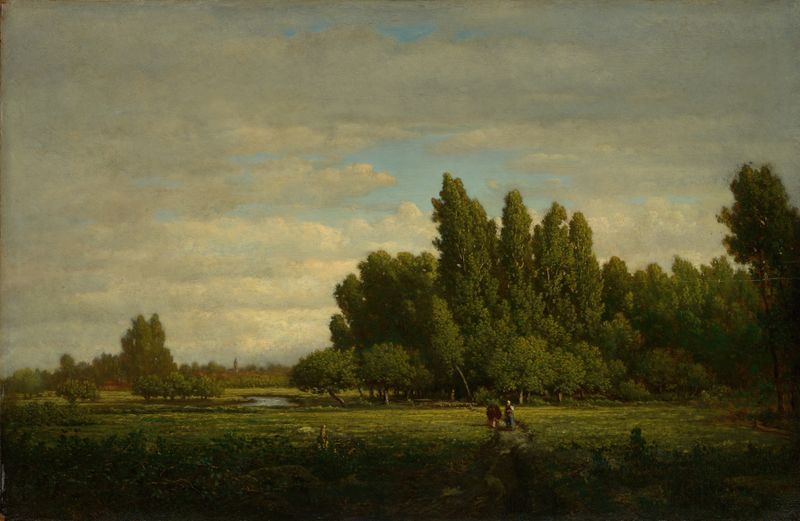
A Meadow Bordered by Trees
Théodore Rousseau
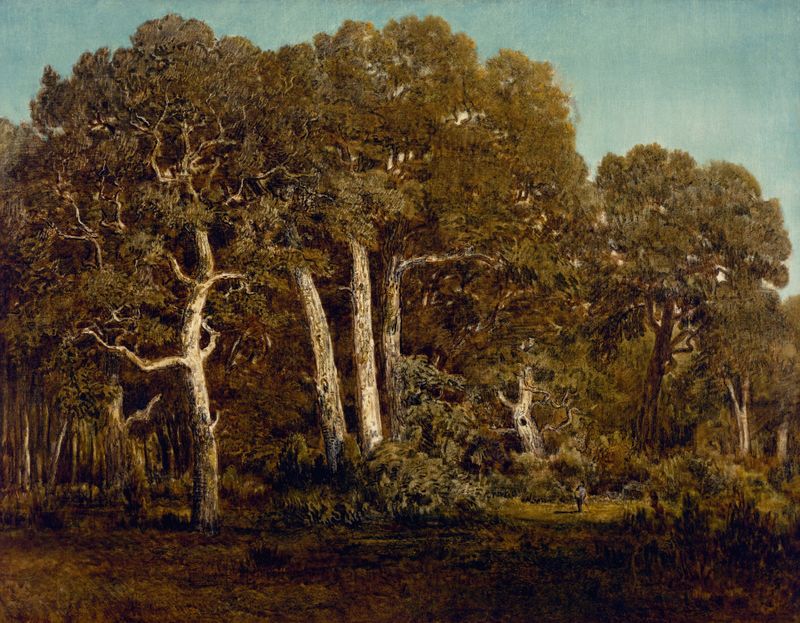
The Great Oaks of Old Bas-Bréau
Théodore Rousseau
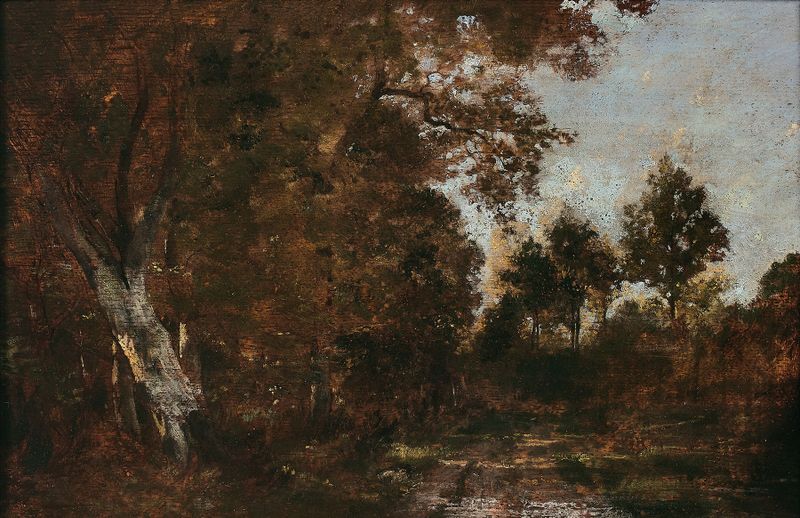
Paysage de sous-bois
Théodore Rousseau
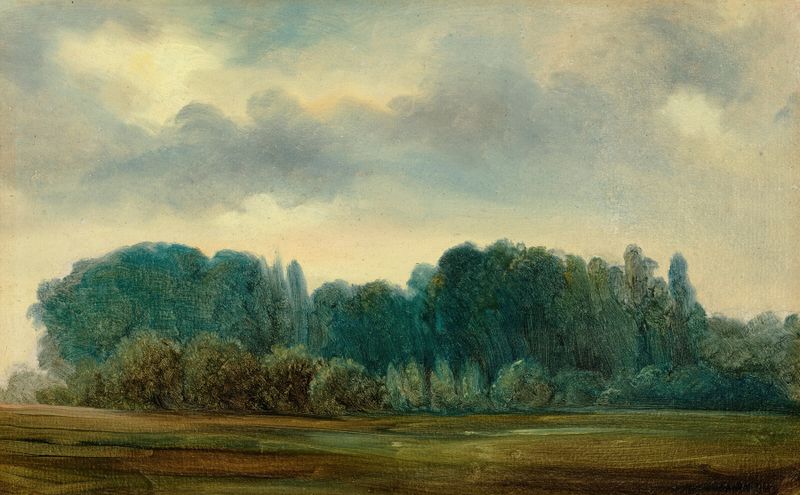
Paysage
Théodore Rousseau
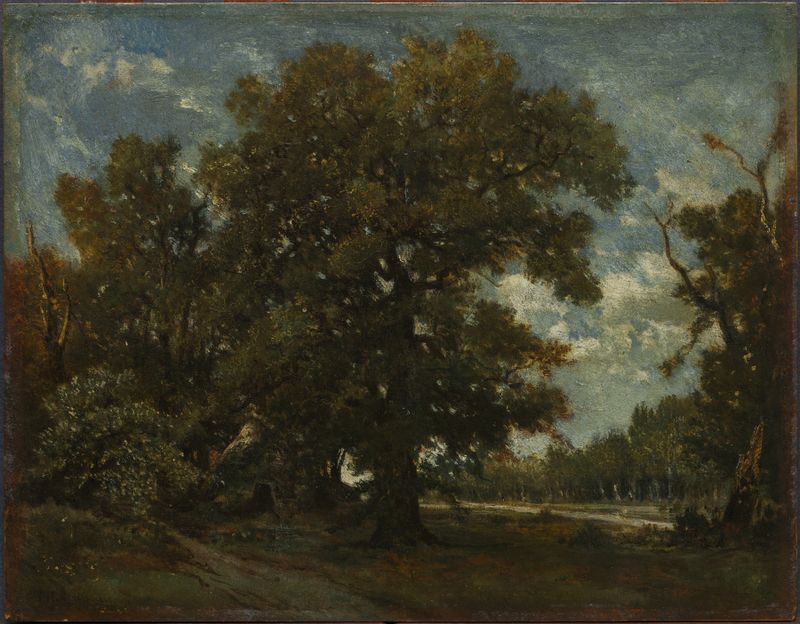
The Oak Tree
Théodore Rousseau
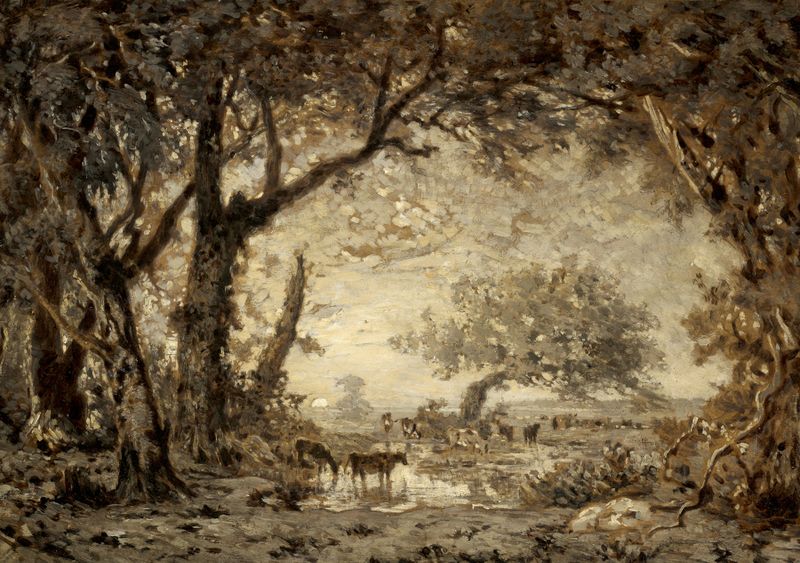
Sunset from the Forest of Fontainebleau
Théodore Rousseau
Edge of the Forest, Sun Setting
Théodore Rousseau
Soleil Couchant
Théodore Rousseau





