
Landscape — History & Facts
Could beauty survive in a century of chaos? This question lingers in the air, echoing through the vibrant strokes of the canvas, where longing and tranquility meet in a delicate dance. Look to the left at the sweeping hills that cradle the horizon, their rolling forms painted with a soft palette of greens and blues. The brushwork here is gentle, imparting a sense of movement, as if the landscape breathes beneath the artist's hand. Notice how the light spills across the foreground, illuminating patches of wildflowers, their vivid yellows and purples standing in stark juxtaposition to the muted earth tones of the hills behind them.
This choice directs the viewer's gaze inward, inviting contemplation amidst the expansive tranquility. Delve deeper and you’ll find contrasts that speak to the complex emotions carried within the scene. The serene beauty of the landscape belies an underlying tension — echoes of a world marred by conflict and uncertainty. Each flower, vibrant yet fragile, symbolizes the resilience of beauty against the backdrop of human strife.
The horizon, painted with a soft gradient of dusk, suggests a fleeting moment caught between day and night, symbolizing longing for peace in tumultuous times. In the 20th century, Julia Giesberts created this piece during a period marked by upheaval and rapid change in the art world. As movements such as Modernism and Abstract Expressionism challenged traditional forms, she found her voice in the beauty of the natural world, seeking solace amid chaos. Her works became a refuge, an exploration of the emotional depths of longing for harmony in a fragmented landscape.
More Artworks by Julia Giesberts
Browse all →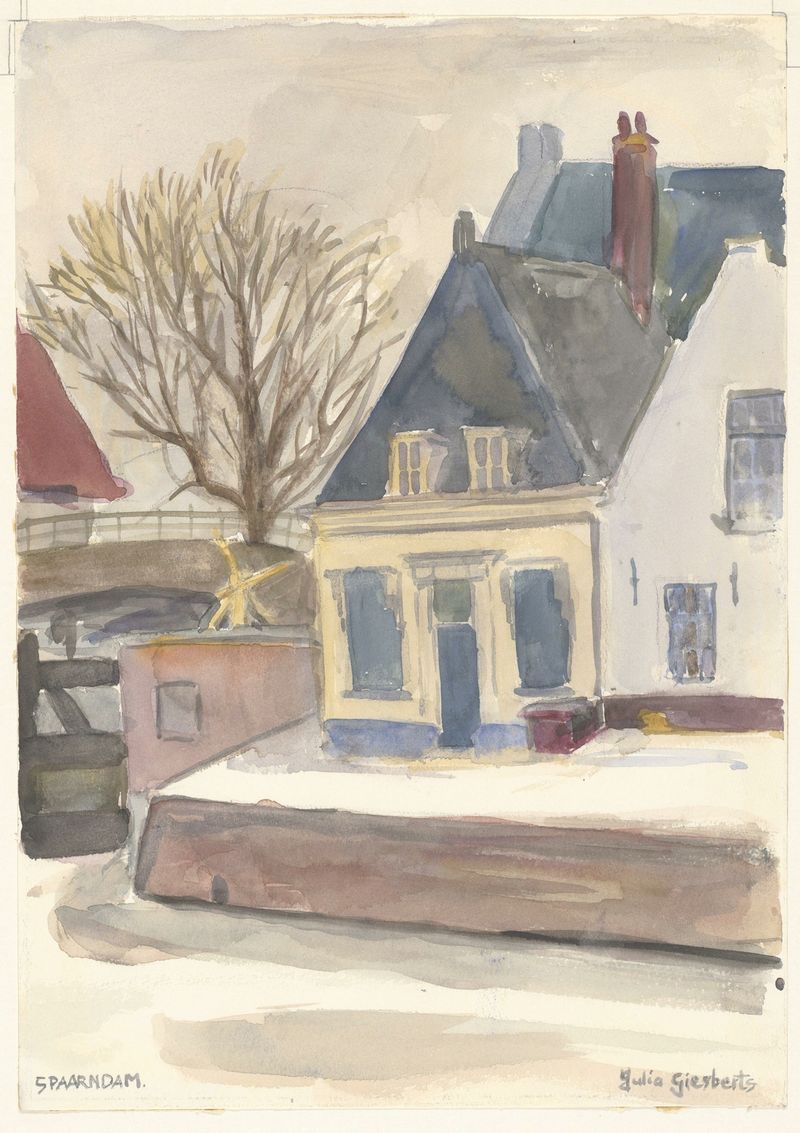
Spaarndam in de winter, links een sluisdeur
Julia Giesberts
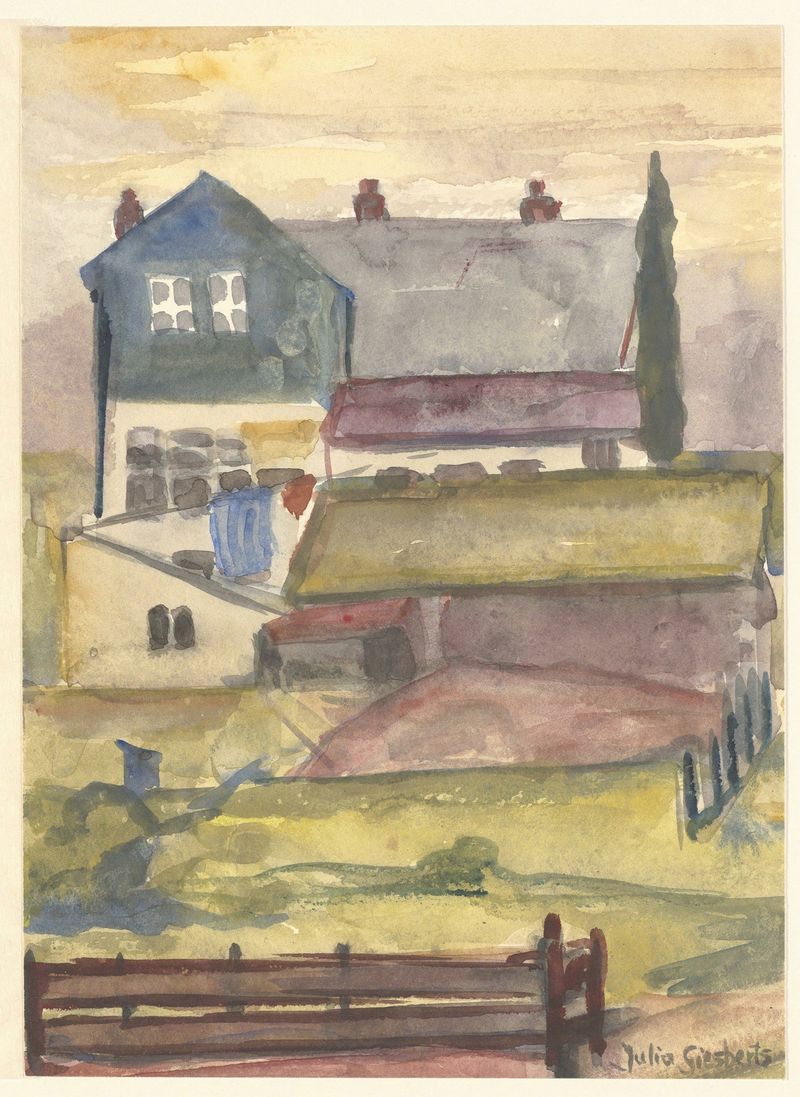
Landscape
Julia Giesberts
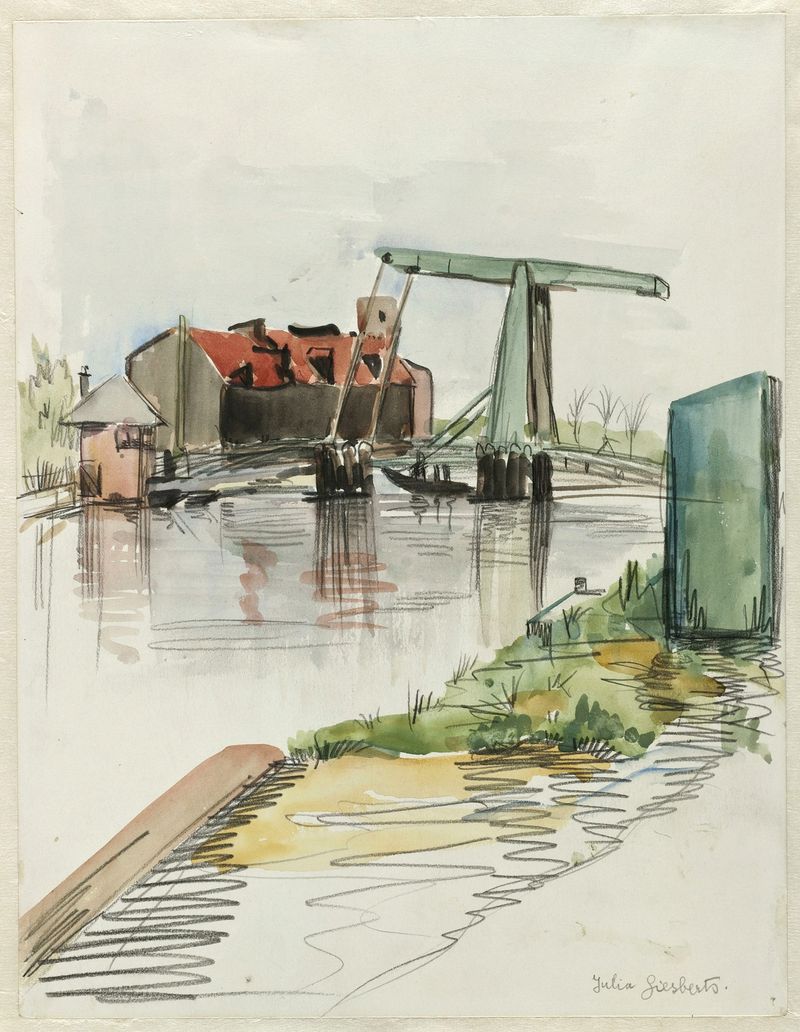
Landscape
Julia Giesberts
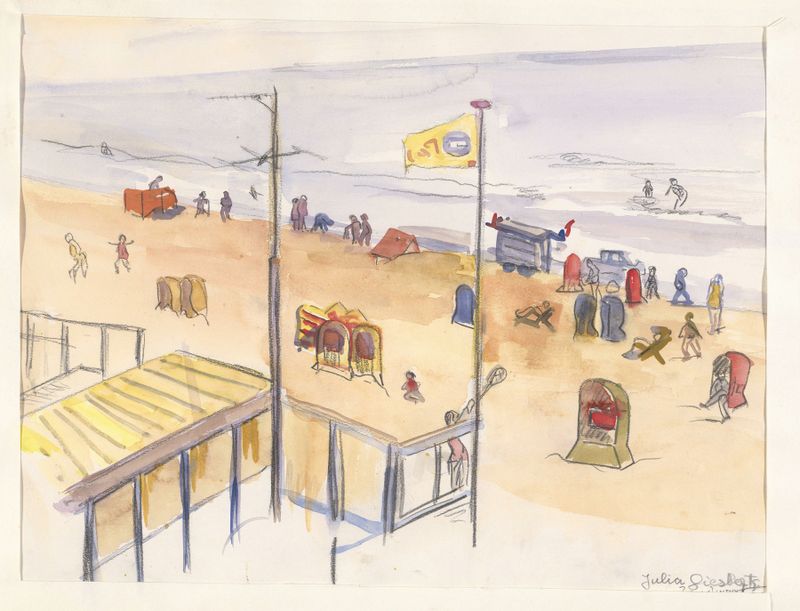
Strandleven te Zandvoort. Op het strand rieten strandstoelen en een haringkar
Julia Giesberts
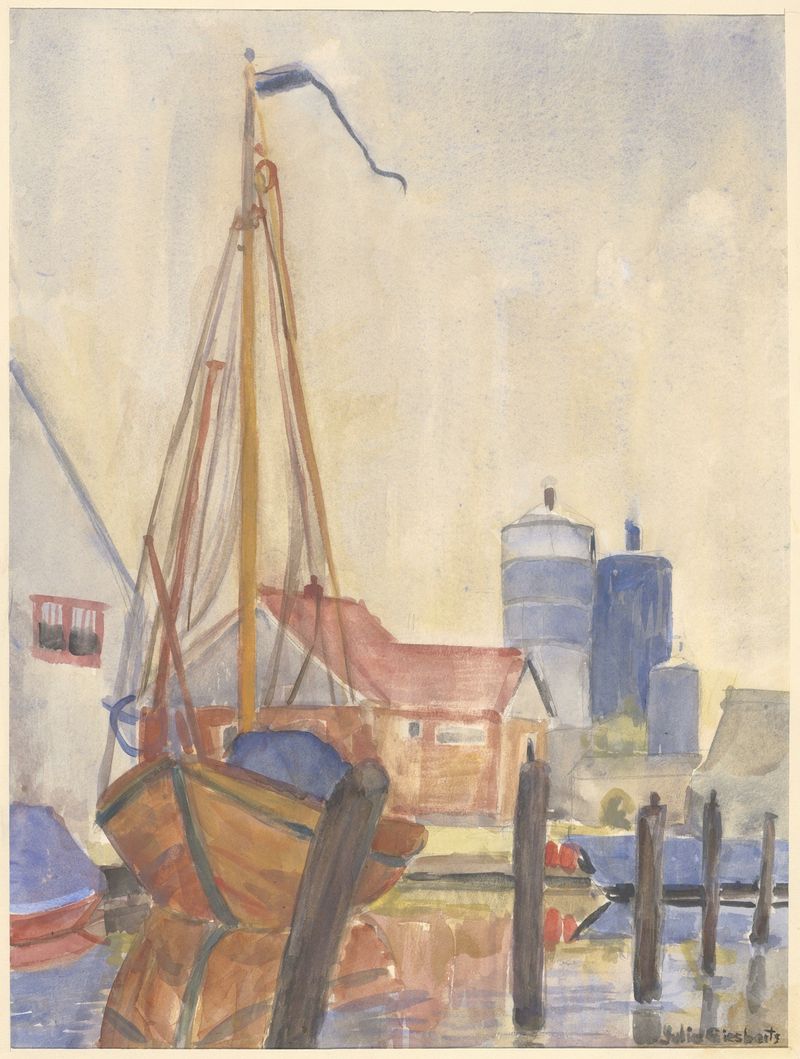
Ringvaart voorbij Aalsmeer
Julia Giesberts
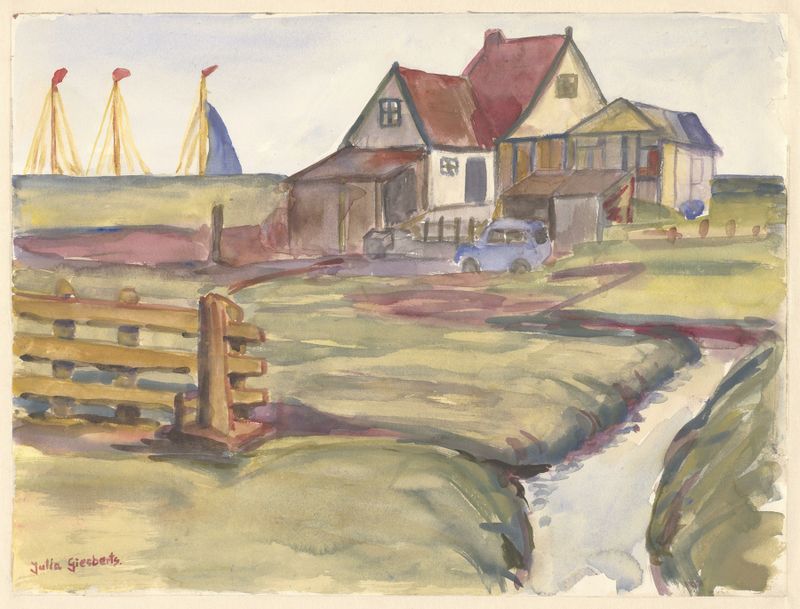
Landscape
Julia Giesberts
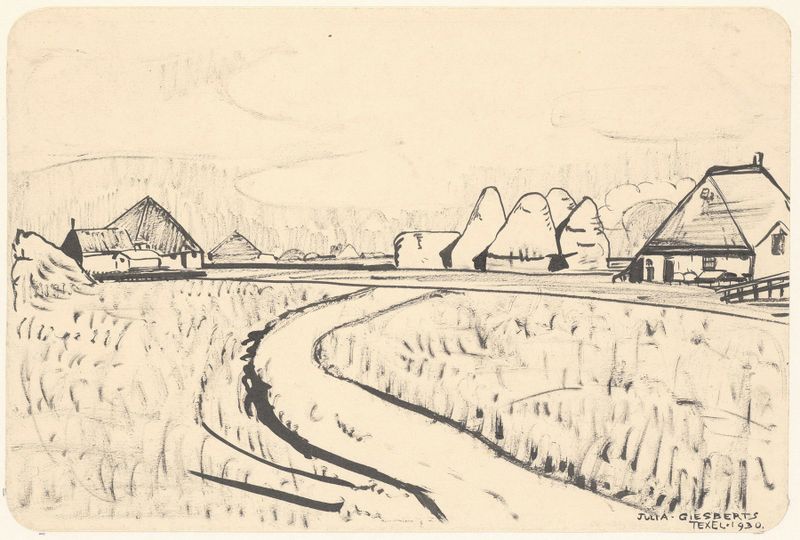
Boerderijen, mogelijk nabij Oosterend
Julia Giesberts
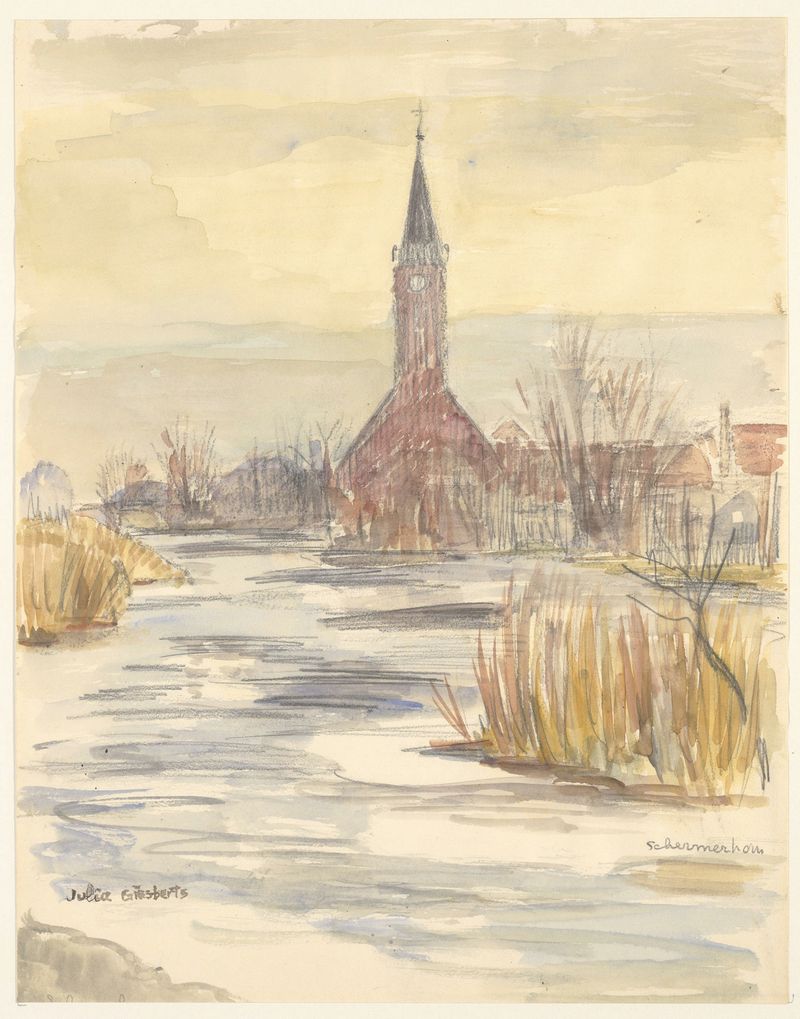
Gezicht op de kerk, op de voorgrond water
Julia Giesberts
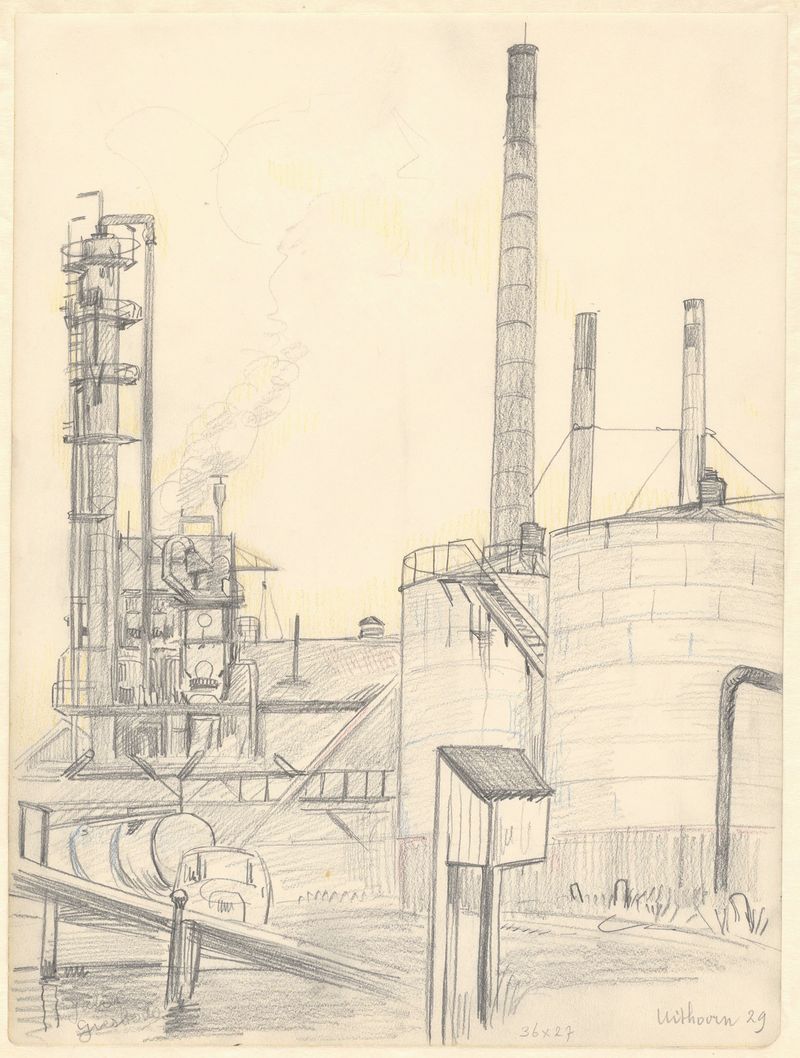
Uithoorn
Julia Giesberts
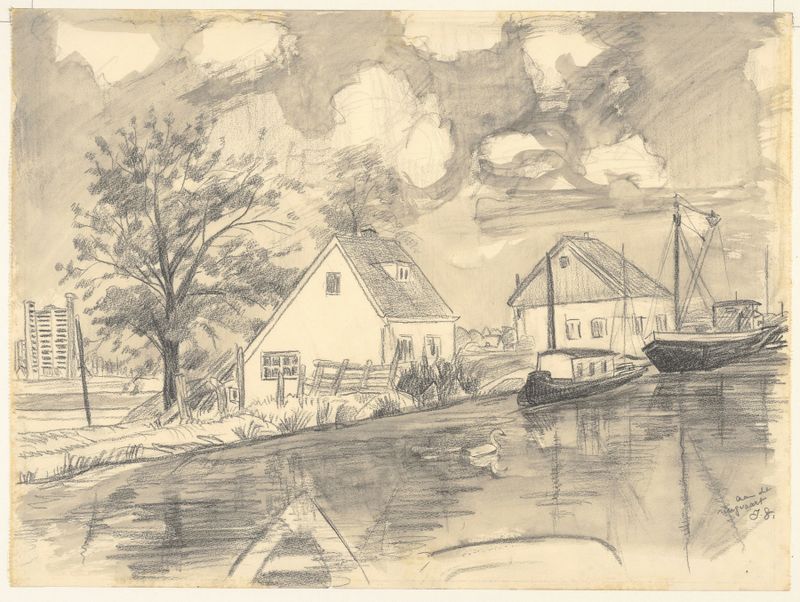
aan de ringvaart
Julia Giesberts





