
Landscape — History & Facts
Can beauty exist without sorrow? In the gently undulating hills and expansive skies of the landscape, Jacob van Ruisdael offers an answer steeped in the quiet complexity of nature. Look to the horizon, where the sun breaks through clouds, casting an ethereal glow over the meandering river that reflects the serene palette of greens and blues. The artist's meticulous brushwork captures each blade of grass and tree, inviting the eye to wander through the sprawling countryside, where light dances across the canvas. Notice the balance between the lush greenery of the foreground and the soft, distant mountains, creating a harmonious composition that evokes both peace and contemplation. Yet, as one delves deeper, contrasts emerge.
The lushness of the landscape belies an underlying tension; the darkening clouds suggest an impending storm, a reminder of nature's duality—a beauty that is transient. The carefully arranged elements, from the flowing water to the solitary figure in the distance, hint at the fragility of existence, suggesting that serenity is often accompanied by a whisper of melancholy. In 1646, van Ruisdael painted this work during a time of great transition in the Dutch Golden Age, where the appreciation for landscape painting flourished. Living in Haarlem, he was deeply influenced by the natural surroundings and the evolving artistic focus on realism and emotional depth.
This painting reflects not only his mastery of light and form but also the profound relationship he fostered with the landscapes that inspired him.
More Artworks by Jacob van Ruisdael
Browse all →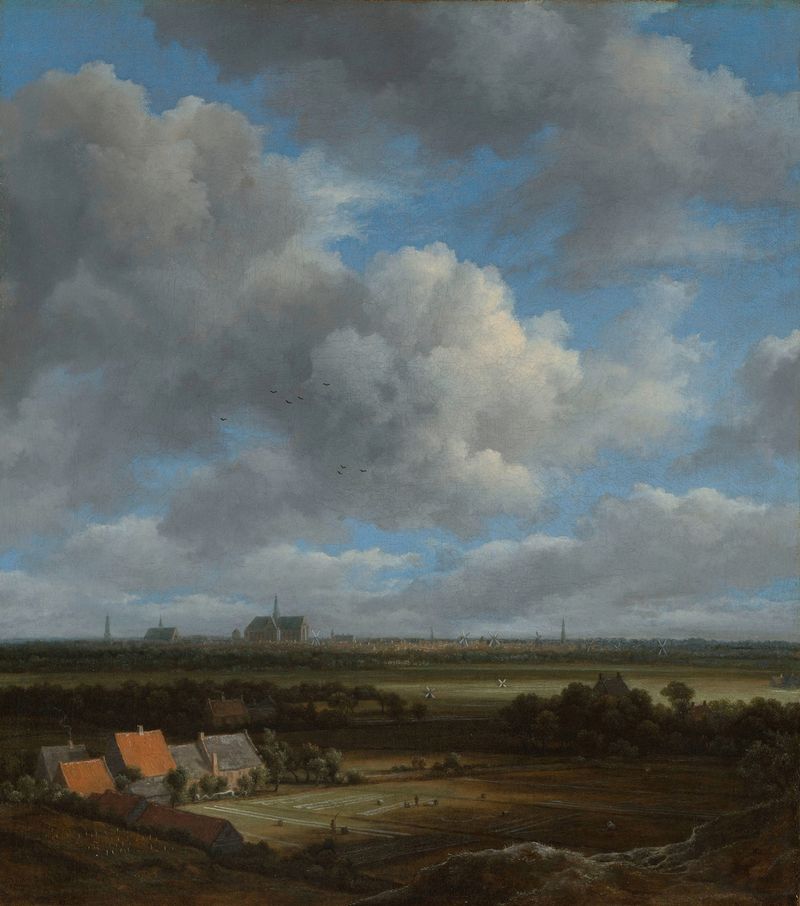
View of Haarlem from the Northwest, with the Bleaching Fields in the Foreground
Jacob van Ruisdael
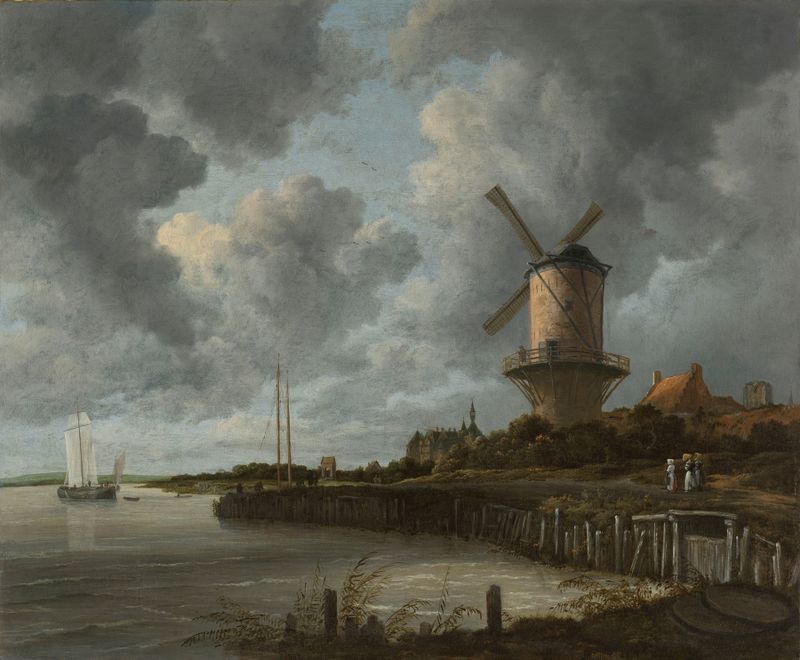
The Windmill at Wijk bij Duurstede
Jacob van Ruisdael
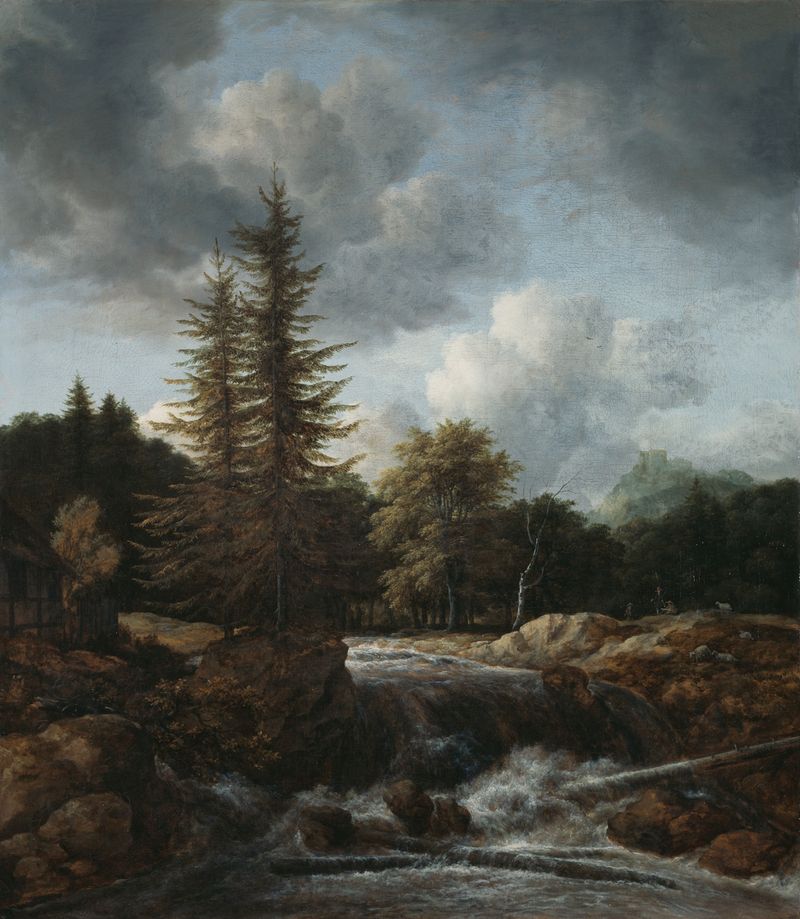
Landscape with Waterfall
Jacob van Ruisdael
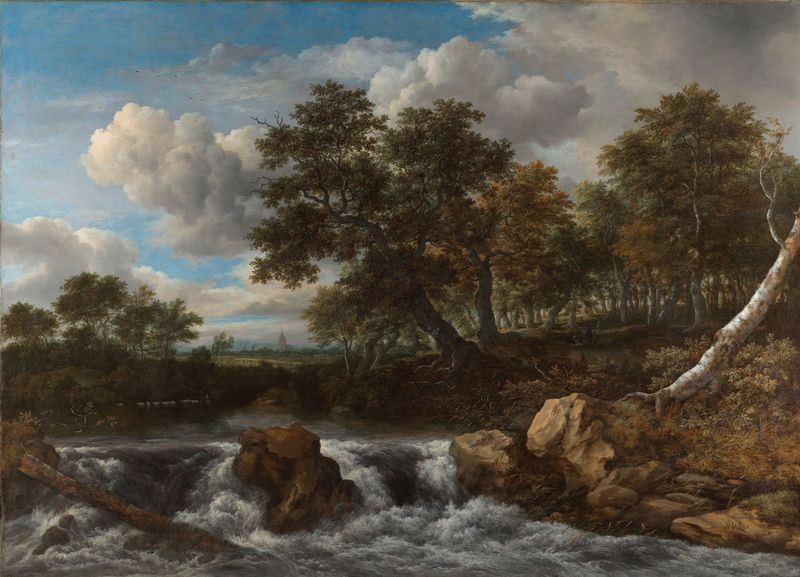
Landscape with Waterfall
Jacob van Ruisdael
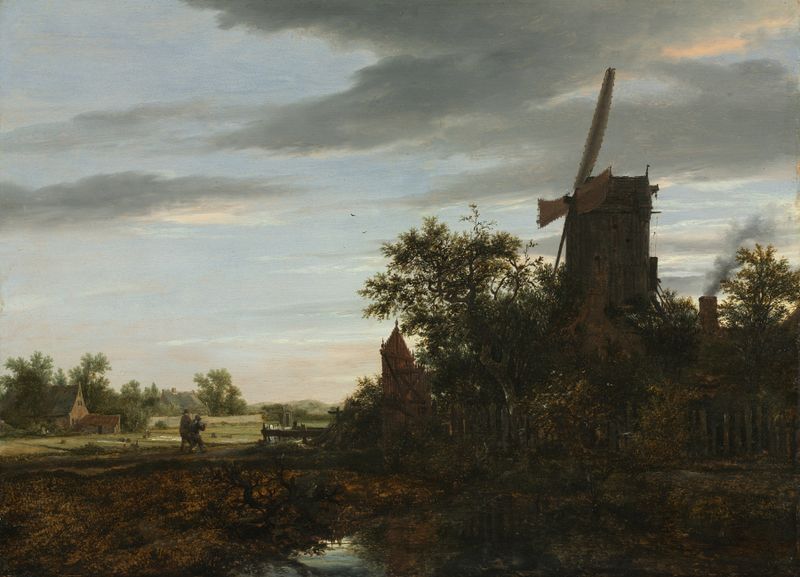
Landscape with a Windmill
Jacob van Ruisdael

Wooded hillside with a view of Bentheim Castle
Jacob van Ruisdael
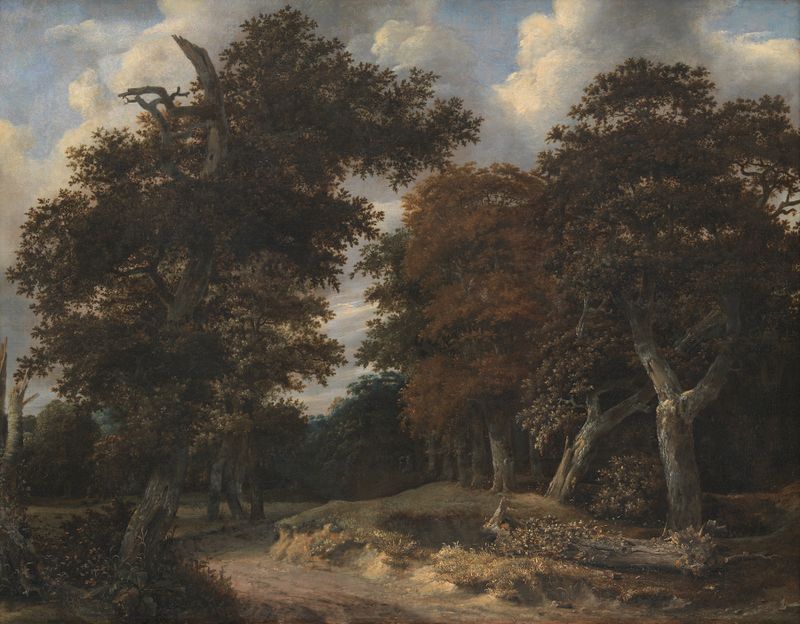
Road through an Oak Forest
Jacob van Ruisdael

Landscape with a Church
Jacob van Ruisdael

The Forest Stream
Jacob van Ruisdael

The Jewish Cemetery
Jacob van Ruisdael





