
Landscape — History & Facts
A single crooked tree, stripped bare in places, commands the right side of the scene, its branches reaching into a sky awash with the soft gold of late afternoon. Your eye is drawn next to the fragile wooden bridge, where tiny figures and animals inch their way across a surging river, dwarfed by the boulders and the restless water below. The light, gentle on the distant hills and almost theatrical where it touches the ruined tower on the left, seems to weigh the fate of the travelers against the enduring forms of stone and wood.
The palette—muted greens, browns, and ochres—sets a mood of quiet tension, as if the landscape itself is holding its breath. Works like this by Adam Pijnacker belong to a world where Dutch and Flemish painters, inspired by Italian journeys or simply by tales of the South, conjured vast, imaginary vistas for a Northern audience hungry for both escape and grandeur. These landscapes were rarely records of real places; instead, they offered viewers a stage for daydreams and a sense of nature’s drama, often commissioned by prosperous merchants or displayed in city homes as windows onto a wilder world. Now in the Royal Museum of Fine Arts Antwerp, this painting stands as a testament to that era’s fascination with both the perils and the pleasures of travel—a reminder, perhaps, to linger over the small figures and imagine their stories as you move through the gallery.
More Artworks by Adam Pijnacker

Italianate River Landscape
Adam Pijnacker
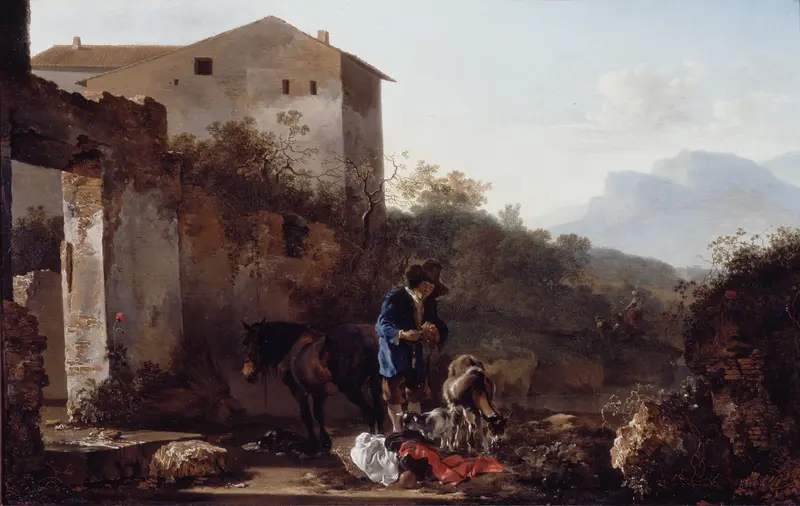
Landscape with a Goatherd
Adam Pijnacker
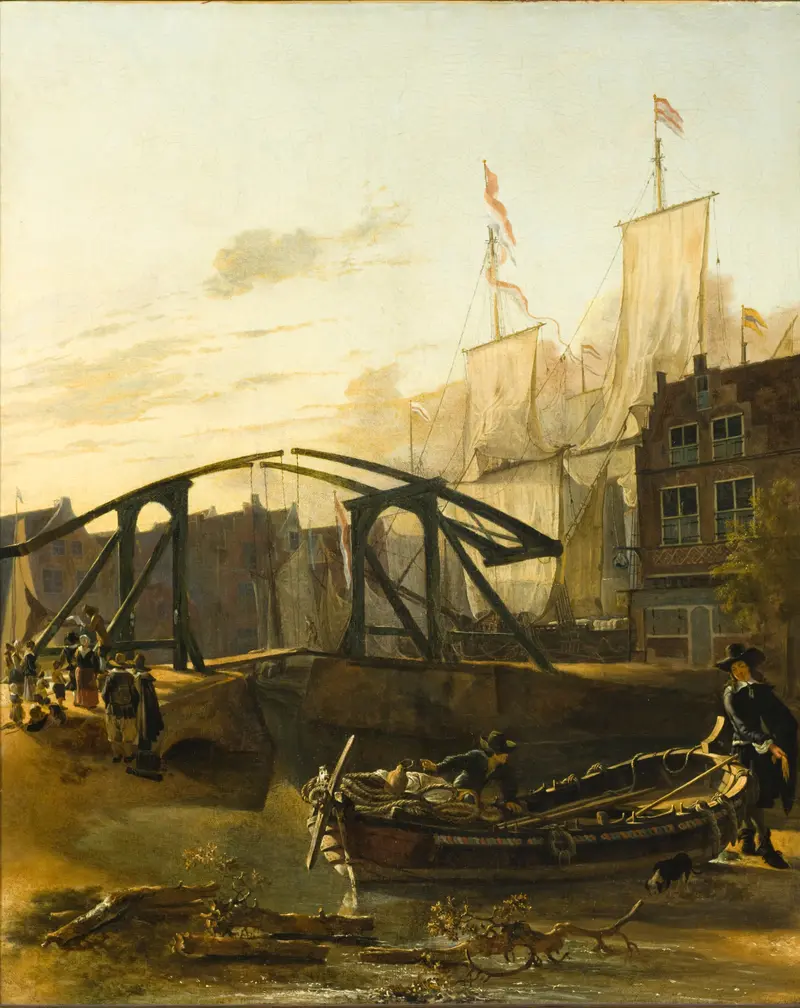
View of a Harbor in Schiedam
Adam Pijnacker
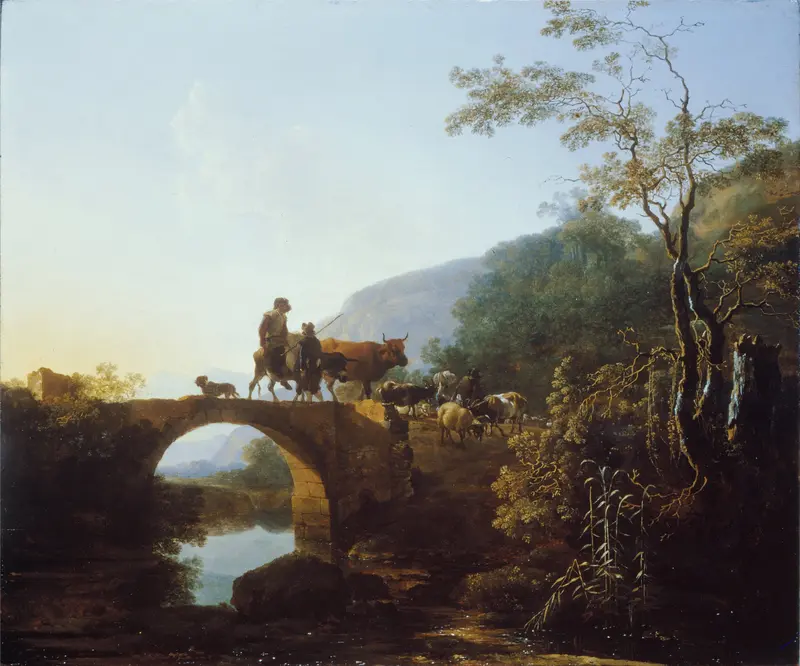
Bridge in an Italian Landscape
Adam Pijnacker
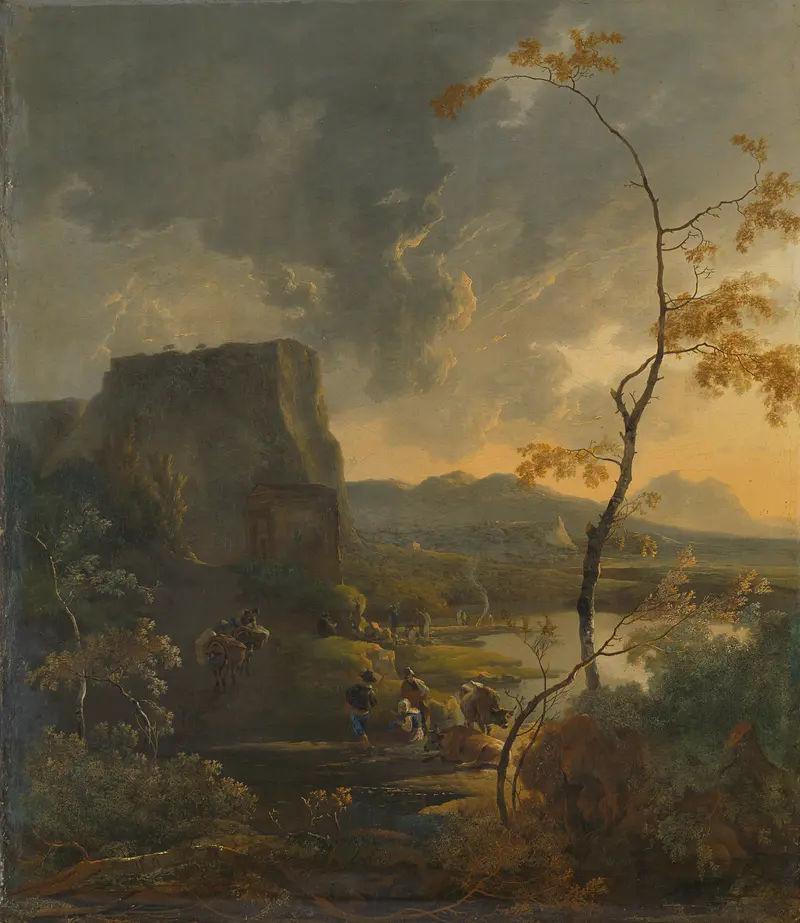
Italian Landscape with Ancient Tempietto
Adam Pijnacker
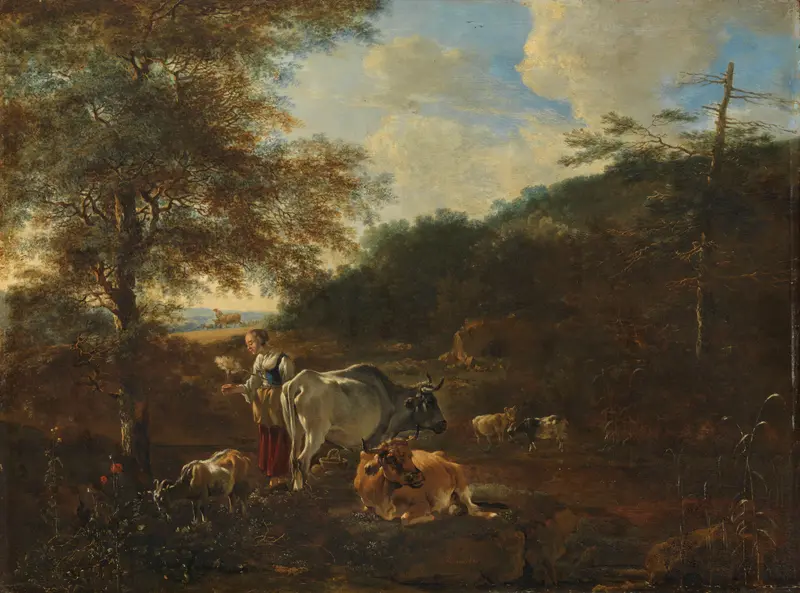
Landscape with cattle
Adam Pijnacker
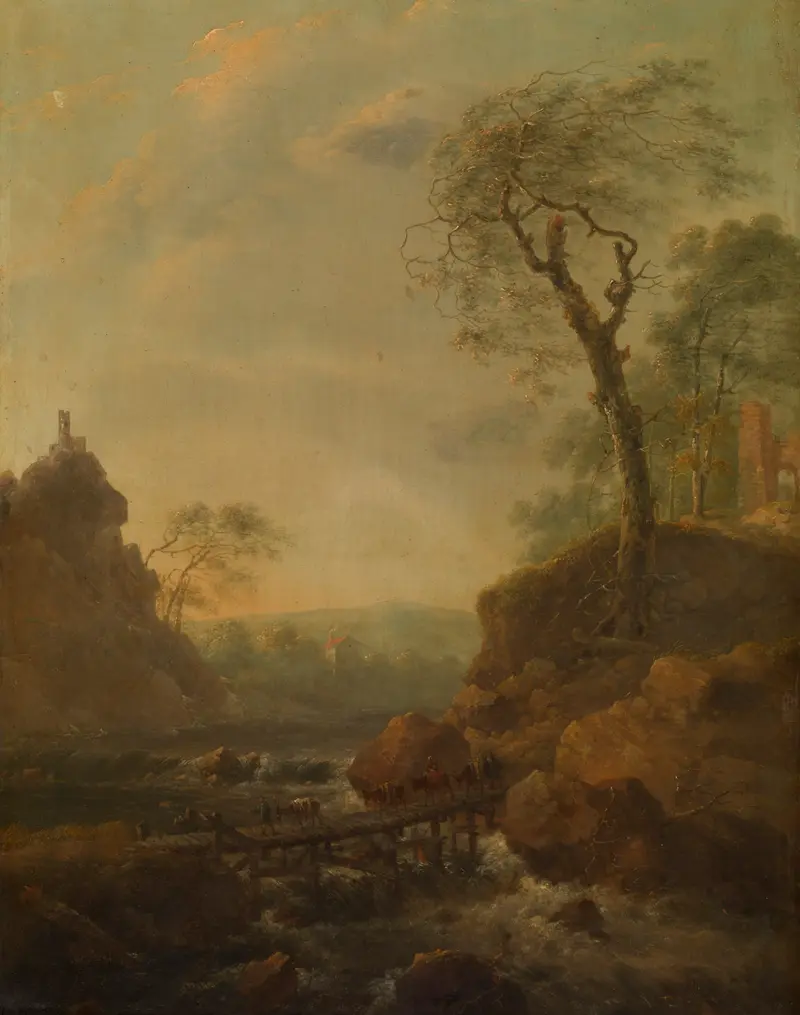
Landscape
Adam Pijnacker
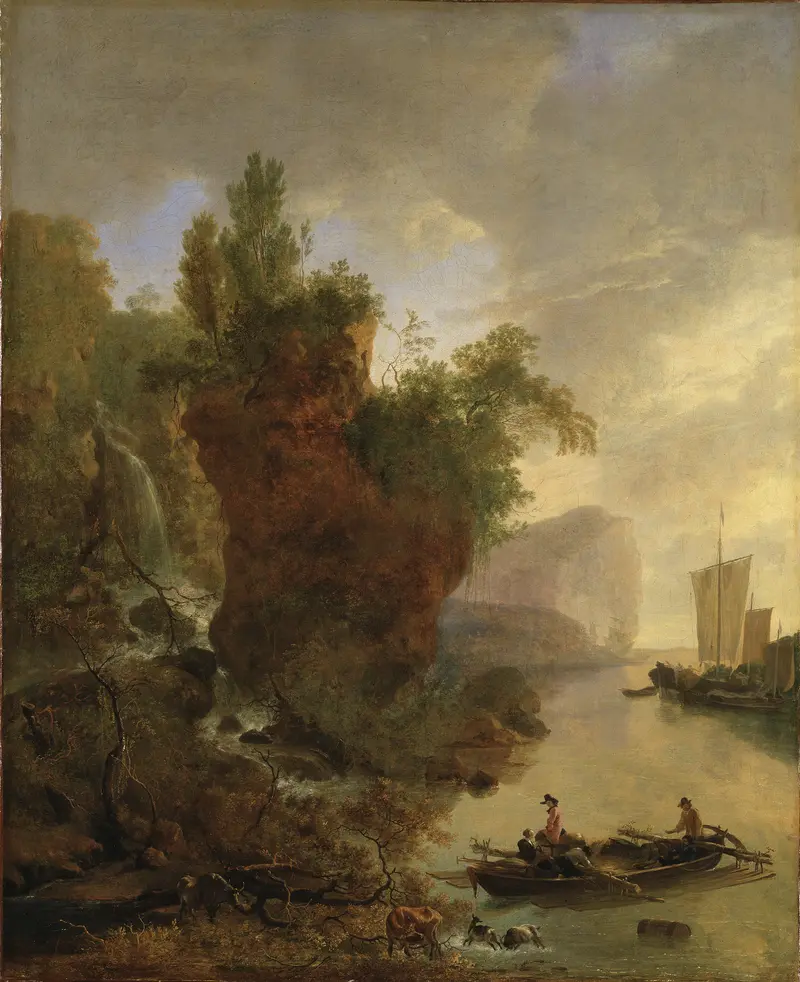
Bay with a Rocky Coast
Adam Pijnacker
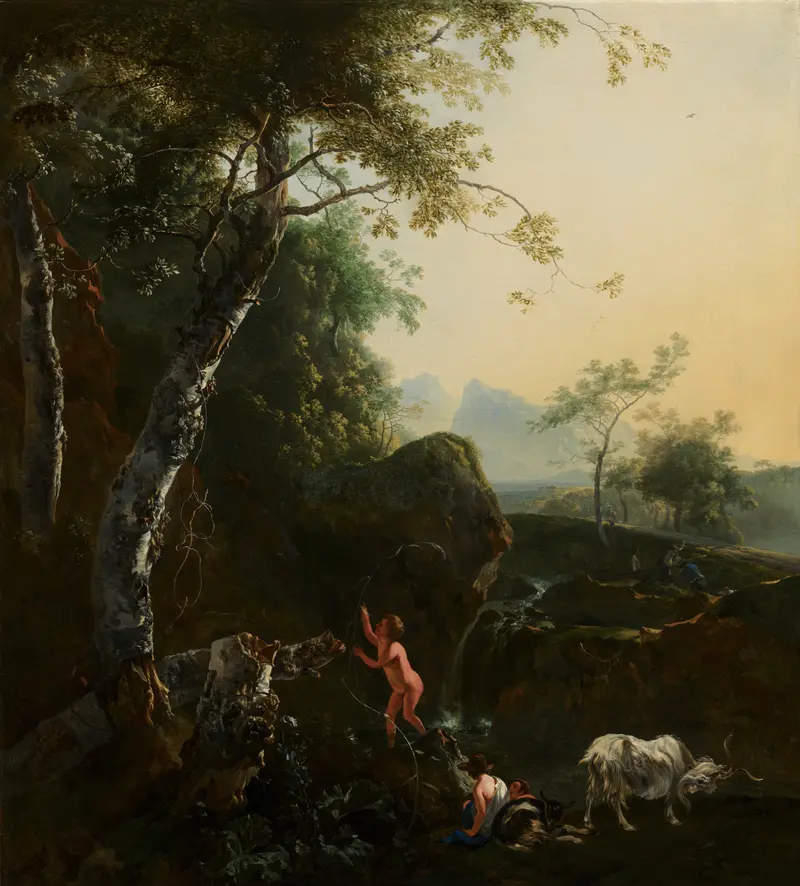
Mountainous Landscape with Waterfall
Adam Pijnacker
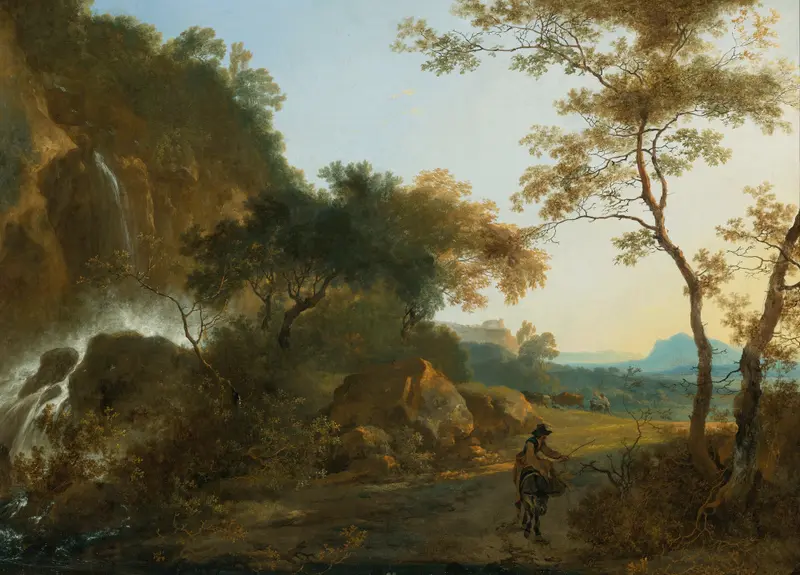
An Italianate Landscape With A Traveller On A Path By A Waterfall
Adam Pijnacker
More Landscape Art

The Starry Night
Vincent van Gogh

View of Delft
Johannes Vermeer

Water Lilies
Claude Monet

The Grand Canal, Venice, looking north-west from the Ca' Corner to the Ca' Contarini degli Scrigni, with the campanile of Santa Maria della Carità
Canaletto

Windsor Castle
Canaletto

The Grand Canal looking North-East from the Palazzo Dolfin-Manin to the Rialto Bridge
Canaletto