
Landscape At Sunset, 1849 — History & Facts
In the hush of twilight, silence blankets the landscape, inviting contemplation. A world poised on the brink of night holds secrets within the fading light, where every brushstroke narrates a story of transition and tranquility. Look to the horizon, where the setting sun bleeds into a tapestry of oranges and purples, casting a warm glow over the verdant hills. Focus on the gently rippling water that reflects the sky's colors, creating a mirror of ethereal beauty.
Note how the soft strokes blend seamlessly, evoking a sense of movement and harmony, while the darkened trees stand as sentinels, framing the serene moment. The composition draws the eye toward the horizon, a pathway to the unknown, inviting viewers to immerse themselves in the peaceful stillness of the scene. Delve deeper into the painting's emotional undercurrents. The juxtaposition of vibrant sunset hues against the looming shadows of the trees evokes a sense of both hope and melancholy, reminding us that beauty is often transient.
The water's placid surface contrasts with the vibrant sky, reflecting the duality of existence — joy and sorrow intertwined. This tension resonates within the viewer, as silence wraps around the landscape, transforming it into a meditative space where thoughts can wander freely. In the mid-19th century, Böcklin painted this work during a period of personal exploration and artistic development. Living in Switzerland, he was deeply influenced by Romanticism, which emphasized emotion and the sublime in nature.
As the art world grappled with the changes brought by industrialization, Böcklin sought refuge in the beauty of natural landscapes, capturing a moment where nature and emotion coexist harmoniously.
More Artworks by Arnold Böcklin
Browse all →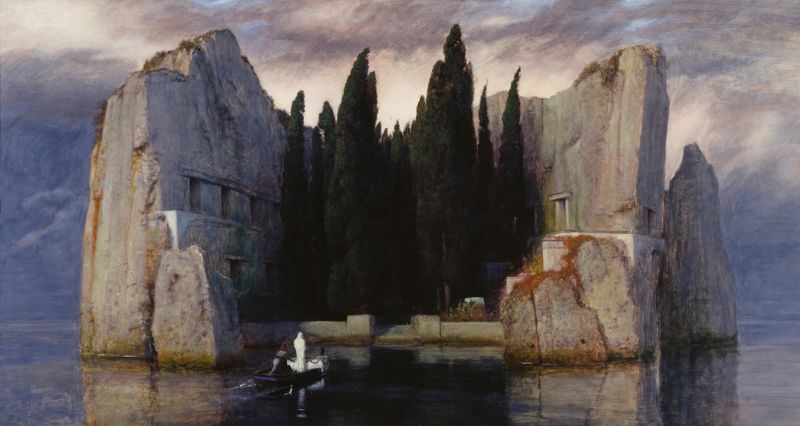
Die Toteninsel III
Arnold Böcklin
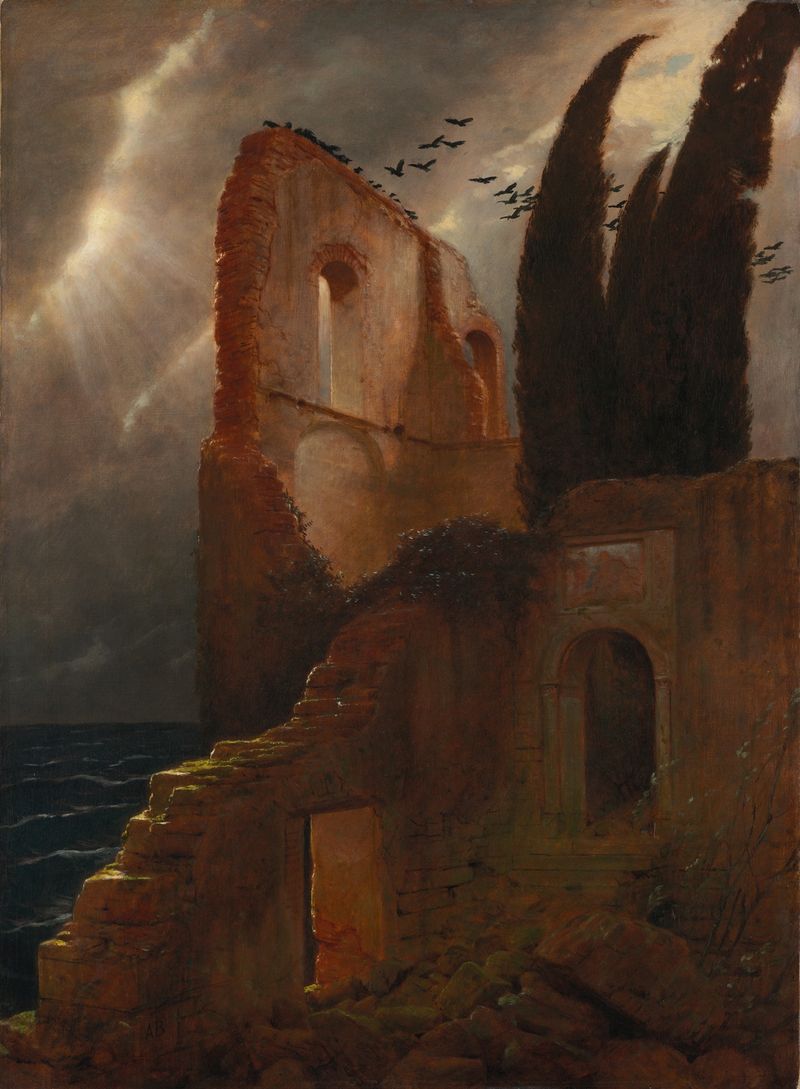
Ruin by the Sea
Arnold Böcklin
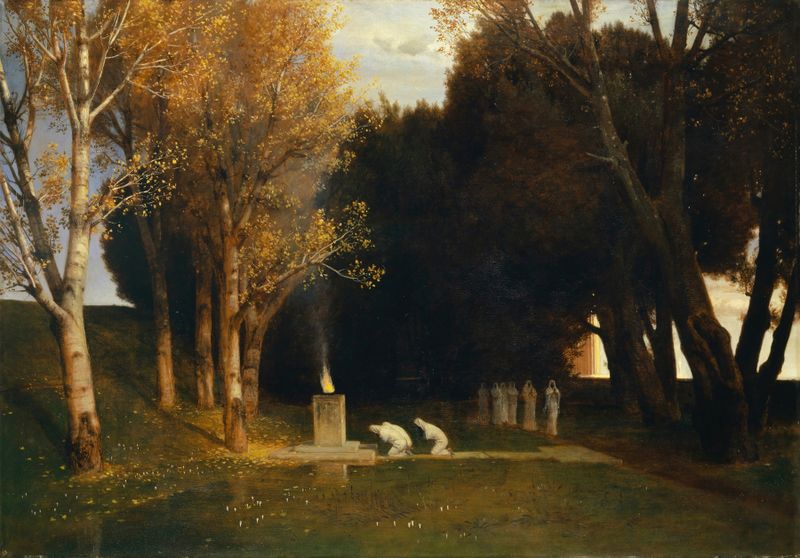
The Sacred Grove
Arnold Böcklin
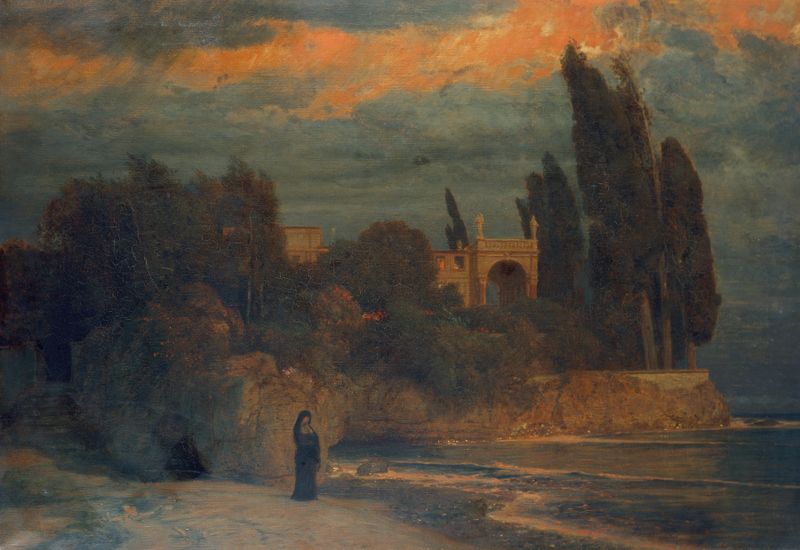
Villa by the Sea
Arnold Böcklin
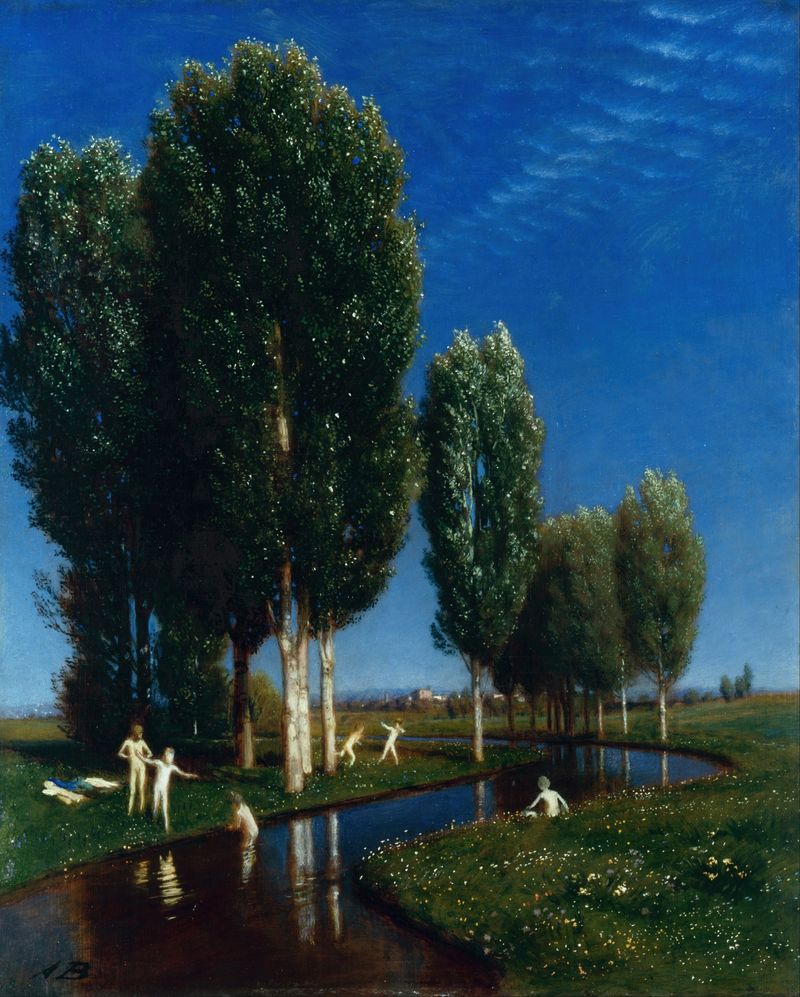
Summer Day
Arnold Böcklin
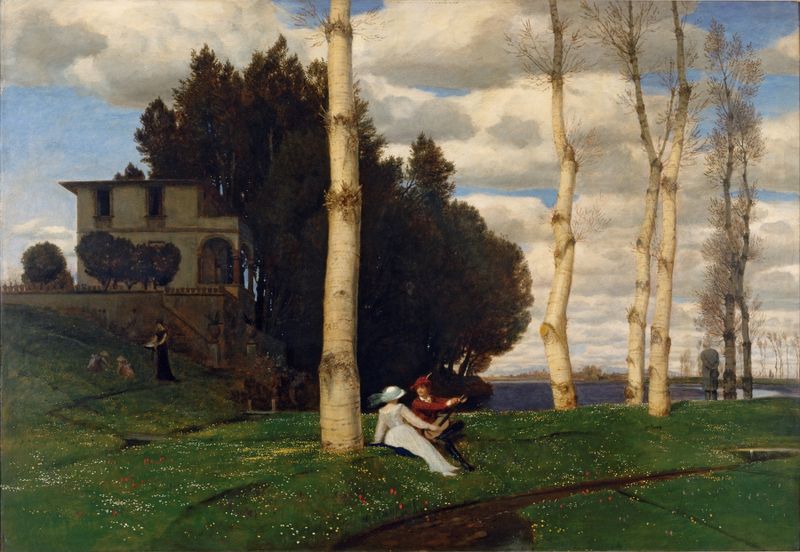
Spring Day (The Three Life Ages)
Arnold Böcklin
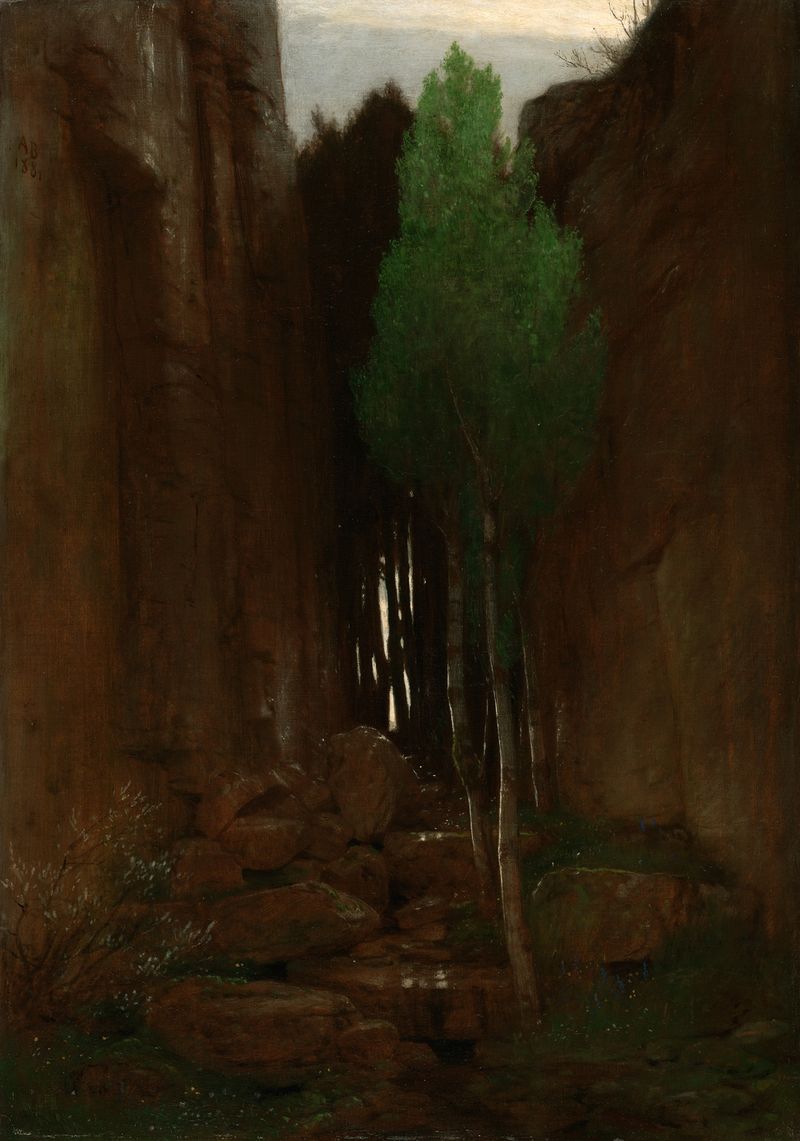
Spring in a Narrow Gorge (Quell in einer Felsschluct)
Arnold Böcklin
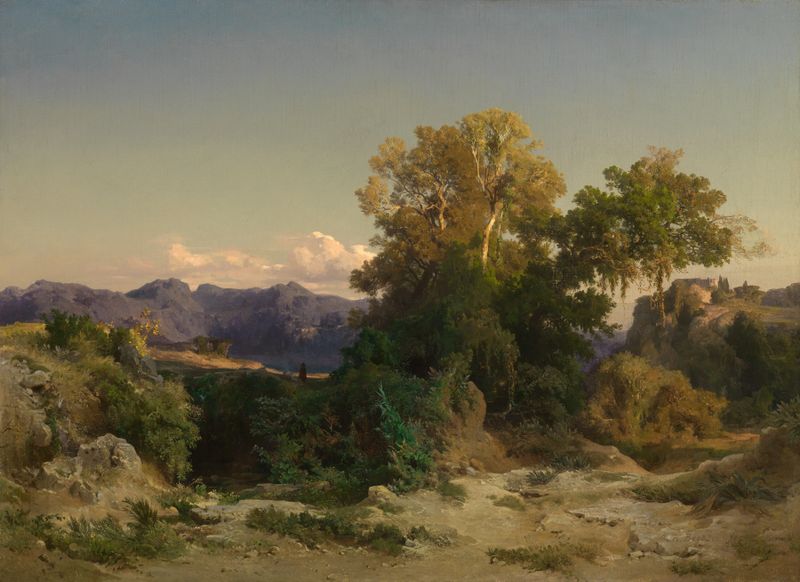
Landscape in the Roman Campagna
Arnold Böcklin
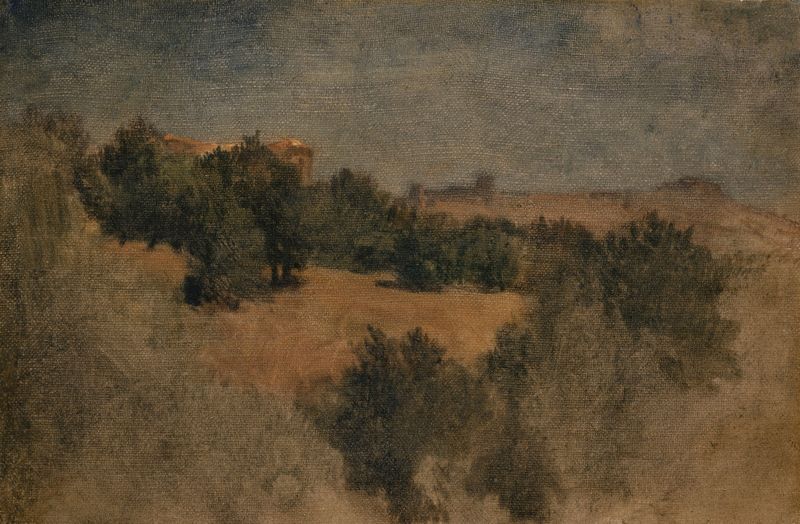
Landscape near Palestrina
Arnold Böcklin
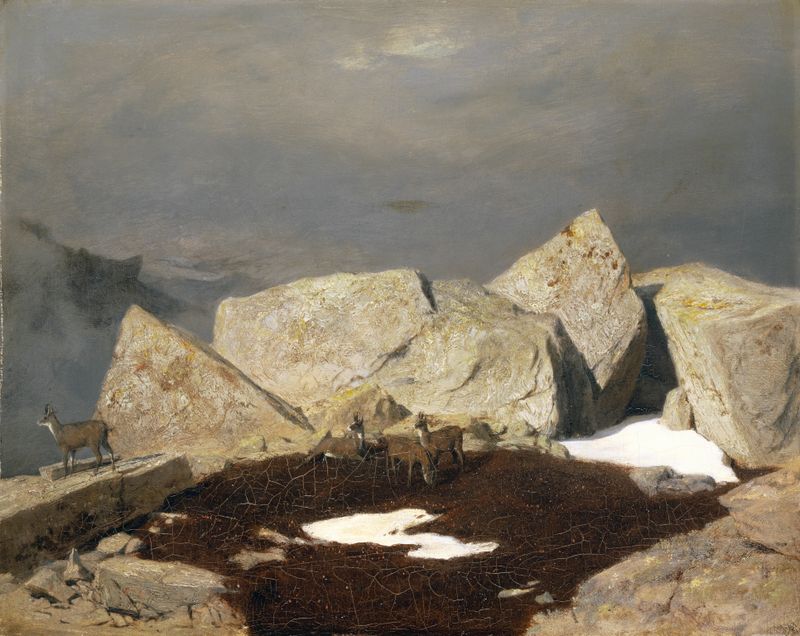
High Mountain Landscape With Chamois
Arnold Böcklin





