
Landscape from Ebersteinburg in Baden — History & Facts
In the vast expanse of nature, emptiness often speaks louder than presence, inviting us to explore the silence of existence. Look to the left at the towering trees, their dark green foliage intertwined with patches of gold and amber, as though whispering secrets of the changing seasons. The undulating hills create a rhythm, drawing your eye toward the distant mountains, which rise majestically against a pale, azure sky. Notice how the delicate interplay of light captures the tranquil surface of the stream, reflecting clouds and the soft warmth of the sun, creating a serene yet expansive atmosphere. Yet, within this serene landscape lies a contrast of solitude and vitality.
The distant mountains serve as a reminder of both permanence and isolation, emphasizing the beauty of what is present while invoking the emptiness that surrounds it. The absence of human figures in this setting speaks volumes, suggesting a poignant relationship between nature and the observer. Each brushstroke breathes life into the canvas, yet simultaneously evokes a sense of longing for connection. In 1876, Hans Gude painted this scene during a period of artistic exploration in Germany, where Romantic ideals were being challenged by the emerging Realist movement.
Working primarily in the scenic beauty of Norway and Germany, Gude sought to capture the sublime aspects of nature while reflecting on personal and collective experiences of solitude. This interplay of themes marked a significant moment in his career, as he sought to balance emotional depth with a respect for the natural world.
More Artworks by Hans Gude
Browse all →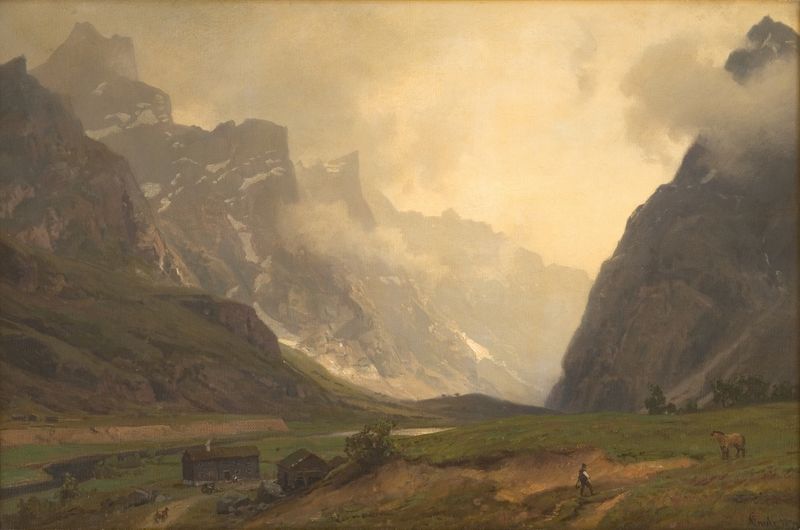
The Troll Peaks in Romsdalen, The Foot of Romsdalshorn to the Right
Hans Gude
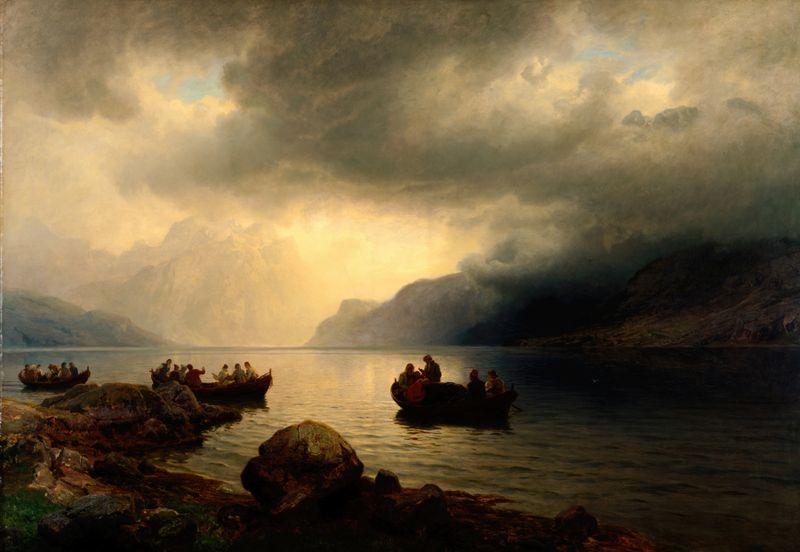
Funeral Procession on the Sogne Fjord
Hans Gude
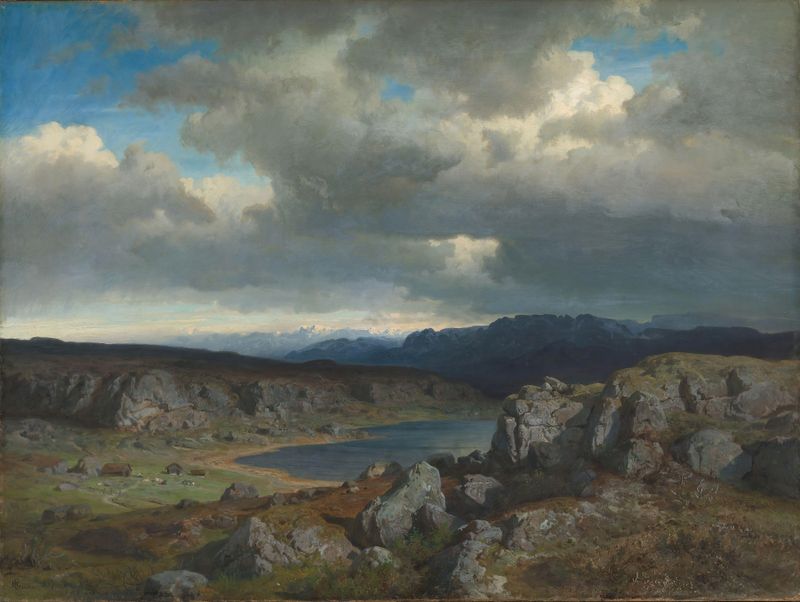
Norwegian Highlands
Hans Gude
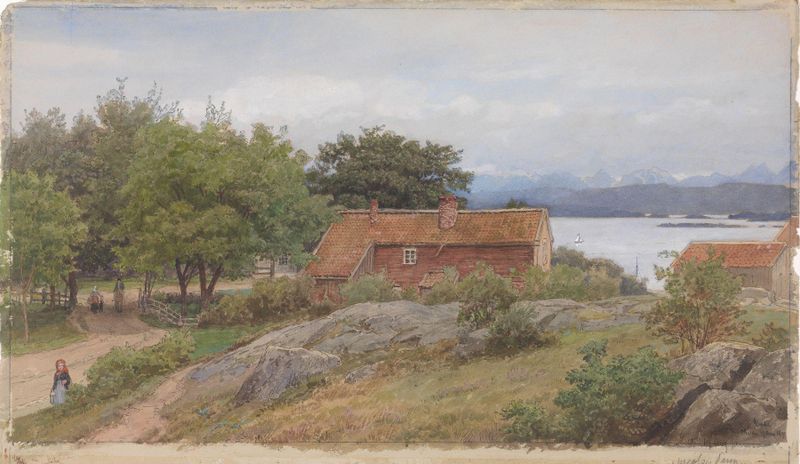
Landskap med bondegård ved Molde
Hans Gude
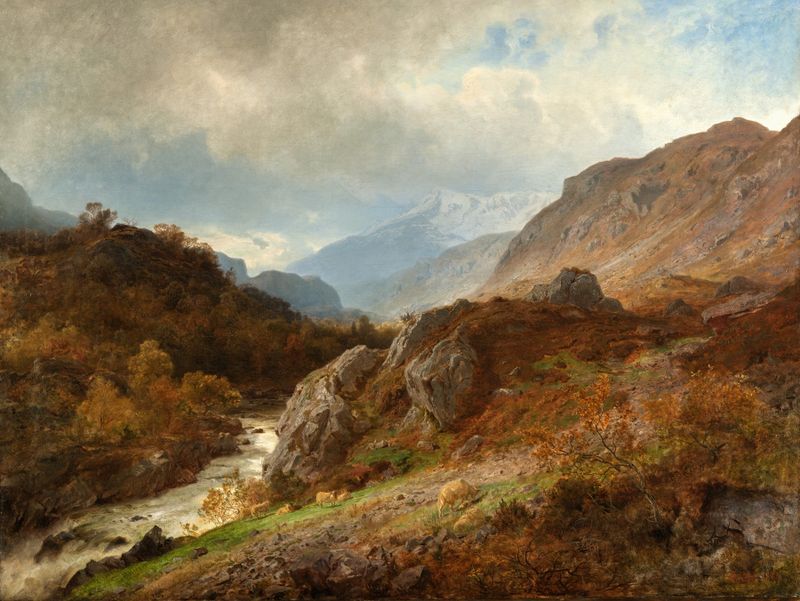
Mountain Landscape
Hans Gude
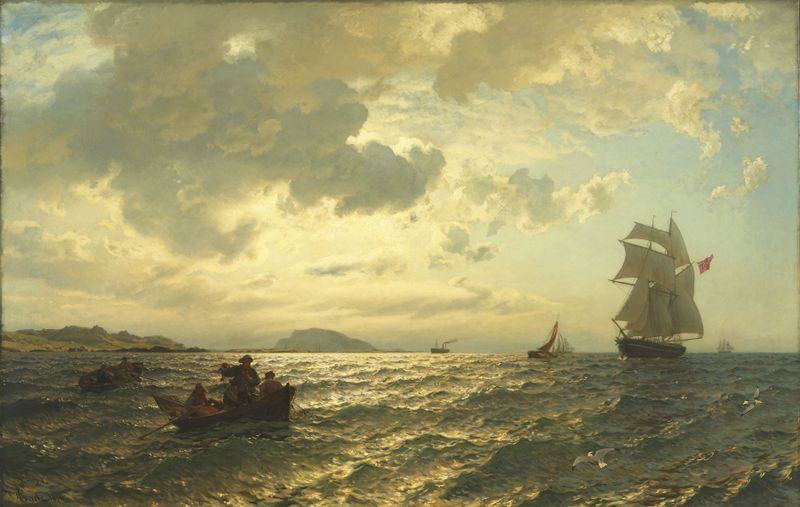
Fresh Breeze on the Norwegian Coast
Hans Gude
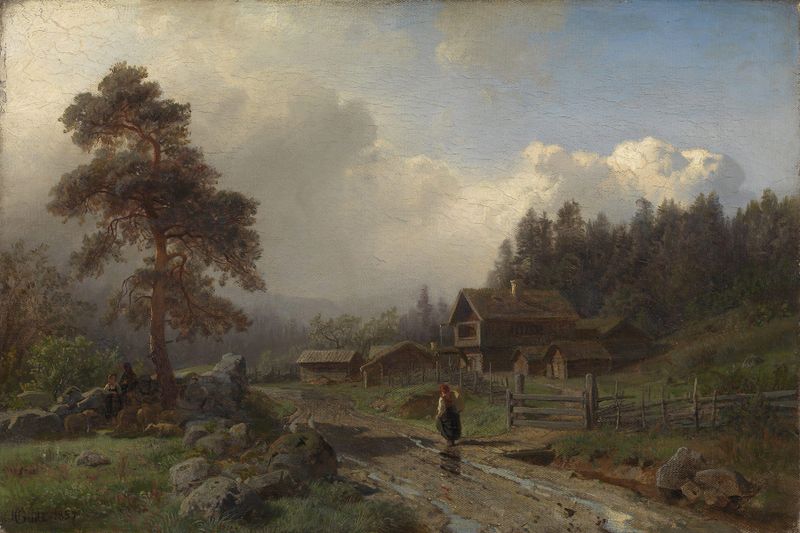
Norwegian Landscape in Rain
Hans Gude
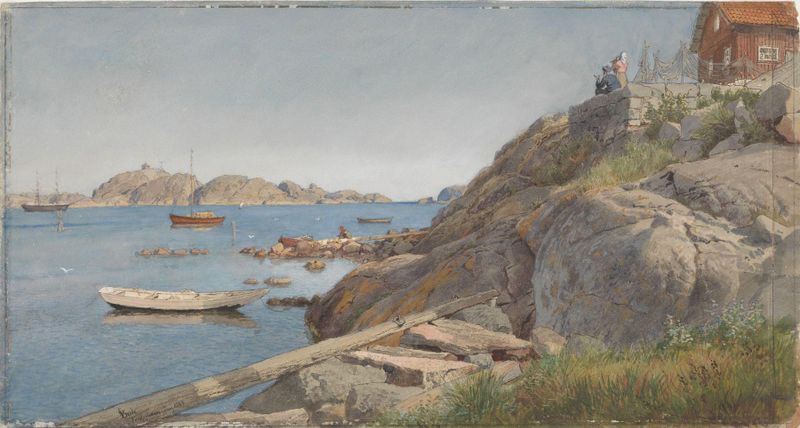
Landscape by Stavern
Hans Gude
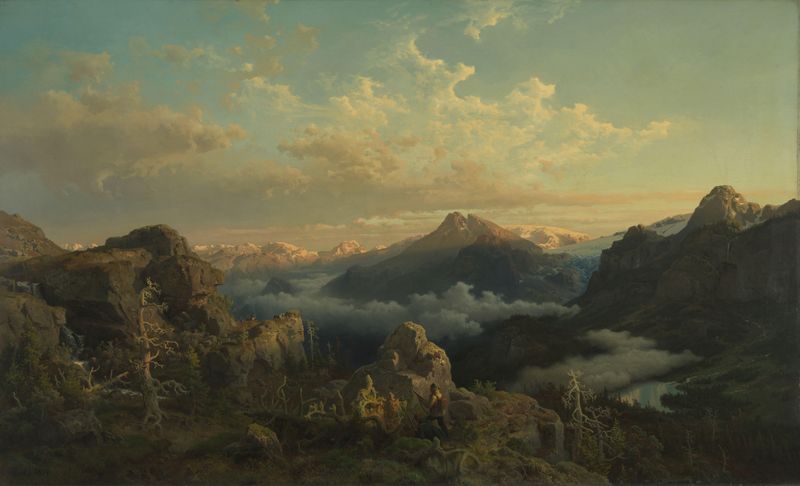
Norwegian Highlands in Sunrise
Hans Gude
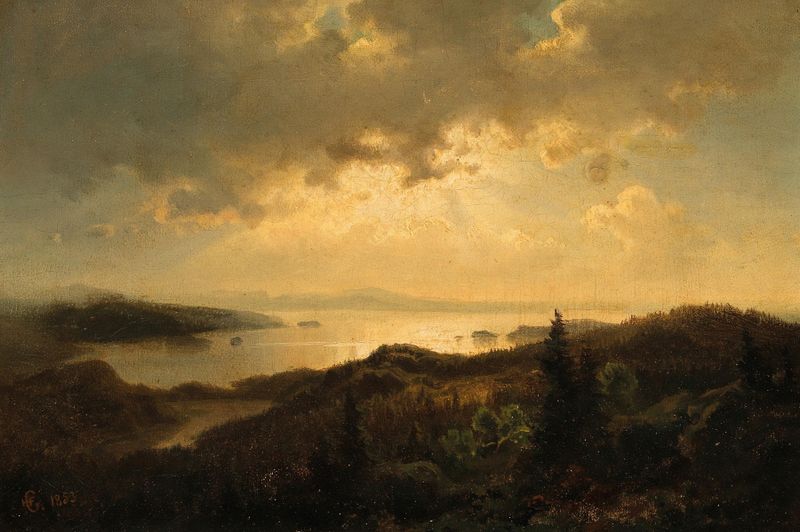
A Scene at Dusk in Norway
Hans Gude





