
Landscape under a stormy sky — History & Facts
Can beauty exist without sorrow? In Landscape under a stormy sky, the tumultuous atmosphere challenges the viewer to reconcile the peace of nature with the violence of impending weather. Focus first on the dense clouds that loom ominously overhead, swirling in shades of gray and blue. Their weight seems to press down on the landscape, casting a somber light that envelops the scene. Notice how the jagged outlines of the trees are rendered with firm brushstrokes, their dark forms contrasting sharply against the bright flashes of the horizon.
This juxtaposition evokes a sense of chaos, yet there is an underlying harmony in the color palette that invites contemplation. Delve deeper into the scene, and you will find subtle details that enrich its narrative. The twisted branches of the trees may symbolize resilience against nature’s fury, while the distant hills seem to whisper of a calm beyond the storm. The interplay of light and shadow not only heightens the emotional tension but also suggests an inevitable transition—a moment pregnant with both dread and anticipation, illustrating the delicate balance between beauty and violence. Rousseau created this piece during a time when Romanticism was gaining momentum in the art world, emphasizing emotion and nature’s sublime power.
Though the exact date remains uncertain, he worked on similar landscapes in the mid-19th century, drawing inspiration from the French countryside while also grappling with his personal challenges. Amidst the artistic upheaval of the period, his exploration of nature’s darker aspects became a hallmark of his legacy.
More Artworks by Théodore Rousseau
Browse all →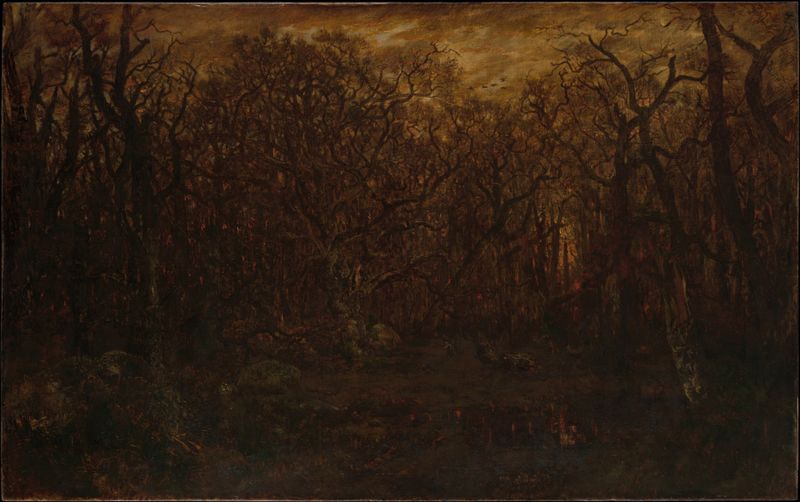
The Forest in Winter at Sunset
Théodore Rousseau
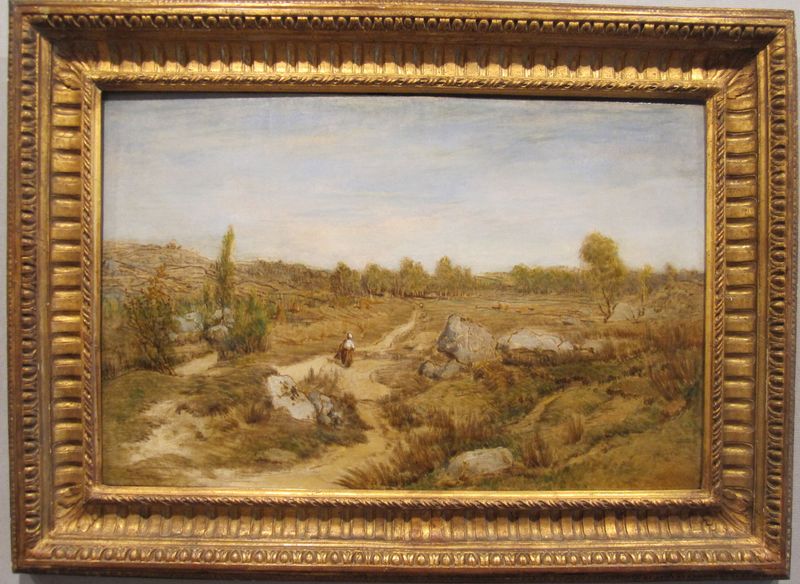
Valley of the Rouars in the Gorges d’Apremont
Théodore Rousseau
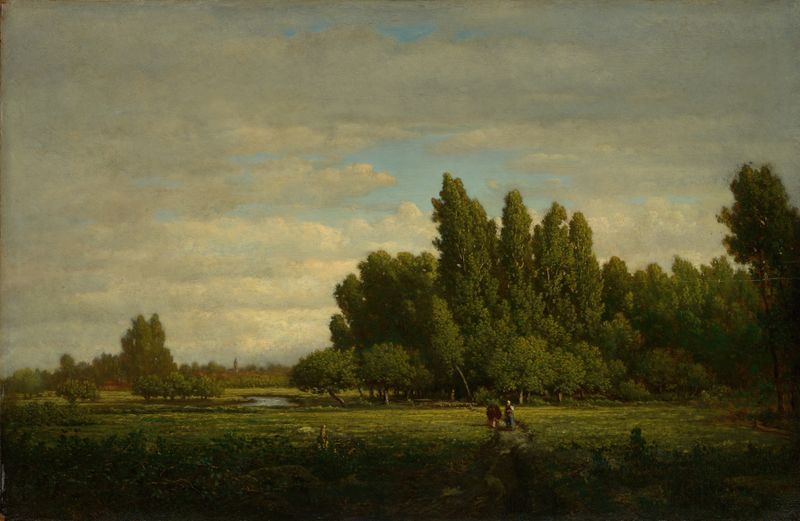
A Meadow Bordered by Trees
Théodore Rousseau
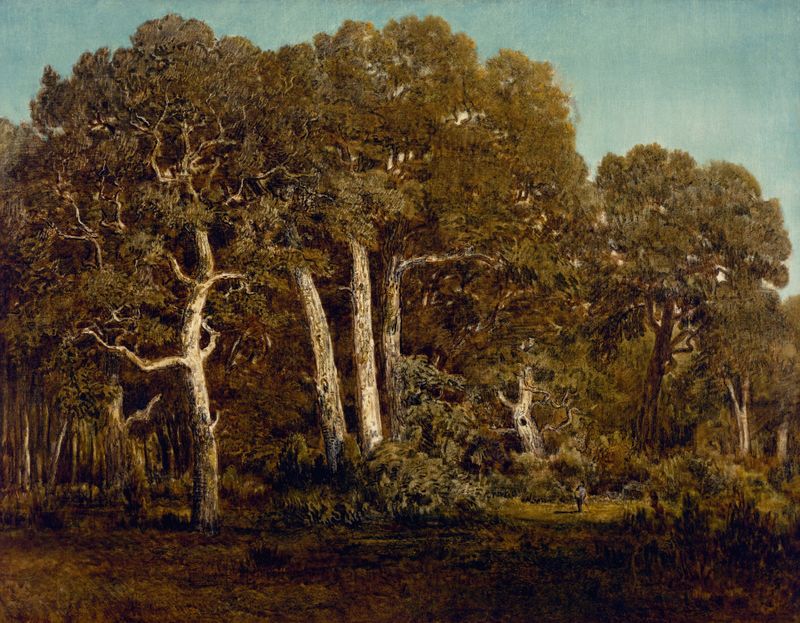
The Great Oaks of Old Bas-Bréau
Théodore Rousseau
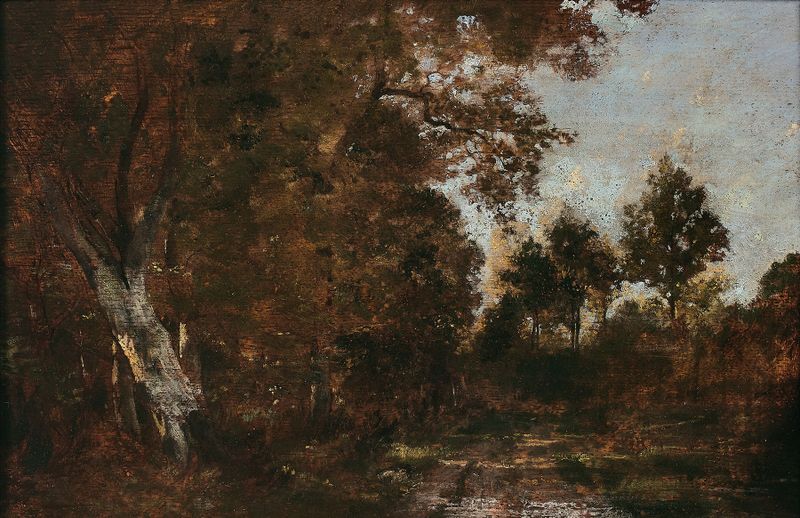
Paysage de sous-bois
Théodore Rousseau
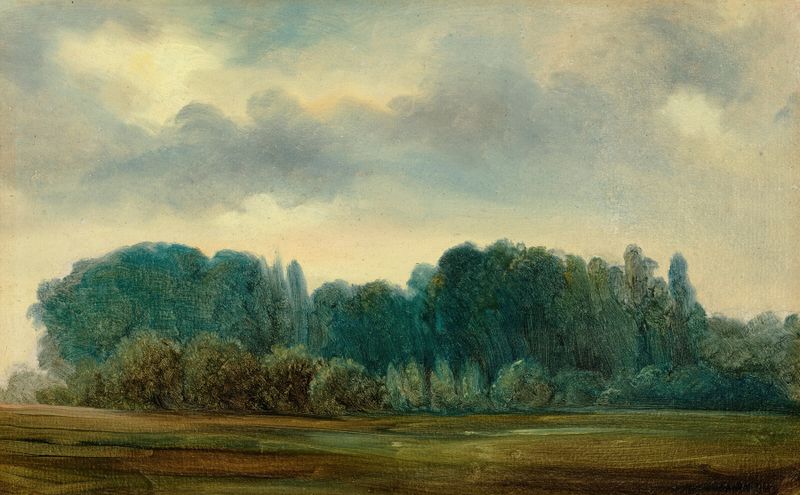
Paysage
Théodore Rousseau
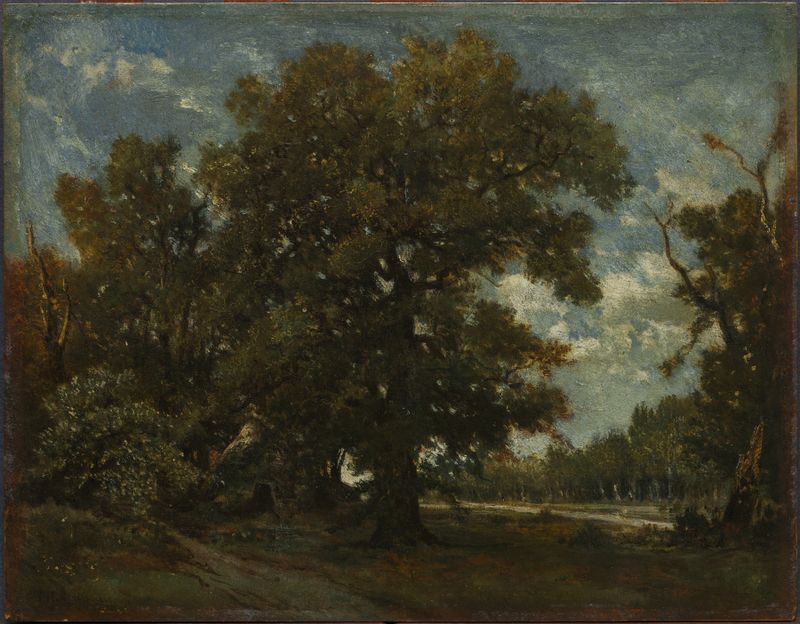
The Oak Tree
Théodore Rousseau
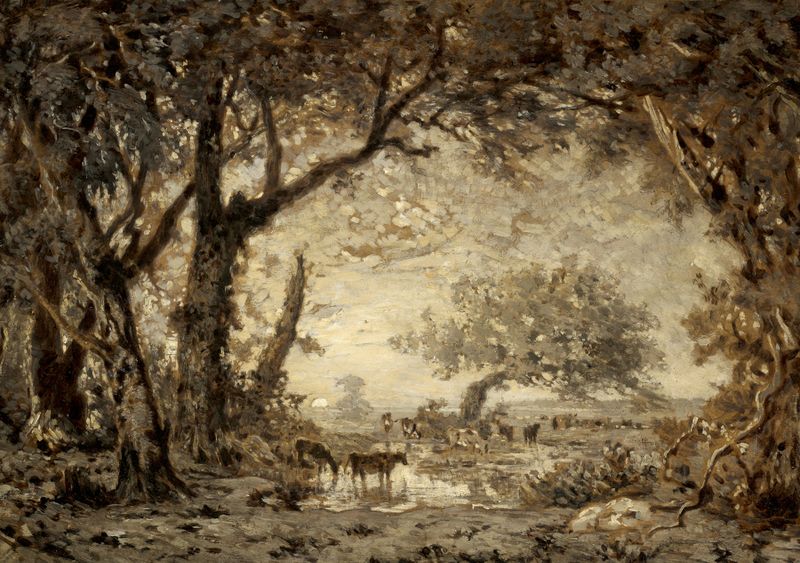
Sunset from the Forest of Fontainebleau
Théodore Rousseau
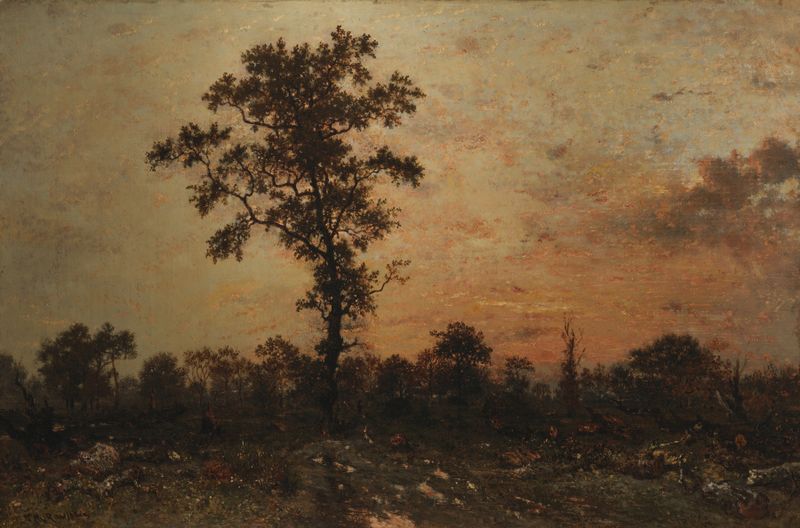
Edge of the Forest, Sun Setting
Théodore Rousseau
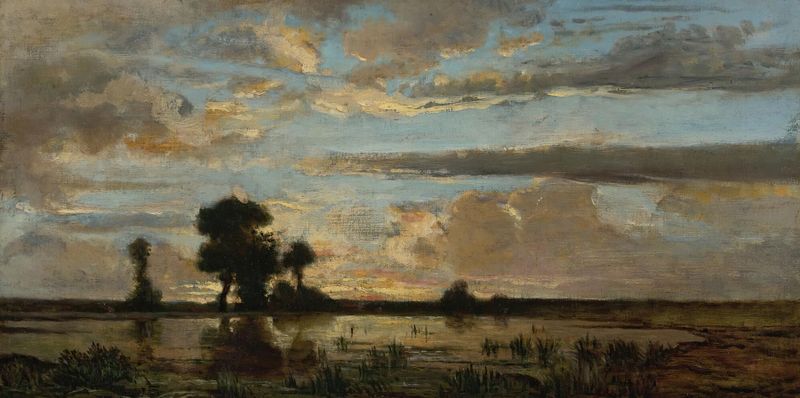
Soleil Couchant
Théodore Rousseau





