
Landscape with a Bridge — History & Facts
Who listens when art speaks of silence? In Landscape with a Bridge, tranquility cloaks the chaotic undercurrents of nature, inviting reflection amid a serene facade. Look to the left at the gentle curve of the river, its surface shimmering as if whispering secrets to the viewer. Notice the bridge arching gracefully over the water, expertly rendered with delicate brushstrokes that capture both structure and fluidity. The muted greens and browns of the landscape blend seamlessly, but it's the soft blue of the sky that draws the eye upwards, creating a harmonious balance that feels both expansive and contained. Amidst the peaceful scene, subtle contrasts emerge.
The bridge, symbolizing connection, stands resilient against the backdrop of nature’s chaos, while the nearby trees, swaying delicately in the breeze, hint at the unseen forces at play. Shadows linger just beneath the bridge, suggesting depth and perhaps uncertainty, reminding us that beneath the serene surface lies a tumultuous world. Each element, though idyllic, invites contemplation of the tumultuous emotions of life—chaos cloaked in beauty. In 1787, Schütz painted this landscape during a period of increasing Romanticism in art, where the focus shifted toward nature and emotional expression.
He was likely influenced by the burgeoning appreciation for the picturesque, seeking to capture not only the beauty of the scene but also the deeper complexities of existence. This work reflects not just a moment in time, but also the artist's introspection in navigating an ever-changing world of art and society.
More Artworks by Christian Georg Schütz the elder
Browse all →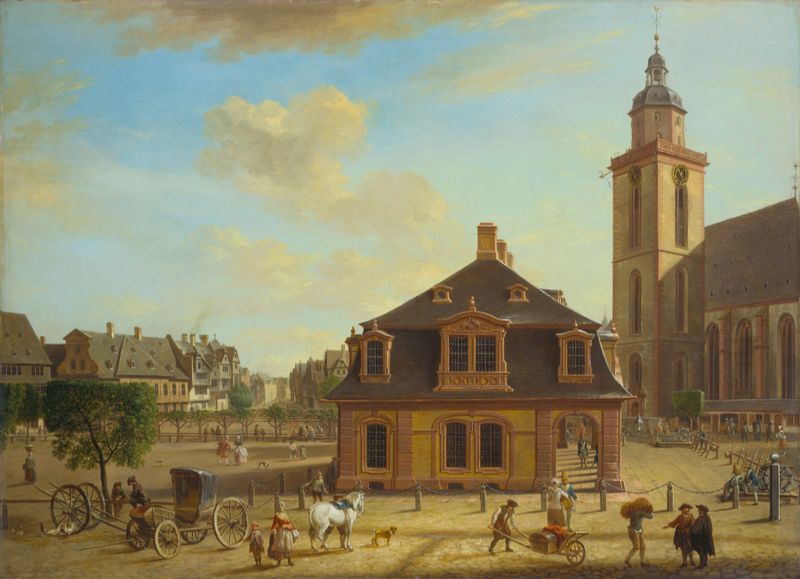
The Rossmarkt in Frankfurt
Christian Georg Schütz the elder
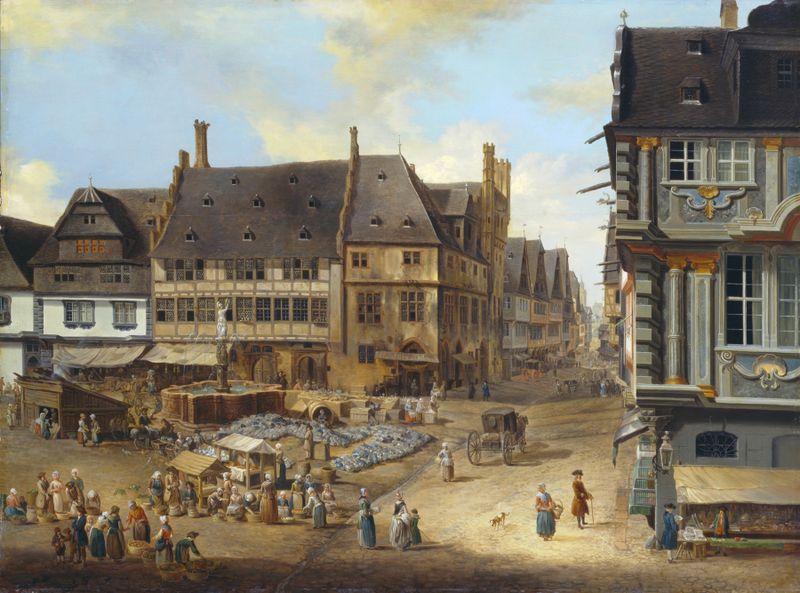
The Liebfrauenberg in Frankfurt
Christian Georg Schütz the elder
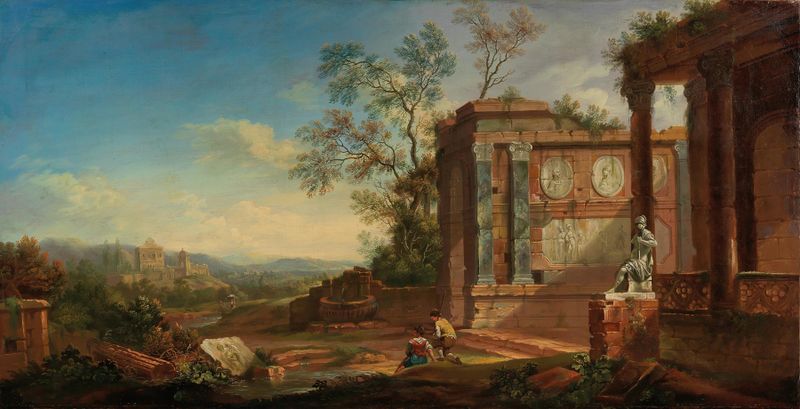
Gebirgige Flusslandschaft
Christian Georg Schütz the elder
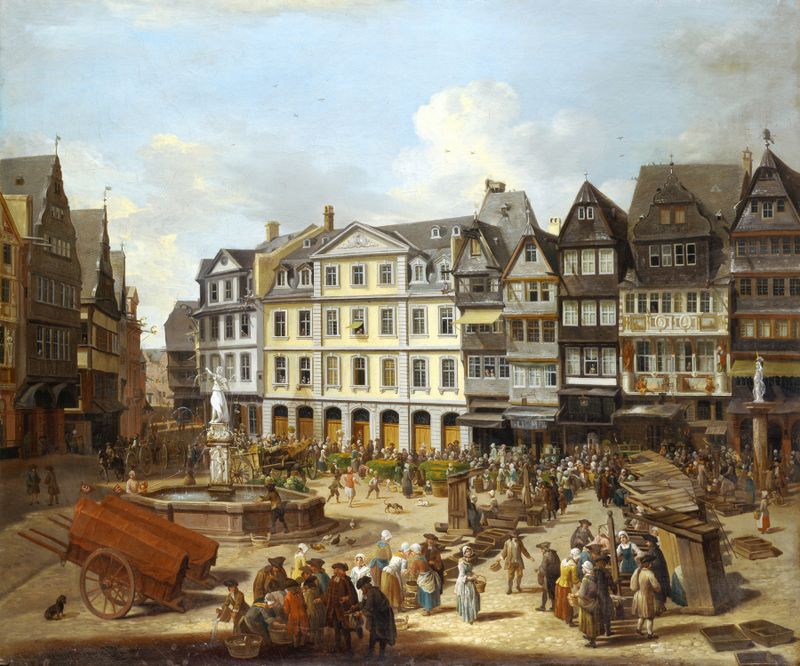
A Market on the Römerberg in Frankfurt
Christian Georg Schütz the elder
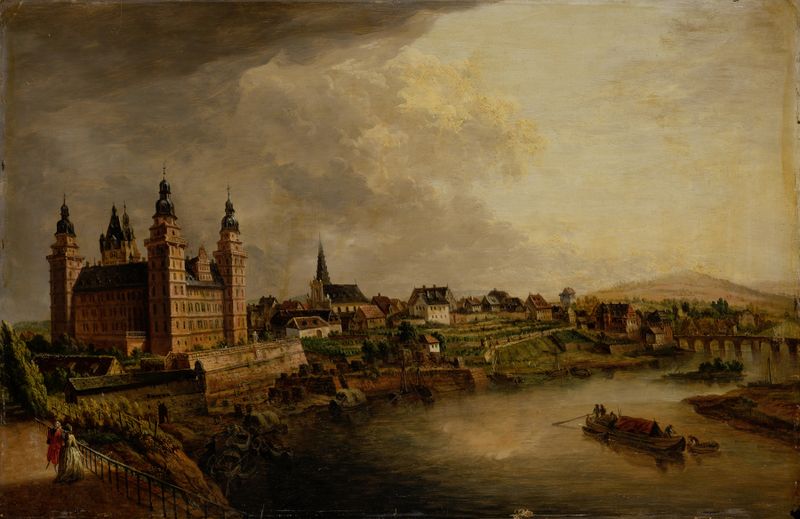
View of Aschaffenburg
Christian Georg Schütz the elder

Landscape with River.
Christian Georg Schütz the elder

River Landscape in the Morning Light
Christian Georg Schütz the elder

A Rhine landscape with a ferry, near Bonn with the Rolandsbogen, Drachenfels and the island of Nonnenwerth beyond
Christian Georg Schütz the elder
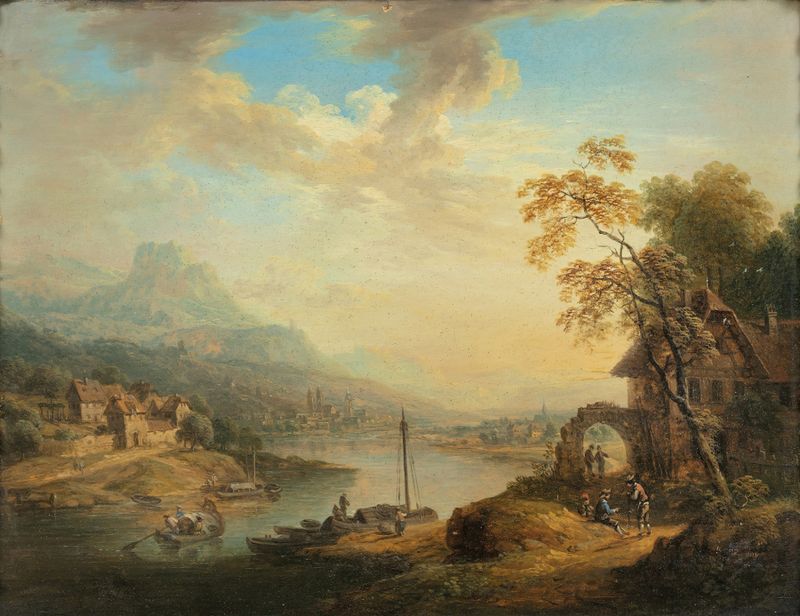
River Landscape
Christian Georg Schütz the elder

Flooded Woodlands near Oberrad
Christian Georg Schütz the elder





