
A Market on the Römerberg in Frankfurt — History & Facts
What if silence could speak through light? In the stillness of a bustling marketplace, the sun's warm embrace casts vibrant colors and elongated shadows, whispering secrets of life and longing. Look to the left at the group of animated merchants, their gestures inviting yet restrained, as if caught in a fleeting moment of anticipation. The intricate architecture of the Römerberg frames the scene, accentuating the rich hues of their garments—deep reds, earthy browns, and soft creams—that breathe life into the canvas. Notice how the play of light dances upon the cobblestones, creating a patchwork of illumination that guides your gaze and evokes the vibrancy of everyday commerce, yet hints at an underlying stillness. Beneath the surface, the juxtaposition of the cheerful marketplace against the muted expressions of passersby stirs a sense of yearning.
Each figure carries their own story, their faces a tapestry of hope and weariness. The delicate details—the way a woman clutches her basket of goods, the children’s laughter muffled by the weight of adult concerns—suggest a deeper narrative, where joy is intertwined with the melancholy of life's transient moments. In 1754, Christian Georg Schütz the elder created this piece during a time of artistic evolution in Germany, as the Rococo style began to ripple through the art world. Living in Frankfurt, a burgeoning center of trade and culture, he captured the essence of daily life, reflecting both the vibrancy of the city and the universal experience of longing within its bustle.
As the market thrived, so too did the artist’s exploration of the human condition, painting a scene that resonates with timeless emotion.
More Artworks by Christian Georg Schütz the elder
Browse all →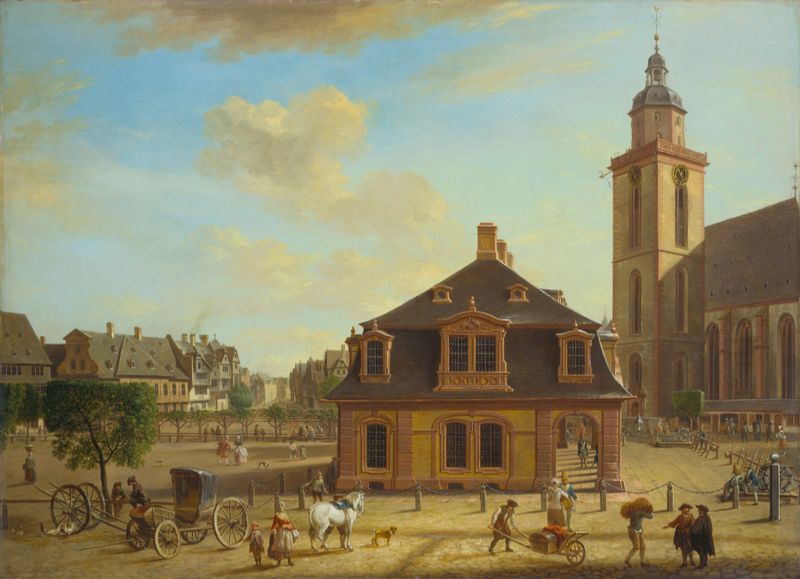
The Rossmarkt in Frankfurt
Christian Georg Schütz the elder
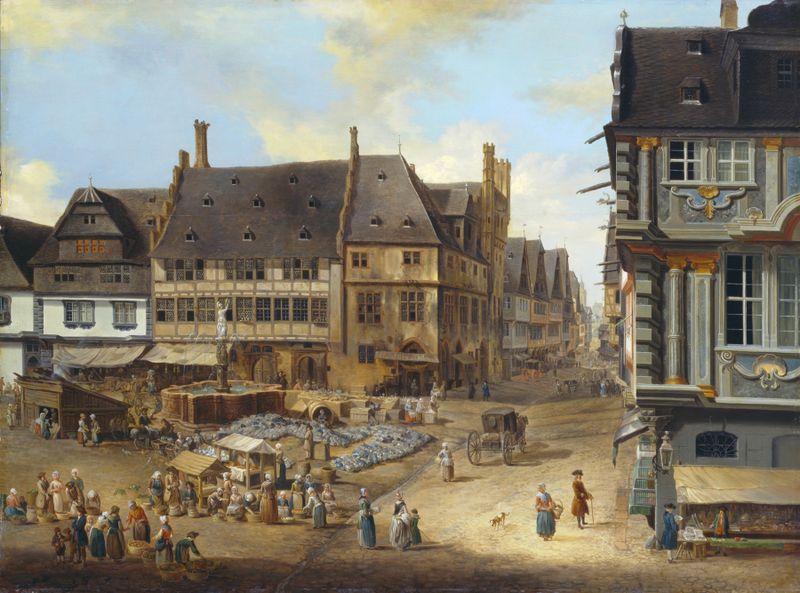
The Liebfrauenberg in Frankfurt
Christian Georg Schütz the elder
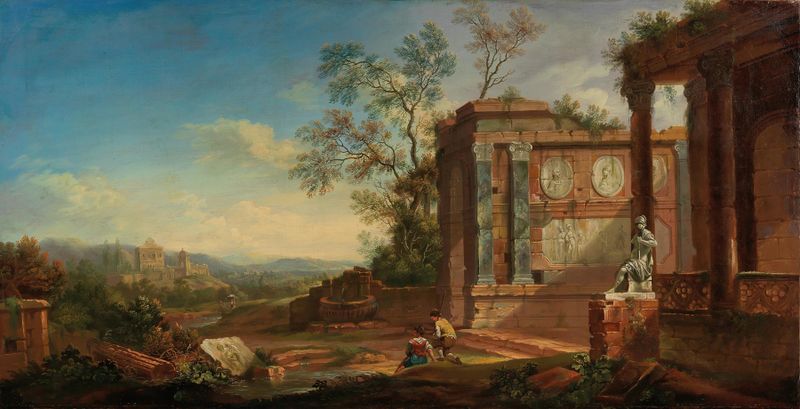
Gebirgige Flusslandschaft
Christian Georg Schütz the elder
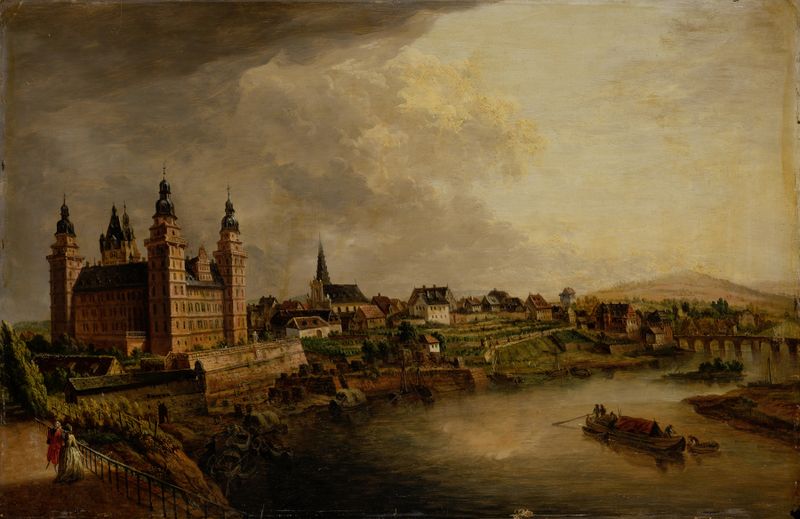
View of Aschaffenburg
Christian Georg Schütz the elder

Landscape with River.
Christian Georg Schütz the elder

River Landscape in the Morning Light
Christian Georg Schütz the elder

A Rhine landscape with a ferry, near Bonn with the Rolandsbogen, Drachenfels and the island of Nonnenwerth beyond
Christian Georg Schütz the elder
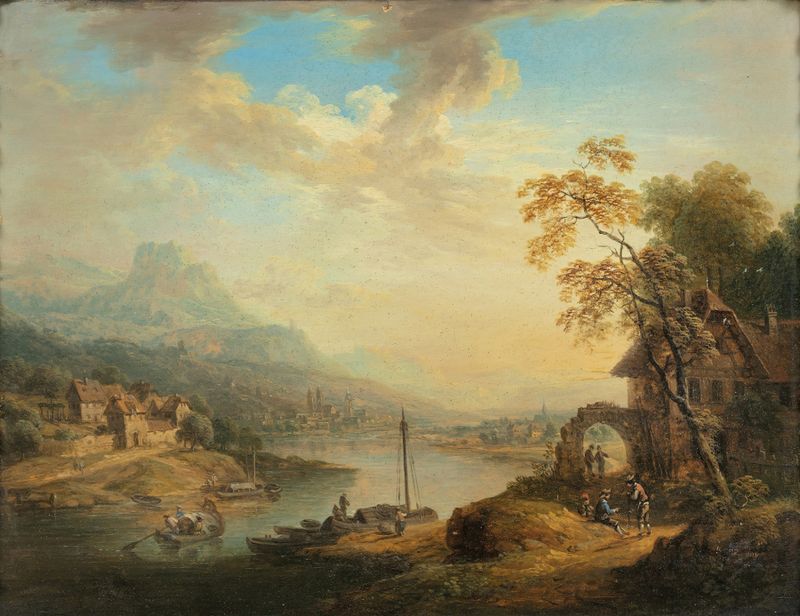
River Landscape
Christian Georg Schütz the elder

Flooded Woodlands near Oberrad
Christian Georg Schütz the elder
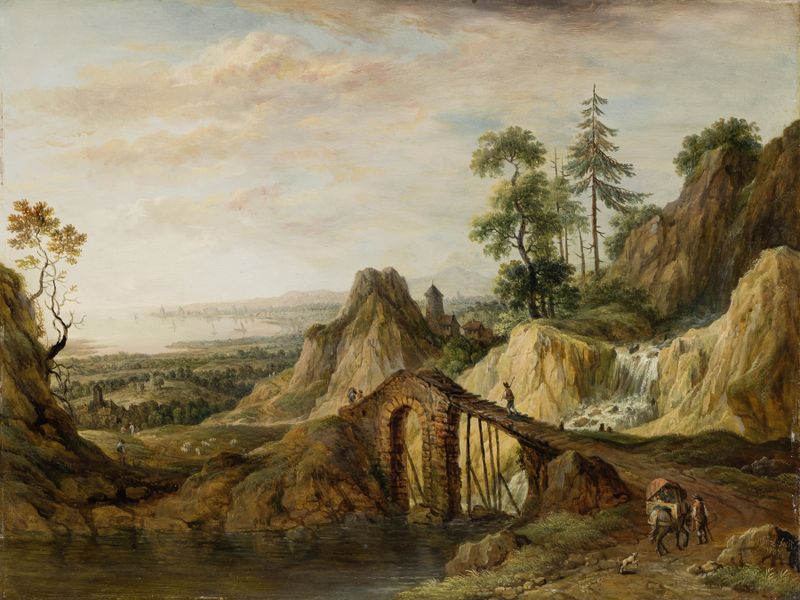
Landscape with a Bridge
Christian Georg Schütz the elder





