
Landscape with a Goatherd — History & Facts
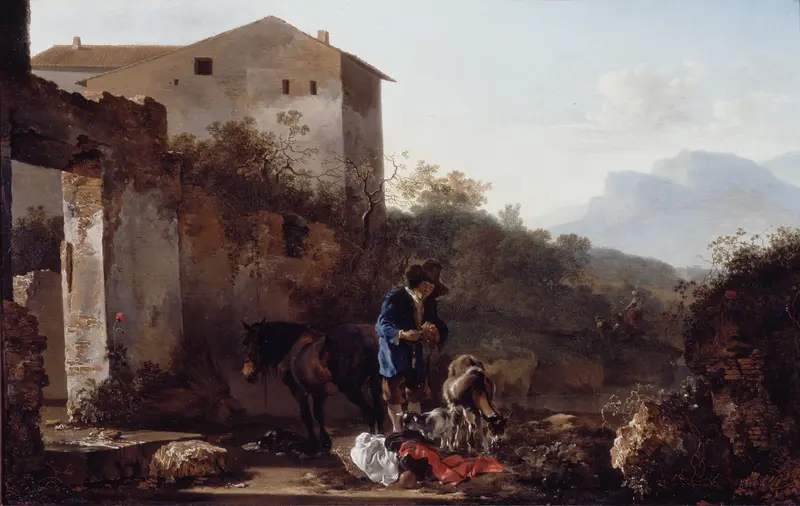
A shaft of morning light catches on a blue coat and a cluster of goats, drawing the viewer into the quiet drama unfolding at the edge of a ruined wall. The man at the center, absorbed in tending his animals, stands in a world where the remnants of human habitation blend seamlessly into the wild tangle of nature. The eye drifts from the dark, textured foreground—where a single red flower stands defiantly among the stones—toward the soft, receding mountains that dissolve into mist.
Every detail, from the careful handling of the goat’s fur to the crisp folds of discarded cloth, seems designed to slow time, inviting us to linger in this moment of pause and labor. Painted in 1650, Landscape with a Goatherd by Adam Pijnacker belongs to a Dutch tradition fascinated by the interplay of man, animal, and landscape. In the mid-seventeenth century, artists like Pijnacker responded to a growing appetite among collectors for scenes that conjured the warmth and grandeur of southern Europe, even as they remained rooted in the realities of rural life. Such works were prized for their ability to transport viewers—often urban patrons—into imagined spaces of tranquility and order.
Little is recorded about the specific journey of this painting before its arrival in the collection of the Saint Louis Art Museum, but its careful balance of architecture, nature, and daily work is a testament to the enduring appeal of the pastoral ideal. Let your eyes wander from the ruined stones to the distant blue peaks, and consider what stories might have unfolded in the silence between man and mountain.
More Artworks by Adam Pijnacker

Italianate River Landscape
Adam Pijnacker
Landscape with a Goatherd
Adam Pijnacker
View of a Harbor in Schiedam
Adam Pijnacker
Bridge in an Italian Landscape
Adam Pijnacker
Italian Landscape with Ancient Tempietto
Adam Pijnacker
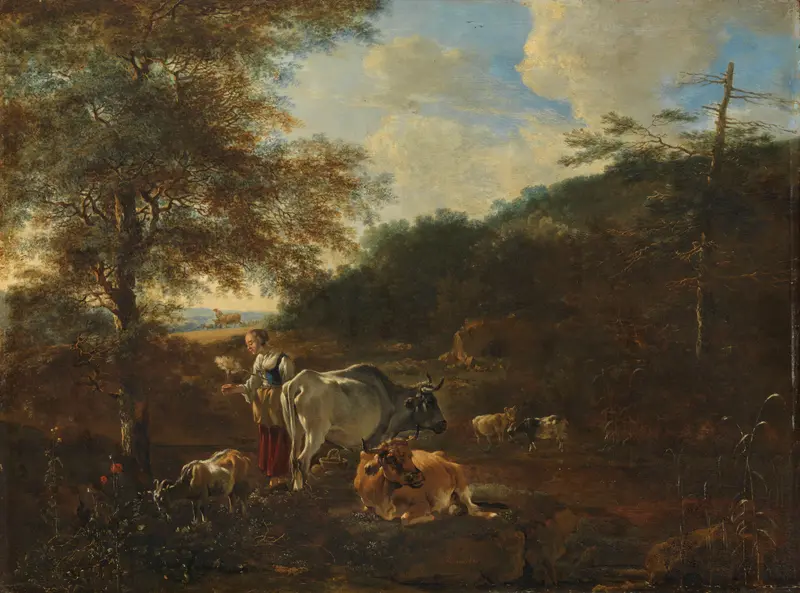
Landscape with cattle
Adam Pijnacker
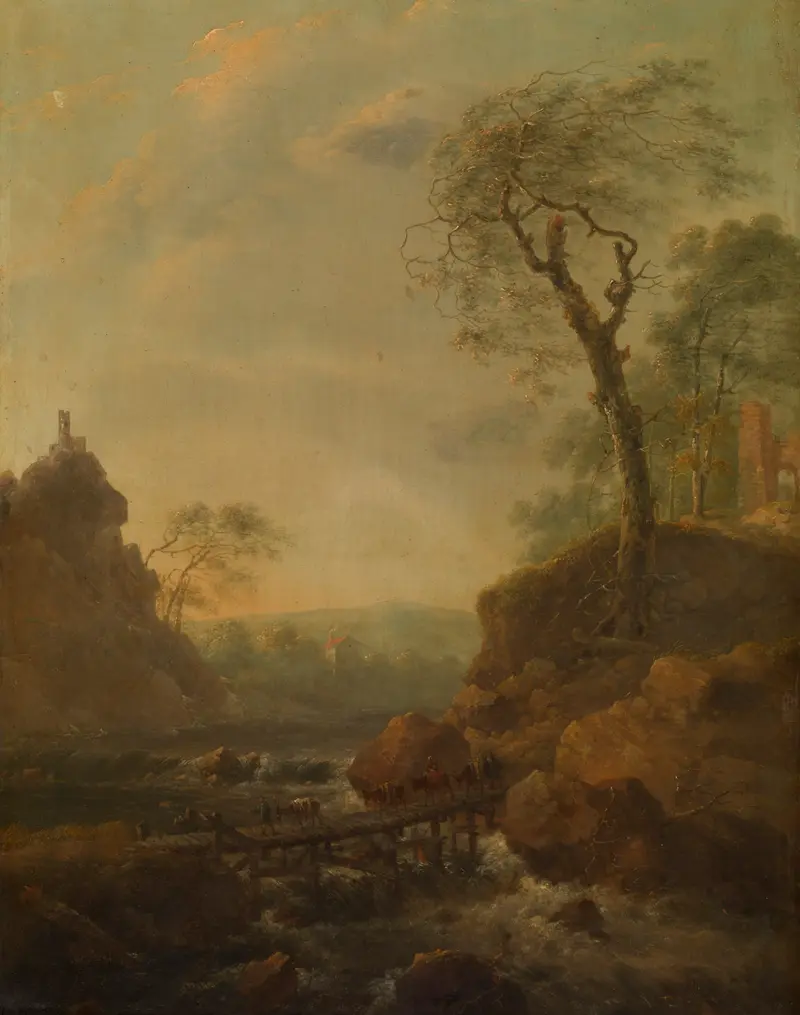
Landscape
Adam Pijnacker
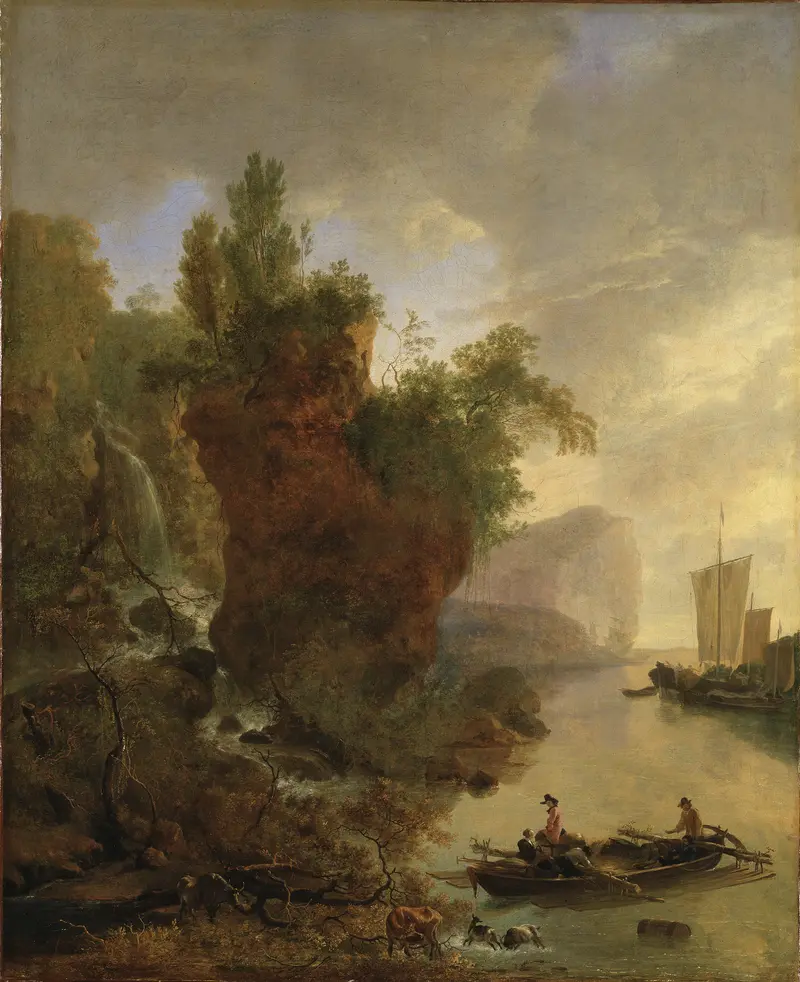
Bay with a Rocky Coast
Adam Pijnacker
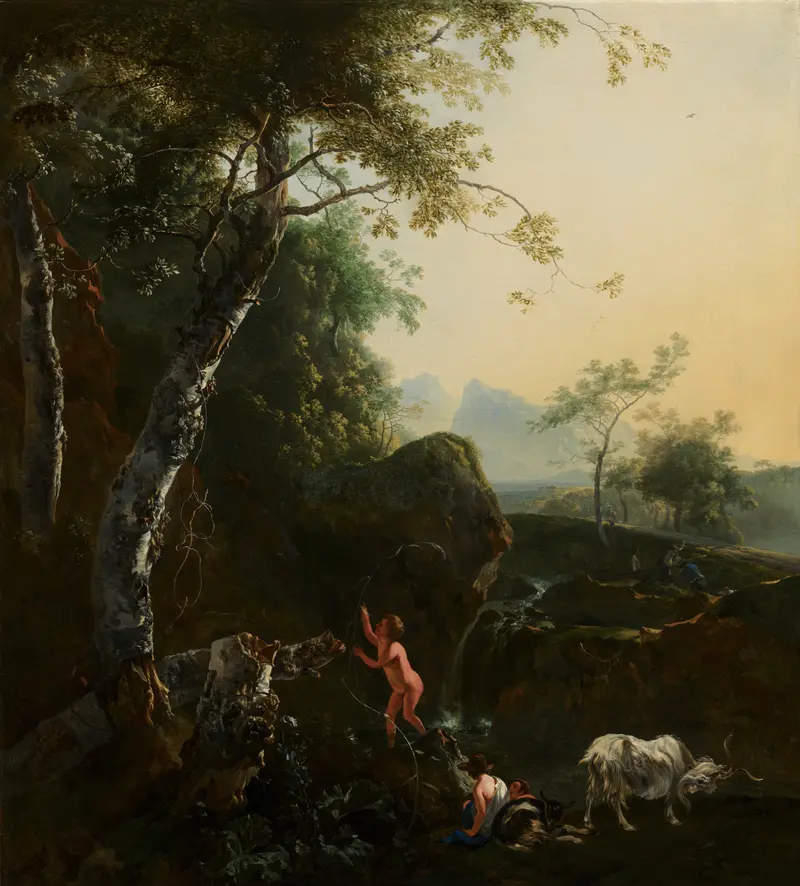
Mountainous Landscape with Waterfall
Adam Pijnacker
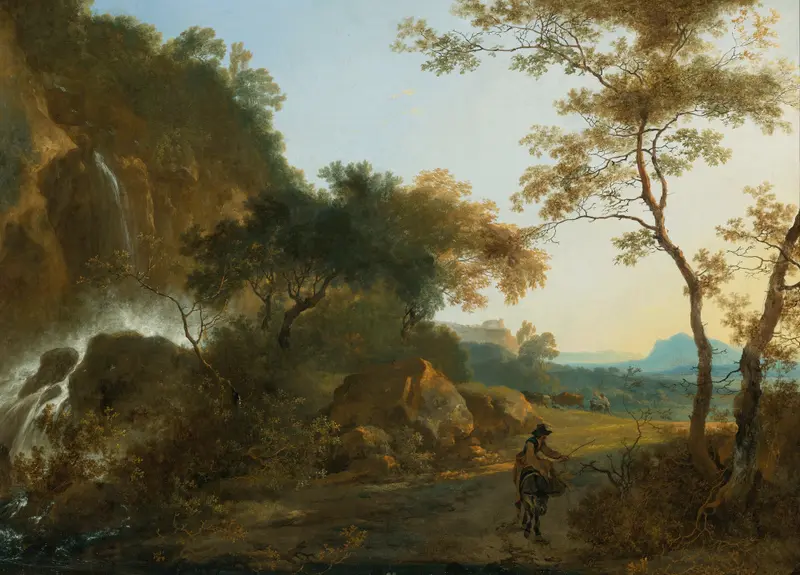
An Italianate Landscape With A Traveller On A Path By A Waterfall
Adam Pijnacker
More Landscape Art

The Starry Night
Vincent van Gogh

View of Delft
Johannes Vermeer

Water Lilies
Claude Monet

The Grand Canal, Venice, looking north-west from the Ca' Corner to the Ca' Contarini degli Scrigni, with the campanile of Santa Maria della Carità
Canaletto

Windsor Castle
Canaletto

The Grand Canal looking North-East from the Palazzo Dolfin-Manin to the Rialto Bridge
Canaletto