
Landscape with a water carrier (detail). — History & Facts
A shaft of sunlight cuts through the tangled canopy, drawing the eye to a humble figure bent over a stream—water carrier, laborer, or perhaps both—while the rest of the world unfolds behind him. The foreground is thick with shadow, where twisting tree trunks and dense foliage create a kind of living proscenium, framing the human activity below. A cart rumbles along the path, its wheels catching the light, while figures and animals move with quiet purpose, each gesture suggesting the routines of rural life.
The landscape opens up as the eye travels upward and right, revealing a distant city bathed in golden light, its towers and domes rising against a sky alive with windblown clouds. The contrast between the dark, intimate foreground and the luminous, expansive background gives the whole scene a sense of journey—both literal and metaphorical—from toil to civilization, from shadow to sun. Works like this, painted in the second half of the seventeenth century, reflect a world in transition. The Italian landscape tradition, shaped by artists such as Salvator Rosa and Gaspard Dughet, was shifting from idealized, classical vistas to more naturalistic, lived-in scenes.
Patrons—often wealthy landowners or urban collectors—sought these paintings both as windows onto imagined countryside and as reminders of the rhythms that sustained city life. Antonio Francesco Peruzzini was part of this movement, weaving together the grandeur of nature and the dignity of everyday work. Though history has kept few traces of this specific painting’s journey, its presence in a modern collection invites us to linger on the details: the play of light on leaves, the careful choreography of figures, and the sense of a world balanced between wildness and order.
More Artworks by Antonio Francesco Peruzzini
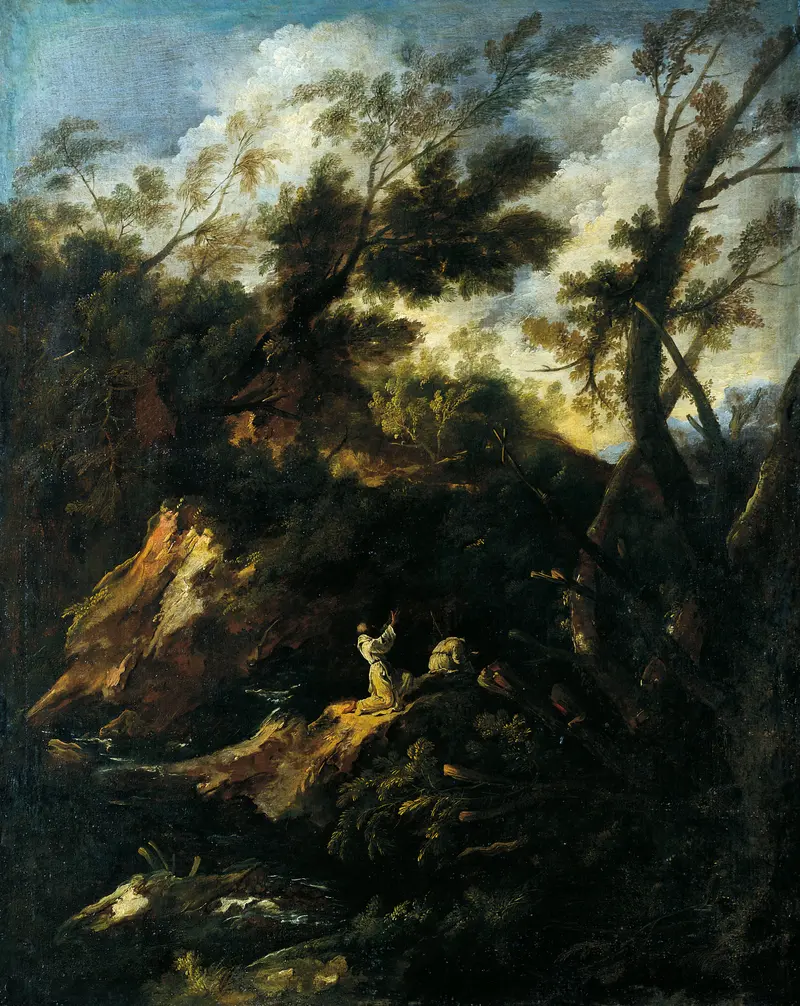
Landscape with Two Praying Monks
Antonio Francesco Peruzzini
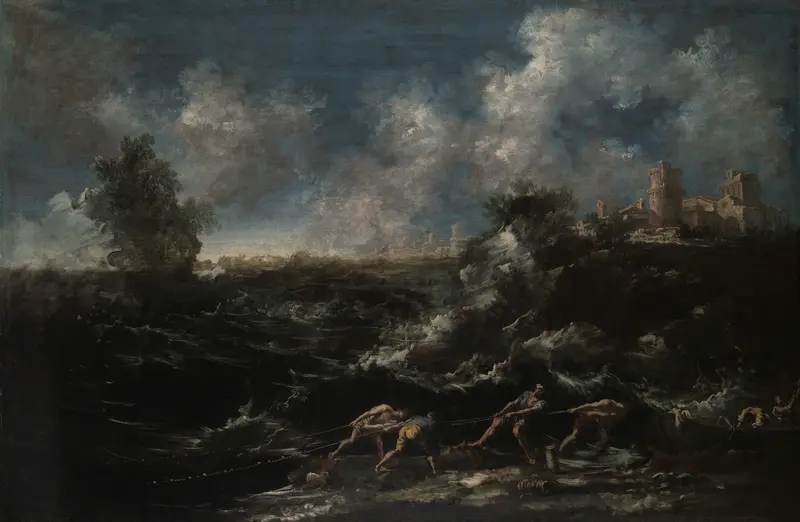
Seascape with Fisherman Pulling out Net
Antonio Francesco Peruzzini
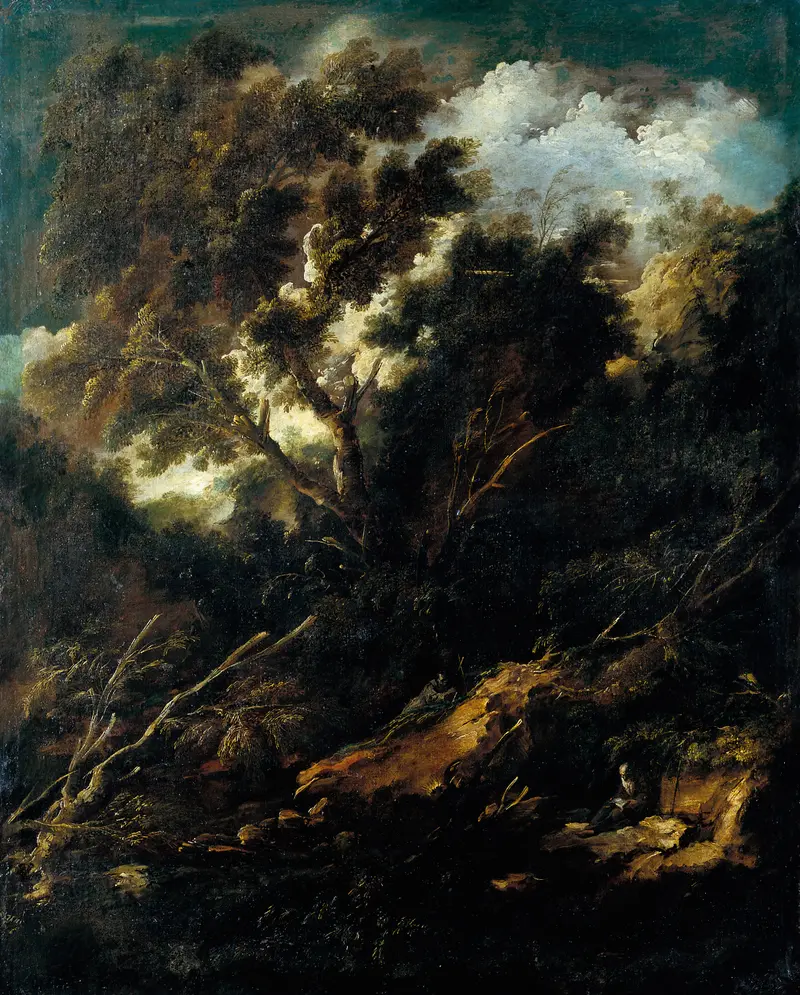
Landscape with a Reading and a Praying Franciscan
Antonio Francesco Peruzzini
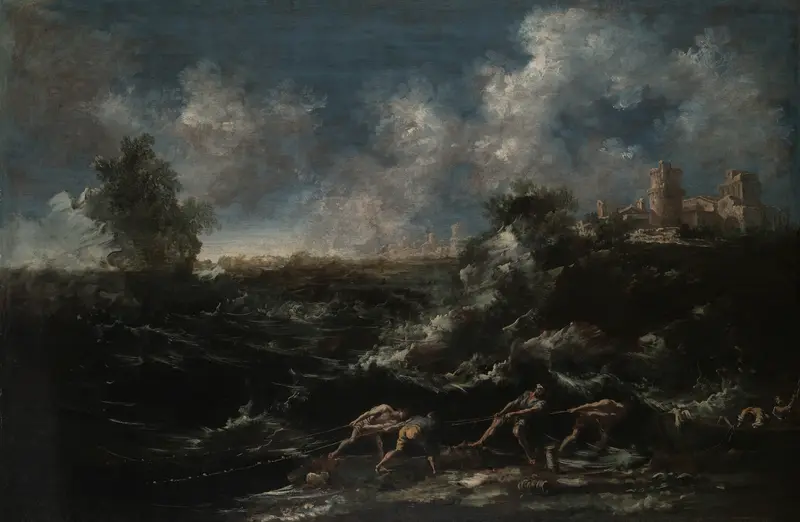
Seascape with Fisherman Pulling out Nets
Antonio Francesco Peruzzini
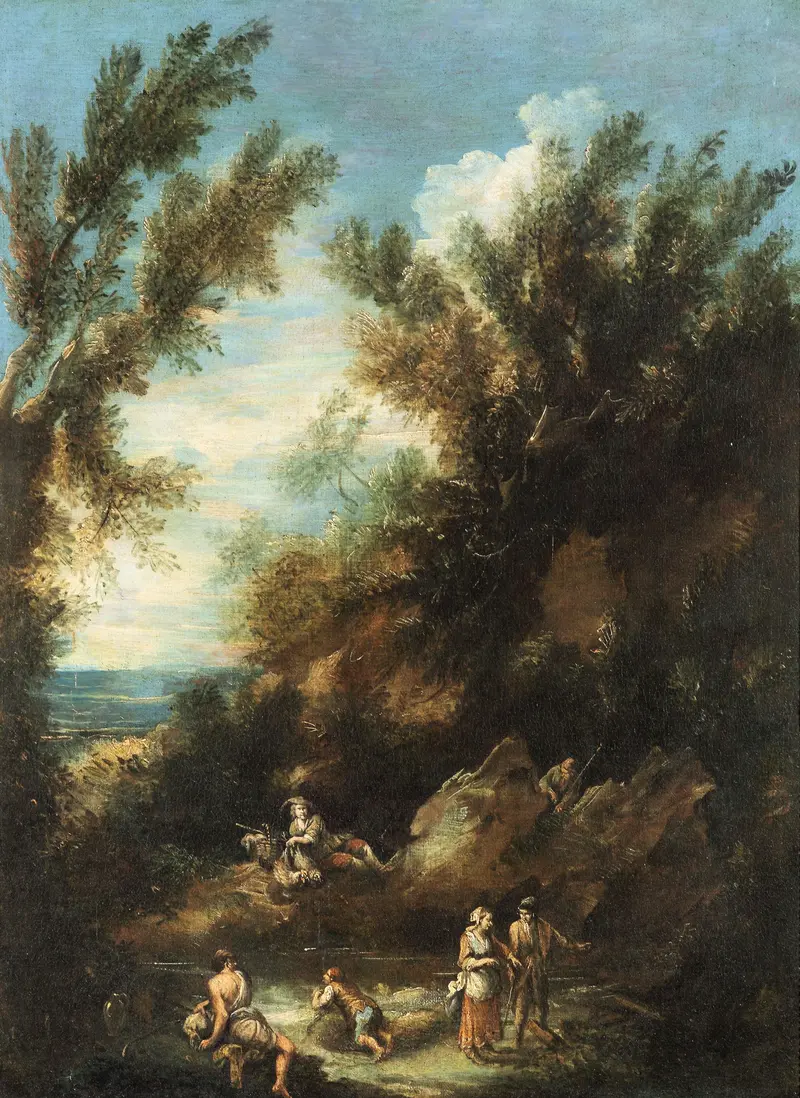
Paesaggio con figure
Antonio Francesco Peruzzini
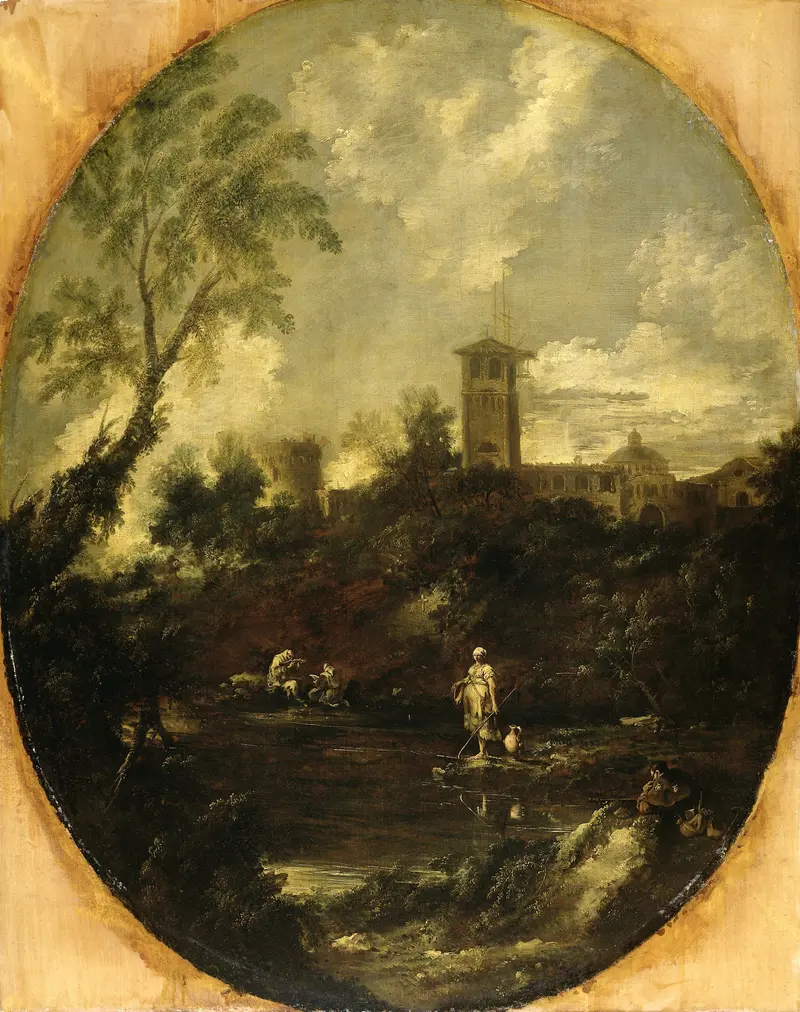
Landscape with Monks, Pilgrim and Peasant Woman
Antonio Francesco Peruzzini
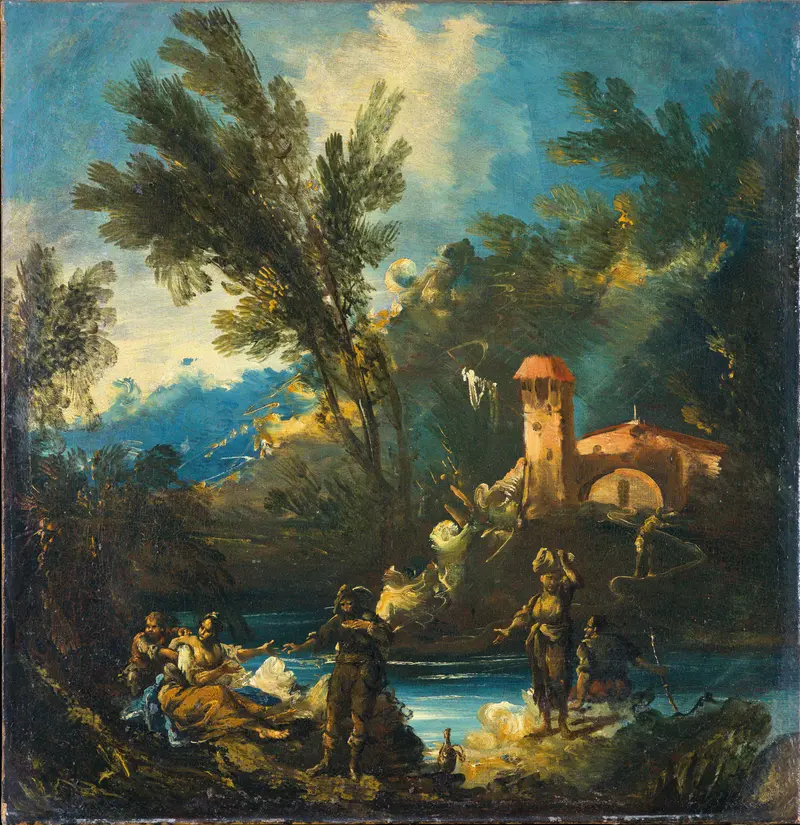
A wooded river landscape with figures
Antonio Francesco Peruzzini
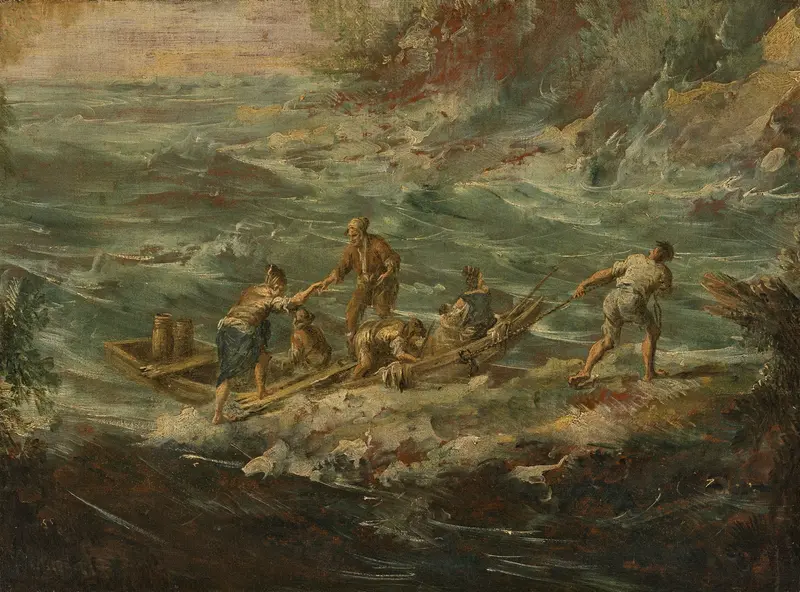
A Mediterranean landscape with figures boarding a boat in choppy seas
Antonio Francesco Peruzzini
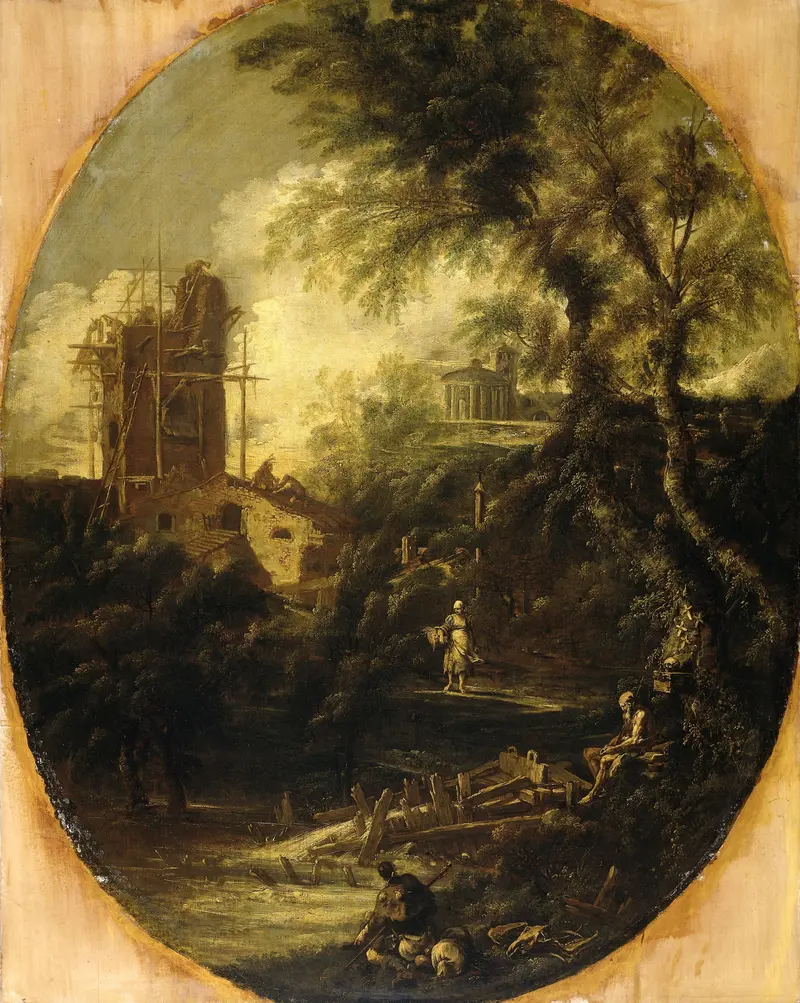
Landscape with Hermit, Pilgrim and Peasant Woman
Antonio Francesco Peruzzini
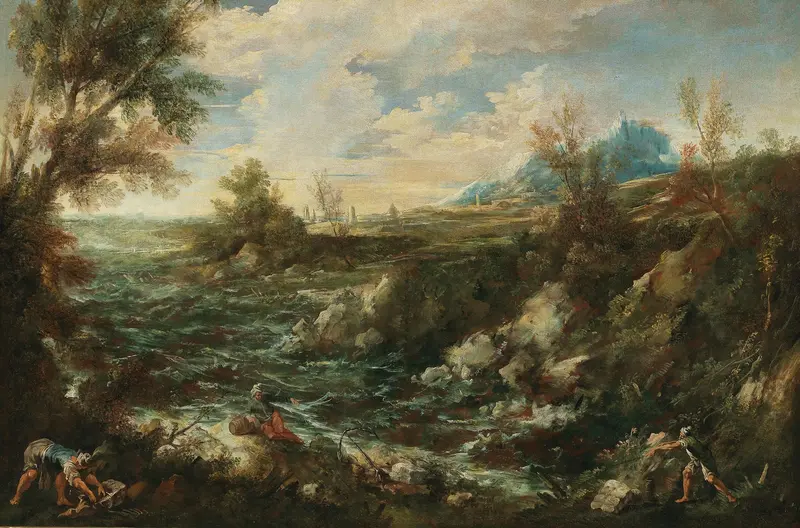
River landscape
Antonio Francesco Peruzzini
More Landscape Art

The Starry Night
Vincent van Gogh

View of Delft
Johannes Vermeer

Water Lilies
Claude Monet

The Grand Canal, Venice, looking north-west from the Ca' Corner to the Ca' Contarini degli Scrigni, with the campanile of Santa Maria della Carità
Canaletto

Windsor Castle
Canaletto

The Grand Canal looking North-East from the Palazzo Dolfin-Manin to the Rialto Bridge
Canaletto