
Landscape with Hermit, Pilgrim and Peasant Woman — History & Facts
In a time of relentless change, it is through the lens of decay that we uncover profound truths about our existence. Here, a landscape unfolds—both a sanctuary and a reflection of our deepest vulnerabilities. Focus on the left side of the canvas, where the hermit emerges as a figure of contemplation, dressed in muted tones that blend with the earth. His demeanor contrasts sharply with the vibrant blossoms that dot the foreground, a burst of life amid the encroaching decay.
Notice how the winding path leads the eye towards the horizon, inviting viewers to ponder the journey ahead and the inevitability of time’s passage as it washes over the landscape in shades of brown and green. Delve deeper into the emotional undercurrents that the artist weaves through this scene. The pilgrim’s gaze seems distant, caught between hope and resignation, while the peasant woman’s posture reflects a quiet strength, resilient yet burdened by her reality. The interplay of light and shadow further heightens this tension; luminous highlights on the flowers radiate a fleeting beauty, juxtaposed against the somber tones of the figures, suggesting a world in which vitality is both cherished and ultimately transient. During the years between 1690 and 1740, Peruzzini painted this work amidst a shifting artistic landscape in Italy, where Baroque influences were beginning to give way to a new sensibility.
Living in Rome, he was surrounded by an era that emphasized both grandeur and human emotion, yet the quiet introspection of this piece signals a personal exploration of themes that resonate still: the search for meaning in the face of decay and the transient beauty of life itself.
More Artworks by Antonio Francesco Peruzzini
Browse all →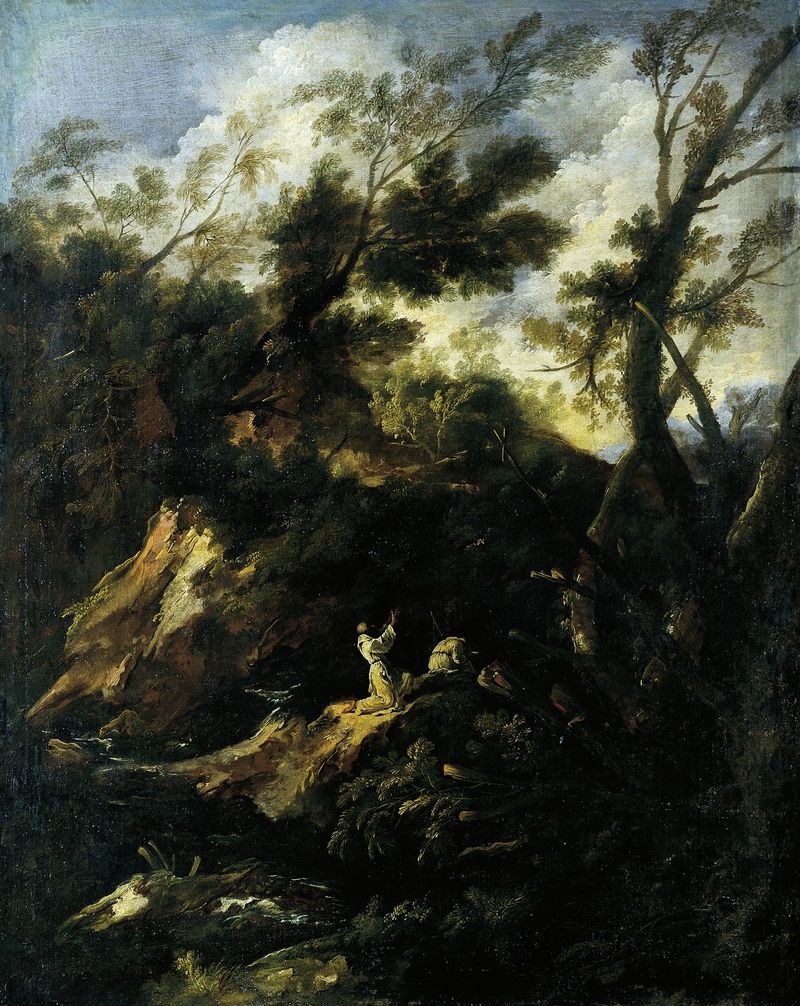
Landscape with Two Praying Monks
Antonio Francesco Peruzzini
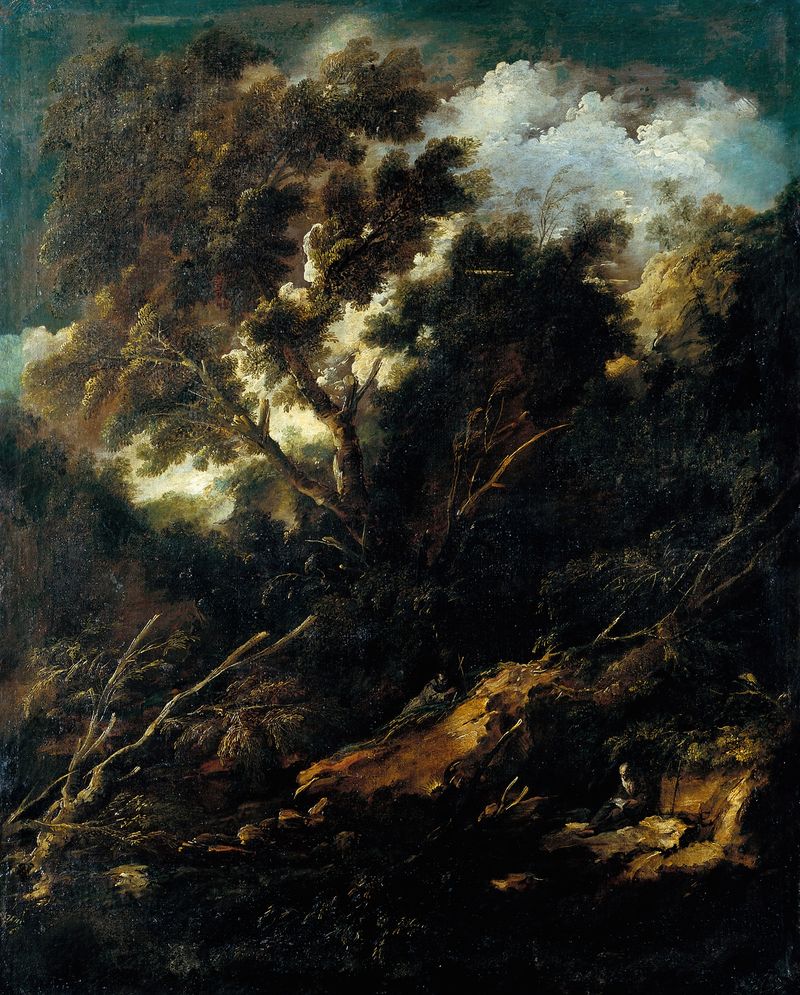
Landscape with a Reading and a Praying Franciscan
Antonio Francesco Peruzzini

Seascape with Fisherman Pulling out Nets
Antonio Francesco Peruzzini
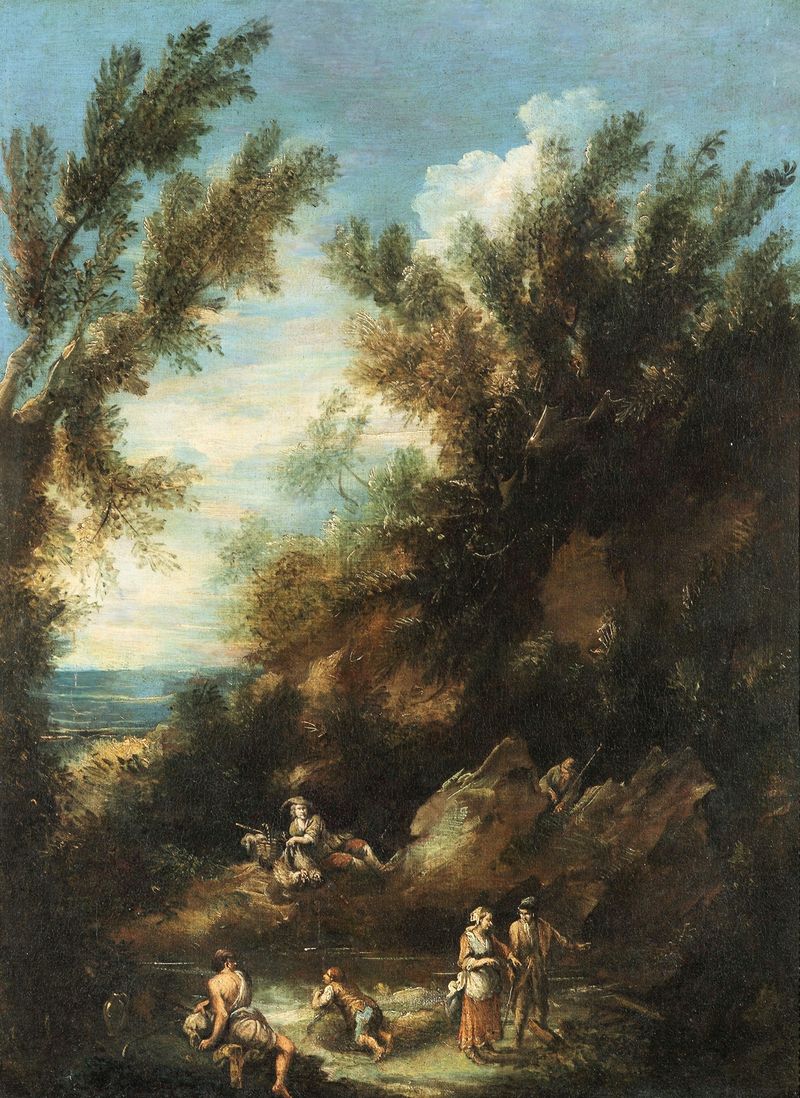
Paesaggio con figure
Antonio Francesco Peruzzini

Landscape with Monks, Pilgrim and Peasant Woman
Antonio Francesco Peruzzini
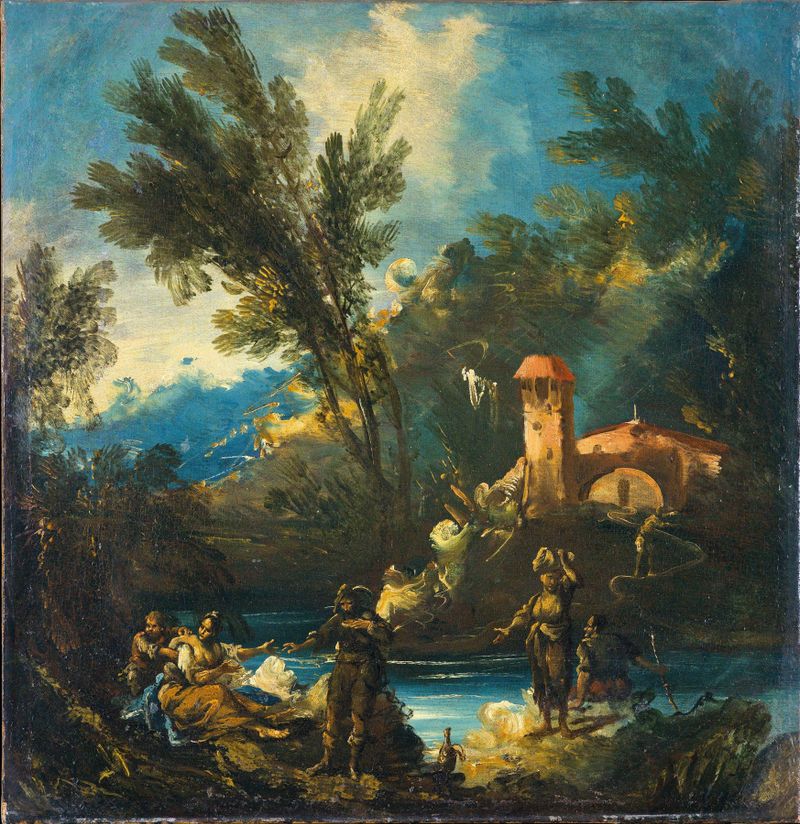
A wooded river landscape with figures
Antonio Francesco Peruzzini
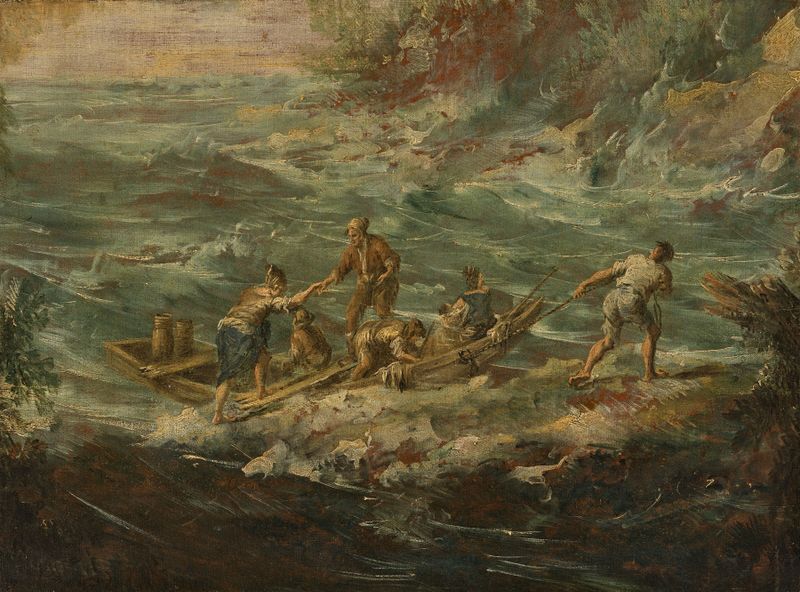
A Mediterranean landscape with figures boarding a boat in choppy seas
Antonio Francesco Peruzzini

River landscape
Antonio Francesco Peruzzini





