
Landscape with a Watermill — History & Facts
In the stillness of nature, a moment hangs in the balance, poised between serenity and the relentless passage of time. Look to the left at the sturdy watermill, its weathered wooden structure framed by lush greenery and a tranquil river. The artist employs a rich palette of greens and browns, drawing your eye across the landscape, where dappled sunlight dances invitingly upon the water’s surface. Notice how the clouds above, swirling in shades of gray and blue, mirror the subtle movements of the foliage, creating a harmonious dialogue between sky and earth. Beneath the surface tranquility lies a void, a reminder of nature’s impermanence.
The mill stands as a sentinel, juxtaposed against the serene flow of the water, reflecting both the beauty and the stillness of rural life. The gentle ripples in the water suggest movement, hinting at the unseen forces of time and change, while the vibrant greenery contrasts with the muted tones of the mill, evoking the tension between human industry and the natural world. Jacob van Ruisdael painted this landscape in 1680, during a time when the Dutch Republic was experiencing both economic prosperity and artistic flourishing. His focus on landscapes, steeped in realism and emotional resonance, mirrored the era’s growing appreciation for nature and its complexities, as well as a desire to reflect the changing dynamics of the world around him.
The work captures not only the beauty of the scene but also an introspective invitation to consider what lies beneath the surface.
More Artworks by Jacob van Ruisdael
Browse all →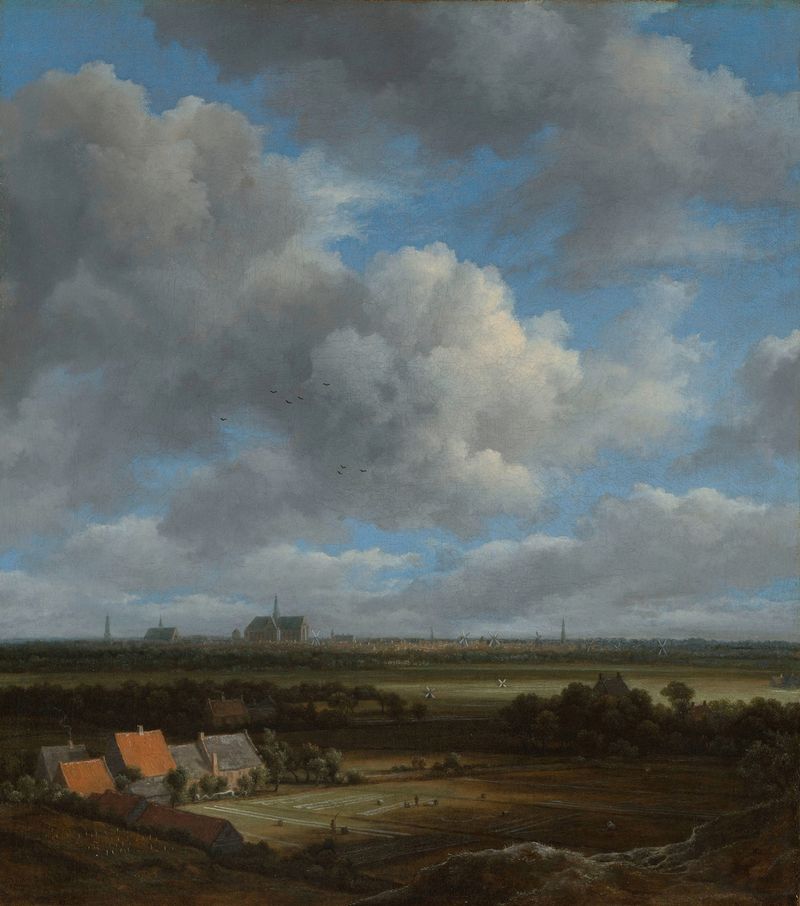
View of Haarlem from the Northwest, with the Bleaching Fields in the Foreground
Jacob van Ruisdael
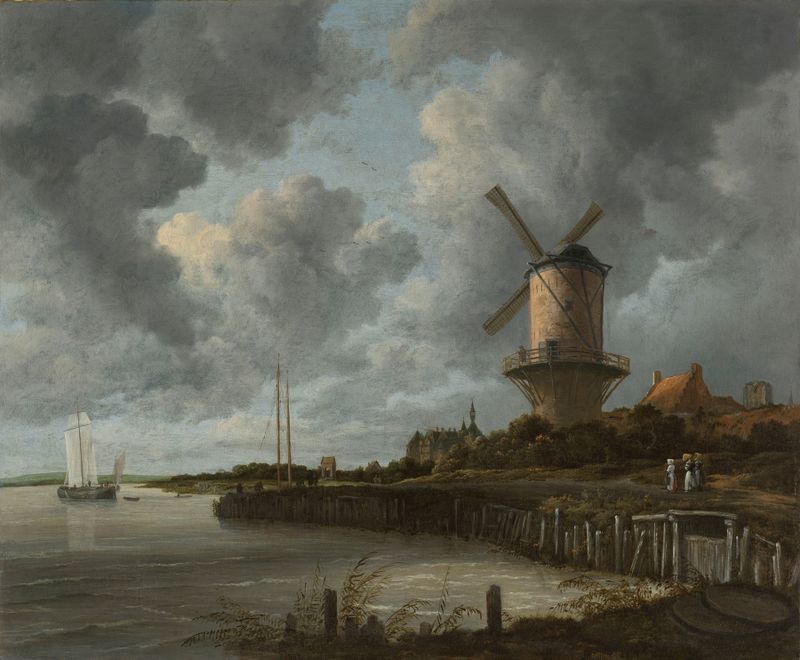
The Windmill at Wijk bij Duurstede
Jacob van Ruisdael
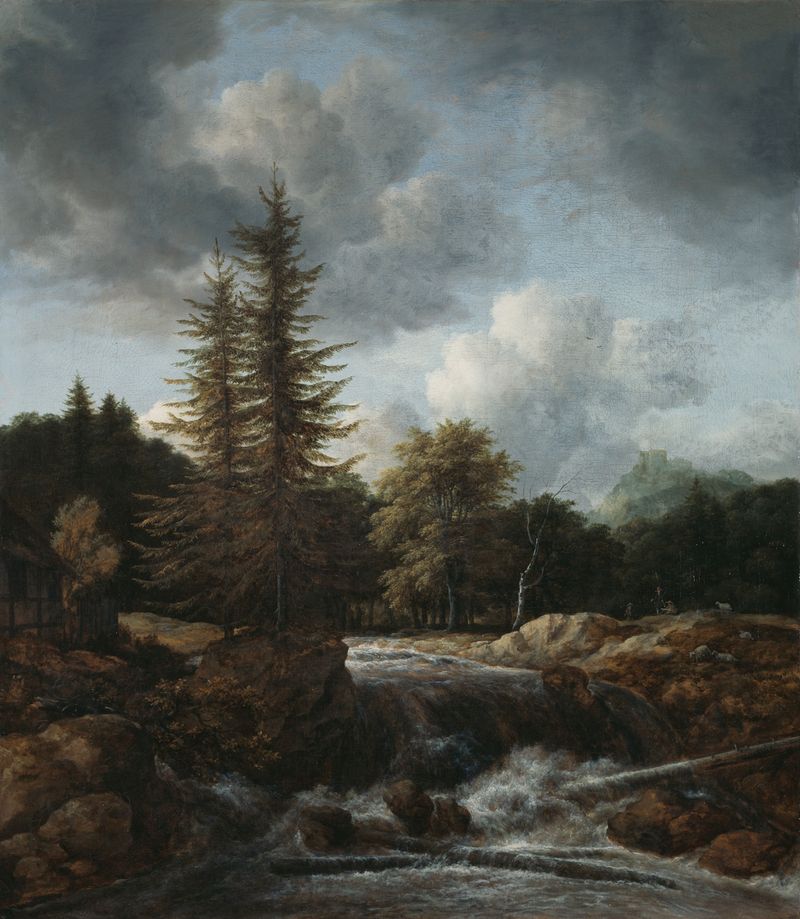
Landscape with Waterfall
Jacob van Ruisdael
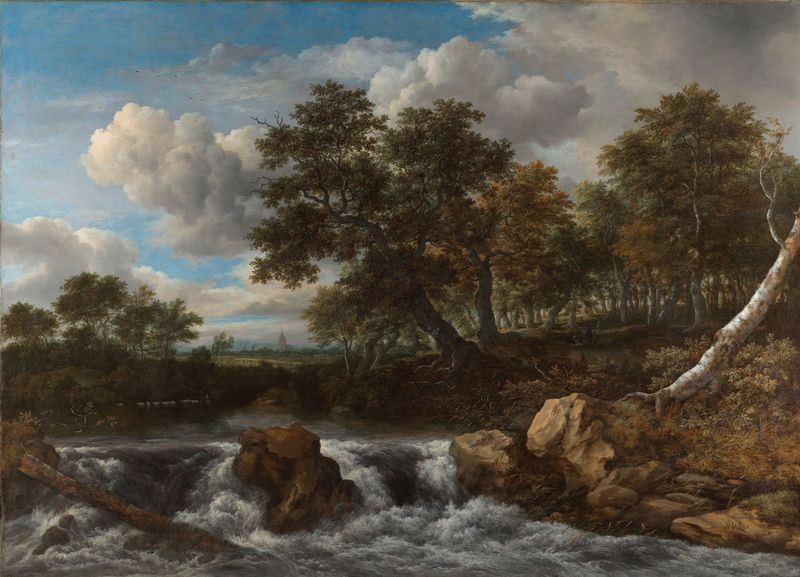
Landscape with Waterfall
Jacob van Ruisdael
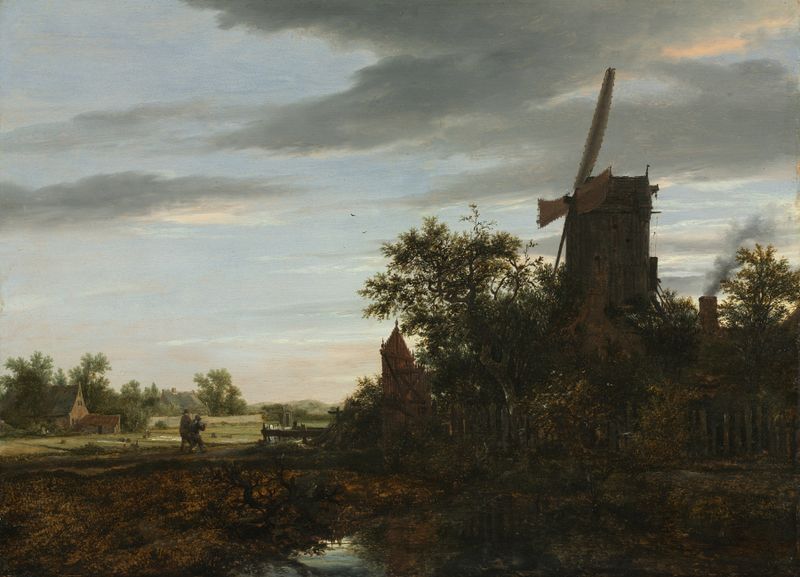
Landscape with a Windmill
Jacob van Ruisdael

Wooded hillside with a view of Bentheim Castle
Jacob van Ruisdael
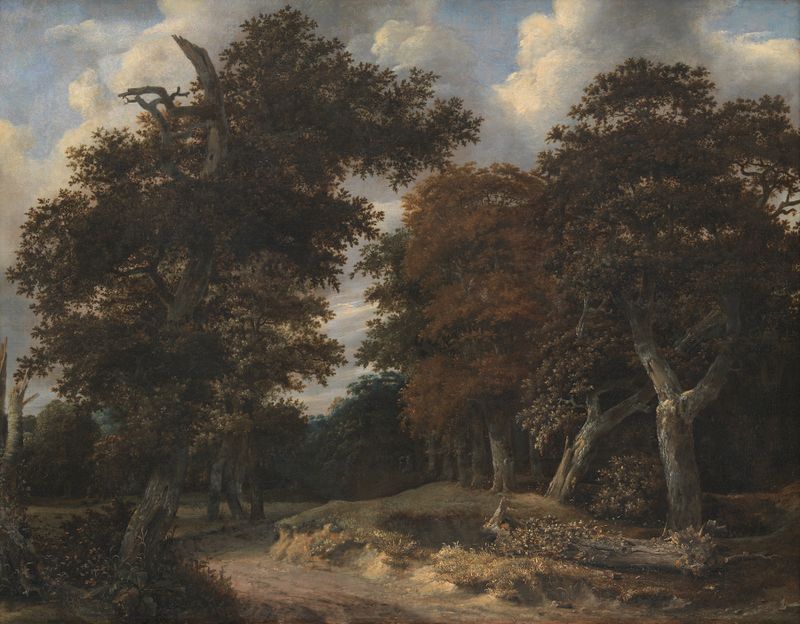
Road through an Oak Forest
Jacob van Ruisdael

Landscape with a Church
Jacob van Ruisdael

The Forest Stream
Jacob van Ruisdael

The Jewish Cemetery
Jacob van Ruisdael





