
Landscape with Cottages and Figures — History & Facts
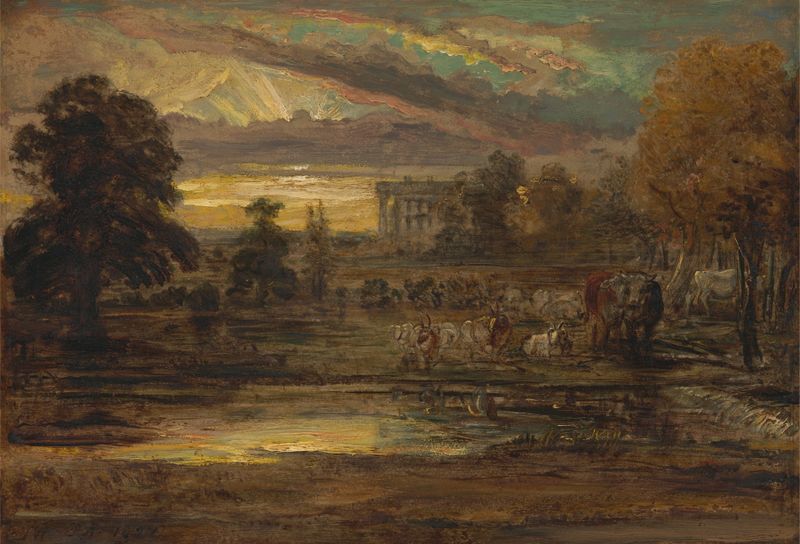
When did color learn to lie? In a world awash with vibrant hues, the betrayals of nature often mask deeper truths beneath their surface. Look to the left at the lush green fields that roll gently into the horizon, a deceptive tranquility framing the little cottages. Notice how the sunlight splashes across the rooftops, creating a vivid contrast against the shadows lurking in the corners. The figures meandering through the landscape seem almost ethereal, their forms blending effortlessly with the colors of the earth, yet their postures suggest weariness, caught between the beauty of their surroundings and the burdens they carry. Delve deeper into the quiet tension between the idyllic scenery and the subtle discomfort it evokes.
The cottages, quaint and inviting, stand as symbols of stability, while the figures, perhaps lost in thought or toil, embody the struggle against an unyielding reality. This juxtaposition highlights a complex relationship between peace and disquiet, revealing how appearances can be deceiving, and suggesting that beneath the charming facade lies a narrative of unspoken hardship. James Ward painted this piece during a time when Romanticism was on the rise in England, likely between the late 18th and early 19th centuries. As he engaged with themes of pastoral beauty, he was reflecting both the idealization of rural life and the harsh truths often hidden within it.
This tension mirrored the broader artistic currents of his time, as artists increasingly grappled with the balance between aesthetic pleasure and the complexities of human experience.
More Artworks by James Ward
Browse all →
View near Swansea, South Wales
James Ward
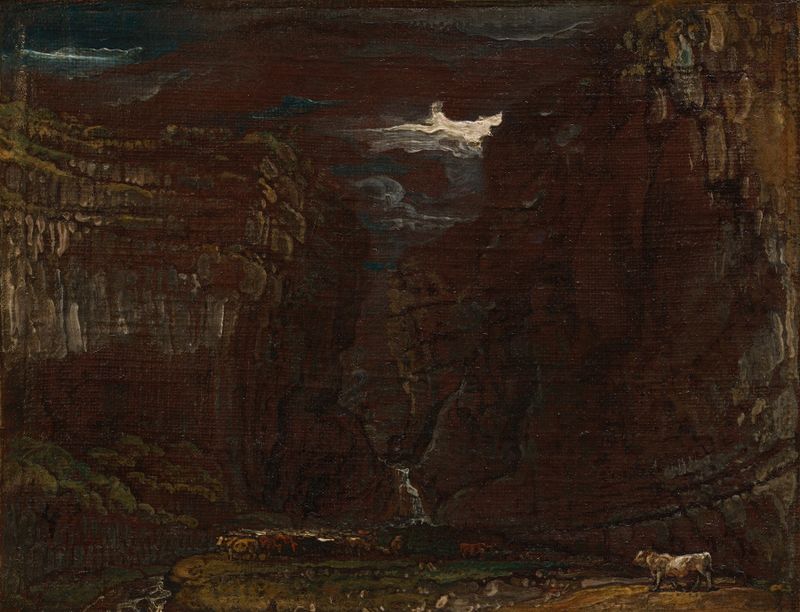
Sketch for ‘Gordale Scar’
James Ward
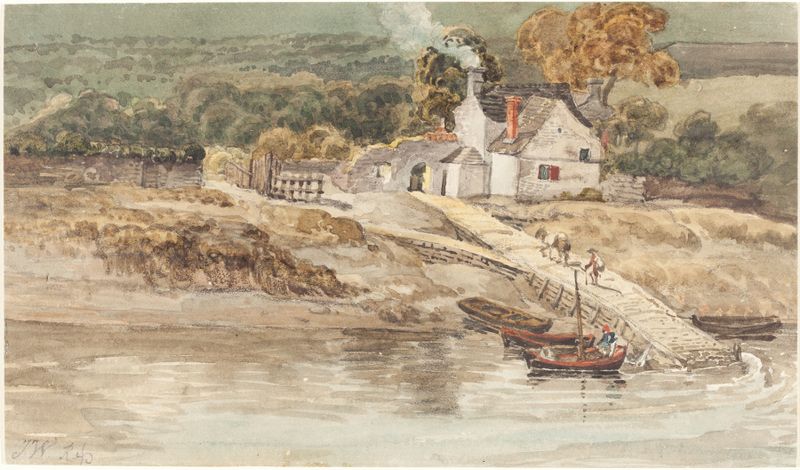
Landing Place near Tintern Abbey
James Ward

Landscape with Cottages
James Ward
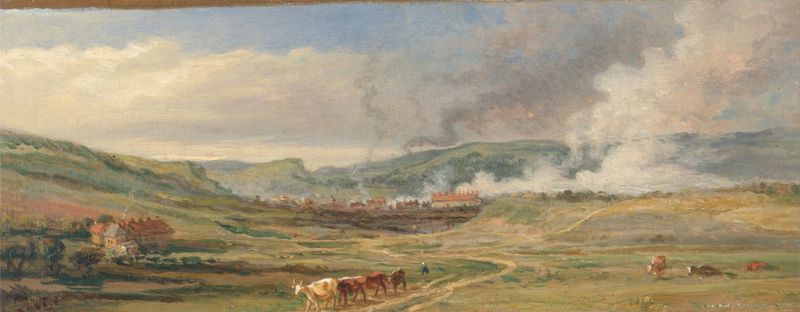
Landscape near Swansea, South Wales
James Ward

Fitzhead in Somerset, with an ox-cart near a lime kiln, and Glastonbury Tor in the distance
James Ward
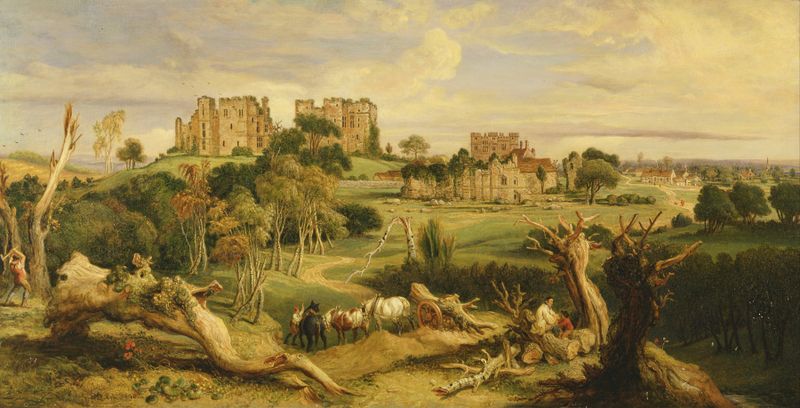
Kenilworth Castle, Warwickshire
James Ward

An Overshot Mill
James Ward
Cattle at a Pool at Sunrise
James Ward

An oak tree in Richmond Park with a herd of fallow deer beside it
James Ward





