
Landscape with Dunes — History & Facts
Where does light end, and longing begin? In a world awash with golden hues and endless horizons, emptiness emerges as both a canvas and a passionate refrain. Look to the right at the gentle slopes of the dunes, their soft contours kissed by sunlight. Notice how the artist captures the interplay of light and shadow, creating a rhythmic dance across the surface. The sky, filled with billowing clouds, is a vast expanse of muted blues and grays, drawing the eye upward and inviting contemplation.
Each brushstroke, executed with precision, brings forth a tactile quality that transcends mere representation, rendering the landscape alive and breathing. As you linger in this scene, consider the contrasting emotions stirred by the tranquil beauty and the sense of isolation evoked. The dunes, while inviting, harbor a stark emptiness—a longing for connection amidst the vastness. Shadows linger in the hollows, hinting at the anxieties that coexist with nature’s grandeur.
This tension between serenity and solitude speaks to the human experience, a reflection of our own longing for meaning within the expansive world. In 1649, Jacob van Ruisdael painted this evocative landscape during a period of profound transformation in Dutch art. The Baroque movement was gaining momentum, and artists were increasingly interested in the interplay of light and atmosphere. Living in a time of prosperity, van Ruisdael was deeply influenced by the natural world around him, often using his work to explore themes of nature's beauty and its inherent solitude, marking him as a key figure in the landscape painting genre.
More Artworks by Jacob van Ruisdael
Browse all →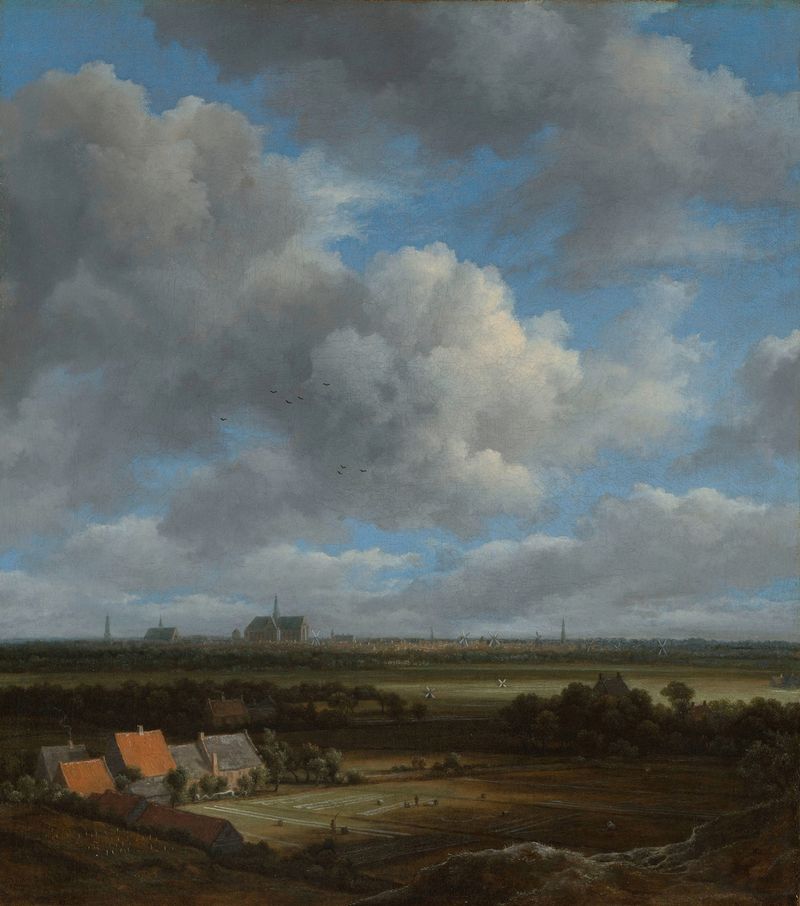
View of Haarlem from the Northwest, with the Bleaching Fields in the Foreground
Jacob van Ruisdael
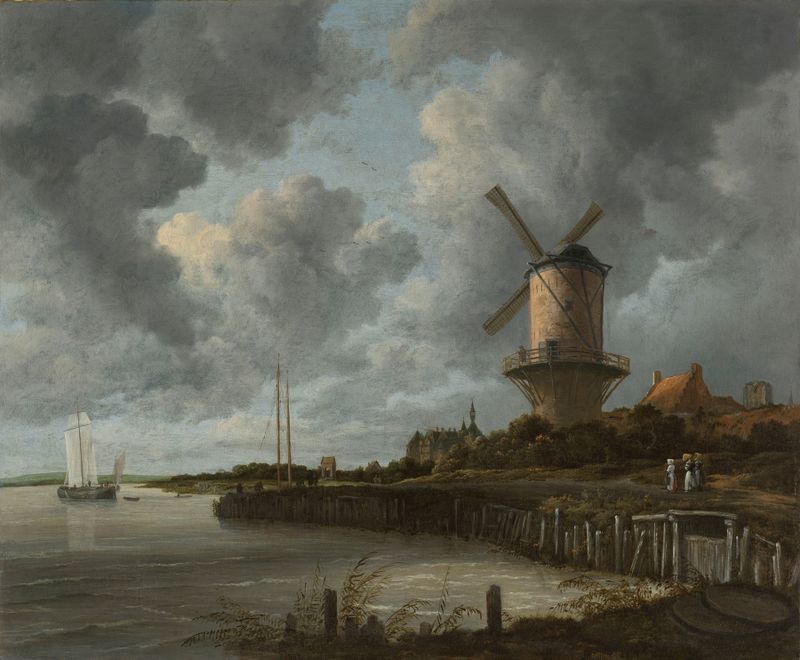
The Windmill at Wijk bij Duurstede
Jacob van Ruisdael
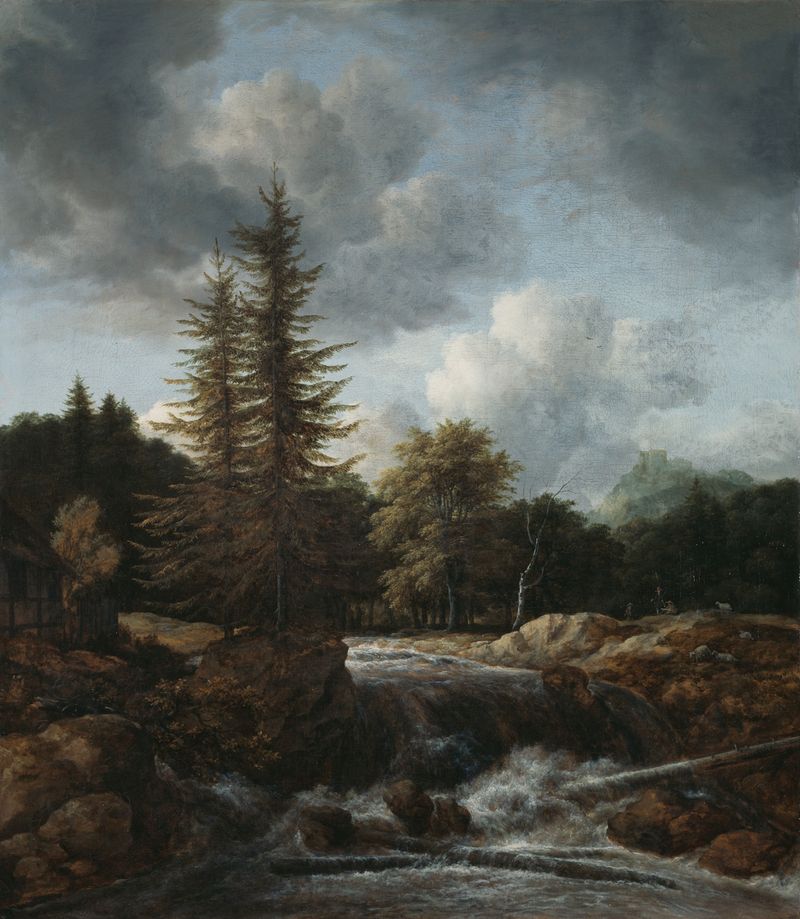
Landscape with Waterfall
Jacob van Ruisdael
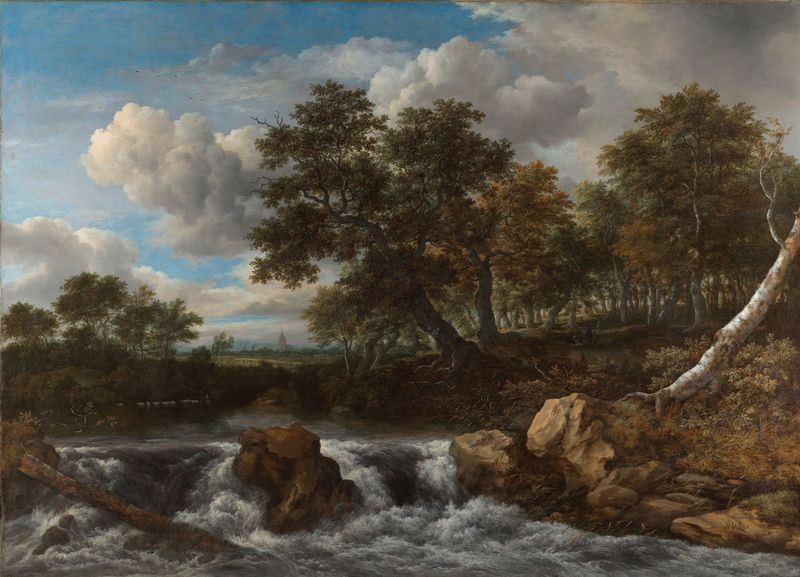
Landscape with Waterfall
Jacob van Ruisdael
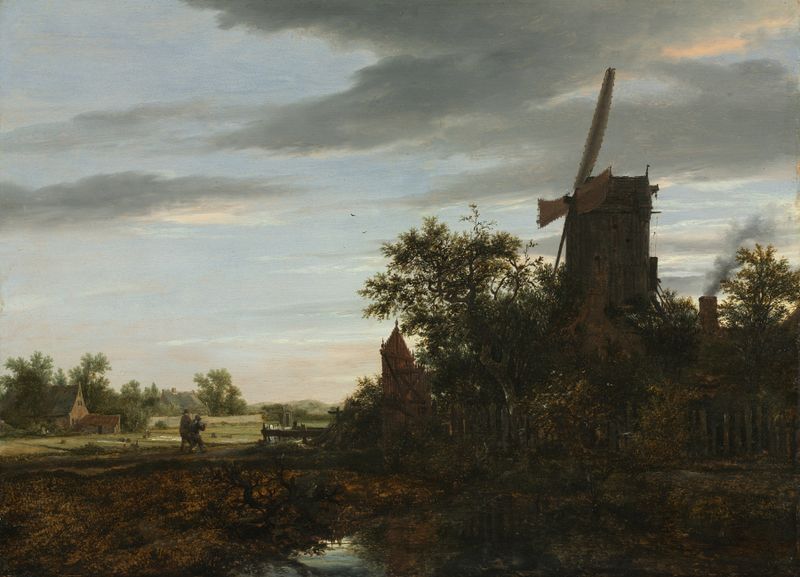
Landscape with a Windmill
Jacob van Ruisdael

Wooded hillside with a view of Bentheim Castle
Jacob van Ruisdael
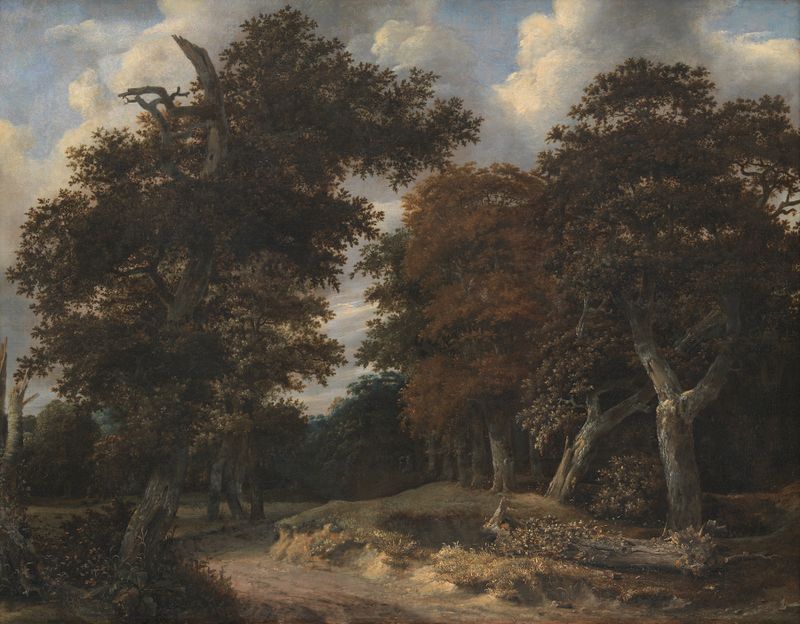
Road through an Oak Forest
Jacob van Ruisdael

Landscape with a Church
Jacob van Ruisdael

The Forest Stream
Jacob van Ruisdael

The Jewish Cemetery
Jacob van Ruisdael





