
Landscape with Sportsmen and Game — History & Facts
The first thing that seizes the eye is the luminous wedge of sky, drawing the viewer’s gaze from the tangled, battered birch trunks at left to the open expanse at right, where the land dissolves into a haze of sunlit distance. Amid these woods, a cluster of hunters and their dogs pause, their quarry laid out before them. The painter’s brush lingers on the textures of bark and leaf, the pale gleam of birch peeling in strips, the velvet of moss, and the delicate, almost theatrical blue-white flowers sprawling at the forest’s edge.
Every detail seems to signal a world both observed and arranged: the hunter’s horn poised mid-rest, the attentive hounds, the play of shadow that shelters them, and the way the forest seems to cradle this moment of triumph and repose. Painted around 1665, Landscape with Sportsmen and Game belongs to a Dutch tradition that celebrated the pleasures and privileges of country life, a genre prized by the prosperous merchant class of the Golden Age. Works like this, with their careful blend of natural observation and staged narrative, were often destined for the walls of townhouses—windows onto a world of leisure and mastery over nature. The artist, Adam Pijnacker, was known for his Italianate landscapes, but here the northern woods take on a grandeur of their own, suffused with clear, northern light.
History has kept few traces of this particular painting’s journey, but its survival in the collection now catalogued by the Google Cultural Institute invites us to look again at how art once made the everyday both familiar and quietly heroic. Let your eye wander from the battered birches to the distant riders, and consider what stories might unfold in the hush between hunt and home.
More Artworks by Adam Pijnacker

Italianate River Landscape
Adam Pijnacker
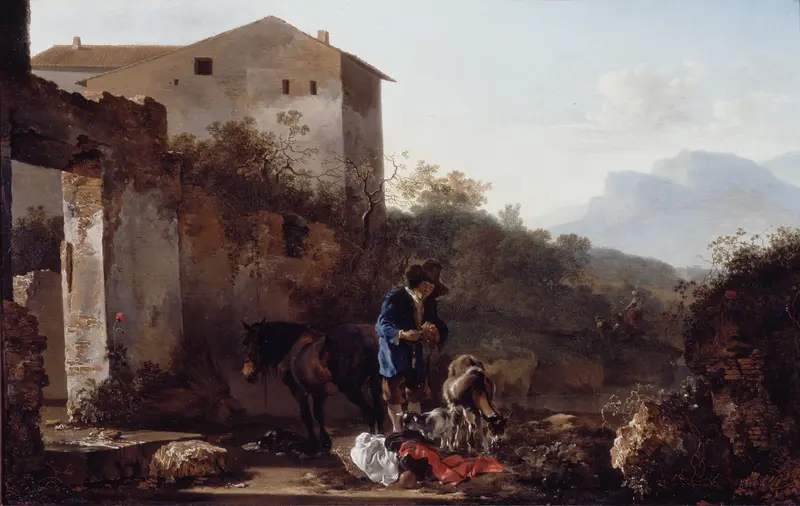
Landscape with a Goatherd
Adam Pijnacker
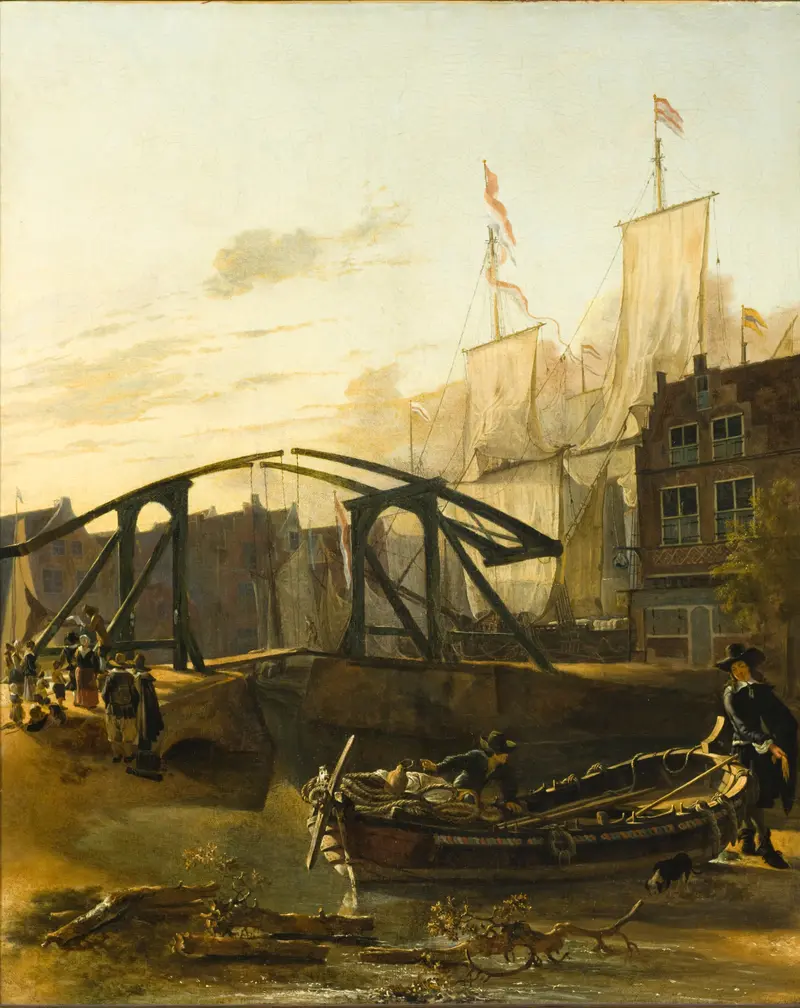
View of a Harbor in Schiedam
Adam Pijnacker
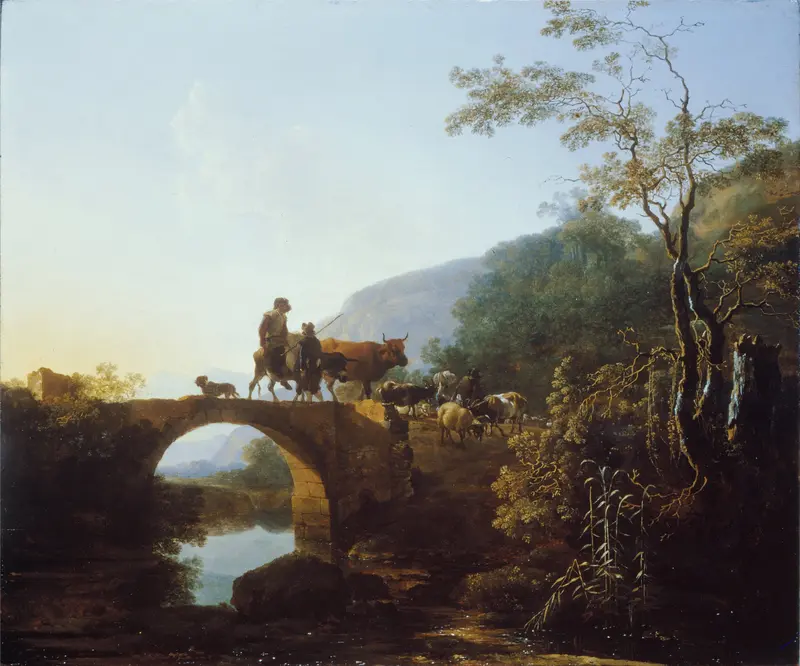
Bridge in an Italian Landscape
Adam Pijnacker
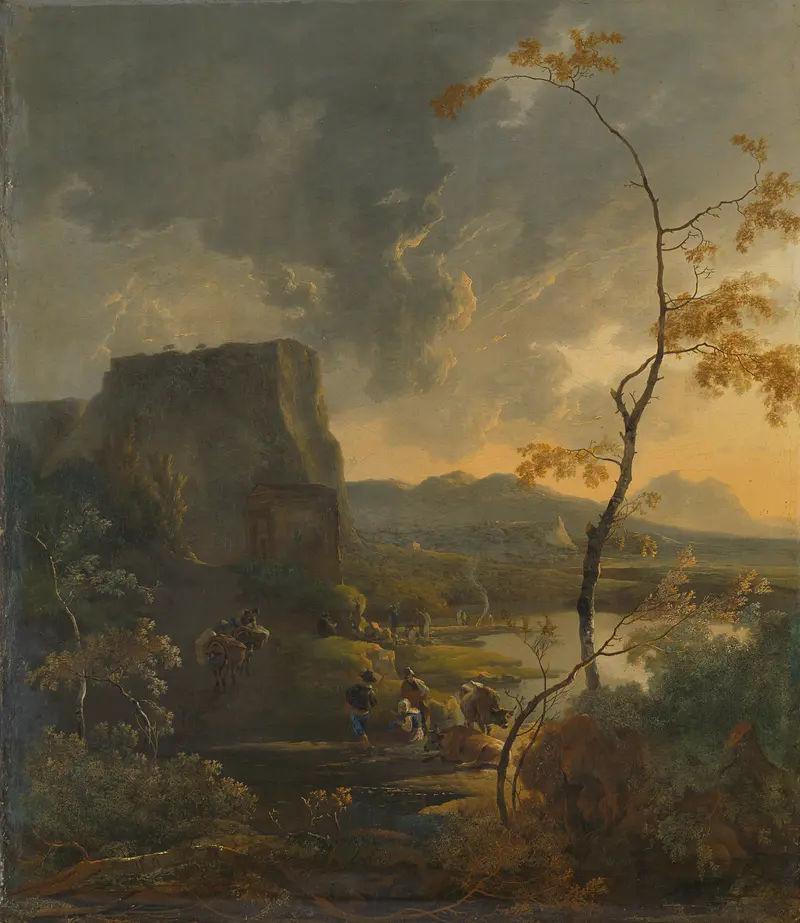
Italian Landscape with Ancient Tempietto
Adam Pijnacker
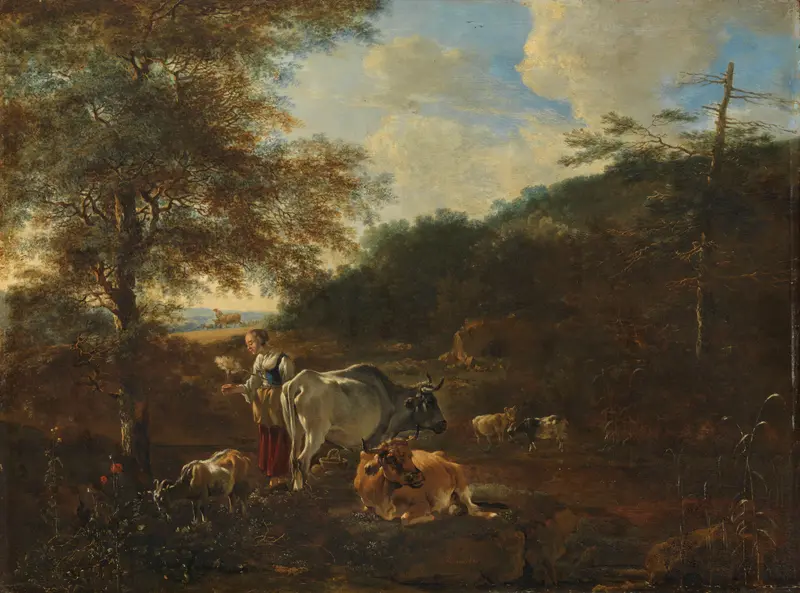
Landscape with cattle
Adam Pijnacker
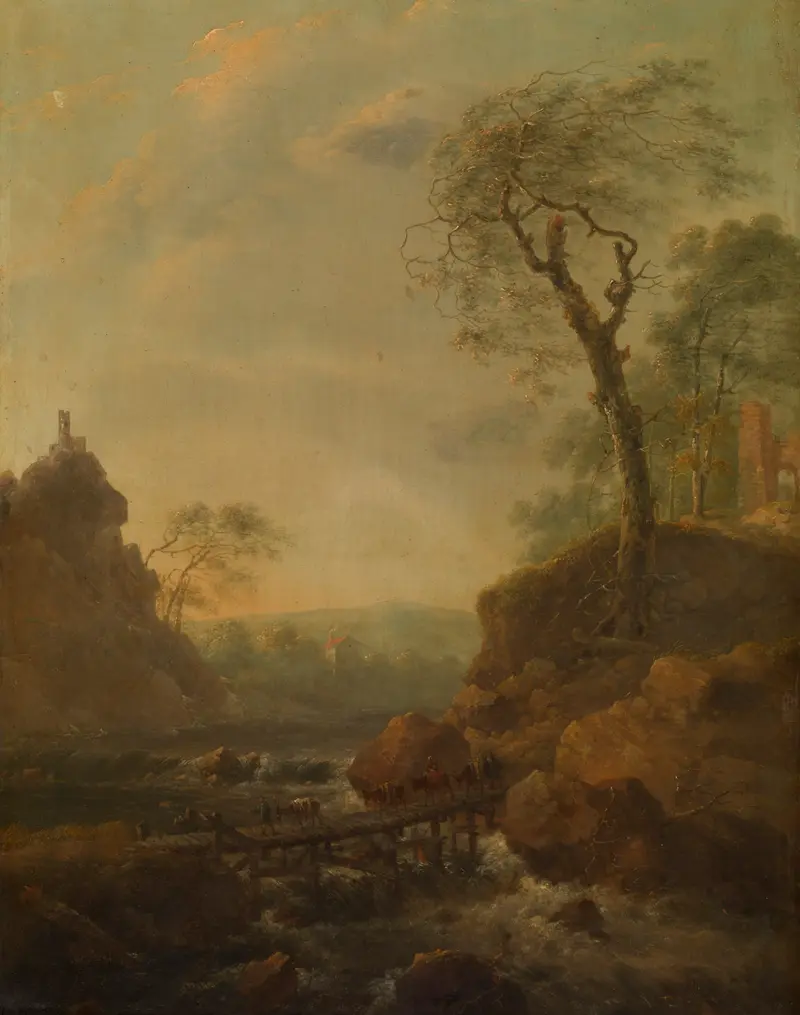
Landscape
Adam Pijnacker
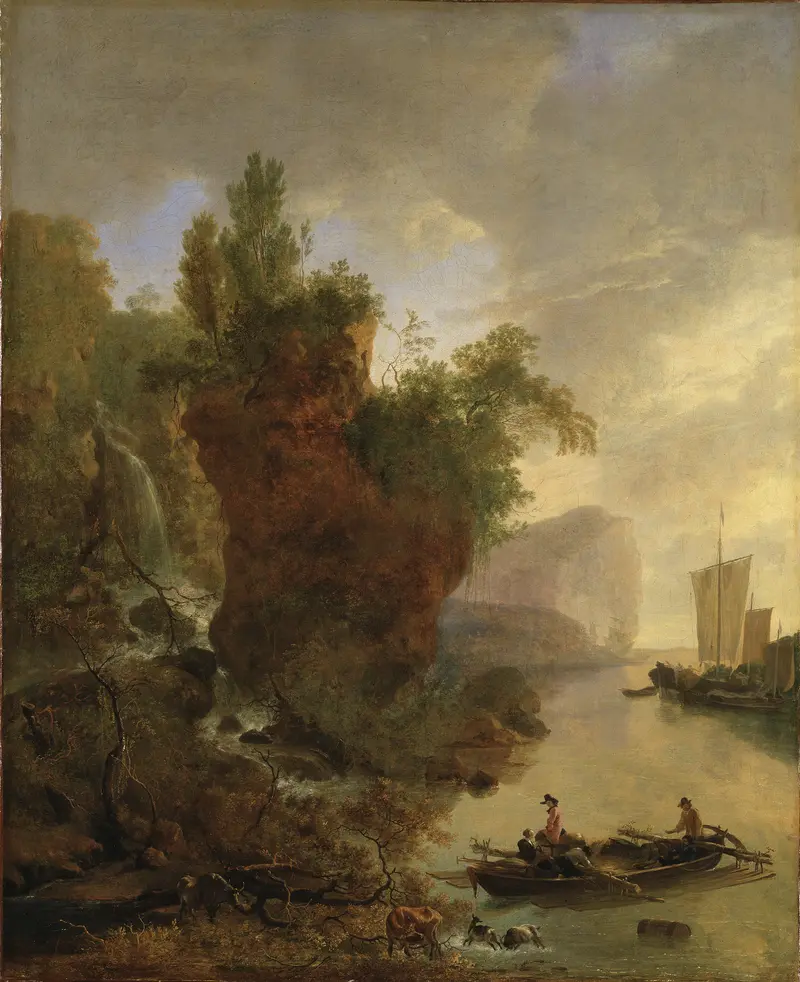
Bay with a Rocky Coast
Adam Pijnacker
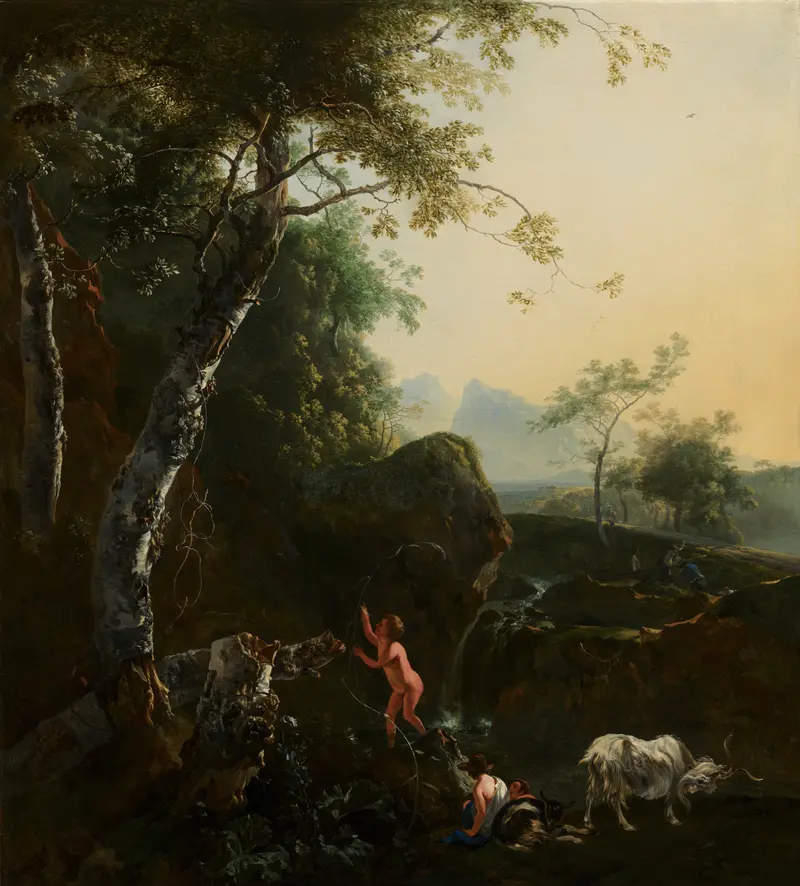
Mountainous Landscape with Waterfall
Adam Pijnacker
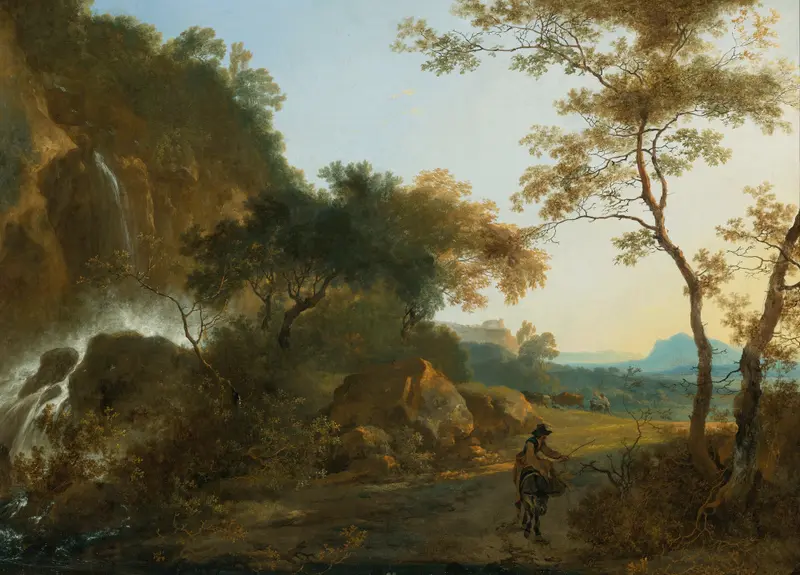
An Italianate Landscape With A Traveller On A Path By A Waterfall
Adam Pijnacker
More Landscape Art

The Starry Night
Vincent van Gogh

View of Delft
Johannes Vermeer

Water Lilies
Claude Monet

The Grand Canal, Venice, looking north-west from the Ca' Corner to the Ca' Contarini degli Scrigni, with the campanile of Santa Maria della Carità
Canaletto

Windsor Castle
Canaletto

The Grand Canal looking North-East from the Palazzo Dolfin-Manin to the Rialto Bridge
Canaletto