
Landscape with Sunrise — History & Facts
The first thing that catches the eye in Landscape with Sunrise is the way the light seeps quietly into the scene, transforming the edge of night into the promise of day. The painter, Adam Pijnacker, draws you into a world where the sun’s first rays catch the upper leaves and the tangled roots of a fallen tree, while the rest of the forest still clings to shadow. A herd of goats picks its way through the undergrowth, their pale coats catching the glow, while a distant rider and ruined wall are half-swallowed by the darkness.
The composition leads you from the dense, mysterious foreground—where every twisted branch and leaf is rendered with care—toward the luminous horizon, where the land opens up and the sky takes command. It is a painting that rewards slow looking, with each detail placed to guide the eye from shadow to light. Works like this flourished in the Dutch Golden Age, when landscape painting became a way for artists to explore both the drama of nature and the subtleties of atmosphere. Between 1625 and 1675, painters such as Pijnacker were celebrated for their ability to conjure entire worlds from the play of light and shade, often drawing inspiration from Italian scenery but rooting their visions in northern forests and fields.
These paintings were prized by collectors who sought reminders of the natural world’s beauty and unpredictability, often to hang in urban homes far from such wildness. Though little is recorded about this specific canvas—now known from a 2017 photograph and held in an unknown collection—it stands as a testament to an era when artists learned to capture the hush of dawn and the slow awakening of the land. Let your gaze linger on the shifting boundary between night and day, and imagine the world just beginning to stir.
More Artworks by Adam Pijnacker

Italianate River Landscape
Adam Pijnacker
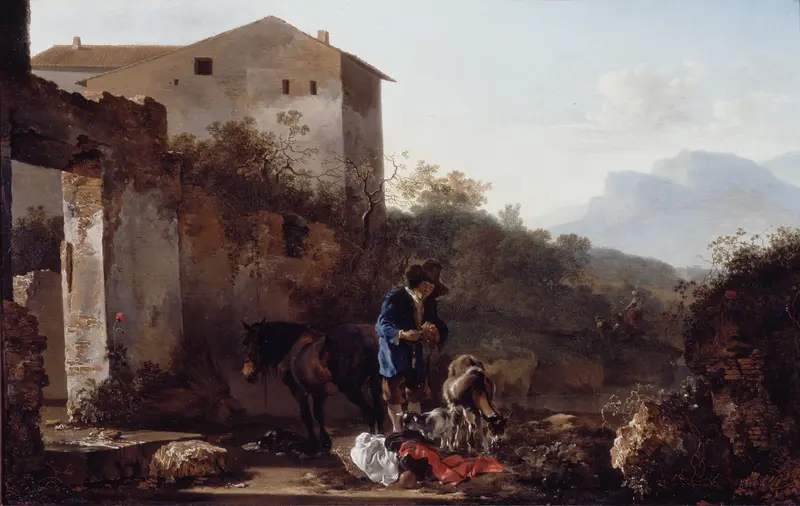
Landscape with a Goatherd
Adam Pijnacker
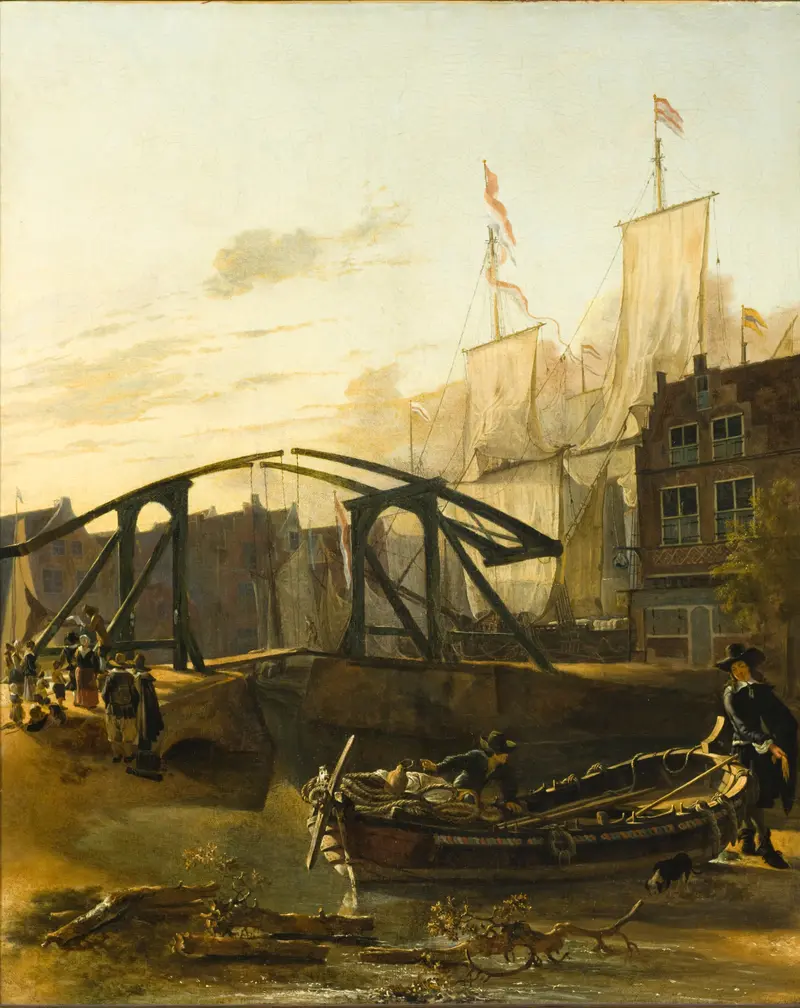
View of a Harbor in Schiedam
Adam Pijnacker
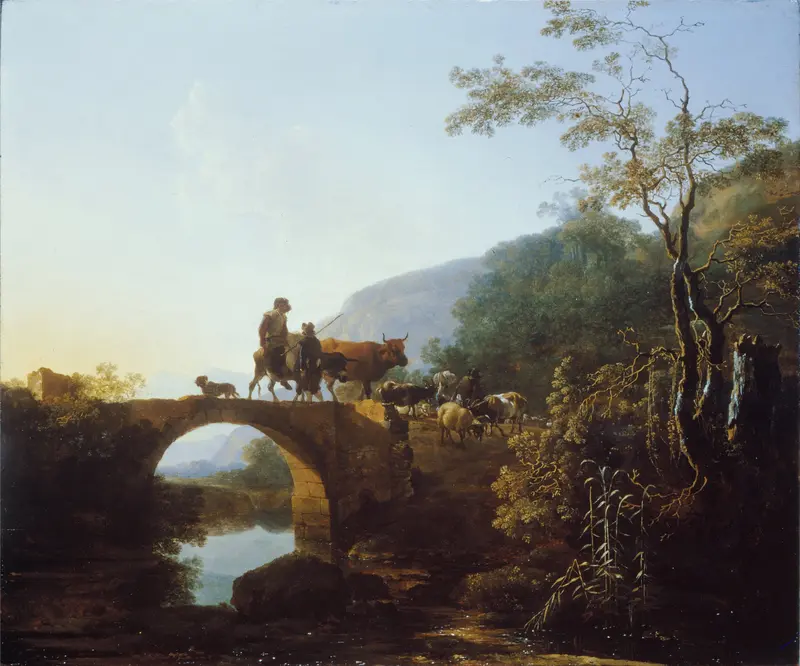
Bridge in an Italian Landscape
Adam Pijnacker
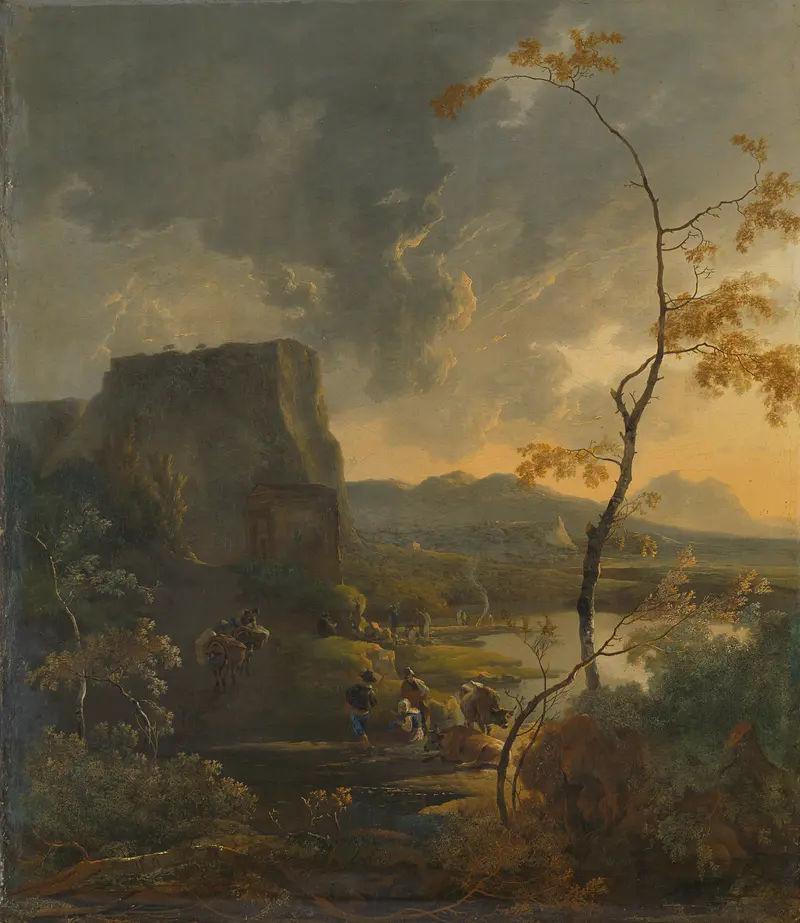
Italian Landscape with Ancient Tempietto
Adam Pijnacker
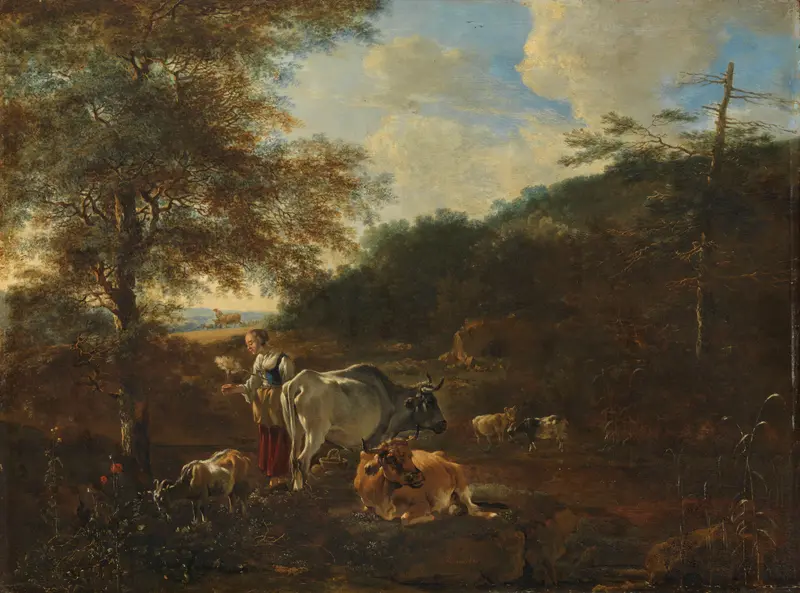
Landscape with cattle
Adam Pijnacker
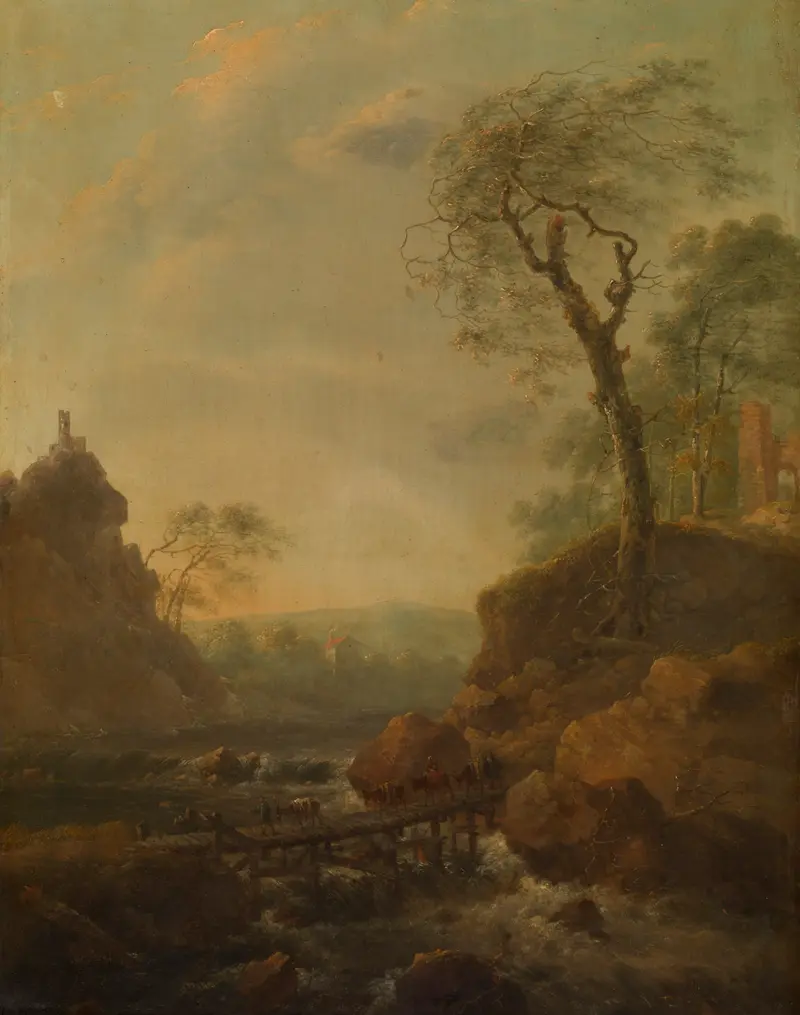
Landscape
Adam Pijnacker
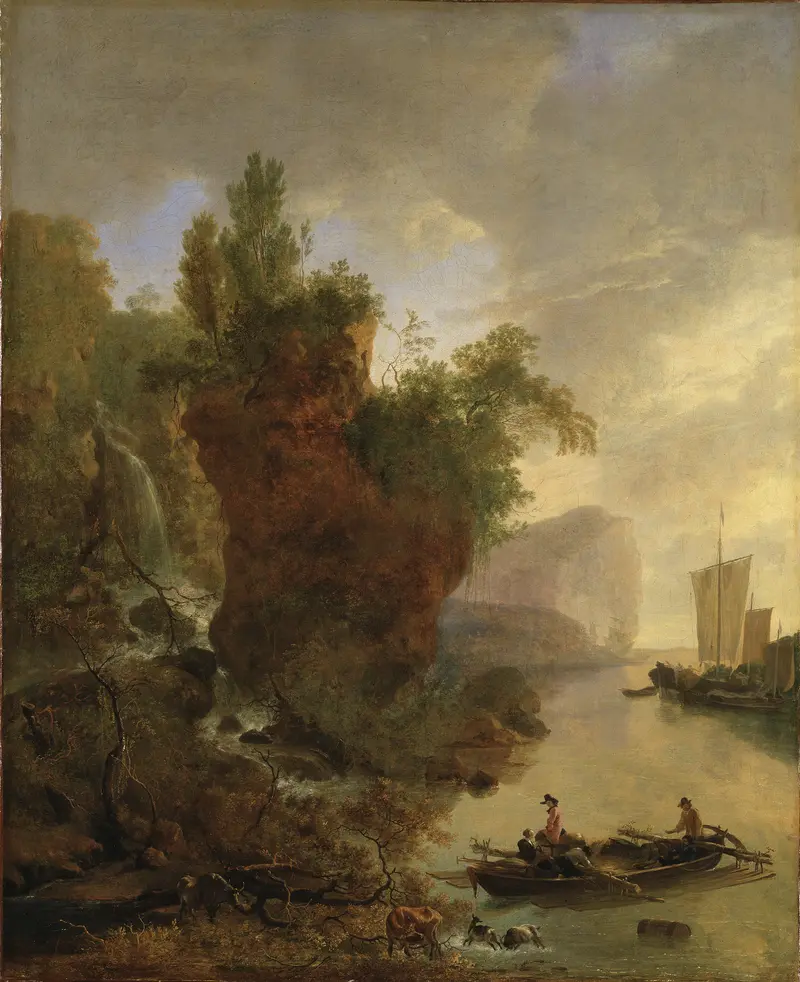
Bay with a Rocky Coast
Adam Pijnacker
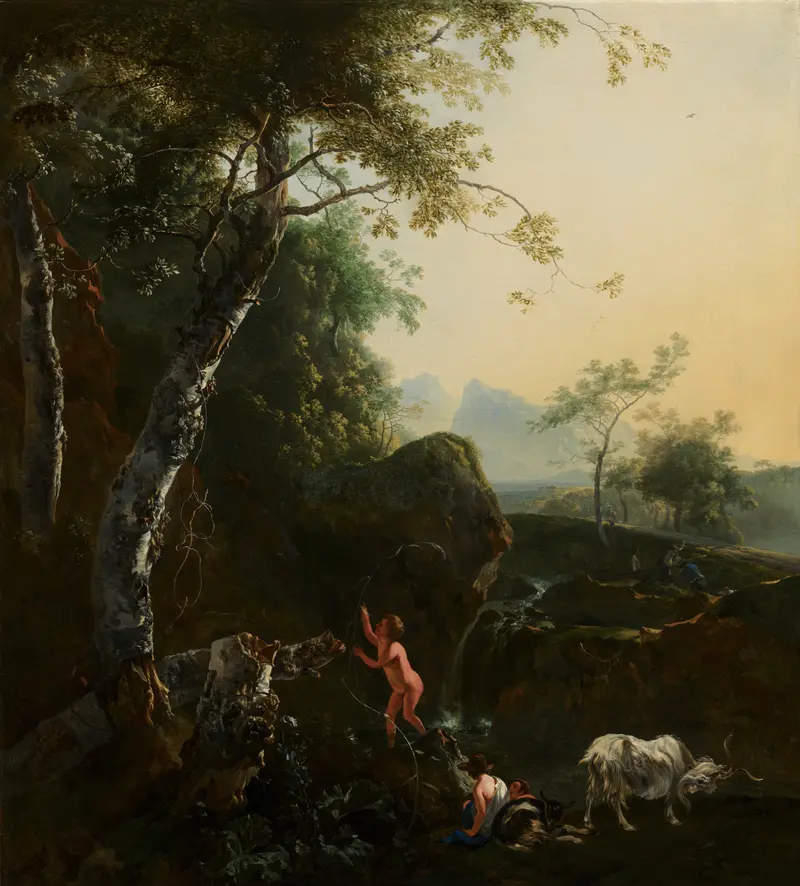
Mountainous Landscape with Waterfall
Adam Pijnacker
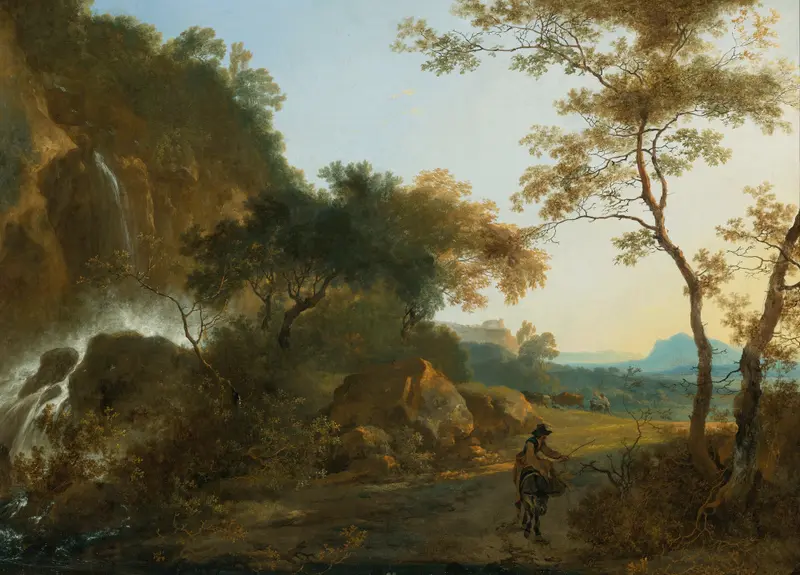
An Italianate Landscape With A Traveller On A Path By A Waterfall
Adam Pijnacker
More Landscape Art

The Starry Night
Vincent van Gogh

View of Delft
Johannes Vermeer

Water Lilies
Claude Monet

The Grand Canal, Venice, looking north-west from the Ca' Corner to the Ca' Contarini degli Scrigni, with the campanile of Santa Maria della Carità
Canaletto

Windsor Castle
Canaletto

The Grand Canal looking North-East from the Palazzo Dolfin-Manin to the Rialto Bridge
Canaletto