
Landscape with Temple Ruin — History & Facts
What if beauty was never meant to be finished? The essence of desire flows through the brushstrokes of a forgotten world, where nature and man converge in a delicate dance of decay and splendor. Look to the left at the majestic temple ruin, its crumbling columns reaching skyward, adorned with creeping vines that weave through the stone. The soft light bathes the scene in a warm, golden hue, gently illuminating the layers of landscape—rolling hills and a tranquil waterway—each element meticulously crafted with a palette of greens and browns that evoke a sense of nostalgia. Notice how the artist’s technique captures both the solidity of the ruins and the ethereal quality of the surrounding flora, creating a harmonious interplay between permanence and transience. Beneath the surface, the painting speaks to the paradox of existence: beauty in decay, the tension between nature’s relentless advance and the remnants of human ambition.
The temple, a symbol of aspiration, stands witness to time's passage, inviting contemplation on what it means to desire—both the creation of monumental works and their inevitable unraveling. In the quiet spaces between the elements, one feels the weight of history, a longing for what once was and what could never be fully realized. Christian Georg Schütz the elder painted this work during a period in the late 18th century, when Romanticism began to influence artistic expression. Living in Germany, he was surrounded by a growing fascination for nature's beauty and the ruins of classical civilization, reflecting a societal shift towards valuing emotional resonance in art.
This work exemplifies the quiet yearning and reverence for the past characteristic of his time.
More Artworks by Christian Georg Schütz the elder
Browse all →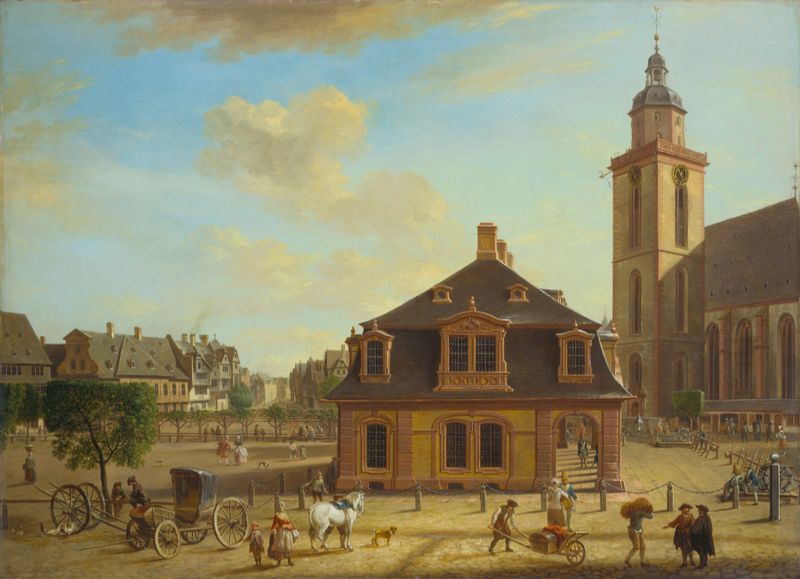
The Rossmarkt in Frankfurt
Christian Georg Schütz the elder
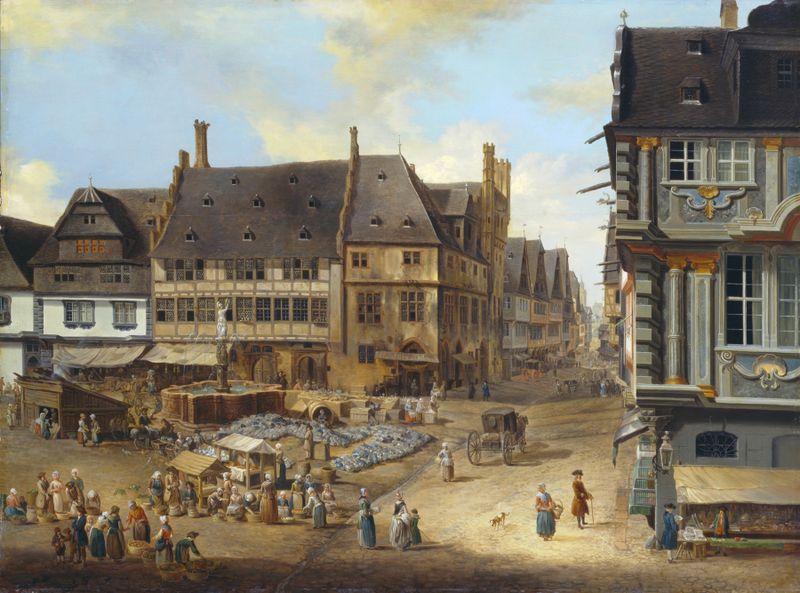
The Liebfrauenberg in Frankfurt
Christian Georg Schütz the elder
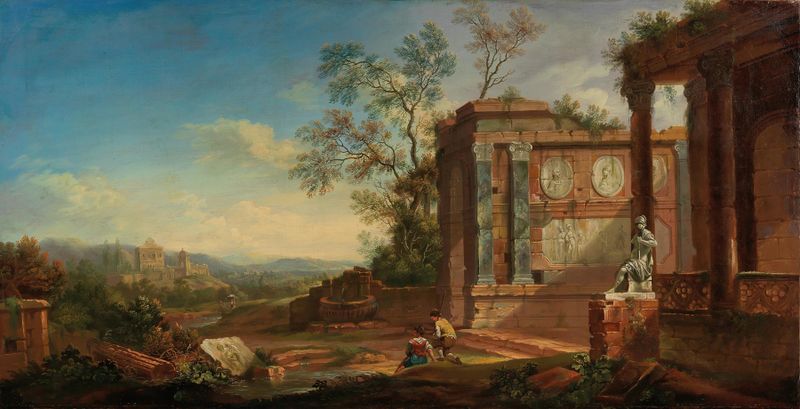
Gebirgige Flusslandschaft
Christian Georg Schütz the elder
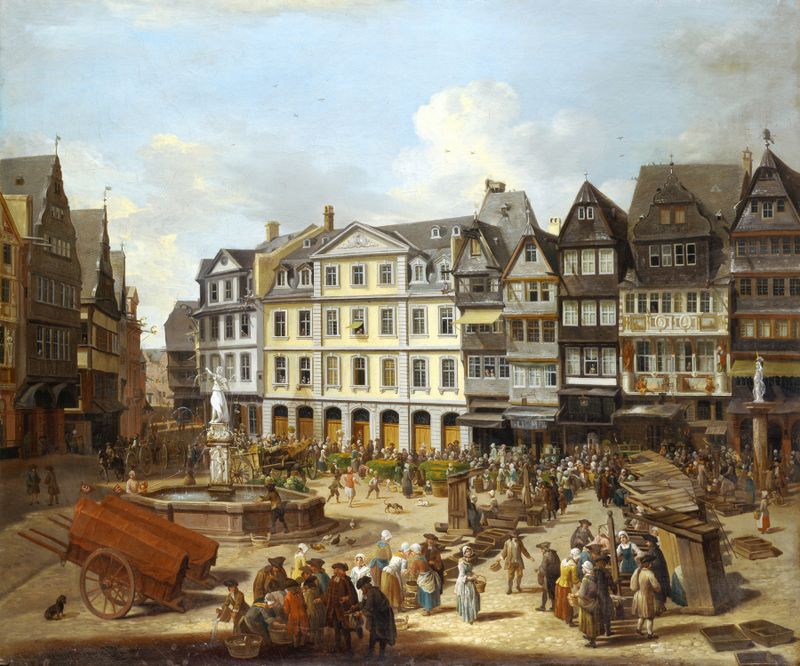
A Market on the Römerberg in Frankfurt
Christian Georg Schütz the elder
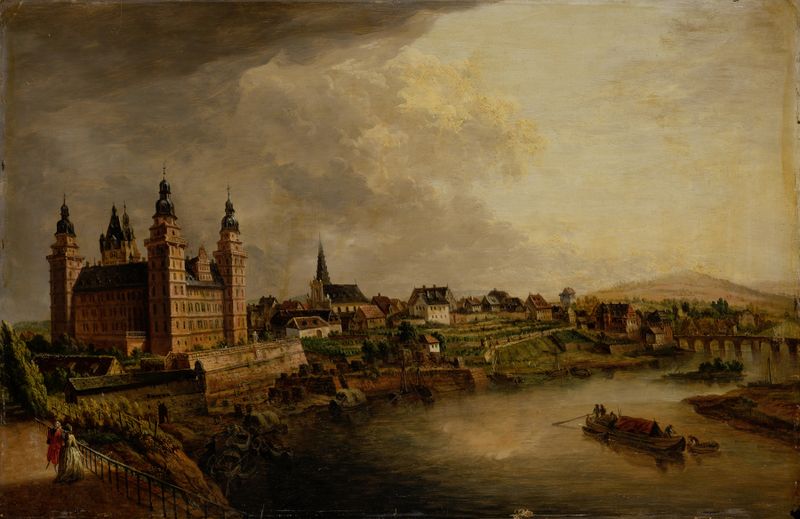
View of Aschaffenburg
Christian Georg Schütz the elder

Landscape with River.
Christian Georg Schütz the elder

River Landscape in the Morning Light
Christian Georg Schütz the elder

A Rhine landscape with a ferry, near Bonn with the Rolandsbogen, Drachenfels and the island of Nonnenwerth beyond
Christian Georg Schütz the elder
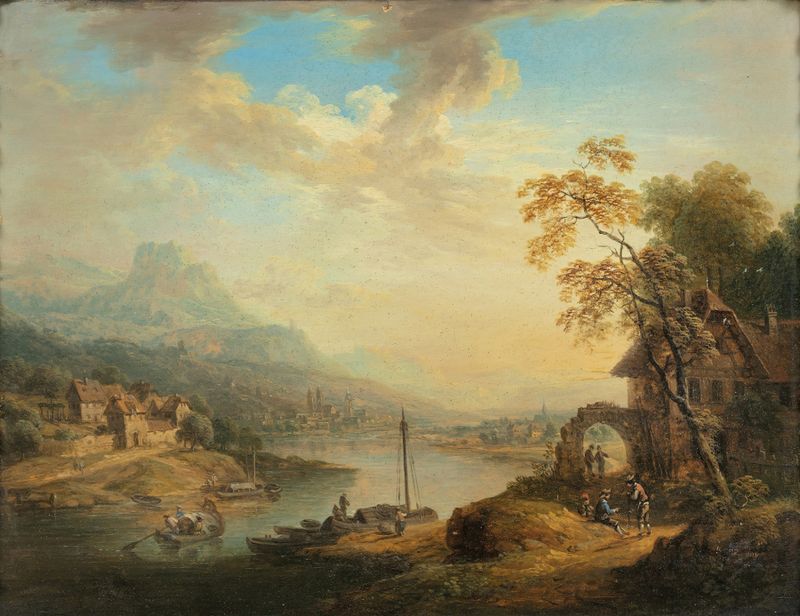
River Landscape
Christian Georg Schütz the elder

Flooded Woodlands near Oberrad
Christian Georg Schütz the elder





