
Landscape with the death of Roland — History & Facts
What first seizes the eye in Landscape with the death of Roland is the sense of scale: a lone, armored figure slumped among the rocks, dwarfed by a wild, mountainous landscape that seems to close in around him. The drama of the scene is not shouted but staged in shadow and turbulence, the jagged cliffs and stormy sky pressing down on the small, vulnerable human presence below. The figure’s white helmet and red cloak draw the gaze, signaling both nobility and defeat, while the broken weapons and scattered objects at his feet tell of a struggle now ended.
Light breaks through the clouds in the distance, illuminating a narrow valley and hinting at a world beyond the tragedy in the foreground—a world that will continue, indifferent to the fate of its hero. Painted by Achille Etna Michallon in or before 1822, this work belongs to a period when French artists were captivated by the power of nature and the drama of national legend. Landscapes like this were not mere settings, but active participants in the story, echoing the emotional turmoil of their subjects. The Romantic movement, to which Michallon contributed, favored such scenes for their ability to stir the imagination and evoke the grandeur and peril of the past.
While little is recorded about the specific commission or early history of this painting, its presence in a modern collection invites us to linger on its contrasts—between man and nature, memory and oblivion—and to let our eyes wander from the armored figure outward, following the river as it disappears into the shadowed gorge.
More Artworks by Achille Etna Michallon

Forest interior
Achille Etna Michallon
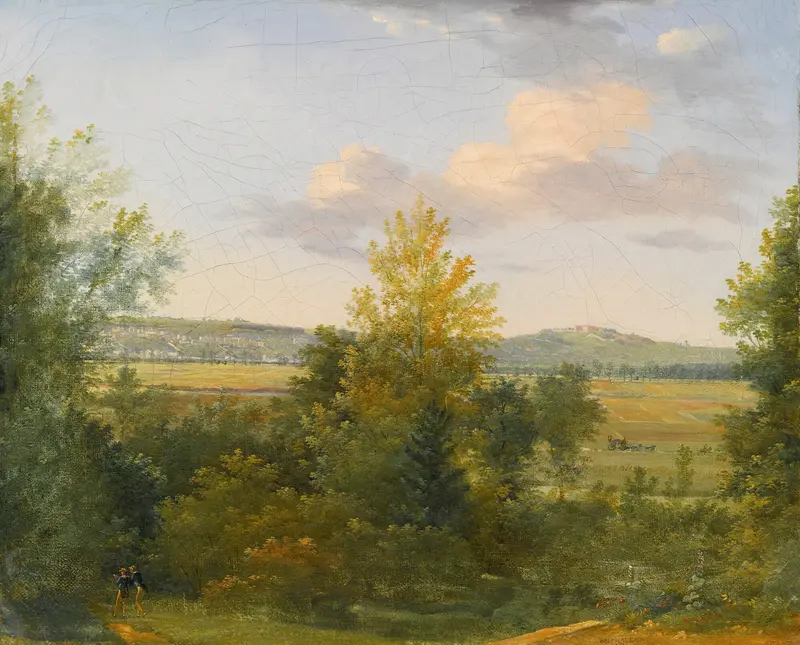
Pastoral landscape with two travellers
Achille Etna Michallon

Die Mündung der Rance bei Saint-Servan (Bretagne)
Achille Etna Michallon

View of a Waterfall through a Ravine
Achille Etna Michallon
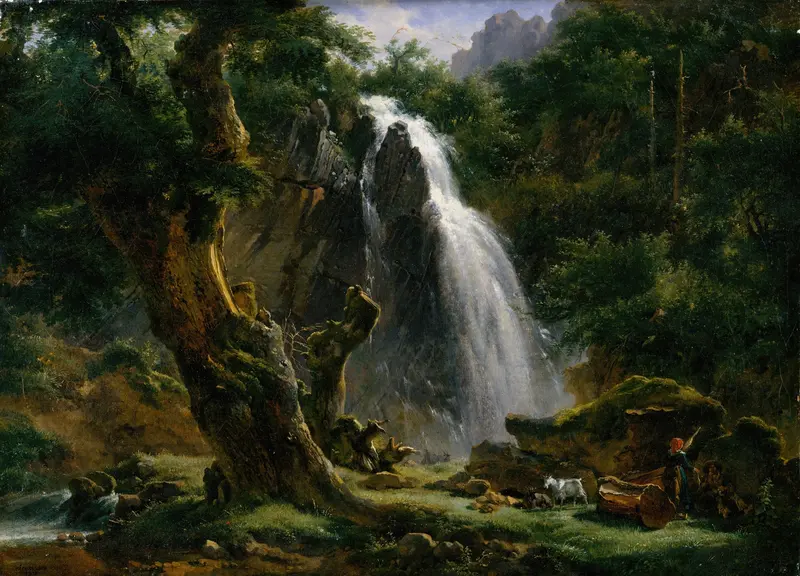
Waterfall at Mont-Dore
Achille Etna Michallon
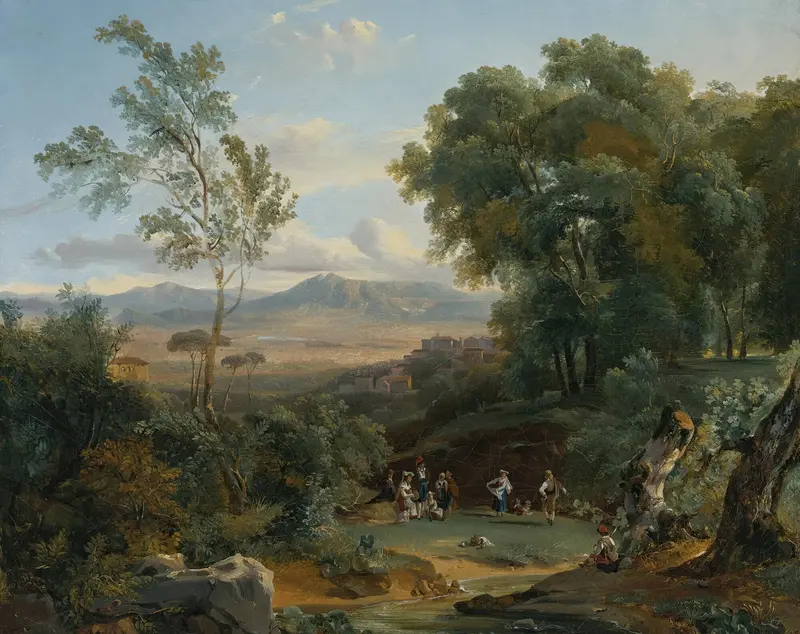
Landscape With A View Of Frascati
Achille Etna Michallon
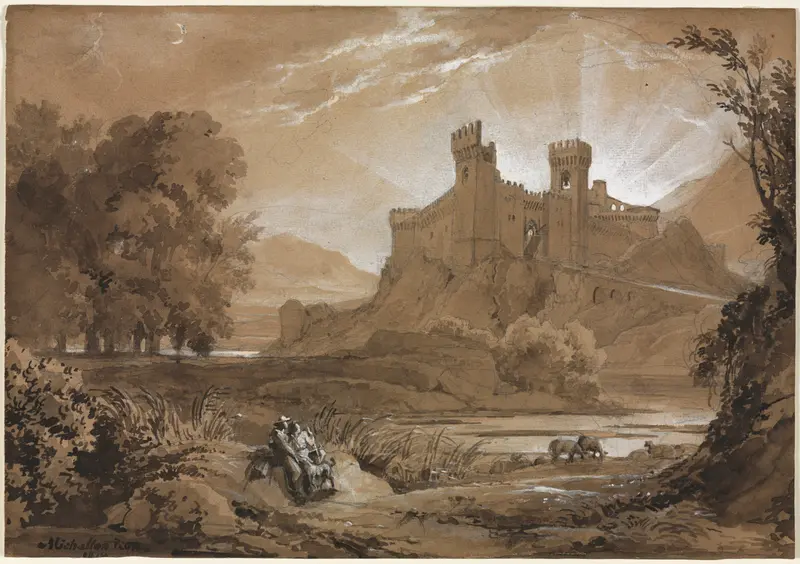
Landscape with Castle and Shepherds
Achille Etna Michallon
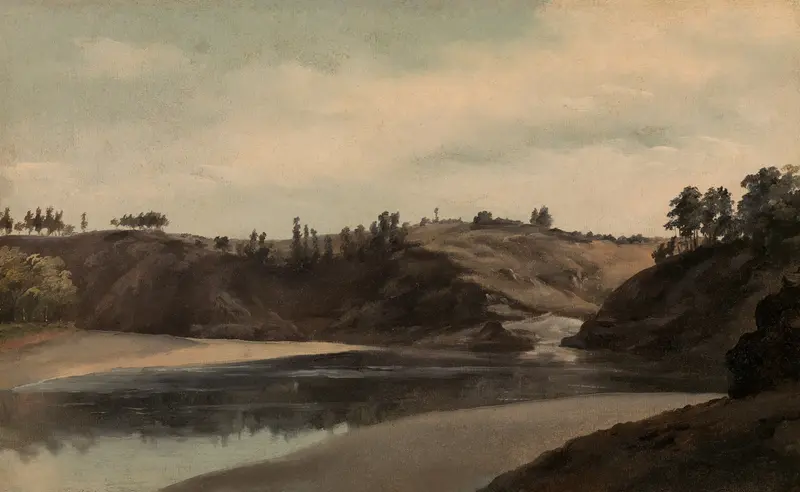
River landscape in Brittany
Achille Etna Michallon
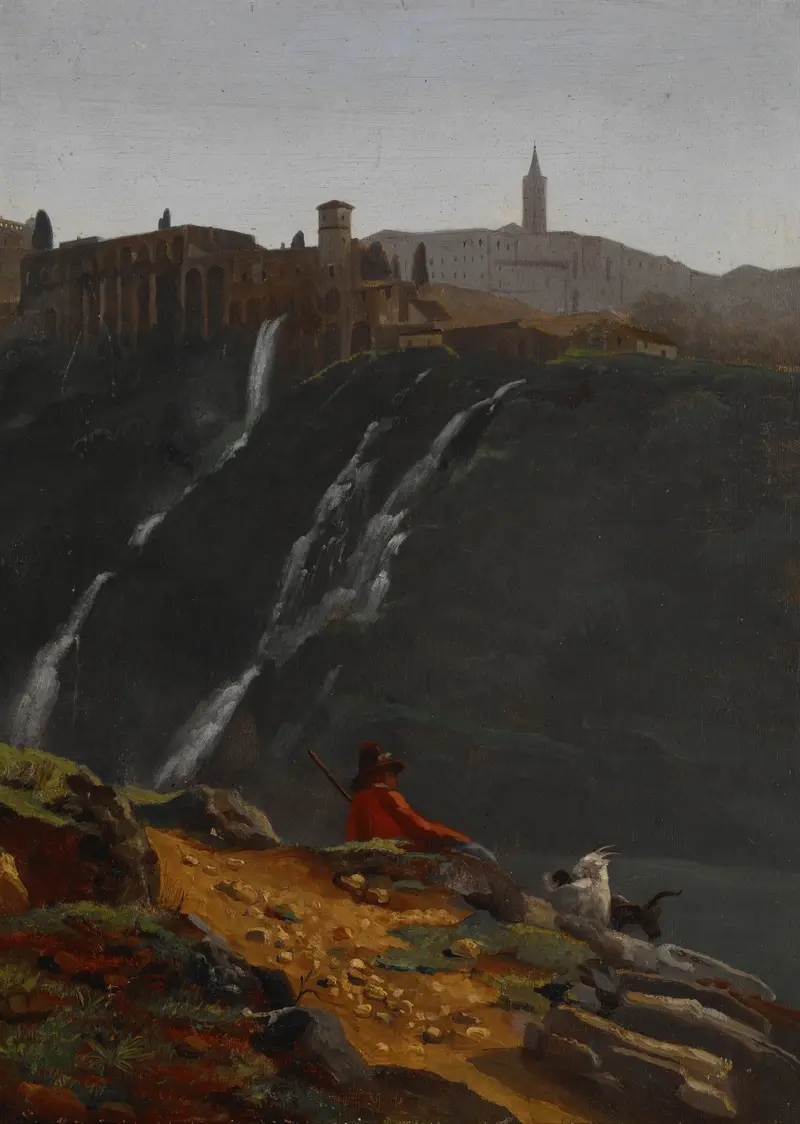
Goatherd Opposite the Falls of Tivoli
Achille Etna Michallon
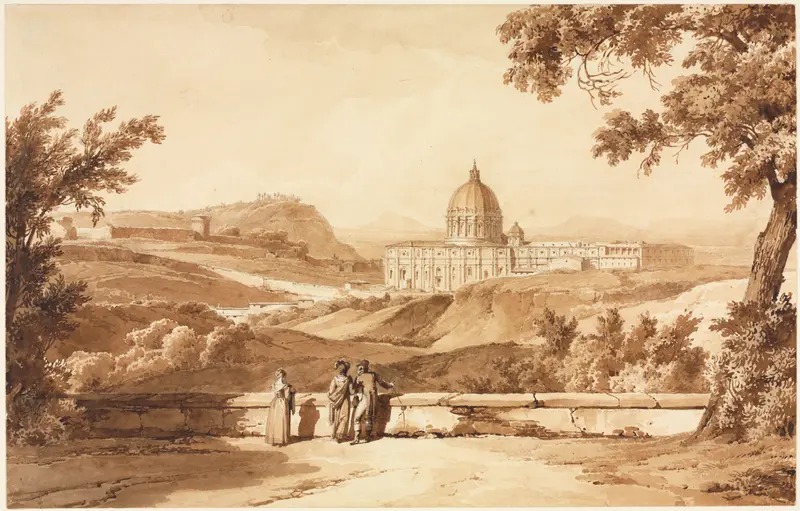
View of St. Peters, Rome
Achille Etna Michallon
More Landscape Art

The Starry Night
Vincent van Gogh

View of Delft
Johannes Vermeer

Water Lilies
Claude Monet

The Grand Canal, Venice, looking north-west from the Ca' Corner to the Ca' Contarini degli Scrigni, with the campanile of Santa Maria della Carità
Canaletto

Windsor Castle
Canaletto

The Grand Canal looking North-East from the Palazzo Dolfin-Manin to the Rialto Bridge
Canaletto