
Landscape with travelers — History & Facts
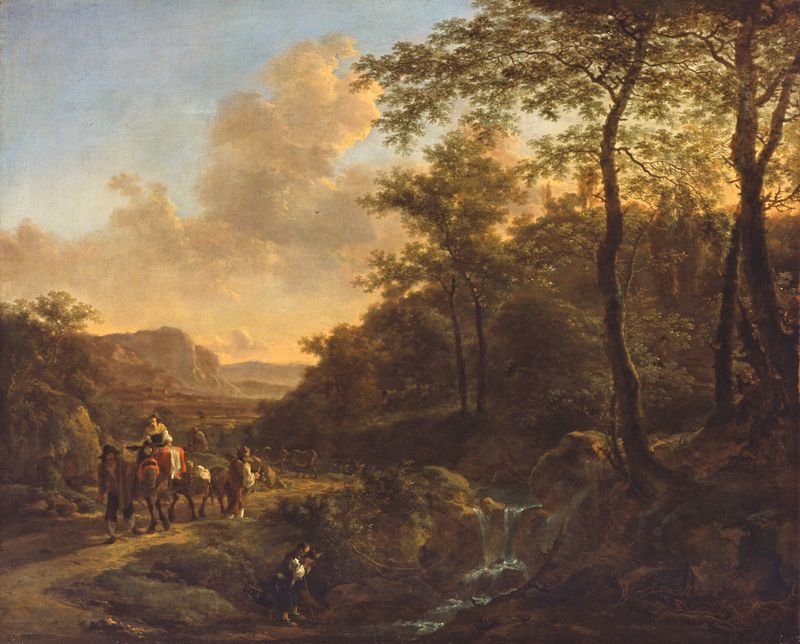
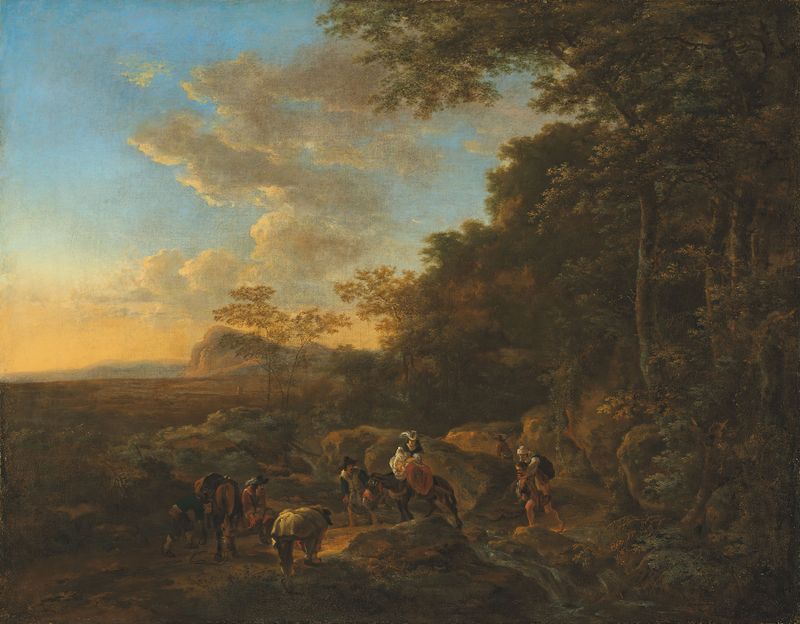
When did color learn to lie? In the realm of art, it serves as both a mirror and a mask, revealing truths while obscuring chaos. Focus your gaze on the sprawling foreground where travelers traverse a twisting path, their forms mere whispers against the vastness around them. Notice how the verdant greens of the hills blend seamlessly into the tumultuous sky, painted in swirling grays and deep blues. The light, filtered through this tumult, creates an unsettling contrast, illuminating the figures yet casting shadows that suggest an imminent storm.
Each stroke feels deliberate, yet chaotic, as if the landscape itself is in flux. Deeper down, the chaotic interplay of nature and humanity emerges. The travelers, seemingly at ease, embody a fleeting serenity, yet they traverse a world poised on the brink of turbulence. The contrasting tranquility of the lush landscape and the darkening sky invites speculation about the unpredictability of their journey.
One can almost sense their vulnerability against the elements, hinting at the fragility of existence when faced with the sublime power of nature. In 1650, Jan Both painted Landscape with Travelers during a period of artistic exploration in the Netherlands. Influenced by the burgeoning Baroque movement, he captured the beauty and complexity of landscapes, reflecting both personal introspection and the broader societal shifts of the time. The chaotic elements in his work echo the changing world around him, where nature’s magnificence often bore a darker undertone, resonating deeply even today.
More Artworks by Jan Both
Browse all →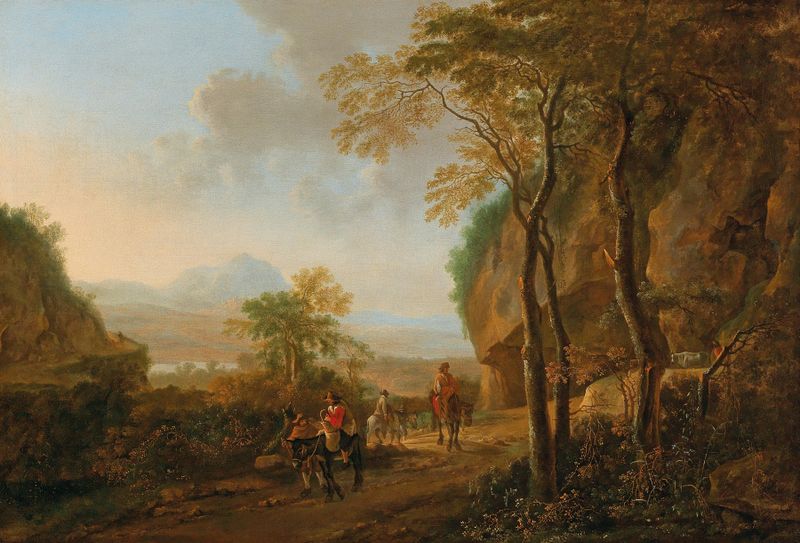
An Italianate landscape with travellers
Jan Both
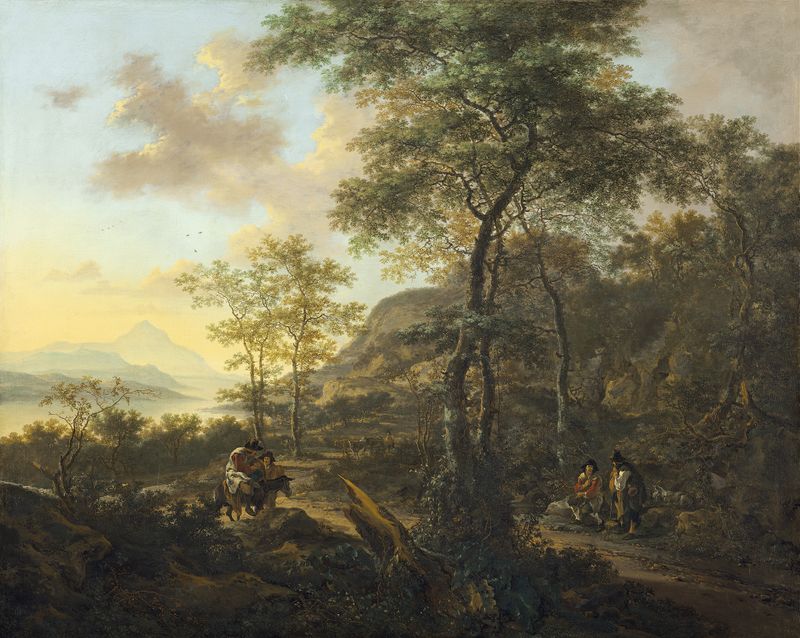
An Italianate Evening Landscape
Jan Both
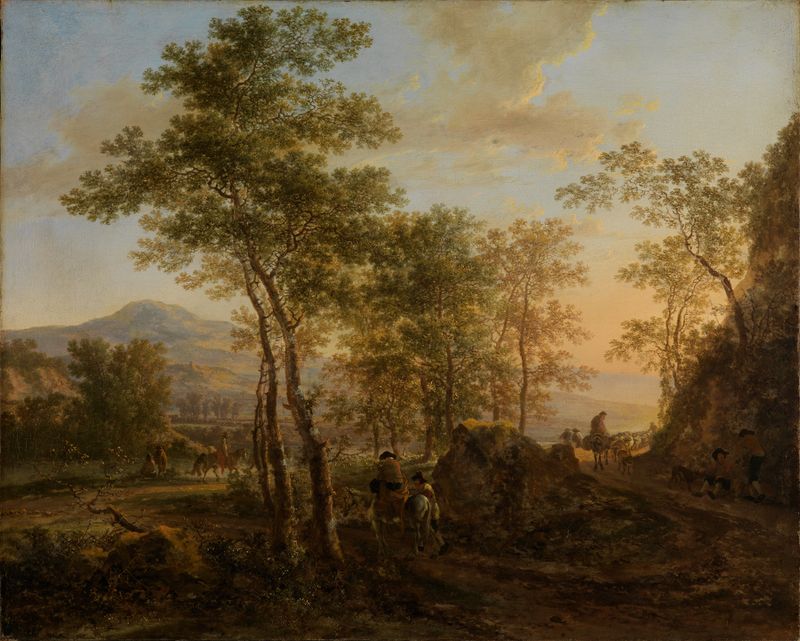
Italienische Landschaft am Abend
Jan Both
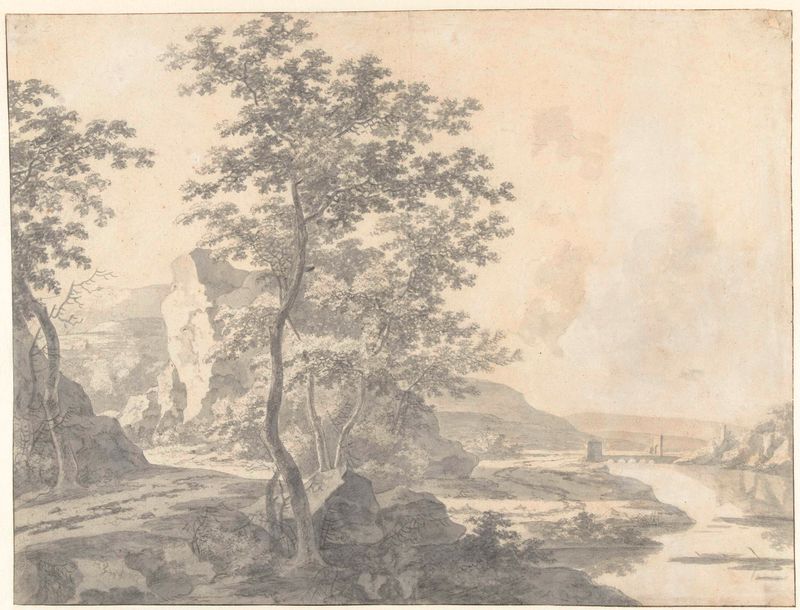
Italiaans landschap
Jan Both
Scene of the Roman Campagna
Jan Both
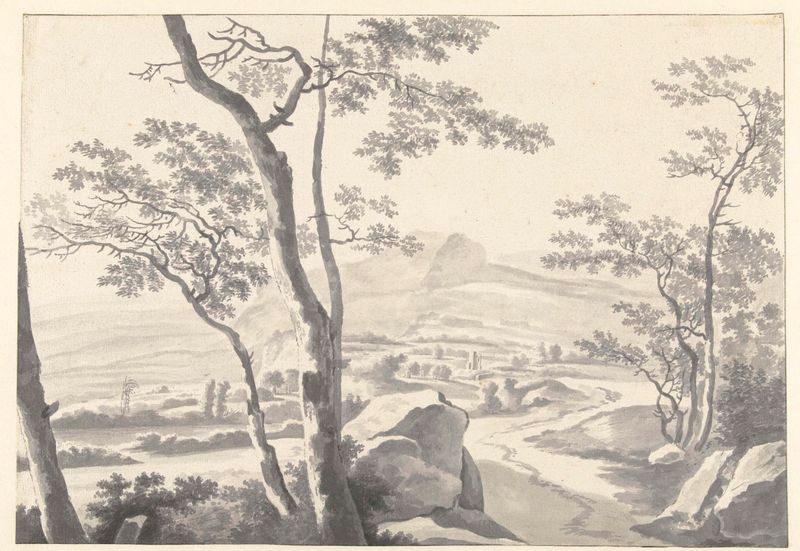
Landschap
Jan Both
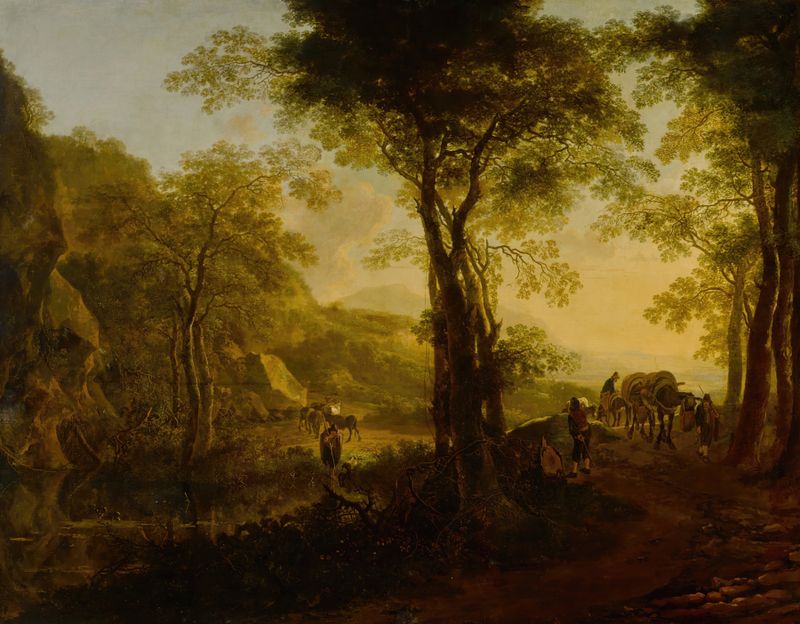
Italianate landscape at sunset, with travelers on a country road
Jan Both
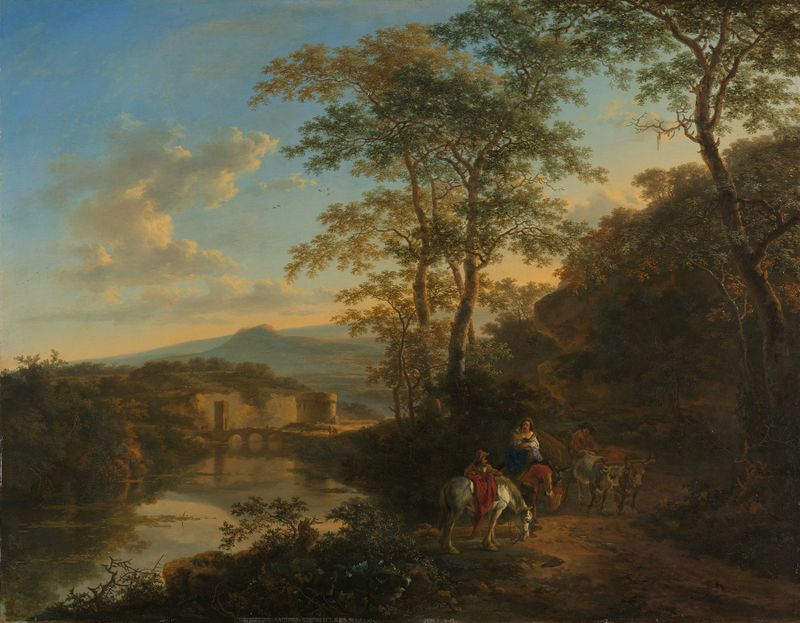
Italian Landscape with the Ponte Lucano over the Aniene River
Jan Both
A wooded landscape with travellers crossing a ford
Jan Both

Italian Landscape
Jan Both





