
Landscape with watermill — History & Facts
What if silence could speak through light? In Landscape with Watermill, tranquility weaves through the fabric of nature, inviting viewers to ponder its silent reverie. Look to the left, where the watermill stands as a steadfast sentinel amidst lush greenery. The artist deftly employs varying shades of green, rich browns, and soft blues to create a harmonious balance, with dappled sunlight filtering through the trees, illuminating the scene. The gentle curve of the river draws the eye toward the mill's wheel, hinting at the passage of time and the persistence of nature's rhythms.
The composition expertly combines detail with vastness, conveying both intimacy and expansiveness. Within this serene landscape, hidden tensions emerge between the natural and the man-made. The watermill, an emblem of human ingenuity, contrasts with the surrounding wilderness, symbolizing humanity's often fragile connection to nature. The play of light and shadow heightens this contrast, suggesting that innocence can easily be lost in the face of progress.
The quiet scene evokes reflection on the delicate equilibrium between technology and the natural world. Jacob van Ruisdael painted this work in 1661 in the Netherlands, a time when the country was flourishing both artistically and economically. The Dutch Golden Age was marked by an increasing interest in landscapes, and the artist sought to capture the sublime beauty of rural life. Living in Haarlem, he was influenced by the burgeoning market for landscape paintings, which aimed to evoke a sense of peace and reverence for the pastoral, making his works resonate deeply with contemporary audiences.
More Artworks by Jacob van Ruisdael
Browse all →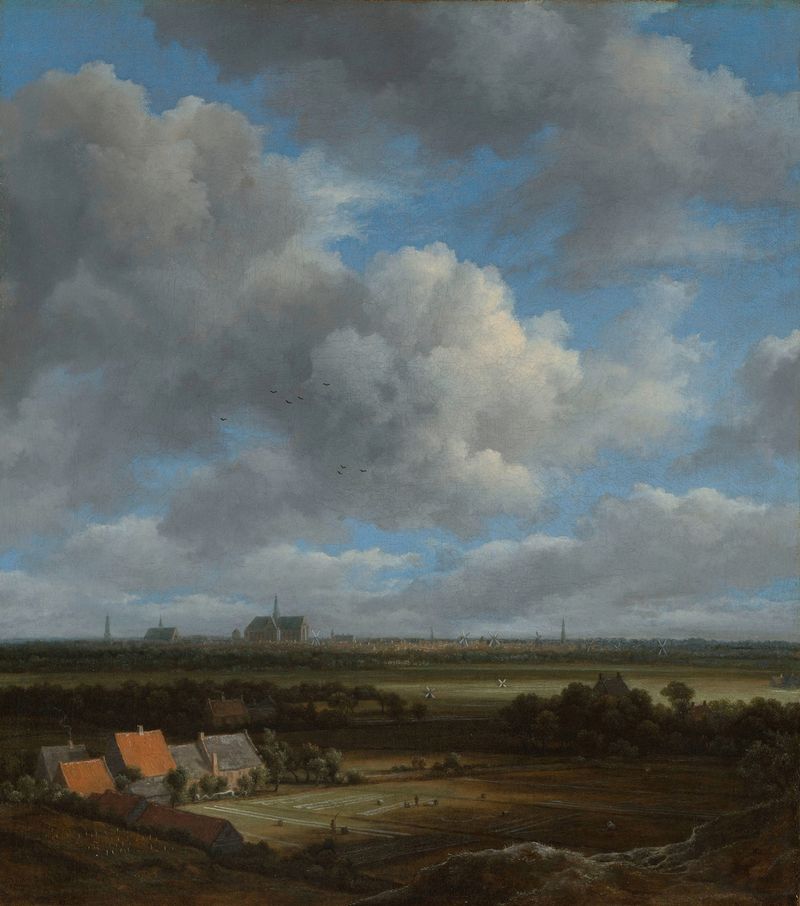
View of Haarlem from the Northwest, with the Bleaching Fields in the Foreground
Jacob van Ruisdael
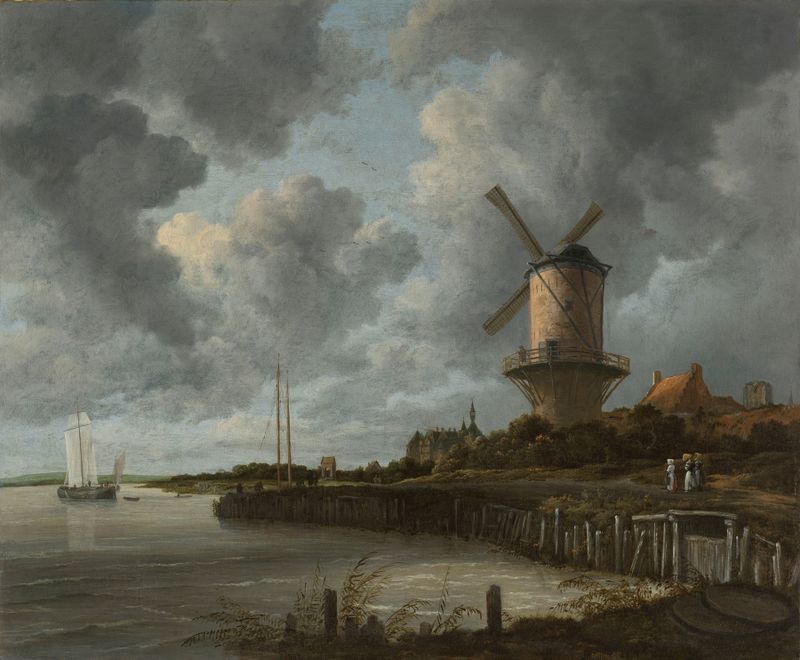
The Windmill at Wijk bij Duurstede
Jacob van Ruisdael
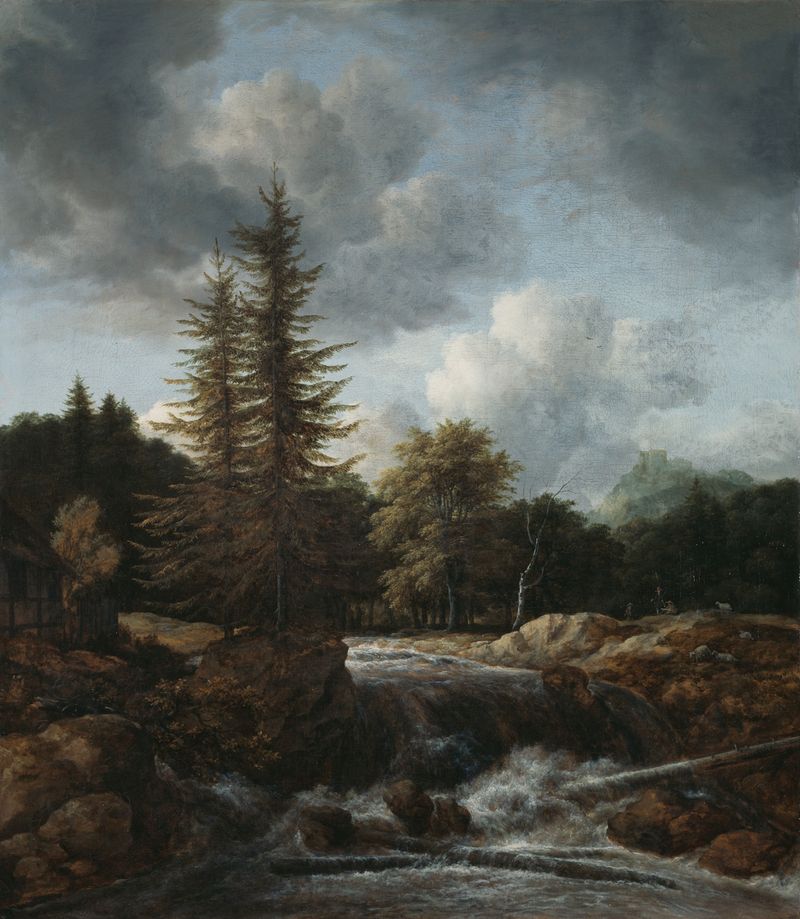
Landscape with Waterfall
Jacob van Ruisdael
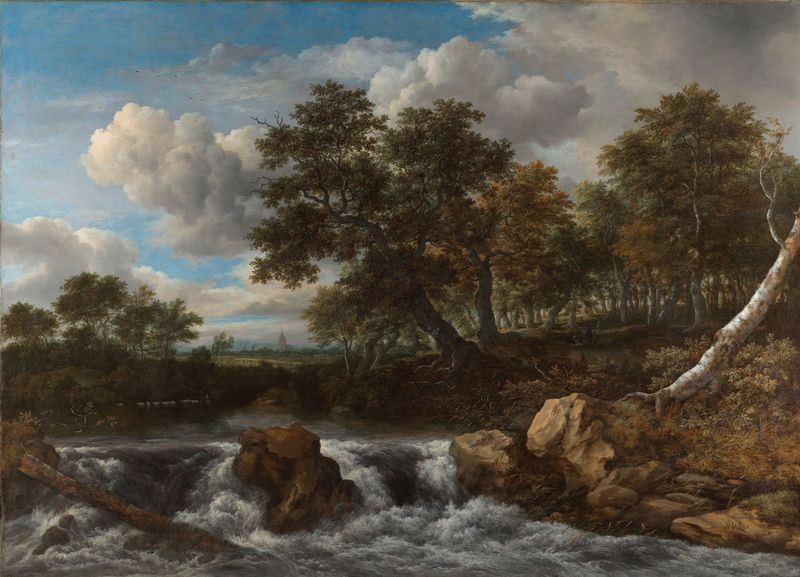
Landscape with Waterfall
Jacob van Ruisdael
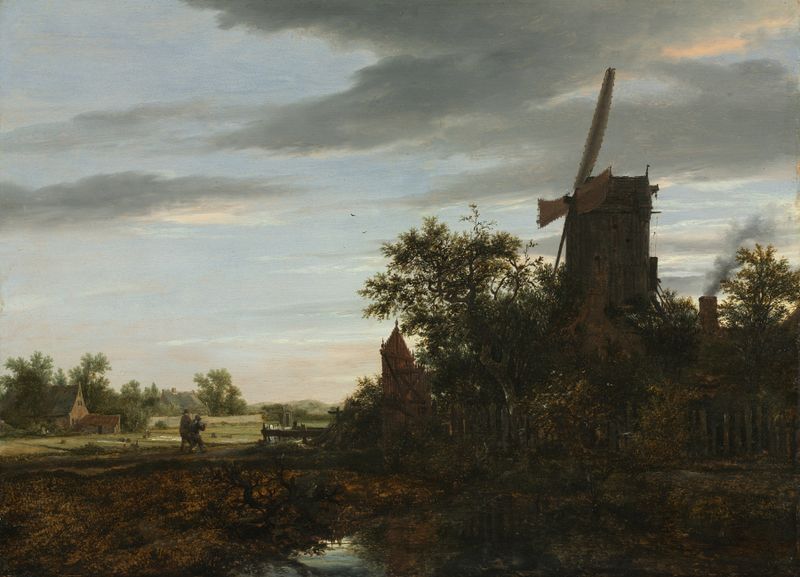
Landscape with a Windmill
Jacob van Ruisdael

Wooded hillside with a view of Bentheim Castle
Jacob van Ruisdael
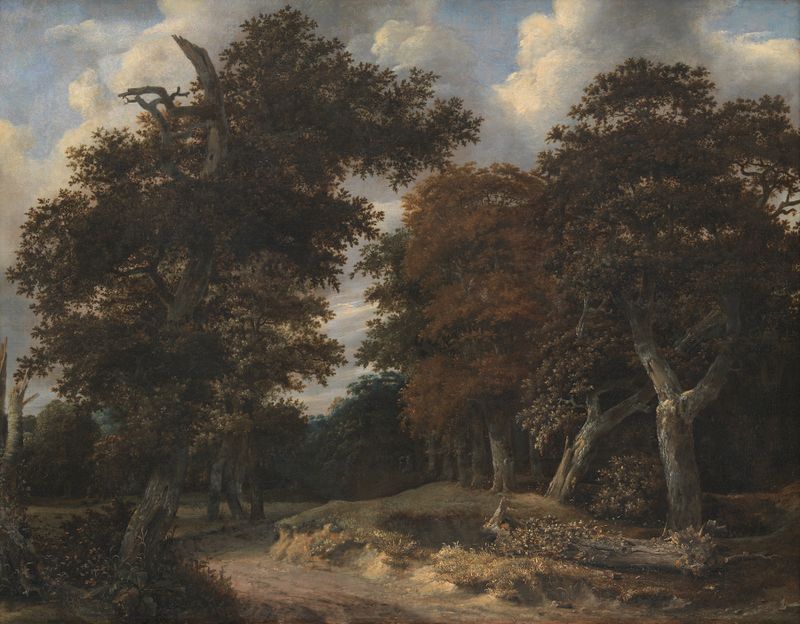
Road through an Oak Forest
Jacob van Ruisdael

Landscape with a Church
Jacob van Ruisdael

The Forest Stream
Jacob van Ruisdael

The Jewish Cemetery
Jacob van Ruisdael





