
Landscape with Watermill — History & Facts
It is a silent witness, holding within it the revelation of a world both familiar and dreamlike, inviting you to step closer. Look to the left at the watermill, its aged wooden structure harmonizing with the surrounding foliage, a serene embodiment of nature's resilience. Notice how the warm sunlight bathes the scene, highlighting rich greens and browns, while casting playful shadows that dance across the water's surface. The gentle contours of the landscape draw your gaze across the canvas, revealing a peaceful yet dynamic interplay between the mill and the flowing stream, a reminder of time’s fluidity. Emotional tensions simmer beneath the serene surface.
The juxtaposition of the robust watermill, a symbol of industriousness, against the quiet embrace of the surrounding nature evokes a sense of harmony, yet hints at the fragility of this balance. The vibrant flora surrounding the structure not only celebrates life but also suggests the inevitable cycle of growth and decay, urging viewers to reflect on their own relationship with the natural world. Henri Rousseau painted this piece in 1879 while living in Paris, a bustling hub of artistic exploration. During this period, he was largely self-taught and faced criticism for his naïve style, yet he found solace in the tranquility of the countryside.
His work was emerging at a time when Impressionism was challenging traditional forms, allowing him to carve out a unique space while gradually gaining recognition for his visionary approach to landscapes.
More Artworks by Henri Rousseau
Browse all →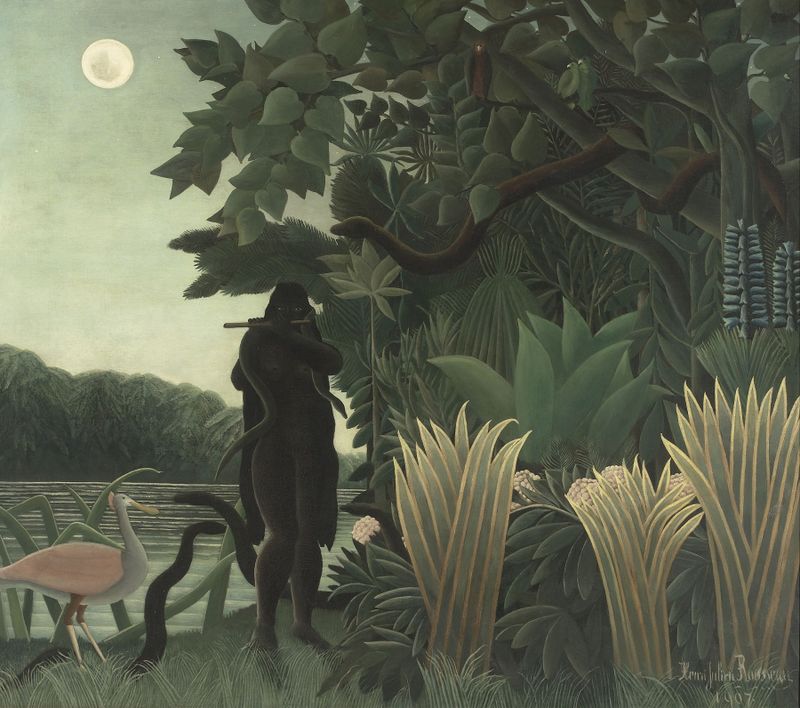
The Snake Charmer
Henri Rousseau
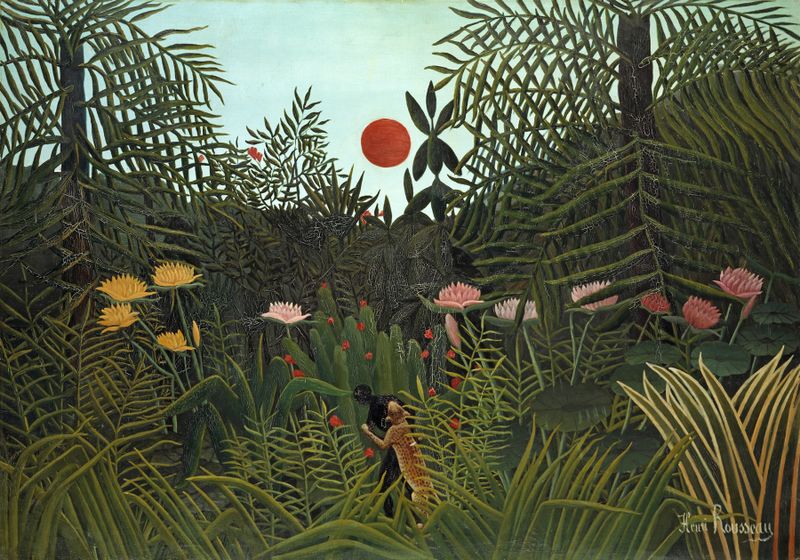
Jungle with Setting Sun
Henri Rousseau
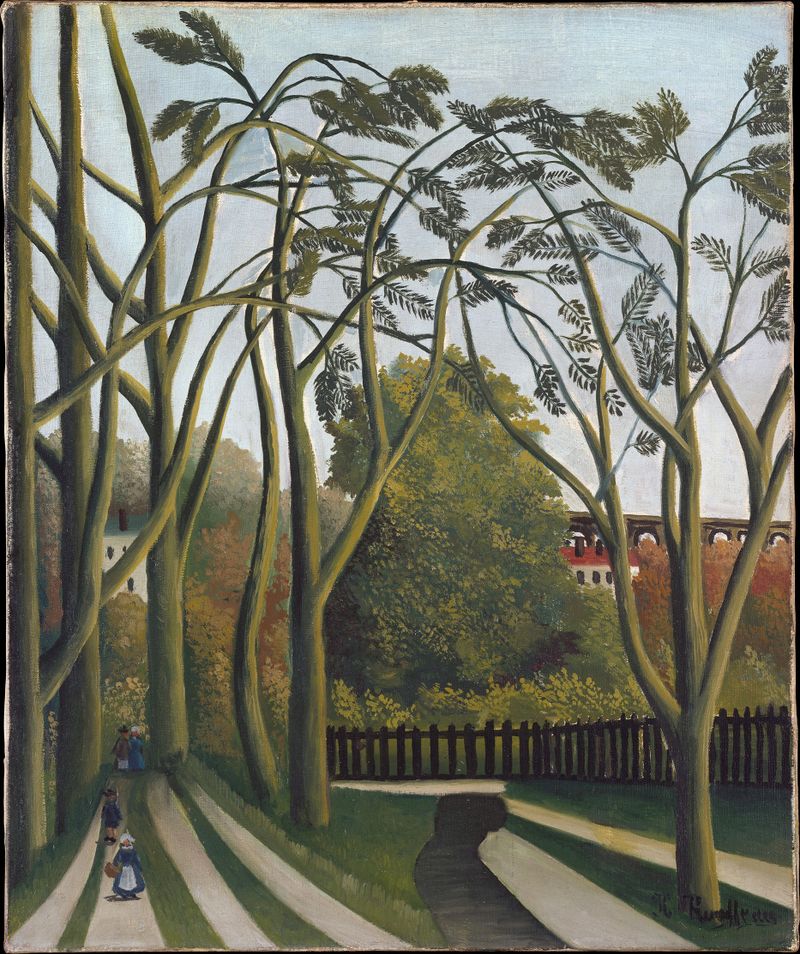
The Banks of the Bièvre near Bicêtre
Henri Rousseau
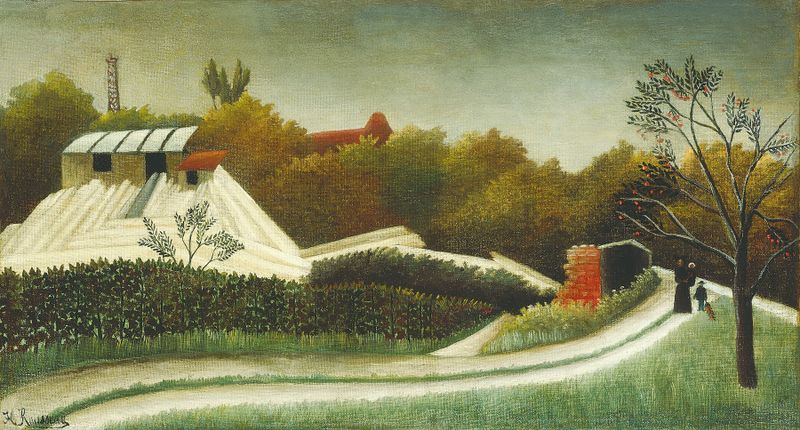
Sawmill, Outskirts of Paris
Henri Rousseau
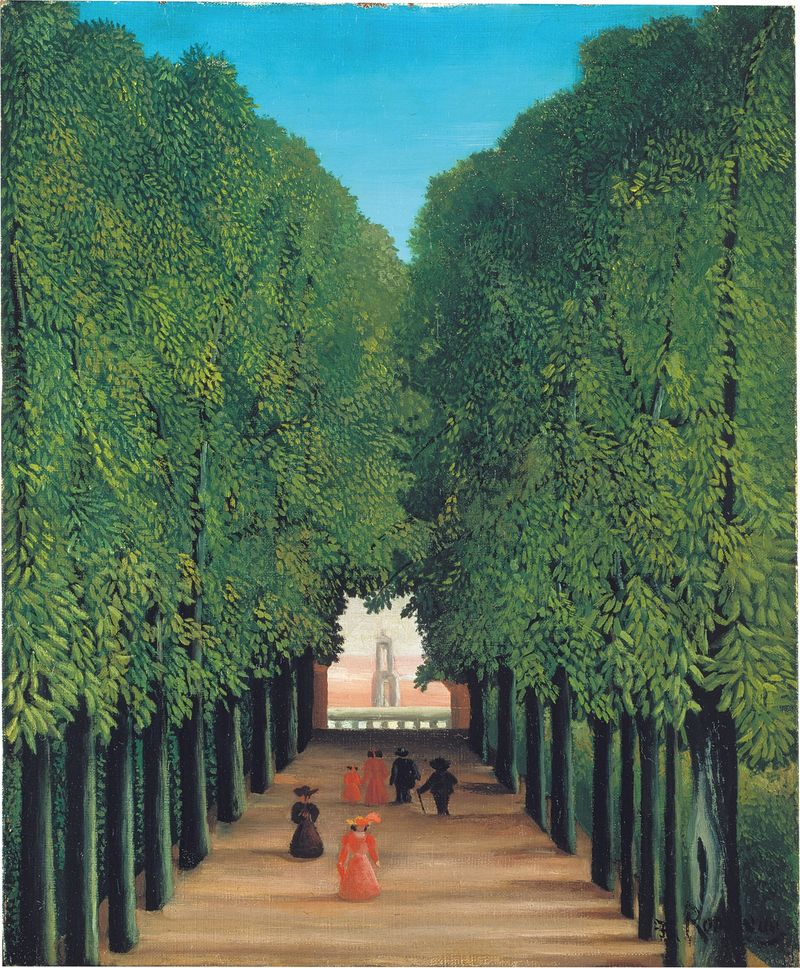
The Avenue in Saint-Cloud Park
Henri Rousseau

Sawmill, Outskirts of Paris
Henri Rousseau
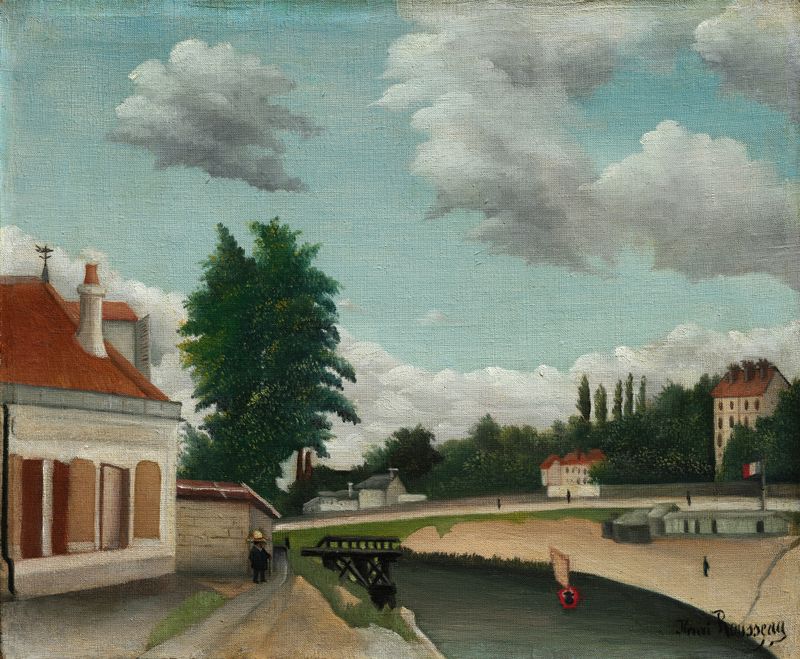
Outskirts of Paris
Henri Rousseau
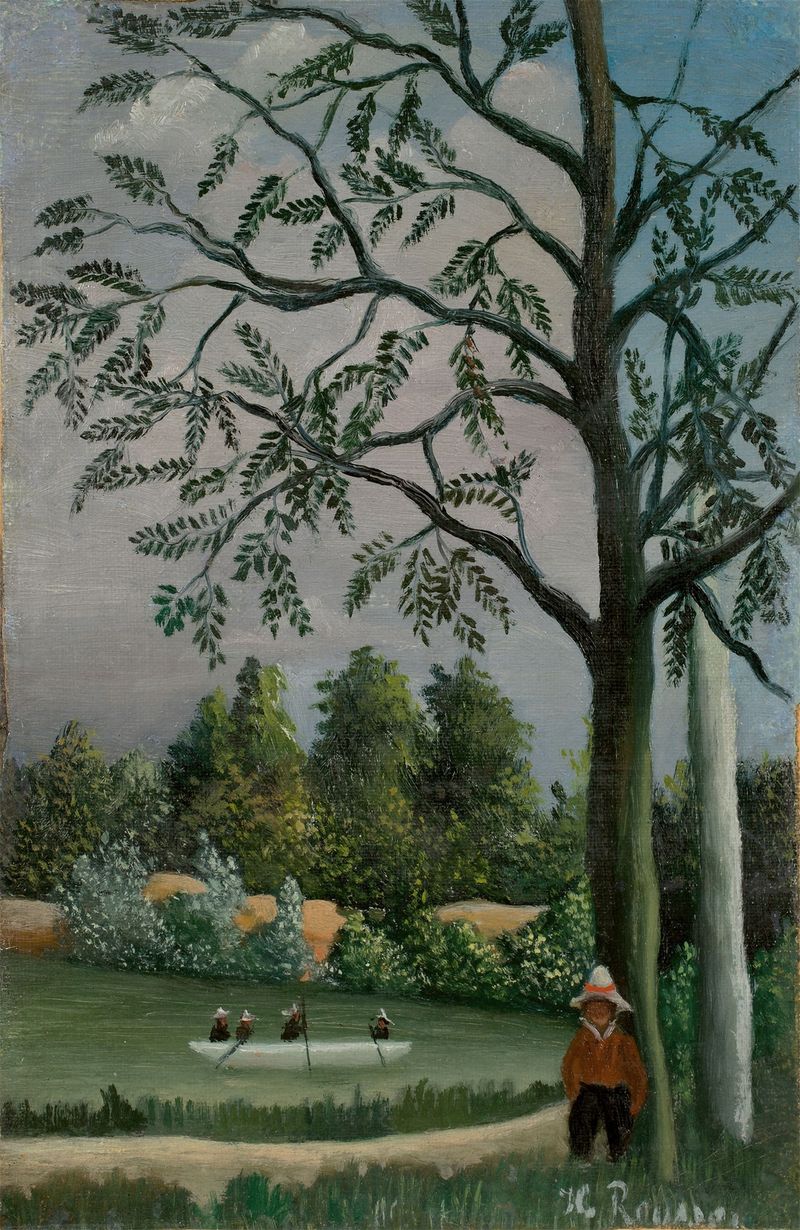
Paysage avec des pêcheurs
Henri Rousseau
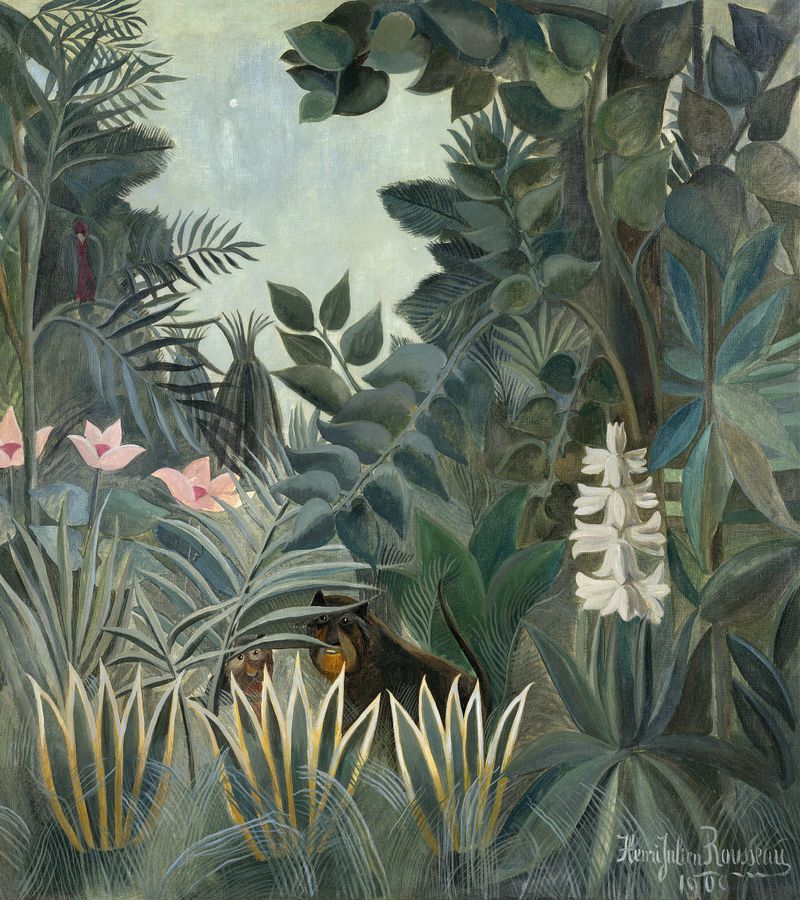
The Equatorial Jungle
Henri Rousseau

Tropical Forest with Monkeys
Henri Rousseau





